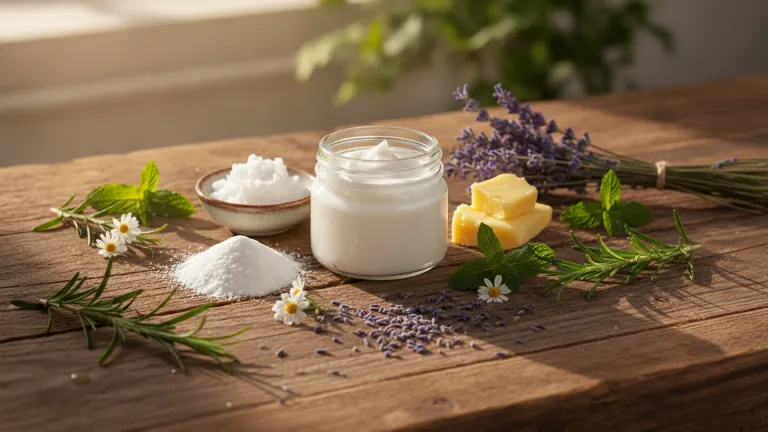
Have you ever stopped to read the list of ingredients on your conventional deodorant? Parabens, aluminum, triclosan, synthetic fragrances — names that few can pronounce, let alone understand what they do to our bodies and the environment. The good news is there’s a simple, affordable, and effective alternative you can prepare at home today, with ingredients you probably already have in your pantry.
The cosmetics industry generates an impressive amount of plastic waste annually. Deodorant packaging — roll-ons, sprays, sticks — is rarely recyclable, especially when combining different types of plastic and metal in the same product. By switching to a homemade natural deodorant, you eliminate not only potentially problematic chemical compounds but also a recurring item from your plastic waste bin that could repeat every month or two for the rest of your life.
This article was created for those who want to start now, without complications. You’ll find practical recipes, answers to the most common questions, and tips to adapt the formula to your skin type. Because taking care of yourself and the planet don’t need to be separate things.
Why replacing conventional deodorant makes a difference
Deodorant is one of the personal hygiene products we use most frequently — usually every day, in direct contact with the skin. That’s why the product’s composition matters more than it seems.
Aluminum salts, present in conventional antiperspirants, work by blocking sweat ducts. Although scientific studies still debate the level of risk to human health with topical use, what is well documented is the environmental impact: aluminum compounds in sewage affect aquatic organisms and are difficult to remove in conventional treatment plants.
Triclosan, an antibacterial agent found in some deodorants and other hygiene products, has been classified by regulatory agencies as potentially disruptive to the endocrine system in aquatic animals. In the United States, the FDA restricted its use in soaps since 2016, but it still appears in formulations in other countries.
Beyond the chemistry, there’s the packaging problem. Most stick deodorants combine plastics of different resins (such as PP and PE) with metal springs, making recycling practically unfeasible in most municipalities. Making your own at home, stored in a reusable glass jar, elegantly solves this problem.
What science says about natural deodorants
It’s important to be honest: deodorant and antiperspirant are different things. Natural deodorant does not prevent sweating — and this is biologically healthy. It works by controlling the bacteria responsible for odor and absorbing some of the moisture.
Ingredients like baking soda have documented antimicrobial action — it creates an alkaline environment that inhibits the growth of certain odor-causing bacteria. Cornstarch and arrowroot work as natural moisture absorbers. Essential oils like lavender, tea tree, and peppermint have antibacterial and antifungal properties studied in various research.
For people with skin sensitive to baking soda (which is relatively common), there are versions with magnesium or clay that work more gently. Further on, we bring options for different skin profiles.
Essential ingredients for homemade natural deodorant
Before you start, it’s worth knowing the role of each ingredient. You don’t need everything at once — the recipes below indicate what’s essential and what’s optional.
| Ingredient | Function | Where to find |
|---|---|---|
| Baking soda | Neutralizes odors, antimicrobial action | Supermarkets |
| Cornstarch or arrowroot | Absorbs moisture | Supermarkets, natural stores |
| Coconut oil | Moisturizing base, mild antimicrobial action | Supermarkets, natural stores |
| Shea butter | Hydration and creamy texture | Natural cosmetics stores |
| Beeswax or carnauba wax | Solid texture (for stick version) | Natural cosmetics stores |
| Tea tree essential oil | Antibacterial action | Natural cosmetics stores |
| Lavender essential oil | Natural fragrance, calming action | Natural cosmetics stores |
| Magnesium bicarbonate | Gentle alternative to regular baking soda | Compounding pharmacies |
Conscious shopping tip: prefer organic cold-pressed coconut oil and essential oils with origin indication. This ensures you’re not replacing a problematic product with another extracted in a predatory manner.
Recipe 1: Creamy natural deodorant (normal skin)
This is the most popular recipe — simple, effective, and ready in less than 15 minutes.
Ingredients:
- 3 tablespoons of coconut oil
- 2 tablespoons of baking soda
- 2 tablespoons of cornstarch or arrowroot
- 10 to 15 drops of essential oil of your choice (tea tree, lavender, cedar, bergamot)
Instructions:
- Soften the coconut oil in a double boiler or for a few seconds in the microwave — it should be soft but not completely liquid.
- In a bowl, mix the baking soda and cornstarch with a fork or small whisk until homogeneous.
- Gradually add the softened coconut oil, stirring well to incorporate. The final texture should be creamy, similar to butter.
- Add the essential oil drops and mix again.
- Transfer to a wide-mouth glass jar with a lid (preserve jars work perfectly).
- Let it rest at room temperature for about 30 minutes to set.
How to use: apply a small amount (about the size of a bean) with your fingers, gently rubbing on clean, dry underarms. Wait a few seconds before getting dressed.
Estimated shelf life: up to 3 months in a cool place, away from direct light. In hot climates, store in the refrigerator to maintain consistency.
Recipe 2: Gentle deodorant for sensitive skin
For those who experience irritation with conventional baking soda, this version replaces part of it with arrowroot and white clay, which are gentler.
Ingredients:
- 3 tablespoons of shea butter
- 2 tablespoons of coconut oil
- 3 tablespoons of arrowroot (or cornstarch)
- 1 teaspoon of white clay
- 1 teaspoon of baking soda (optional, reduced amount)
- 10 drops of lavender essential oil
Instructions:
- Melt the shea butter and coconut oil in a gentle double boiler until liquid.
- Remove from heat and let cool for 10 minutes.
- Mix the arrowroot, clay, and baking soda (if using) separately.
- Incorporate the powders into the oil mixture, stirring well.
- Add the essential oil and stir again.
- Pour into a glass jar and wait for it to solidify.
This version has a softer texture and is recommended for those starting the transition or who have more delicate skin.
Stick version: solid deodorant for convenience
If you prefer the convenience of a stick, simply add wax to the basic recipe.
Add to recipe 1:
- 1 tablespoon of grated beeswax (or carnauba wax for a vegan version)
Additional instructions:
- Melt the wax in a double boiler along with the coconut oil, stirring until completely dissolved.
- Remove from heat, wait for it to cool slightly, and incorporate the remaining ingredients.
- Pour into a reused (washed) deodorant tube or silicone molds.
- Wait for it to solidify completely before using — this may take a few hours.
Practical tips for transition and daily use
Many people give up on natural deodorant in the first few weeks thinking it “doesn’t work.” What actually happens is an adaptation period — the body needs 2 to 4 weeks to regulate perspiration after years of using antiperspirants with aluminum.
During this period:
- Apply natural deodorant always on clean and completely dry skin
- Reapply midday if necessary, especially on hot days
- Wear clothes with natural fibers (cotton, linen) that breathe better
- Drink plenty of water — proper hydration regulates sweat composition
- Reduce consumption of foods like onion, garlic, and alcohol, which intensify body odor
- Do a weekly “armpit detox” with diluted clay to remove accumulated residue
If discomfort persists after a month, try the gentle recipe (Recipe 2) or experiment with a magnesium bicarbonate-based solution, available at compounding pharmacies.
Taking care of the skin you have is a fundamental part of any sustainable practice. After all, self-care and caring for the planet go hand in hand — and understanding how our daily choices affect the ecosystems around us is the first step. If you want to delve deeper into this connection, it’s worth reading about biodiversity: what it is and why you should protect it.
How much you save — and how much you stop polluting
Making your own deodorant is not just an ecological choice — it’s also financially smart.
A basic recipe with the ingredients listed above costs, on average, between $3 and $6 to produce and lasts between 2 and 3 months of use. A conventional deodorant of similar quality can cost between $4 and $10 per unit, still generating packaging that goes to the trash.
In addition to financial savings, each jar of homemade natural deodorant represents:
- One less plastic container per purchase cycle
- Zero aluminum discarded in sewers
- Ingredients with traceable origin, especially if you opt for organic versions
- Less transportation and emissions, since you stop buying an industrialized product
Conclusion: your routine can be part of the solution
Making deodorant at home may seem like a small gesture in the face of global-scale environmental problems. But it’s precisely the sum of conscious individual choices — multiplied by millions of people — that moves markets, transforms industries, and creates demand for cleaner and more responsible products.
You don’t need to change everything at once. Start with deodorant. Try the basic recipe this weekend, with ingredients that may already be in your kitchen. If it works for you, share it with someone. Every conversation about sustainable alternatives is a seed planted.
And if you want to continue exploring ways to reduce the impact of your daily routine, take a look at how to reuse food scraps and reduce waste — another simple change that makes a real difference.
The planet thanks you. And your skin probably will too.
