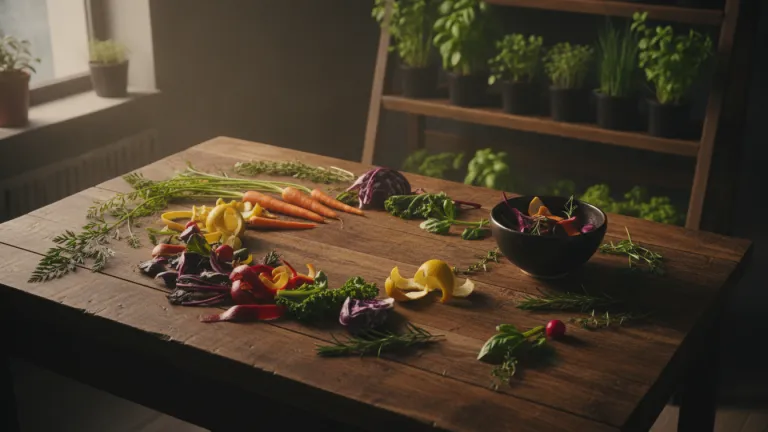
You open the fridge and find a half-dried onion, a handful of wilted cilantro leaves, and leftover rice from two days ago. The most common reaction? Throw it all in the trash. But this everyday decision, repeated millions of times daily in households, has a far greater environmental and economic cost than it appears.
Brazil wastes an enormous amount of food throughout the entire production chain — from farm to table. According to the Food and Agriculture Organization of the United Nations (FAO), about one-third of all food produced worldwide is lost or wasted each year, equivalent to approximately 1.3 billion tons. In the domestic context, a significant portion of this waste happens at home, during preparation and from forgotten leftovers. And the impact goes beyond your wallet: food that ends up in landfills decomposes and releases methane, a gas with global warming potential far greater than CO₂.
The good news is that there’s an immense field of possibilities between “the food is perfect” and “I’ll throw it away.” Reusing food scraps is a practical, economical, and surprisingly creative skill — and this article will show you how to incorporate this habit into your routine, step by step.
Why food waste is a serious environmental problem
When we talk about sustainability, we often think about solar energy, electric transportation, or plastic recycling. Food waste rarely takes center stage in the debate, but it should.
According to the Intergovernmental Panel on Climate Change (IPCC), the global food system as a whole — including production, transportation, processing, and disposal — is responsible for approximately 21 to 37% of global greenhouse gas emissions. Food waste represents a significant portion of this equation. When food is wasted, all the energy, water, land, and labor invested in its production are also wasted.
In Brazil, the Brazilian Institute of Geography and Statistics (IBGE) and organizations like Embrapa point out that losses and waste occur at every stage of the chain: at harvest, during transportation, in retail, and especially in household consumption. Beyond emissions, there’s the water impact: producing food requires substantial volumes of water. Wasting food also means wasting the water used to produce it.
The economic dimension also weighs heavily. A Brazilian family of four can save hundreds of reais per month simply by reducing household waste — money that literally goes in the trash every week.
Understand what can actually be reused
Before diving into techniques, it’s worth busting a very common myth: most “scraps” we throw away are still perfectly edible or useful. The problem isn’t the food — it’s the lack of knowledge about how to handle it.
Here’s what can typically be reused:
- Vegetable peels and skins (carrot, zucchini, potato, beet): can become baked chips, stocks, or be composted
- Stems from kale, broccoli, and parsley: rich in fiber and nutrients, ideal for sautés and broths
- Stale bread: base for French toast, breadcrumbs, croutons, or toast
- Cooked rice and beans: can be transformed into fritters, soups, or new dishes
- Outer leaves of lettuce and cabbage: slightly more fibrous, but completely edible in sautés
- Citrus fruit peels (orange, lemon): used to flavor oil, make jam, or zest for recipes
- Vegetable cooking water: excellent base for soups and sauces
- Used frying oil (in small amounts): can be disposed of properly or delivered to collection points for recycling
How to plan your week to generate less waste
Much of household waste begins before you even go to the supermarket. Impulse buying, without planning, is one of the main culprits.
Meal planning as an anti-waste tool
- Take inventory of your fridge and pantry before going shopping. Note what you already have and what’s close to expiring.
- Plan the week’s menu based on what you already have at home. Schedule the most perishable items for the first days.
- Make an objective shopping list and, as much as possible, buy only what’s on the list.
- Prefer smaller, more frequent purchases if you have easy access to markets — this reduces the accumulation of forgotten items.
- Store properly: keep leafy greens in containers with paper towels, store fresh herbs like bouquets in the fridge, and use airtight containers for leftovers.
A simple and effective tip: place items that need to be consumed first at the front of the fridge. What’s in the back tends to be forgotten.
Practical techniques for reusing leftovers daily
Homemade stocks: the noble destination for scraps
One of the most versatile and nutritious uses for scraps is homemade vegetable stock. Store peels, stems, leaves, and trimmings in a bag or container in the freezer. When it’s full, boil everything in water for about 40 minutes, strain, and freeze the stock in portions. It serves as a base for soups, risottos, sauces, and much more.
Step-by-step vegetable stock from scraps:
- Set aside clean peels from carrots, onions, garlic, parsley stems, celery leaves, green bean ends, and similar items
- Place in a pot with enough water to cover everything
- Add salt, black pepper, and if desired, a drizzle of olive oil
- Bring to medium heat for 40 to 50 minutes
- Strain, discard the solids (or compost them), and store the stock
- Freeze in ice cube trays or 250ml containers for future use
Stale bread: simple transformations
- Homemade breadcrumbs: simply blend the dry bread in a blender or food processor. Lasts weeks in a sealed container.
- Croutons: cut into cubes, season with olive oil, garlic, and herbs, and bake until golden.
- Seasoned toast: great for accompanying soups or as a snack.
- French toast or bread pudding: classic recipes that transform stale bread into dessert.
Rice and beans: the second life of Brazilian basics
Cooked rice can become cheese rice balls (just mix, bread, and fry or bake), baked rice with vegetables and tomato sauce, or a base for simple homemade sushi. Cooked beans, in turn, can be blended to make bean cream soup or transformed into vegan burgers when mixed with oat flour and seasonings.
Composting: when culinary reuse isn’t possible
Not everything can return to the plate. Very hard peels, already spoiled food scraps, and coffee grounds have a better destination than regular trash: composting.
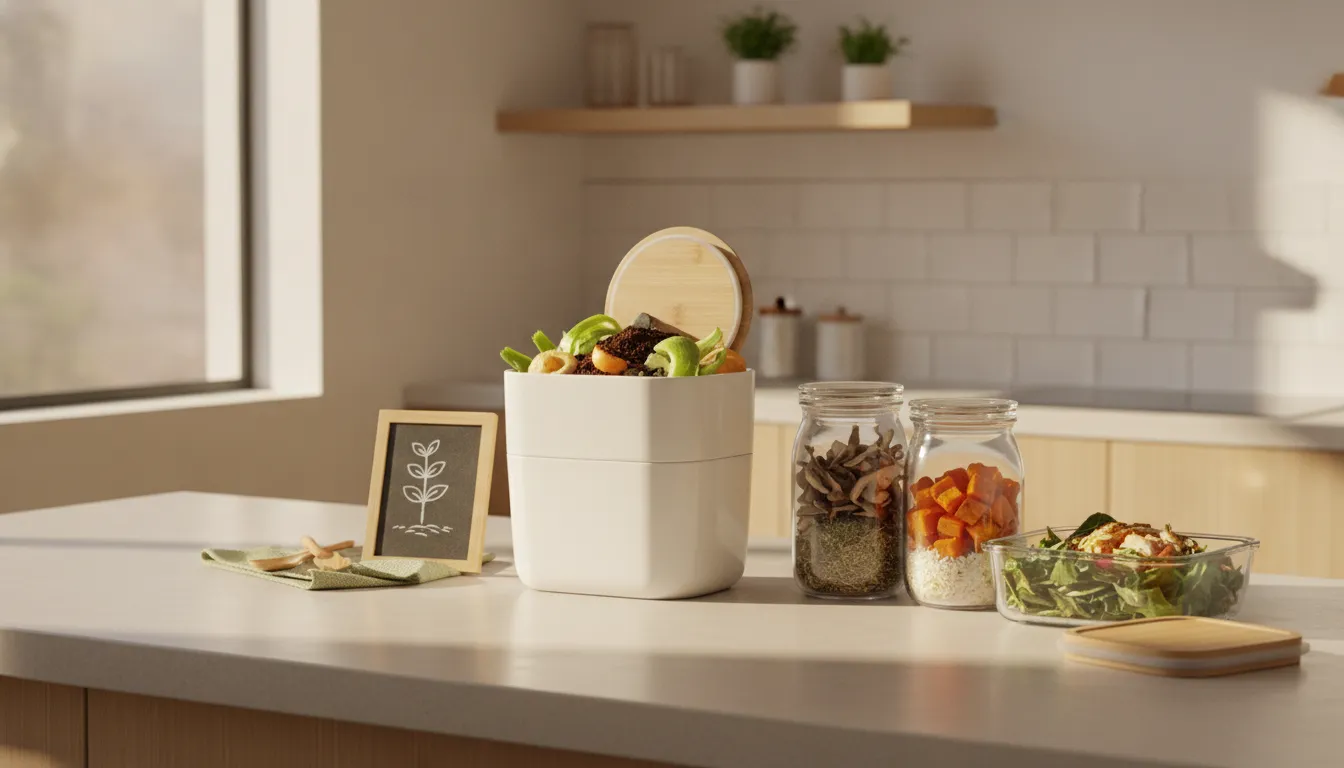
Composting transforms organic matter into nutrient-rich fertilizer for plants. You don’t need outdoor space for this — there are compact home composters for apartments, including worm bin models that work on small balconies.
What can be composted:
- Fruit and vegetable peels and trimmings
- Coffee grounds and paper filters
- Tea bags
- Eggshells
- Cooked food scraps (in moderation, avoiding meat and dairy in simple composters)
The compost produced can feed gardens, pots, and flower beds — closing a truly sustainable cycle within your home.
Smart storage: prevent food from reaching the point of spoiling
Much of household waste happens because foods weren’t stored correctly. Small adjustments make a big difference:
| Food | Storage tip |
|---|---|
| Fresh herbs (parsley, cilantro) | In a jar with water in the fridge, like flowers |
| Leafy greens | In a container with damp paper towel |
| Ripe fruits | Separated from other fruits to avoid accelerating ripening |
| Ready leftovers | In airtight containers, labeled with date |
| Bread | In a cloth towel or fabric bag, outside the fridge |
| Cheeses | Wrapped in parchment paper, not plastic |
To reduce the use of plastic wrap in storage, it’s worth exploring sustainable alternatives — the article Substitua o filme plástico na cozinha sem abrir mão da praticidade offers practical and accessible options for this.
Whole food utilization: a tradition that needs to return
The concept of whole food utilization — using all edible parts of a food — isn’t new. Previous generations did this out of necessity; today, we do it out of awareness.
Embrapa has developed over the years various research and materials on whole food utilization, including recipes using parts normally discarded. The central idea is simple: what would be trash can be an ingredient.
Some practical examples worth incorporating:
- Carrot tops: slightly bitter, but edible in small quantities — they pair well in pesto or sautés
- Watermelon rind: can be transformed into candy or preserves
- Pumpkin seeds: roasted with olive oil and salt, they become a nutritious snack
- Banana peel: used in recipes as “pulled banana” in vegan dishes, or fried as an appetizer
A plant-based diet, which reduces waste and environmental impacts, can also be a complementary path. If you’re thinking about changing your eating habits more broadly, the article Reduza o consumo de carne aos poucos e com saúde offers an accessible guide for this.
Start today: small actions, big collective impact
Reusing food scraps doesn’t require you to become a chef, nor does it require transforming your routine all at once. The secret lies in the consistency of small choices.
Start this week with three simple actions:
- Before throwing away any food, ask yourself: “Can this become something else?” A quick search for “recipe with [ingredient]” almost always reveals a creative solution.
- Start a scrap bag in the freezer for future vegetable stock. Just save what you would discard and use it when you’ve accumulated enough.
- Identify one food you regularly throw away and research ways to use it. Garlic skins, broccoli stems, beet leaves — there are recipes for almost everything.
Every meal is an opportunity to make a more conscious decision. And by doing this at home, you not only reduce your family’s environmental impact — you also connect to a more careful and rewarding way of relating to food. The planet thanks you, and your wallet does too.
