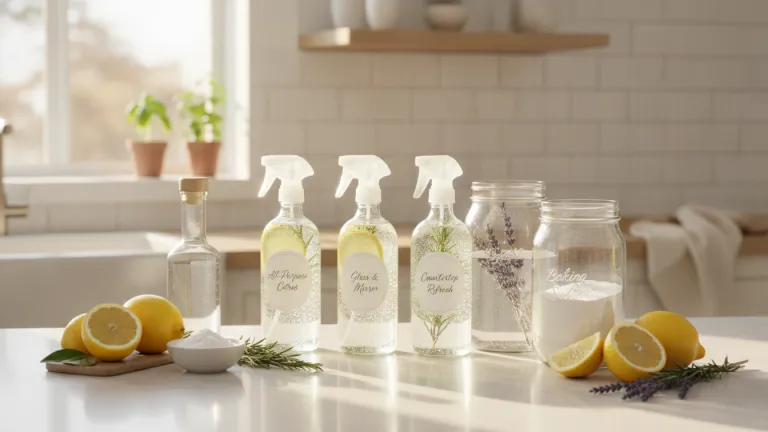
Every time you open your cleaning cabinet, a mixture of synthetic surfactants, artificial fragrances, and persistent chemical compounds is ready to be poured down sinks, drains, and inevitably into the waterways around you. The household cleaning industry is responsible for a significant portion of the pollutant load reaching wastewater treatment plants — many of which were not designed to completely remove compounds like phthalates, parabens, and non-ionic surfactants. The result is chronic, silent, and cumulative contamination of aquatic ecosystems.
The good news is that the alternative doesn’t require a laboratory, a chemistry degree, or a high budget. With simple, inexpensive, and widely available ingredients — white vinegar, baking soda, coconut soap, lemon, and alcohol — you can prepare efficient, biodegradable cleaning products at home that are much less harmful to the environment. Beyond the environmental benefits, the financial savings are real and noticeable within the first few weeks.
This article provides tested recipes, explanations of how each ingredient works, and practical tips for you to create your own eco-friendly cleaning line today. No miracle formulas, no exotic ingredients impossible to find — just simple science serving sustainable daily living.
Why conventional cleaning products concern sustainability experts so much
Most industrialized cleaning products contain synthetic surfactants derived from petroleum, preservatives, and chelating agents like EDTA (ethylenediaminetetraacetic acid), which are poorly biodegradable and accumulate in aquatic environments. Scientific studies published over the past decades have documented the presence of these compounds in rivers, sediments, and even marine organisms, interfering with the endocrine systems of fish and other animals.
There’s also the problem of plastic packaging. The household hygiene and cleaning sector is one of the largest generators of single-use plastic packaging in Brazil. Much of this material is not effectively recycled — it ends up in landfills or, worse, in the natural environment.
By preparing your own products, you reduce packaging waste, control exactly what goes into the formula, and avoid unnecessary substances. It’s one of the most direct ways to understand and reduce your ecological footprint in everyday life.
Key ingredients: what each one does and why they’re safe
Before getting to the recipes, it’s worth understanding each ingredient’s function. This allows you to adapt the formulas to your needs — without fear.
Baking soda: the gentle abrasive and natural deodorizer
Baking soda (NaHCO₃) is slightly alkaline (pH around 8.3) and works as a gentle abrasive, capable of removing dirt and stains without scratching surfaces. It also neutralizes acidic odors chemically, not just masking them. It’s biodegradable, non-toxic, and widely available in supermarkets at low cost.
White vinegar: degreaser and antimicrobial
White alcohol vinegar (acetic acid diluted to 4–5%) is acidic enough to dissolve lime deposits and grease, and has proven antimicrobial action against many common bacteria. Important note: never mix vinegar with baking soda expecting to enhance the effects — the acid-base reaction neutralizes both, resulting in water with sodium acetate, with no relevant cleaning action. Use them in separate steps.
Coconut soap or Castile soap
Derived from vegetable oils (coconut or olive), coconut soap is biodegradable, efficient as a natural surfactant, and much less harmful to aquatic environments than petrochemical surfactants. It’s available in supermarkets and natural product stores in liquid or bar form.
70% ethyl alcohol
70% alcohol is one of the most effective surface disinfectants available, with proven action against bacteria, fungi, and viruses. It evaporates quickly, leaves no residue, and is biodegradable. Prefer plant-based versions (sugarcane), which are common in Brazil.
Essential oils (optional)
Besides providing a pleasant aroma, some essential oils have documented antimicrobial properties — such as tea tree, lavender, eucalyptus, and orange. Use sparingly (10 to 20 drops per bottle) and from reliable sources. They’re optional but greatly improve the user experience.
Homemade eco-friendly cleaning product recipes: complete step-by-step guide
All-purpose surface cleaner
This is the go-to product — works on countertops, sinks, tables, refrigerators, and most household surfaces.
Ingredients:
- 500 ml of filtered or boiled and cooled water
- 100 ml of white vinegar
- 1 tablespoon of liquid coconut soap
- 15 drops of lavender or orange essential oil (optional)
Directions:
- Mix the water and vinegar in a clean spray bottle (preferably glass or recycled HDPE).
- Add the liquid coconut soap carefully to avoid excessive foam.
- Add the essential oil drops if desired.
- Close the bottle and shake gently.
- Estimated shelf life: up to 30 days. Shake before each use.
Note: do not use on marble, polished granite, or natural stone surfaces — acetic acid can damage them over time.
Scrub for oven, stovetop, and stubborn grease
Ingredients:
- 4 tablespoons of baking soda
- Liquid coconut soap (enough to form a paste — about 2 tablespoons)
- 10 drops of orange essential oil (optional, enhances degreasing action)
Directions:
- Mix the baking soda with the coconut soap in a small container until you get a homogeneous paste.
- Add the essential oil if using.
- Apply the paste directly on grease or stubborn dirt.
- Let it sit for 10 to 20 minutes.
- Scrub with a sponge or brush and rinse well.
Disinfectant for bathroom and critical surfaces
Ingredients:
- 400 ml of 70% ethyl alcohol
- 100 ml of filtered water
- 10 drops of tea tree essential oil
- 10 drops of eucalyptus essential oil
Directions:
- Mix the alcohol and water in a spray bottle.
- Add the essential oils.
- Shake well and apply to surfaces, letting the product act for at least 30 seconds before drying.
- Ideal for toilets, faucets, door handles, and high-touch surfaces.
Natural streak-free glass cleaner
Ingredients:
- 300 ml of distilled or filtered water
- 100 ml of white vinegar
- 1 teaspoon of cornstarch
- 5 drops of lemon essential oil (optional)
Directions:
- Dissolve the cornstarch in a little water before mixing everything.
- Combine all ingredients in the spray bottle.
- Shake well before each use (the starch tends to settle).
- Apply to glass and clean with a microfiber cloth or newspaper without colored ink, using circular motions.
Eco-friendly fabric softener
Ingredients:
- 500 ml of white vinegar
- 20 drops of lavender essential oil
Directions:
- Mix the vinegar with the essential oil in a bottle with a lid.
- Use 100 to 150 ml per wash, in the washing machine’s fabric softener compartment.
- The vinegar removes soap residue from fibers, leaving clothes softer without residual odor after drying.
Practical tips for building your eco-friendly cleaning routine
- Reuse empty containers from conventional products — wash them well and use them for homemade products.
- Prefer microfiber cloths over disposable paper: they’re more efficient, washable, and durable.
- Make small batches initially to test effectiveness on your specific surfaces.
- Label each bottle with the product name, ingredients, and preparation date.
- Store away from small children — natural products are not synonymous with harmless in large quantities.
- Buy ingredients in bulk whenever possible — reduces packaging and significantly lowers cost per use.
- Test on inconspicuous surfaces before applying to visible areas, especially on new or delicate materials.
Comparison: homemade vs. conventional products
| Criteria | Conventional product | Homemade eco-friendly product |
|---|---|---|
| Cost per use | Medium to high | Low |
| Biodegradability | Variable (often low) | High |
| Plastic packaging | Yes, frequently | Reusable |
| Known ingredients | Rarely fully listed | 100% transparent |
| General cleaning effectiveness | High | Good to very good |
| Safety for pets | Variable | Generally higher |
Real limitations: when homemade products aren’t enough
Honesty is part of responsible environmental journalism. Homemade products have limitations that need to be acknowledged:
- Intense mold on walls may require products with more potent fungicidal action, especially in environments with structural humidity.
- Hospital-grade disinfection or post-severe contamination requires specific protocols that go beyond household use.
- Pests like cockroaches and ants are not controlled by cleaning products, homemade or otherwise — they require a specific approach.
For everyday household use, the recipes presented here are sufficient and effective. The goal is not to replace everything radically and immediately, but to progressively reduce the use of more aggressive products.
Conclusion: small choices, real and cumulative impact

Every bottle of conventional cleaning product you replace with a homemade version represents less plastic discarded, fewer persistent chemical compounds in rivers, and less money leaving your pocket. It seems small in isolation — but multiplied by millions of households, the collective impact is significant.
Start with just one recipe this week. The all-purpose cleaner is the most versatile and easy to incorporate into your routine. Try it, adapt it to your taste, and if it works well for you, share it with those around you. The transformation of collective habits begins exactly like this — in kitchen conversations, in choices made at the supermarket, in small actions repeated consistently.
If you want to go further and understand how each everyday choice connects to the bigger picture of sustainability, it’s worth reading about how to understand your ecological footprint and change your habits. The path doesn’t need to be perfect — it just needs to start.
