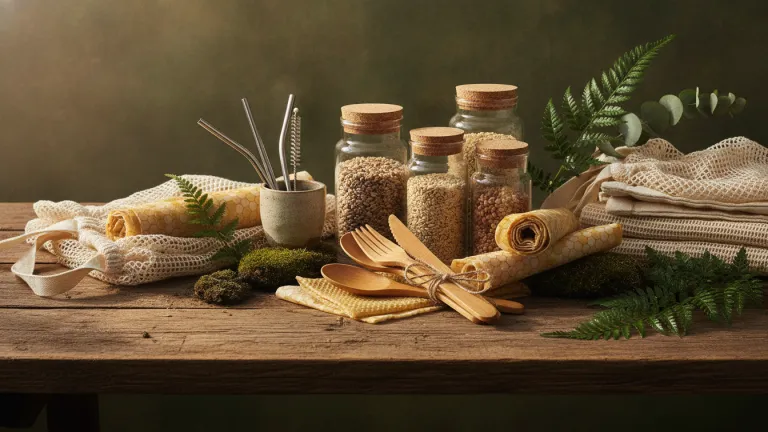
Every time we open a plastic package, squeeze a disposable cup, or tear open an individual sachet, we contribute to a cycle that already overburdens oceans, soils, and living organisms around the world. Disposable plastic has become a symbol of convenience, but also of a consumption model that the planet simply cannot absorb. The good news is that 2026 already offers us concrete, accessible alternatives—and in many cases—superior to plastic in terms of performance, durability, and cost over time.
The pressure on single-use plastic has never been more intense. After years of debate, the UN is advancing negotiations on a binding global treaty on plastic pollution, with sessions of the Intergovernmental Negotiating Committee (INC) continuing. In Brazil, Law No. 12,305/2010—the National Solid Waste Policy—already establishes guidelines for waste reduction, and cities like São Paulo and Rio de Janeiro have implemented restrictions on specific disposable plastic items. The regulatory landscape is changing, and ecological substitutes have arrived with it.
This article brings together the main alternatives to disposable plastic available today, with practical information for you to adopt each one in your routine. You don’t need to change everything at once: each swap counts, and some even save money in the medium term.
Why Disposable Plastic Is Still an Urgent Problem in 2026
Plastic is produced from petroleum and natural gas, non-renewable fossil resources. Most single-use plastics—such as straws, cutlery, cups, food packaging, and bags—are used for minutes but persist in the environment for hundreds of years.
According to data from the United Nations Environment Program (UNEP), less than 10% of plastic produced globally throughout history has been effectively recycled. The rest went to landfills, incinerators, or leaked into the environment. Oceans concentrate a significant portion of this liability: scientific studies have identified the presence of microplastics even in the deepest trenches of the Pacific and in human blood samples.
In Brazil, according to the Solid Waste Panorama released by the Brazilian Association of Public Cleaning and Special Waste Companies (ABRELPE), the country generates tens of millions of tons of urban solid waste per year, with a significant portion composed of plastics. Most still goes to landfills or inadequate disposal. Given this situation, reducing disposable plastic at the source—before disposal—is the most effective strategy.
Sustainable Packaging: The Main Alternatives to Plastic
Reusable Glass as a Substitute for Plastic Packaging
Glass is one of the safest materials for food contact. It does not release chemical substances, is waterproof, maintains flavor and aroma, and can be reused indefinitely. Glass containers easily replace plastic packaging for storing food in the refrigerator, freezer, and pantry.
Practical advantages:
- Lasts decades with proper use
- Does not absorb odors or stains
- Can go in the microwave and dishwasher (check lids)
- 100% recyclable without loss of quality
The initial cost is higher than disposable plastic, but divided by the time of use, it becomes significantly cheaper.
Stainless Steel and Aluminum to Replace Plastic Cups and Bottles
Mugs, water bottles, and stainless steel containers are robust alternatives and already very popular in Brazil. A quality stainless steel bottle can last more than ten years. In environmental terms, the balance is positive compared to the sum of dozens of disposable PET bottles over the same period.
Examples of immediate use:
- Reusable water bottle at work, the gym, and school
- Thermal cup for coffee instead of a small plastic coffee cup
- Stainless steel food container instead of disposable styrofoam or plastic packaging
Bamboo: An Ecological Alternative for Cutlery, Plates, and Packaging
Bamboo is one of the fastest-growing materials on the planet—some species grow more than one meter per day—and does not require intensive pesticides to develop. Cutlery, plates, straws, packaging boxes, and even bamboo toothbrushes are already found in Brazilian stores and e-commerce platforms.
Bamboo is biodegradable when not treated with synthetic products, which represents a real advantage over plastic at the end of its life. Attention: pressed bamboo products with synthetic resins may have lower biodegradation capacity, so it’s worth checking the composition.
Paper and Cardboard: When They’re Really Better Than Plastic
Paper and cardboard have a “green” image, but comparison with plastic depends on context. For single-use packaging that goes straight to trash, paper is generally more suitable than plastic because it biodegrades more easily and is widely recyclable.
However, paper is not always superior: paper packaging with plastic coating (like many disposable coffee cups) is not recyclable in conventional streams. The tip is to prefer paper without synthetic coating and, whenever possible, from certified origin (such as FSC—Forest Stewardship Council).
Bioplastics: Ecological Alternatives or Partial Solution?
Bioplastics—plastics made from renewable sources like corn, sugarcane, or cassava—have gained shelf space in Brazilian stores. Brazil holds a prominent global position in this sector, with production of ethanol and biobased polymers such as PLA (polylactic acid) and PHA.
However, bioplastics require attention:
- Not all bioplastics are biodegradable. BioPE (plant-based polyethylene) has renewable origins but behaves similarly to conventional plastic in disposal.
- Compostable bioplastics (such as PLA and PHA) degrade, but often only under industrial composting conditions, not in home environments or landfills.
- They are a valid alternative when associated with adequate composting systems or selective collection.
How to Make the Transition: Step-by-Step to Reduce Disposable Plastic at Home
- Do an inventory. During one week, separate and observe all the disposable plastic your household generates. Food packaging, bags, cups, cutlery, straws, pads, diapers, cleaning product containers.
- Prioritize items with the highest volume. Plastic bags, PET bottles, and food packaging usually lead the ranking. Start with them.
- Replace one item at a time. Don’t try to eliminate everything at once. Replace the PET bottle with a reusable one, then move on to returnable bags, then to glass containers.
- Buy in bulk when possible. Open markets, natural food stores, and some supermarkets already offer bulk sections where you bring your own containers and avoid packaging.
- Take your utensils when you leave home. A foldable bag in your pocket, a thermal cup, and a pair of stainless steel cutlery in your backpack eliminate much of the disposable plastic outside the home.
- Evaluate hygiene and cleaning products. Shampoo and conditioner bars, soap bars, refills of concentrated detergent, and cellulose or natural fiber sponges are swaps that significantly reduce plastic in the bathroom and kitchen.
- Involve those living with you. Habit changes are easier and more lasting when the whole family participates.
Practical Comparison: Disposable Plastic vs. Ecological Alternatives
| Disposable Item | Ecological Alternative | Estimated Durability | Long-Term Cost |
|---|---|---|---|
| PET Bottle | Stainless Steel or Glass Bottle | 5 to 15 years | Lower |
| Plastic Bag | Cotton or Jute Reusable Bag | 3 to 10 years | Lower |
| Plastic Straw | Stainless Steel, Bamboo, or Glass Straw | Years / Biodegradable | Lower or Similar |
| Disposable Cup | Reusable Cup or Mug | Several years | Much Lower |
| Food Packaging | Glass Container with Lid | Decades | Much Lower |
| Disposable Pad | Menstrual Cup or Cloth Pad | 5 to 10 years | Much Lower |
The Role of Companies and Government in Plastic Alternatives
Individual change matters, but greater impact comes from systemic transformation. Companies that adopt returnable packaging, refills, and design for disassembly and recycling play a decisive role. In Brazil, Extended Producer Responsibility (EPR), provided for in the National Solid Waste Policy, holds manufacturers accountable for proper disposal of their products and packaging—and its full implementation is still an ongoing challenge.
Consumers also exert pressure by choosing brands with real environmental commitment and by demanding more rigorous public policies from their representatives. Supporting selective collection initiatives in your municipality, participating in cleanup efforts, and defending legislation that restricts unnecessary plastic are ways to amplify individual impact.
Tips for Choosing a Good Ecological Alternative to Plastic
Not every “sustainable” product is what it seems. Before buying, consider:
- Real durability: a product that lasts years offsets the impact of production.
- Origin and certifications: FSC for paper, GOTS for textiles, compostability certification for bioplastics.
- End of life: can the product be recycled, composted, or reused in your municipality?
- Greenwashing: be suspicious of packaging with vague labels like “eco,” “natural,” or “green” without technical backing.
- Real need: the best alternative to disposable plastic is often simply not buying the disposable item.
If you also want to reduce your environmental footprint beyond packaging, it’s worth knowing how other daily choices impact the planet—such as reducing meat consumption without suffering, another change with significant environmental effect and completely within your reach.
Conclusion: Each Swap Is a Real Step
Replacing disposable plastic doesn’t require perfection or sacrifice. It requires attention, a little planning, and willingness to create new habits. Ecological alternatives already exist, are already available in Brazil, are already accessible to different budgets—and many of them are simply better than plastic in terms of quality, safety, and economy.
Start with one swap today. It could be the bottle, the bag, or the coffee cup. Each item removed from the disposable plastic cycle is a concrete vote for the kind of world we want to build. And when millions of people cast this vote at the same time, the market responds, companies adapt, and public policies follow.
Disposable plastic already has better alternatives. Now it’s just a matter of choosing where to start.
