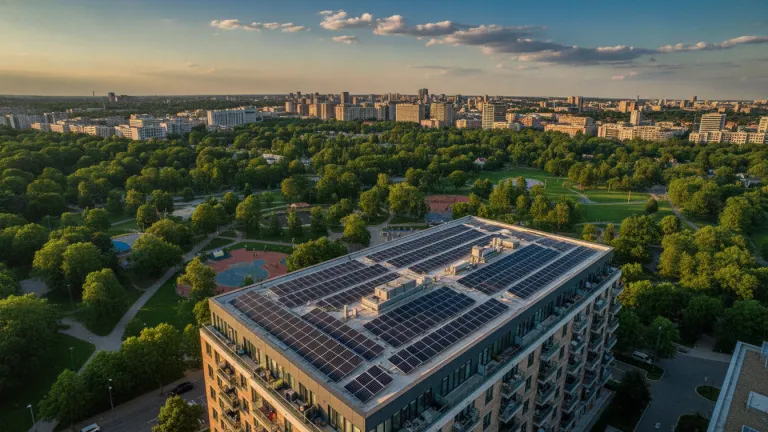
Living in an apartment and wanting to use solar energy may seem like a contradiction at first glance. After all, those who live in a condominium don’t have direct access to the roof, don’t control common areas, and depend on collective decisions for almost everything. But reality has changed quite a bit in recent years — and today this combination is not only possible, it’s becoming increasingly common throughout Brazil.
The expansion of the solar energy market in the country has been remarkable over the past decade. According to ANEEL (National Electric Energy Agency) data, Brazil has surpassed the mark of tens of gigawatts installed in distributed generation, and residential photovoltaic systems already represent a significant portion of this growth. What many people still don’t know is that Brazilian legislation has evolved significantly to include apartment dwellers in this ecosystem — especially with the advances brought by Law No. 14,300/2022, the Legal Framework for Microgeneration and Minigeneration Distributed.
In this article, you’ll understand how solar energy works for those living in apartments, what options are available, what legislation allows, how your condominium can adopt the system, and what practical steps you can take today to start taking advantage of the benefits of this clean and increasingly accessible technology.
How photovoltaic solar energy works in apartments
Before talking about the modalities available to apartment dwellers, it’s worth understanding the basics. Photovoltaic systems convert sunlight into electricity through solar panels made of semiconductor cells, usually silicon. This energy can be consumed at the moment of generation or injected into the electrical grid, generating credits that are discounted on electricity bills — the so-called energy compensation system (net metering).
The fundamental difference between a house and an apartment is access to physical space for panel installation. In a single-family residence, the resident installs the system on their own roof and is the direct owner and user of the generation. In an apartment, this logic changes — but there are concrete alternatives that allow the condominium resident to participate in the solar market without needing their own roof.
The three main solar energy modalities for apartments
Shared generation in the condominium
In this modality, the condominium installs solar panels in common areas — building roof, coverage, parking garage, or marquees — and the generated energy can be used in two ways:
- To supply common areas (corridor lighting, elevators, concierge, water pumps), reducing collective expenses
- Or distributed among condominium units, according to quotas defined in assembly
This second model, provided for in Law No. 14,300/2022, allows individual residents to also receive energy credits on their private bills, depending on the configuration approved by the condominium and the local utility company.
Remote self-consumption
Here, the resident or a group of people installs a solar system in a property different from where the energy will be consumed — such as a rural property, warehouse, or another property — and the credits generated are transferred to the apartment’s consumption unit. This possibility is also regulated by current legislation and can be an interesting alternative for those with access to another property.
Shared solar plants and energy cooperatives
One of the most democratic innovations brought by the Legal Framework is the possibility of participating in collective solar plants. Consumers — including apartment dwellers — can associate with solar energy cooperatives or consortiums, purchasing generation shares in a centralized plant. Credits are distributed proportionally and deducted directly from participants’ electricity bills. It’s like investing in a solar panel without needing to physically have it on your roof.
What the legislation says: rights and possibilities for the condominium resident
The Law No. 14,300, of January 6, 2022, known as the Legal Framework for Microgeneration and Minigeneration Distributed, was a turning point for solar energy in Brazil. It brought legal certainty to the sector, established clear rules for energy compensation, and paved the way for modalities that previously existed only as pilot projects.
Among the most relevant points for apartment dwellers:
- Shared generation is legally recognized, allowing condominiums to generate and distribute energy among units
- Remote self-consumption was formalized, ensuring that credits can be transferred between units of the same owner or consortiums
- Energy cooperatives and consortiums have clear rules for operation and benefit distribution
- The law establishes a transition period for utility companies to adapt and continue to compensate for energy injected into the grid
It’s important to remember that, in addition to federal law, each energy distributor has its own operational norms. Therefore, before making any decision, it’s essential to consult the company responsible for supply in your region (such as CEMIG, CPFL, Enel, Light, Energisa, among others) to check the specific procedures for connection and compensation.
How to approve solar energy in your condominium: step by step
If you want to bring the solar energy proposal to your condominium, the path goes through assembly and a well-structured process. See how to proceed:
- Gather initial information: research whether your building’s roof or common area has adequate structure and solar orientation (ideally facing geographic north in Brazil)
- Request quotes: get quotes from at least three certified installer companies experienced with condominium projects
- Calculate savings potential: ask the installer for a financial return estimate, considering the consumption of common areas and/or units
- Present the project in an informal meeting: before the official assembly, talk with the manager and influential residents to build support
- Bring the topic to assembly: approval of improvements in condominiums usually requires qualified quorum — check your condominium’s bylaws
- Hire a certified company: after approval, installation must be done by professionals with certification and the project must be approved by the local utility company
- Follow up on the connection process: after installation, there is an inspection and approval stage by the utility company, which can take several weeks
- Monitor results: modern systems offer real-time monitoring via app, allowing you to track generation and consumption
What are the costs and expected financial return
Investment in a solar system for condominiums varies greatly depending on the building size, common area consumption, and installed capacity. In general terms, systems aimed at common areas of medium-sized condominiums can cost tens of thousands of reais — an amount that, in many cases, pays for itself in a timeframe ranging from four to eight years, depending on consumption profile and local tariffs.
To better understand how to calculate the return of a solar system and the payback period in different scenarios, check out this detailed content: Does solar energy pay off in Brazil in how much time?
Some points that directly influence financial viability:
- Local energy tariff: regions with higher tariffs have faster returns
- City solar incidence: Brazil has one of the best solar irradiation indexes in the world, which favors practically the entire national territory
- Available financing: public and private banks offer specific credit lines for solar energy, some with reduced interest rates
- Property resale value: market research indicates that properties with installed solar systems tend to be more valued
Practical checklist: what an apartment dweller can do now
Even without having made any decisions yet, there are concrete actions you can put into practice today:
- Evaluate your current electricity bill and understand how much you spend per month — this number is the basis for any viability calculation
- Check if your condominium already has any solar project underway by talking to the manager
- Research solar energy cooperatives in your region — some already operate in major Brazilian urban centers
- Consult your utility company about local rules for shared generation and remote self-consumption
- Actively participate in condominium assemblies and bring the topic up for discussion
- Get quotes even without a decision made — understanding the numbers helps you present more solid arguments
- Inform yourself about available financing on the market for photovoltaic systems in condominiums
Environmental and social advantages beyond savings
Solar energy is not just a financially smart decision — it’s also a choice with direct environmental impact. Photovoltaic generation doesn’t emit greenhouse gases during operation, contributing to the reduction of CO₂ emissions that drive climate change, as documented by the IPCC in its most recent assessment reports.
In the urban context, the collective adoption of solar energy in condominiums has a multiplier effect: it reduces pressure on the electrical grid during peak hours, contributes to the stability of the national energy system, and creates a culture of more conscious consumption among residents. It’s one of the most accessible ways ordinary people have to contribute to the energy transition without sacrificing comfort.
Additionally, for residents seeking to incorporate other sustainable practices into their daily lives, solar energy can be the starting point for a broader journey toward reducing impact — from more conscious food choices to the use of urban spaces for food production.
Conclusion: solar energy in apartments is possible — and increasingly accessible
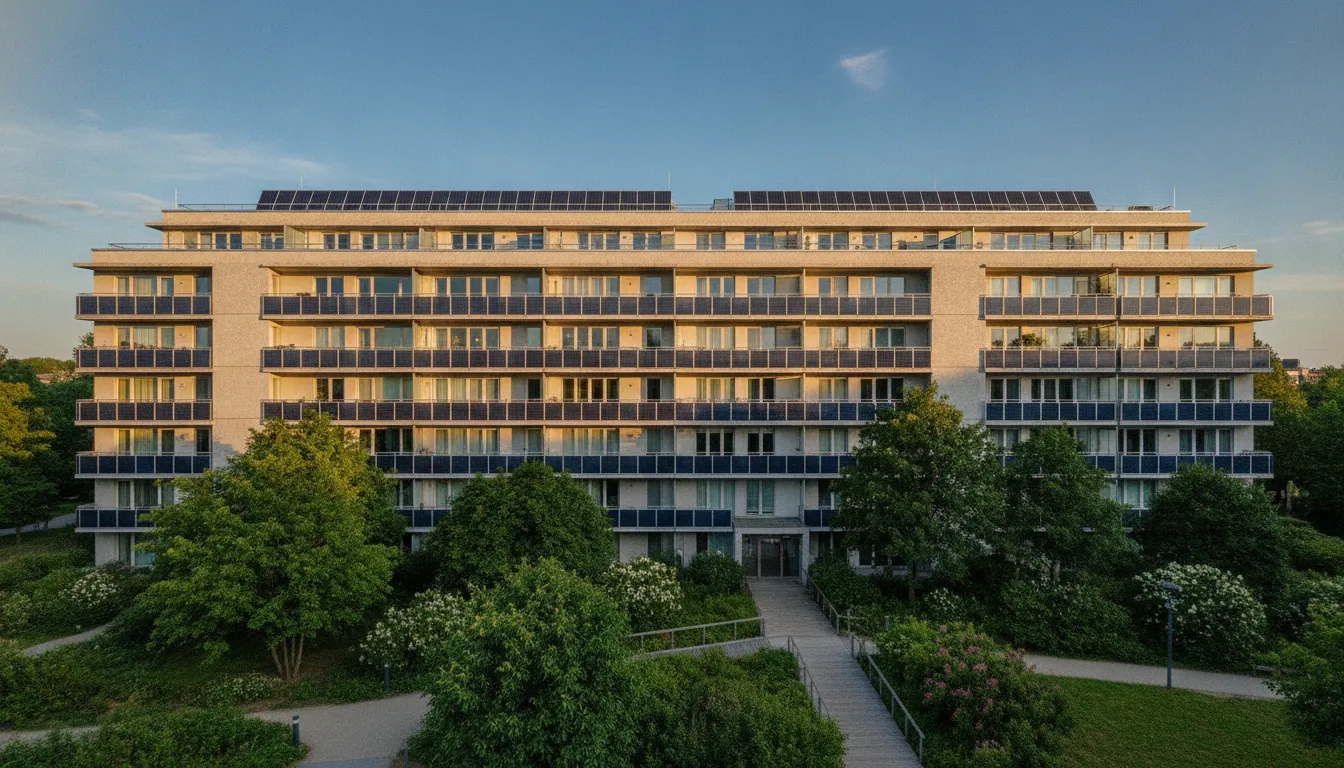
The answer to the title’s question is clear: yes, it is possible to use solar energy while living in an apartment. The path may be different from someone who owns a house with their own roof, but the options are real, legally supported, and financially viable — especially with the maturity that the Brazilian solar market has reached in 2026.
The first step is always knowledge. Understanding the available modalities, talking with the manager, researching cooperatives in your region, and participating in condominium decisions are actions that cost only time — and that can generate years of savings and positive impact.
You don’t need to own a house to be part of the solar revolution. Start with what you have, where you are, and invite your neighbors to join this transformation. The planet — and your electricity bill — will thank you.
