Why Do We Still Use So Much Disposable Plastic?
Imagine opening your refrigerator and realizing that almost everything inside is wrapped in some type of plastic: the yogurt, the cheese, the vegetables, the drinks. Now consider that much of this plastic will be used for seconds or minutes — and will take centuries to decompose in the environment. It’s an equation that clearly doesn’t add up.
Brazil is one of the largest generators of plastic waste in the world. According to data from UNEP (United Nations Environment Programme), the planet produces more than 400 million tons of plastic per year, and a large portion of this volume comes from single-use packaging. In Brazil, studies from IPEA (Institute for Applied Economic Research) indicate that selective collection still effectively reaches only a small portion of Brazilian municipalities, meaning most discarded plastic ends up in landfills, dumps, or the environment itself.
The good news — and it’s real — is that there are viable, accessible, and often cheaper alternatives in the long run to replace disposable plastic in daily life. You don’t need to change everything at once or spend a fortune. Small changes, made consciously, already make a measurable difference. Here’s what’s available today and how to apply these changes in your life.
The Real Problem with Disposable Plastic
Plastic itself isn’t the absolute villain — it has fundamental uses in medicine, construction, and other fields. The problem lies in the single-use model: creating a material that lasts centuries just to wrap something for a few minutes.
Single-use plastic includes:
- Supermarket plastic bags
- Disposable cups, plates, and cutlery
- Plastic straws
- Food packaging (plastic wrap, styrofoam trays)
- Caps and lids from PET bottles
- Cotton swabs with plastic stems
When these items aren’t disposed of properly, they fragment into microplastics — tiny particles that have already been found in oceans, soils, groundwater, and even human organisms, according to WHO reports and academic studies published in recent years. The ecological impact is profound and is still being fully mapped by science.
From an economic standpoint, the cost of cleaning and treating plastic waste falls on the government — meaning on all of society. Reducing single-use consumption, therefore, isn’t just an environmental issue: it’s also a collectively smart financial decision.
Kitchen Substitutes: Where Most Plastic Is Used
The kitchen is the main battleground against disposable plastic inside the home. It’s also where substitutions are easiest and most immediate.
Plastic wrap and zip bags: what to use instead
- Beeswax wraps: reusable cloths infused with beeswax that wrap food and mold to the warmth of your hands. They last up to a year with regular use. They’re already manufactured in Brazil by national brands, with prices ranging from $4 to $10 per unit — but they replace dozens of rolls of plastic wrap.
- Silicone lids: flexible reusable covers that fit over bowls and pans. Washable, durable, and found in household goods stores.
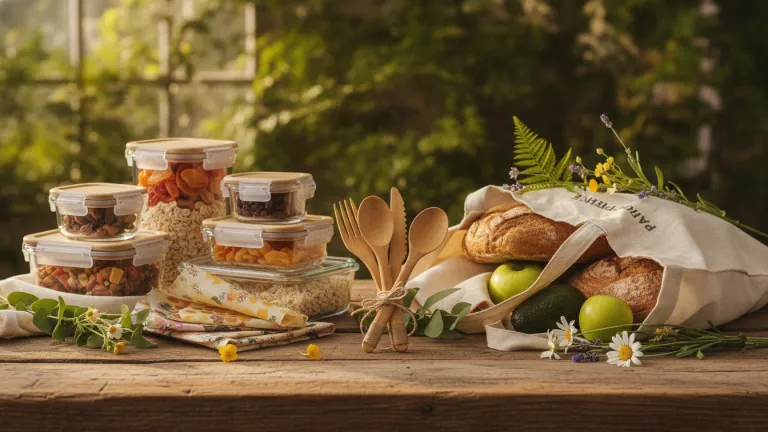
- Glass containers with lids: replace disposable containers and plastic bags at the same time. A set of glass containers can last decades.
- Manual vacuum sealing: for those who preserve food more frequently, manual pumps with reusable bags are an economical option.
Plastic garbage bags: can they be replaced?
Yes, with some caveats. For dry waste (paper, packaging), there’s no need to use a plastic bag — trash can go directly into the bin, which is washed afterward. For organic waste, a very efficient alternative is home composting, which eliminates much of the waste that would go into the bag. When a bag is necessary, there are certified compostable bag options made from corn starch.
Substitutes for Shopping and Food Transport
Reusable bags: the simplest and cheapest switch
A reusable bag made of raw cotton or TNT (woven polypropylene) costs between $1 and $4 and replaces hundreds of plastic bags throughout its useful life. If used regularly for two years, the cost per use drops to practically zero.
Practical tip: keep at least two folded bags inside your purse or in your car’s glove compartment. The biggest enemy of the reusable bag is forgetfulness.
Fabric bags for produce
Many people replace the large bag but continue using the transparent plastic bags for fruits and vegetables. The alternative is mesh fabric bags (like tulle or organza), which allow you to see the contents and weigh the products. They cost a few dollars and are sold at markets and sustainable product stores.
Substitutes for Personal Hygiene and Bathroom
The bathroom hides a surprising amount of disposable plastic.
Comparison of common alternatives
| Plastic item | Sustainable alternative | Approximate cost | Estimated durability |
|---|---|---|---|
| Shampoo in plastic bottle | Solid shampoo bar | $3 – $8 | 2 to 3 months |
| Plastic toothbrush | Bamboo handle toothbrush | $2 – $5 | same as conventional |
| Plastic cotton swab stem | Paper or bamboo stem | similar price | single use, biodegradable |
| Disposable sanitary pad | Silicone menstrual cup | $12 – $25 | up to 10 years |
| Disposable razor | Reusable metal safety razor | $8 – $16 | decades |
The menstrual cup deserves special attention: the initial investment is higher, but the savings compared to disposable pads over the years is very significant. Additionally, it completely eliminates the waste generated month after month.
Eating Out: How to Avoid Disposables in Daily Life
Eating outside the home is one of the largest generators of disposable plastic per capita — cups, lids, straws, cutlery, delivery packaging. Some practical strategies:
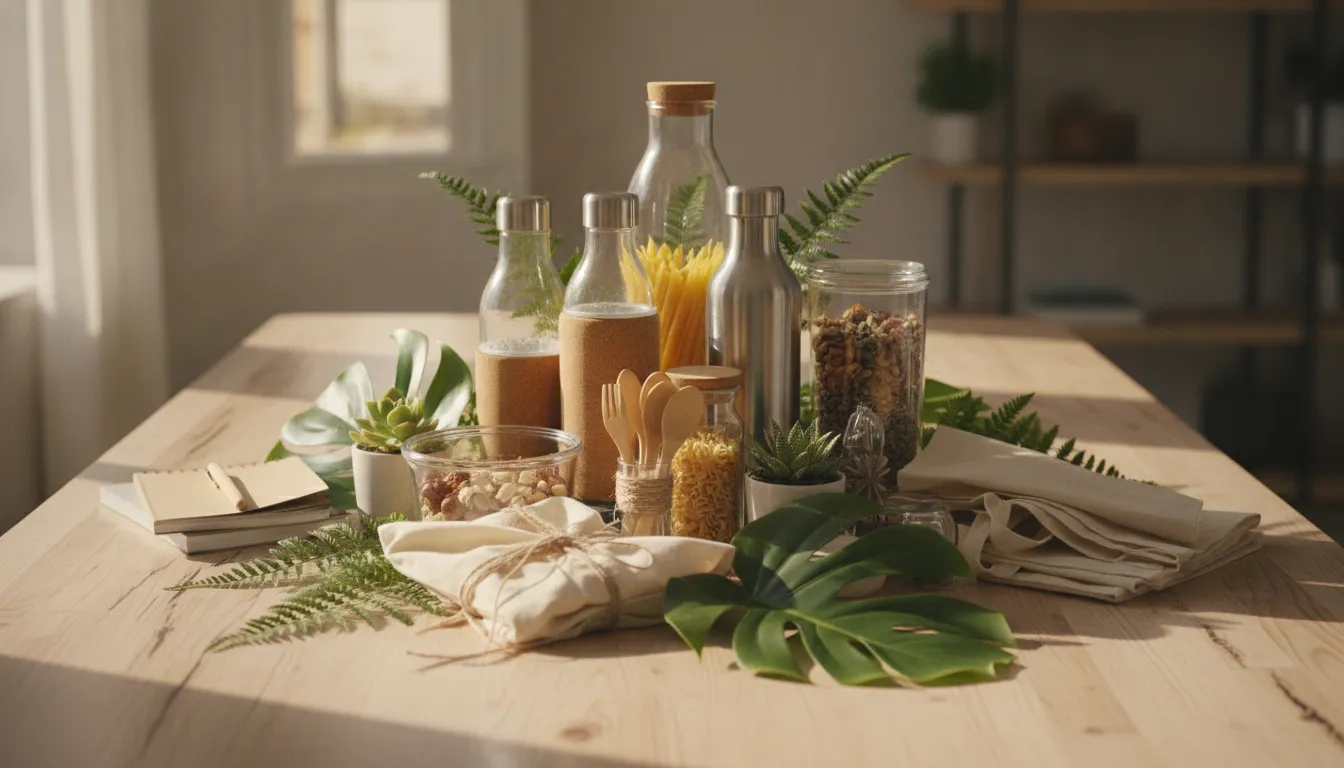
- Carry your own reusable bottle. A quality stainless steel or glass bottle costs between $6 and $16 and lasts for years. Many coffee shops and restaurants already offer discounts for those who bring their own cup.
- Use reusable straws. Bamboo, stainless steel, or silicone ones are easy to carry in a small case.
- Keep a set of bamboo or stainless steel cutlery in your bag for snacks and meals out.
- Ask for no straw and no bag when ordering — in many establishments, the default is still to include these items automatically.
- Choose restaurants with sustainable delivery packaging — paper boxes, sugarcane bagasse packaging, or corn starch containers are already available in the market and many companies have adopted them.
- Prefer bulk shopping at markets and stores that allow you to bring your own containers — it eliminates unnecessary packaging and is often cheaper per pound.
Innovations and Sustainable Materials Coming to Market
In recent years, the sustainable packaging market has grown significantly in Brazil and worldwide. Some materials deserve attention:
Bioplastics: real promise or greenwashing?
Bioplastics are made from renewable sources, such as corn starch, sugarcane, or cellulose. Some are compostable (they degrade under specific industrial or home conditions), while others are only bio-based but not biodegradable.
It’s important to differentiate:
- Certified compostable (such as by ASTM D6400 or EN 13432 standards): actually degrades under controlled conditions
- Biodegradable without certification: often a misleading label, as degradation can take decades
Embrapa has been developing research on packaging made from cassava starch and other national biopolymers, pointing to a promising future of materials with local origin and national production chains.
High-performance paper and cardboard
Paper packaging with moisture-resistant treatment is replacing styrofoam trays in markets and butcher shops. The technology already exists and costs are falling as scale increases.
Glass and stainless steel: the classics that never go out of style
For home use, glass and stainless steel remain the most durable, safe alternatives with the best long-term cost-benefit. They don’t release chemical compounds into food, are indefinitely recyclable, and have virtually unlimited lifespan with good care.
How to Make the Transition Without Stress: A Simple Plan
Changing habits doesn’t need to be an overnight revolution. The most effective approach — and the one most likely to last — is gradual and planned.
- Take an inventory of the disposable plastic you use in one week. Separate your plastic waste for a few days and observe which items appear most frequently.
- Choose the two or three most recurring items and research the alternatives available for them specifically.
- Buy one substitute at a time, as the original item runs out. Don’t throw away what still works — use it until the end and replace it afterward.
- Involve other people in the house in the change — collective adoption greatly increases the chances of success.
- Record the savings generated over time. Noticing the real financial benefit is a powerful motivator.
- Explore events and communities focused on conscious consumption in your city — you may discover local suppliers of sustainable products and exchange experiences. Initiatives like cleanup events are also great ways to get involved and meet people with the same values.
Conclusion: Every Switch Counts, and They Add Up
Replacing disposable plastic doesn’t require sacrifice or large immediate investments. It mainly requires attention and decision — noticing the problem and choosing to act differently, one item at a time.
The alternatives exist, are available in the market, and in many cases cost less over time than the disposables they replace. Economic and environmental logic point in the same direction: less disposable plastic is better for your wallet and for the planet.
In 2026, there’s no longer any excuse of lack of options. The market has responded, the products are on the shelves — physical and digital — and change is within reach of anyone who decides to start. Begin with the kitchen, or the bathroom, or your next trip to the grocery store. The important thing is to start.
