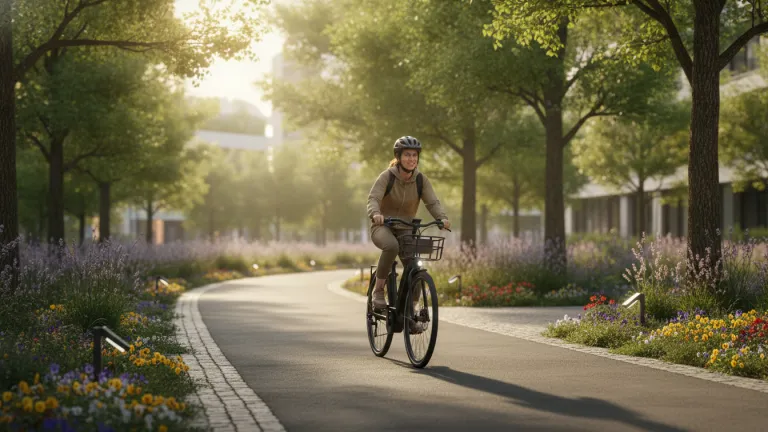
Why the bicycle became a protagonist in cities again
There’s something almost poetic about choosing a bicycle as your means of transportation. A motorless vehicle, no fossil fuel, capable of crossing cities, transforming bodies and reducing emissions — all at once. In 2026, while Brazilian cities still debate metro expansion and bus corridors, thousands of people have already found in bikes a practical, accessible and immediate answer to part of the urban and environmental problems we face.
Cycling daily is not just a transportation choice. It’s a declaration of priorities: health, sustainability and quality of life before motorized convenience. And the best part: the benefits are felt almost immediately — in your wallet, in your body and in the air we breathe.
If you’ve ever thought about using a bicycle to go to work, school or the market, but haven’t taken the first step yet, this article was written for you. Let’s explore why cycling matters, how to start safely and what this change means for the planet.
The environmental impact of trading your car for a bicycle
The transport sector is one of the largest responsible for greenhouse gas emissions in Brazil. According to data from the Greenhouse Gas Emissions and Removals Estimation System (SEEG), road transportation accounts for a significant portion of Brazil’s national CO₂ emissions, with private automobiles being one of the main culprits in cities.
The bicycle, on the other hand, emits no CO₂ during use. Even considering the energy involved in its manufacturing, its life cycle generates a fraction of the emissions of a conventional car. Comparative life cycle studies — conducted by European institutes such as the European Cyclists’ Federation — indicate that the bicycle emits approximately 10 to 15 times less CO₂ per kilometer traveled than a combustion engine automobile, even when accounting for vehicle production.
Beyond carbon emissions, cars produce noise pollution, fine particulates (PM2.5) and other pollutants that directly affect the health of urban populations. Each trip made by bicycle instead of a car is a concrete contribution — small on an individual scale, but significant when multiplied by thousands of daily cyclists in a city.
Health benefits you’ll feel in your body
The World Health Organization (WHO) recommends that adults engage in at least 150 minutes of moderate physical activity per week. Cycling from home to work and back, on routes of 20 to 30 minutes, already fulfills much of that goal — without needing to reserve separate time on your schedule for the gym.
Among the documented benefits of regular cycling are:
- Improved cardiovascular health, with reduced risk of heart disease
- Body weight control and improved metabolism
- Reduction of stress and anxiety, thanks to endorphin release during exercise
- Better sleep and energy throughout the day
- Strengthening of leg, glute and core muscles
- Lower impact on joints compared to running, making it accessible to different profiles
A study published in the British Medical Journal with over 260,000 participants showed that people who cycled regularly to work had significantly lower risk of death from cardiovascular disease and cancer. Commuting by bike — cycling done out of necessity, not leisure — is especially effective because it’s incorporated into routine without extra planning effort.
The financial benefit: how much you can save by cycling
The cost of maintaining a car in Brazil in 2026 is substantial. Considering financing installments or depreciation, vehicle registration tax, insurance, fuel, maintenance and parking, it’s easy to reach monthly amounts exceeding R$ 2,000 for mid-range vehicles in major cities. Even those who use only public transportation can have considerable expenses depending on the number of trips.
The bicycle, in comparison, has very low maintenance costs. A basic annual service — tire replacement, brake adjustment, chain lubrication — typically costs between R$ 100 and R$ 300, depending on the city. The acquisition value varies greatly, but it’s possible to find bicycles suitable for urban use at accessible prices, and the used market offers good options.
For those living in a city with a bike-sharing system (like Bike Itaú in São Paulo, Rio de Janeiro and other capitals), the cost can be even lower, with monthly plans at prices well below individual motorized transportation.
The math is simple: each kilometer cycled instead of a car trip or ride-sharing app represents real savings in your family budget.
How to start cycling daily: step by step
If you’re not yet an urban cyclist, the transition may seem intimidating. But it doesn’t have to be abrupt. Here’s how to start gradually and safely:
- Assess your route. First, map out the trips you make most frequently. Apps like Google Maps and Komoot have bike route options and show available bike lanes and paths.
- Start short. Don’t try to cycle 15 km in your first week. Start with trips of 3 to 5 km, until you feel comfortable with traffic and physical effort.
- Choose the right bicycle for you. For urban use, city bikes or hybrid bikes are the most suitable: upright posture, wider tires and durable components. If possible, test before buying.
- Invest in essential safety equipment:
- Helmet (required by law on many roads)
- Front and rear lights (essential for cycling at night)
- Bell
- Quality lock
- Learn traffic laws for cyclists. The Brazilian Traffic Code provides specific rights and duties for cyclists. Knowing them protects you and facilitates coexistence with other road users.
- Plan the logistics. If you’ll be cycling to work, check if there’s a place to store your bike, if showers are available or how to adapt your personal hygiene upon arrival.
- Start on favorable days. You don’t need to cycle in the rain right away. Start on dry days with mild weather to build the habit without excessive strain.
- Gradually increase frequency. Try cycling 2 times per week in the first month, 3 times in the second, and so on.
Urban cycling and sustainable mobility: the Brazilian scenario
Brazil has a long relationship with bicycles, but historically associated with leisure or necessity due to lack of options. This scenario is changing. Cities like São Paulo, Curitiba, Fortaleza and Porto Alegre have expanded their bike lane and path networks in recent years, and the use of bicycles as daily transportation has grown noticeably, a trend accelerated by the Covid-19 pandemic and consolidated in the following years.
The Urban Mobility Research from the Ministry of Cities points to the bicycle as one of the means of transportation with the greatest potential for expansion in Brazilian medium and large-sized cities, especially for routes up to 10 km — a distance that represents much of daily urban trips.
There is still much progress to be made in infrastructure and culture of respect for cyclists in traffic. But each person who chooses to cycle strengthens this movement and sends a signal to the government that the demand for more cycle-friendly cities is real. To better understand how this concept applies to urban planning, it’s worth exploring the topic of sustainable urban mobility.
Combining cycling with other sustainable habits
People who start cycling frequently begin to see other opportunities to reduce their environmental impact. It’s a cascading effect: a change in one habit opens doors to other reflections.
Some combinations that work well:
- Bicycle + reusable bag for everyday shopping, eliminating plastic bag use and reducing car trips to the market
- Bicycle + plant-based diet, since reducing meat consumption is also one of the individual actions with the greatest climate impact — a topic we explore in detail in eating less meat: where to really start
- Bicycle + public transportation, combining bike use for short trips and buses or metro for longer distances
- Bicycle + conscious consumption, since those who cycle tend to buy less on impulse and prioritize what they really need
Consistency between habits amplifies impact and also makes change more sustainable in the long run. It’s not about perfection, but about moving in the right direction.
Conclusion: your next pedal starts today
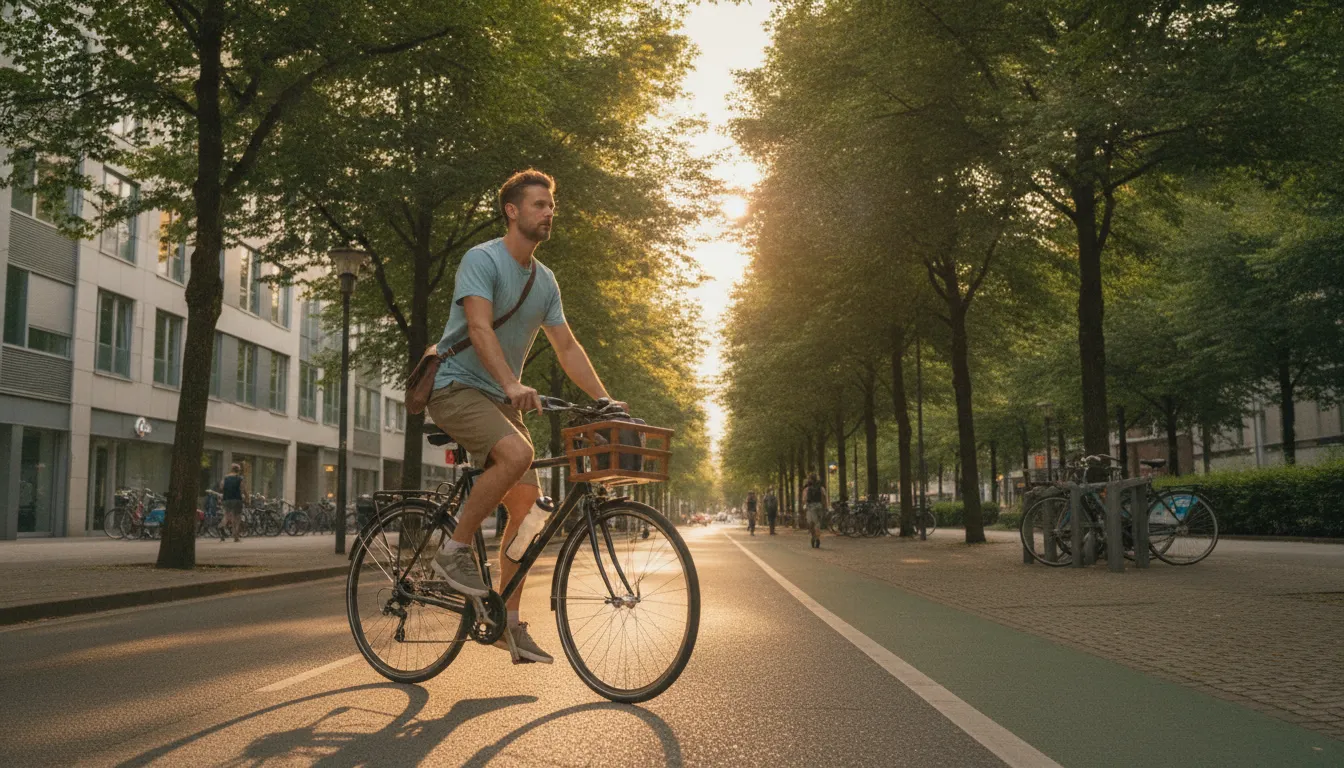
Transforming your routine doesn’t require an overnight revolution. Sometimes it starts with a simple choice: take the bicycle instead of the car to go to the nearest market. Or cycle to the metro station instead of waiting for the bus. These gestures, repeated frequently, build a new habit — and a habit multiplied by many people builds better cities and a healthier planet.
In 2026, the tools are available: route apps, bike-sharing systems, specialty stores, urban cyclist communities in virtually every city. What makes the difference is the decision to experiment.
You don’t need to be an athlete, you don’t need the perfect bicycle and you don’t need to cycle every day from the start. You just need to start. And when you realize you’ve arrived at work with energy, savings in your pocket and the feeling of having done something good for the planet — you’ll want to do it again.
So, what will be your first bike route this week?
