Imagine waking up earlier than you’d like, getting into a car stuck in traffic for forty minutes to travel five kilometers, arriving at work stressed, and knowing that this daily commute is contributing to air pollution and greenhouse gas emissions. This is the reality of millions of Brazilians in large cities — and also the starting point for an urgent conversation about how we move through urban spaces.
Sustainable urban mobility is not a futuristic concept. It already exists, works in cities around the world, and increasingly is gaining ground in Brazil. In simple terms, it means organizing transportation in cities so that people can move with efficiency, safety, and comfort, while simultaneously reducing the environmental, social, and economic impacts generated by this movement.
Understanding what lies behind this concept — and what you can do in your daily life — is the goal of this article. Because the change in how a city moves starts, yes, in the individual choices of those who live in it.
What is sustainable urban mobility
Sustainable urban mobility is a model of movement in cities that prioritizes means of transportation with lower environmental impact, greater social inclusion, and better energy efficiency. It relies on three main pillars:
- Environmental: reduce emissions of pollutants and greenhouse gases, decrease consumption of fossil fuels and the use of urban space by individual vehicles.
- Social: ensure access to transportation for all people, regardless of income, physical mobility, or location in the city.
- Economic: make movement cheaper for citizens and more efficient for the city, reducing costs with infrastructure, public health, and lost productivity in traffic.
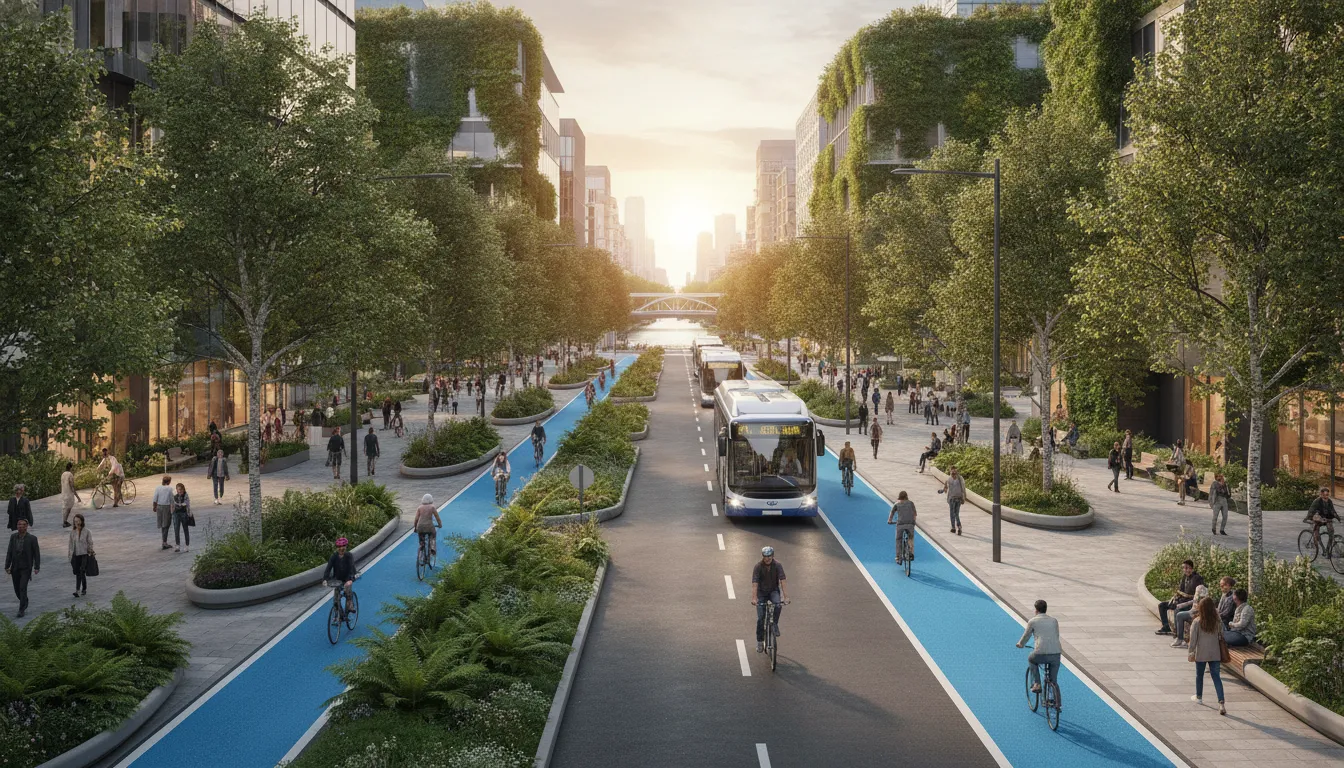
In practice, this means valuing walking, bicycling, quality public transportation, and low-emission vehicles — and rethinking the role of the private car as the protagonist of urban space.
Why urban mobility matters for the environment
The transportation sector is one of the largest sources of greenhouse gas emissions in the world. According to data from the Intergovernmental Panel on Climate Change (IPCC), transportation accounts for approximately 16% of global CO₂ emissions, with most coming from road vehicles powered by fossil fuels.
In Brazil, the scenario is equally concerning. The energy sector — which includes transportation — is one of the main sources of national emissions, according to inventories published by the Ministry of Environment. In cities, beyond CO₂, gasoline and diesel vehicles emit particulate matter, nitrogen oxides, and other pollutants that directly affect the respiratory health of the urban population.
Beyond emissions, the current model of mobility based on individual cars consumes large areas of urban land with parking and roads, contributes to the urban heat island effect in cities, and is associated with high rates of traffic accidents — which also generate significant social and public health costs.
Main models of sustainable mobility in cities
Efficient and integrated public transportation
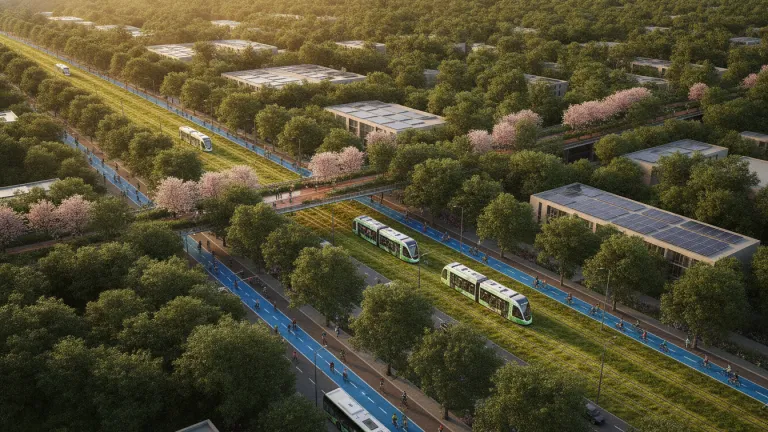
Well-planned collective transportation is the backbone of sustainable mobility. A full bus can replace dozens of individual cars, proportionally reducing emissions and congestion. Electric urban metros and trains go further: they operate with energy that can be generated from renewable sources, making travel practically free of direct emissions.
Cities like Curitiba are historical references in Brazil for the Bus Rapid Transit (BRT) system, with exclusive corridors and fare integration. In São Paulo, the expansion of metro lines and the progressive electrification of the bus fleet are concrete steps in this direction.
Bike lanes and bicycle infrastructure
The bicycle is one of the most efficient means of transportation ever invented by humanity — it doesn’t emit pollutants, takes up little space, is quiet, and promotes physical health. For it to function as a genuine urban transportation mode, not just for leisure, it is essential that cities invest in:
- Continuous and safe bike lanes and cycle paths
- Bike racks and bicycle parking at public transportation stations
- Proper signage and integration with other modes
Cities like Amsterdam and Copenhagen are world models, but in Brazil, Fortaleza and São Paulo have expanded their cycling networks in recent years with positive results in increasing bicycle use for daily commutes.
Micromobility: electric scooters and light electric vehicles
Shared electric scooters have gained presence in several Brazilian cities and can be useful especially for the so-called “last mile” trips — short routes between a metro or bus station and the final destination. When integrated with public transportation and used responsibly, they help reduce car use for short distances.
Electric and hybrid vehicles
Electric cars emit zero local pollutants and, when charged with energy from renewable sources — such as hydroelectric and solar power, which have large participation in the Brazilian energy matrix — they have significantly lower carbon footprint than combustion vehicles. In Brazil, the electric fleet is still small, but growing consistently, driven by tax incentives and expanding charging infrastructure.
Transportation-oriented urban planning
A factor often overlooked: the way a city is planned determines how much people need to move. Cities with mixed-use land — where housing, commerce, services, and work are close together — naturally reduce the need for long daily commutes. The concept of the “15-minute city,” where essentials are a walk or bike ride from home, is one of the most debated proposals in contemporary urban planning.
How it works in practice: the integrated mobility system
Sustainable mobility works better when different modes connect fluidly. An ideal integrated system works like this:
- The citizen walks or bikes to a metro, bus, or train station near their home.
- Boards public transportation with a single card or app that integrates all modes.
- Arrives at a station near the destination and, if necessary, uses a shared scooter or walks the final stretch.
- On the return, the same system works in reverse, with predictable schedules and real-time information available on the phone.
This model depends on public investment in infrastructure, but also on policies that discourage excessive use of private cars, such as charging for road use during peak hours (urban toll) and reducing parking spaces in central areas.
What you can do today: practical sustainable mobility choices
Even without waiting for the perfect city to be built around you, there are concrete changes any person can adopt now:
- Walk more: routes of up to 1.5 km are easily achievable on foot for most people and emit no pollutants.
- Use a bike for short and medium trips: if your city’s infrastructure allows it safely, the bike can replace the car in many journeys.
- Prefer public transportation to a private car whenever the option is viable in time and safety.
- Carpooling: sharing a car with coworkers or neighbors already reduces emissions by half per person on a trip.
- Remote or hybrid work: if you have this flexibility, one fewer commute per week makes a real difference over the course of a year.
- Plan trips by combining activities: instead of leaving three times with the car, solve everything in one trip.
- Consider electric or hybrid vehicles for your next car purchase, considering long-term costs.
- Support public sustainable mobility policies in your city by participating in public hearings, voting for candidates who prioritize public transportation and bike lanes, and engaging in local movements.
Just as we rethink other consumption habits — like reducing waste in the kitchen or building a more sustainable wardrobe — rethinking how we move is part of a more conscious lifestyle consistent with the challenges of our time.
Inspiring examples around the world and in Brazil
| City | Sustainable Mobility Highlight |
|---|---|
| Curitiba (BR) | Pioneering BRT system, integration between buses and urban planning |
| Fortaleza (BR) | One of Brazil’s largest bike networks in expansion |
| Bogotá (Colombia) | TransMilenio (BRT) and Sunday Ciclovía — streets closed to cars |
| Amsterdam (Netherlands) | Over 50% of trips made by bicycle |
| Singapore | Electronic urban toll system since the 1970s, highly efficient public transportation |
None of these cities arrived at the current model overnight. All went through decades of investment, planning, and — especially — political decision to put people before cars.
Challenges of sustainable mobility in Brazil
Being honest about obstacles is just as important as celebrating progress. In Brazil, sustainable mobility faces real challenges:
- Territorial inequality: in the peripheries of large cities, public transportation is often poor, forcing residents to depend on their own transportation or face long trips.
- Outdated infrastructure: discontinuous bike lanes, poorly maintained sidewalks, and overcrowded metro stations make it difficult to adopt alternative modes.
- Car culture: decades of policies that prioritized the automobile created an urban culture difficult to transform quickly.
- Funding: investing in quality public transportation requires significant resources and long-term planning, often interrupted by management changes.
Recognizing these challenges is not to discourage — it is to understand where citizen pressure and public investment need to concentrate.
Conclusion: moving differently is acting for the planet
Sustainable urban mobility is not a luxury of rich cities or a distant ideal. It is a concrete necessity to reduce emissions, improve air quality, make our cities more livable, and ensure equal access to urban space.
Each bike ride, each metro trip instead of a car, each shared ride is a vote for the kind of city — and planet — we want to build. And, just like other conscious consumption choices we make at home and in our daily lives, the way we move matters and adds up.
Start with what is possible for you today. Try biking to the market. Discover if public transportation connects your neighborhood to your workplace more efficiently than you imagined. Talk with neighbors about carpooling. Small steps, multiplied by millions of people, have the power to redesign the map of our cities.
