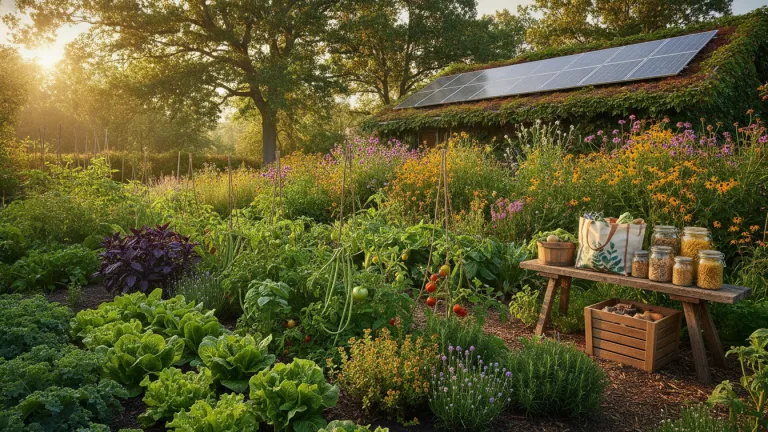
Many people still associate sustainable living with expensive products in specialty stores, costly home renovations, or an almost monastic effort to give up comforts. This image, reinforced by marketing campaigns that sell “green” as luxury, drives millions away from changes that, in practice, are simple, accessible, and—often—economically advantageous. The reality is different: living more ecologically, in most cases, means spending less, not more.
In 2026, with inflation still pressuring Brazilian family budgets and electricity rates at elevated levels, finding ways to reduce expenses without sacrificing quality of life has become a priority. What few realize is that many cost-cutting strategies coincide exactly with the most recommended practices for reducing environmental impact: consume less, waste less, reuse more. It’s not a coincidence—it’s logic.
This article gathers concrete actions, organized by area of daily life, to show that sustainability and savings go hand in hand. You don’t need to transform everything at once. Each small step already makes a difference—for your wallet and for the planet.
Why the “Eco-Luxury” Myth Persists
The confusion has a partially legitimate origin: certified organic products, solar panels, and electric cars do cost more in initial acquisition. But cost analysis needs to look at the complete cycle, not just the price tag.
An LED bulb, for example, costs more than an incandescent one at purchase, but consumes up to 75% less energy and lasts much longer—the financial return comes within a few months. The same reasoning applies to dozens of daily choices. When media highlights only the entry price without considering cost over time, it creates the impression that being sustainable is expensive. In practice, the complete calculation almost always points the opposite way.
Moreover, a huge part of what we call “sustainable living” doesn’t involve buying anything. Avoiding food waste, reducing water consumption, preferring public transportation or bicycles, repairing instead of throwing away—all of this saves money directly and immediately, without any initial investment.
Electricity: Where Wallet and Planet Meet
The electric bill is one of the biggest villains in household budgets and also one of the largest sources of carbon emissions in cities. The good news is that small habit changes have real—and measurable—impact.
Habits that reduce the bill without costing anything
- Unplugging devices from outlets when not in use eliminates so-called “phantom consumption” (standby), which can represent between 5% and 10% of a residence’s total consumption, according to International Energy Agency (IEA) data.
- Using the washing machine with full loads reduces the number of cycles and spending on water and energy.
- Taking advantage of natural light throughout the day, adjusting schedules for household activities.
- Setting air conditioning between 23°C and 24°C instead of 18°C can generate significant savings in monthly consumption.
For those who want to go further, photovoltaic solar energy has become increasingly accessible in Brazil. With the significant growth of the national market in recent years and the rules of the electricity compensation system, many families can amortize the investment in less than seven years—and then enjoy practically free energy for decades. If you want to understand how it works in practice, check out our guide Solar Energy: How to Actually Reduce Your Electric Bill.
Sustainable Food: Eating Better While Spending Less
Food is probably the area where the connection between sustainability and economy is most direct and immediate. Food waste is a huge problem: according to the United Nations Food and Agriculture Organization (FAO), about one-third of all food produced in the world is lost or wasted—which represents an environmental tragedy and, for each family, money literally thrown away.
How to reduce waste and spending on food
- Plan the week’s meals before going to the market. A shopping list based on a menu avoids impulse purchases and reduces what goes to waste.
- Learn food preservation techniques—freezing, fermenting, making homemade jams and preserves are ways to use what would be discarded. To learn more, see our Conservar Alimentos: Guia Prático Contra o Desperdício.
- Prefer seasonal foods from local producers. Besides being fresher and more nutritious, they usually cost less because they don’t carry the cost of long-distance transportation or cold storage.
- Reduce meat consumption, especially beef. Beef production is one of the activities with the largest carbon footprint, according to the IPCC. From a financial perspective, replacing part of meat meals with plant proteins—beans, lentils, chickpeas—represents concrete savings in the monthly budget.
- Use the “forgotten” parts of foods: stems, peels, and leaves have nutritional and culinary value, and are discarded by habit, not necessity.
Home Garden: Minimal Investment, Daily Returns
Growing herbs, spices, and some vegetables at home is one of the most rewarding and economical ways to adopt a more sustainable lifestyle. Scallions, parsley, basil, lettuce, and arugula grow well in small pots, on balconies or sunny windows, and can be harvested over weeks or months from a single minimal investment in seeds or seedlings.
Besides direct savings—these items have relatively high prices in supermarkets due to their perishability—the home garden eliminates plastic packaging, reduces transportation, and brings you closer to the natural food cycle. To start from scratch, with simple and practical guidance, access the guide Plantar em Casa: O Guia Completo para Iniciantes.
Conscious Consumption: Buy Less, Spend Better
The culture of disposal—buy, use little, and throw away—is one of the biggest drivers of the environmental crisis and, at the same time, a silent drain on family budgets. Changing this logic doesn’t require sacrifice; it requires attention.
Practical principles of conscious consumption
- Repair before buying new. Cobblers, seamstresses, electronics repairers, and carpenters exist in practically all cities and charge much less than replacing with a new product.
- Buy secondhand. Clothing, furniture, appliances, and used books in good condition cost a fraction of the original price. Person-to-person sales platforms have made this market accessible and convenient.
- Adopt the 30-day rule. For non-essential purchases, wait 30 days before deciding. Most of the time, the impulse passes—and the money stays in your pocket.
- Prefer durable products to disposables. Reusable water bottles, cloth bags, washable and reusable packaging cost more once, but represent savings and less waste over time.
- Exchange, borrow, and share. Tools, books, special occasion clothing—many items are used few times and can be shared with neighbors, friends, or through community groups.
Water: The Resource Worth Gold
Brazil is a country of enormous water wealth, but distribution is unequal and pressure on resources increases each year, as warned by reports from the Ministry of the Environment and the National Water Agency (ANA). In practical terms for daily life, saving water means a lower bill at the end of the month—and it’s easier than it seems.
| Habit | Estimated water savings |
|---|---|
| Turn off the tap while brushing teeth | Up to 12 liters per time |
| Switch from 15-min to 5-min shower | About 60 to 80 liters per shower |
| Reuse washing machine water to clean the yard | Dozens of liters per cycle |
| Install flow reducers on faucets | Reduction of up to 50% in flow |
Small routine adaptations, without any significant investment, have direct impact on the water bill and on preserving an increasingly precious resource.
Mobility: Less Car, More Health and Savings
Individual gasoline transportation is expensive—fuel, insurance, property tax, maintenance, parking—and represents one of the main sources of greenhouse gas emissions in urban areas, according to data from the Intergovernmental Panel on Climate Change (IPCC). The most sustainable alternatives are, in general, also the cheapest.
- The bicycle has very low maintenance costs and serves for trips of up to 10-15 km with reasonable comfort, depending on climate and local infrastructure.
- Public transportation, even with current fares, costs substantially less than maintaining a personal car for daily commutes.
- Working from home when possible eliminates commuting and reduces spending on transportation, eating out, and work clothes.
- Combining trips—doing several tasks in one outing—reduces the number of necessary car trips.
Conclusion: Start Today, With What You Have

Living more sustainably is not a distant destination reserved for those with lots of money or lots of time. It’s a set of daily choices, many of them simple and immediate, that together make a real difference—on the planet and in your wallet.
You don’t need to do everything at once. Choose one area—food, energy, consumption—and start there. Observe the results over a month: the bill that came lower, the food that wasn’t thrown away, the pleasure of harvesting something you planted yourself. These small results build motivation to go further.
The planet needs many people making imperfect but consistent choices—not a few people making perfect choices. Every action counts. And the best part is that, in this case, doing good for the world and doing good for your budget are exactly the same thing.
