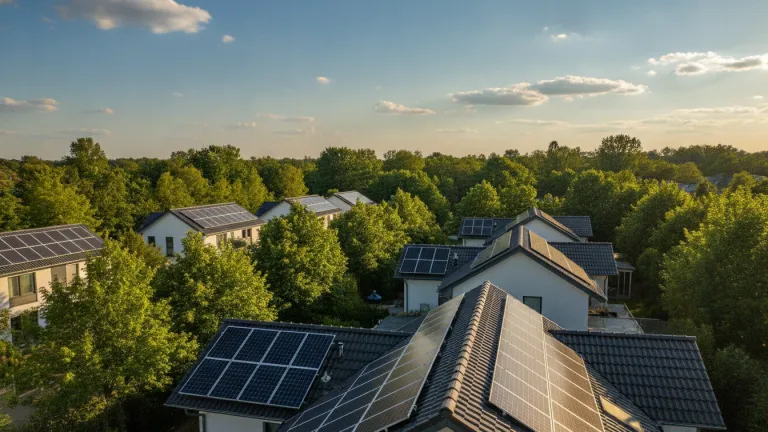
Why your electric bill never stops rising — and what you can do about it now
Did you open your electric bill this month and get a shock? You’re not alone. In recent years, electricity rates have risen consistently in many regions, driven by factors such as energy crises, variable rate structures, and utility surcharges. For millions of households, the electric bill has become one of the largest fixed monthly expenses — and it feels like there’s no way out.
But there is. Solar photovoltaic energy is no longer a privilege reserved for the wealthy or those living in isolated rural areas. By 2026, distributed solar generation capacity has grown significantly, and more and more ordinary families — in houses, rural properties, and even some apartment configurations — are seeing their bills drop in a real and sustained way. It’s not magic: it’s technology that has become cheaper, legislation that has advanced, and an energy compensation model that works.
This article is a practical guide to help you understand how solar energy can truly reduce your electric bill, what costs are involved, what to expect in the long term, and how to take the first step today — without the runaround.
How solar photovoltaic energy works in practice
The principle is simple: solar panels installed on your roof or in an open area capture sunlight and convert it into electricity. This energy directly powers the appliances in your home. When generation exceeds consumption at any given moment, the surplus is fed into the utility grid.
This is where the net metering system comes in, regulated by energy authorities. Each kilowatt-hour (kWh) you send to the grid generates credits that are deducted from your next bill. In practice, you use the electrical grid as a “virtual battery”: you send energy during the day and draw from it at night or on cloudy days.
The main components of a residential solar system
- Photovoltaic panels: convert sunlight into direct current
- Inverter: transforms direct current into alternating current, compatible with the grid
- Protection panel and bidirectional meter: installed by the utility to record energy input and output
- Mounting structure: supports that securely attach the panels to the roof
Systems with storage batteries also exist, but they still significantly increase the initial investment. For most grid-connected residences, the battery-free model works very well.
How much does it cost to install solar energy at home
This is the point that generates the most questions — and also the one that has evolved most favorably in recent years. The cost of photovoltaic panels has dropped significantly in the global market over the past decades, making the investment increasingly accessible.
The cost of a residential system depends on the required size, which in turn depends on your average monthly consumption. As a general reference:
| Average monthly consumption | Estimated system capacity | Approximate investment range |
|---|---|---|
| Up to 200 kWh | 1.5 to 2 kWp | $1,500 to $3,000 |
| 300 to 400 kWh | 3 to 4 kWp | $3,000 to $5,000 |
| 500 to 700 kWh | 5 to 7 kWp | $5,000 to $8,000 |
Values are 2026 market estimates and may vary by region, installation company, and equipment chosen.
The return on investment period — called payback — typically ranges from 4 to 7 years, depending on your local rate, system size, and solar incidence in your region. After that, you generate energy essentially for free for another 15 to 20 years, which is the average lifespan of the panels.
Financing and available credit lines
You don’t need to have the full amount upfront. Various financial institutions offer specific credit lines for solar energy, some with subsidized rates. Banks and government development agencies have historically operated programs aimed at distributed generation. It’s worth researching current conditions directly with institutions, as programs are updated frequently.
What the legislation says: your rights as an energy generator
Distributed generation legislation has established a legal framework in many countries, providing greater legal security for those investing in solar energy. Laws typically define clear rules about the compensation system and guarantee that generated credits have multi-year validity.
Energy regulatory agencies oversee the technical and commercial details. You typically have the right to:
- Install a photovoltaic system and connect to the local utility grid
- Receive energy credits for each kWh injected into the grid
- Use these credits on other consumer units under your ownership (such as a second residence or business)
- Participate in shared generation projects or remote self-consumption, which allow, for example, apartment residents to invest in a solar plant outside the city and receive credits on their bill
Speaking of apartments: individual installation in condominium units has its particularities. If you live in an apartment and want to better understand this option, check out our complete article on solar energy in apartments: is it possible to install?.
How to size the ideal system for your home
There’s no “standard” system that works for everyone. Proper sizing is essential so you don’t pay more than you need — or end up with a system that’s too small.
Step by step to size your system:
- Gather your bills from the last 12 months and calculate your average monthly consumption in kWh. This value is always listed on your bill.
- Consider future consumption changes — are you going to install air conditioning? Buy an electric car? This increases demand and should be factored into the system.
- Check solar incidence in your region. Solar irradiation varies by location. Solar resource maps are available online through energy research centers.
- Evaluate your roof: slope, orientation (ideally facing the equator) and possible shading from trees or neighboring buildings greatly influence generation.
- Request quotes from at least three installation companies and ask each one to present the sizing calculation methodology. Be wary of companies that don’t explain how they arrived at the number of panels.
- Confirm that the installation company has qualified professionals (responsible engineer) and that the project will be properly registered with the utility and relevant licensing authorities.
- After installation, monitor generation for the first few months using the inverter app (all modern models have remote monitoring) and compare with what was predicted in the project.
Practical tips to maximize savings
Installing the system is the first step. To get the most out of solar generation and further reduce your bill, adopt these strategies:
- Concentrate use of heavy appliances during the day: washing machine, dishwasher, iron, and electric water heater consume more when used during peak solar generation hours (approximately between 9 AM and 4 PM).
- Review your rate contract with the utility: depending on your utility and consumption profile, time-of-use rates — which vary by time of day — can be advantageous combined with solar.
- Keep the panels clean: dust, leaves, and bird droppings reduce generation efficiency. Simple cleaning with water and a soft cloth every two or three months makes a difference.
- Periodically check the inverter: most have automatic alerts, but it’s worth checking if daily generation is within expectations.
- Combine solar energy with other energy efficiency practices: switching to LED bulbs, using power strips to eliminate standby consumption, and having appliances with good energy ratings are actions that enhance savings.
- Monitor your credits on your bill: verify that the kWh injected are being correctly recorded and compensated. Billing errors happen and need to be disputed with the utility.
Benefits beyond financial savings
Reducing your electric bill is the most immediate motivator — and completely legitimate. But it’s worth remembering that installing solar energy brings other concrete benefits:
Property appreciation: real estate market studies and research indicate that residences with installed photovoltaic systems tend to have higher sale values, as the buyer inherits the generation and savings.
Energy independence: in regions subject to frequent blackouts or dependence on variable-cost power plants, having your own generation represents more stability.
Emissions reduction: solar photovoltaic energy is one of the sources with the lowest carbon emissions per kWh generated over the life cycle, according to IPCC data. By generating your own clean energy, you reduce your participation in demand for more polluting sources in the electrical grid.
Contribution to energy decentralization: each new installed system helps distribute energy generation, making the national electrical system more resilient.
Conclusion: the best time to start is now
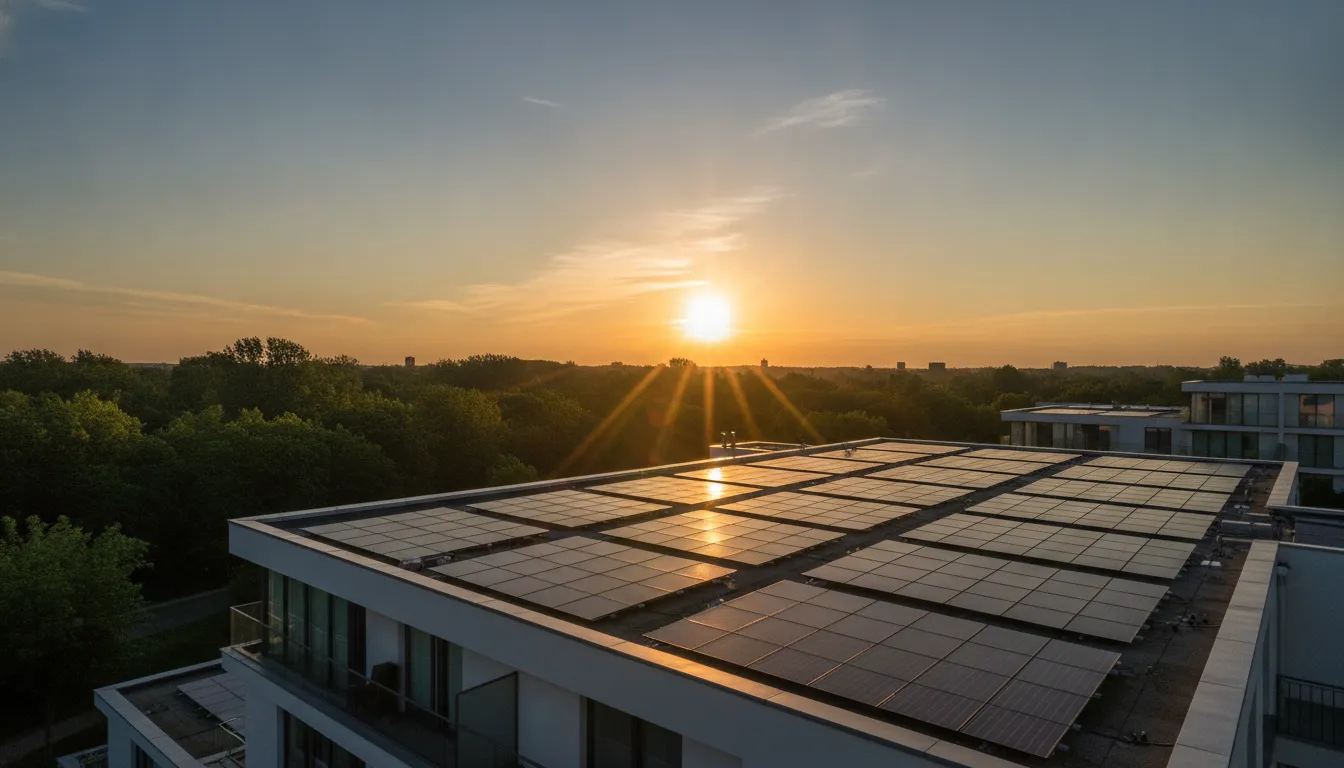
Solar energy is no longer a future promise. It’s an accessible, regulated, and financially proven reality for millions of households. In 2026, the scenario is more favorable than ever: cheaper technology, consolidated legislation, and a competitive installer market.
The first step doesn’t require a large investment: gather your electric bills, calculate your average consumption, and request quotes from installation companies in your city. With this information in hand, you’ll have a clear view of how much you can save and how long the system takes to pay for itself.
Every electric bill you reduce is money that goes back in your pocket — month after month, for decades. And every kilowatt generated by the sun is one less kilowatt that needs to come from sources with greater environmental impact.
Your electric bill can, indeed, be much lower. You just need to take the first step.
