Every day, tons of perfectly edible food end up in the trash — and much of this waste begins at home, in the forgotten drawer of the refrigerator or in the fruit bowl with overripe bananas. The problem goes far beyond individual financial loss: food waste is one of the largest contributors to greenhouse gas emissions worldwide. According to the Food and Agriculture Organization of the United Nations (FAO), about one-third of all food produced globally for human consumption is lost or wasted — representing an immense environmental and social impact.
In Brazil, the situation is also serious. Data from IBGE and sector research indicate that waste occurs throughout the production chain, but a significant portion happens in households. With the rising cost of living in recent years, preserving food well has ceased to be just an ecological issue — it’s also a smart economic choice. Every meal utilized is money in your pocket and less pressure on the planet.
The good news is that there are simple, practical, and proven techniques to preserve food longer, reduce waste, and transform your kitchen into a more sustainable space. This guide brings together what’s most effective — from refrigerator organization to dry storage — so you can start now, with what you already have at home.
Why Preserving Food Is an Environmental Act
When food goes to waste, it’s not just the food that’s lost. All the water, energy, land, labor, and transportation invested in its production are also wasted. The FAO estimates that if food waste were a country, it would be the third-largest CO₂ emitter in the world, behind only the United States and China.
Furthermore, when food decomposes in landfills without access to oxygen, it releases methane — a gas with a global warming potential dozens of times greater than CO₂ over a 20-year horizon, according to IPCC data. Reducing waste at home, therefore, is one of the most direct and accessible actions anyone can take to reduce their carbon footprint.
Preserving food well is also connected to other sustainable habits. Those who make better use of what they buy tend to plan meals better, shop more consciously, and even embrace practices like home gardening, which further closes the cycle of responsible consumption.
Understanding Expiration: Expiration Date vs. Actual Shelf Life
One of the biggest villains of household waste is the confusion between “expires on” and “unsafe for consumption”. Many foods are unnecessarily discarded due to misinterpretation of labels.
- “Use by”: indicates food safety. After this date, the product may actually pose risks — worth respecting.
- “Best before”: indicates optimal quality, not necessarily danger. Many products remain safe and tasty beyond this date.
- Foods without dates: rice, beans, salt, sugar, and other dry goods can last years if stored properly.
Learn to use your senses: smell, texture, color, and taste are reliable indicators for most fresh foods. An apple with a small spot can be fully utilized — just remove the compromised part.
Refrigerator Organization: How to Preserve Food Efficiently
The way you organize your refrigerator directly impacts food longevity. A well-organized refrigerator also consumes less energy, as cold air circulates better.
Temperature Zones in the Refrigerator
| Zone | Approximate Temperature | What to Store |
|---|---|---|
| Top shelf | Warmest (~8°C) | Dairy, ready leftovers, beverages |
| Middle shelf | Intermediate (~5°C) | Eggs, cheeses, deli meats |
| Bottom shelf | Coldest (~2–4°C) | Meats, fish, poultry |
| Vegetable drawers | High humidity (~8°C) | Fresh fruits and vegetables |
| Door | Warmest (~10°C) | Condiments, juices, butter |
Practical Organization Tips
- Use the FIFO method (First In, First Out): place newer items in back and consume older items first.
- Keep foods visible: what’s hidden in the back is what gets lost most. Use transparent containers.
- Don’t store hot foods: wait for them to cool before refrigerating to avoid raising the internal temperature.
- Cover everything: uncovered foods lose moisture and contaminate others with odors.
- Check temperature regularly: ideal for the refrigerator is between 1°C and 4°C; for the freezer, -18°C or less.
Food Preservation Techniques: From Basic to Advanced
Blanching and Freezing Vegetables
Freezing fresh vegetables is one of the most effective techniques for extending shelf life without significant nutritional loss. The secret lies in blanching before freezing:
- Wash and cut vegetables to desired size.
- Boil water in a large pot.
- Submerge vegetables for 1 to 3 minutes (depending on type).
- Transfer immediately to a bowl with ice water — this thermal shock stops the cooking.
- Drain well and dry with a clean cloth.
- Distribute in portions in airtight bags or containers and freeze.
- Label with date and contents. Most vegetables last 8 to 12 months in the freezer.
Home Fermentation
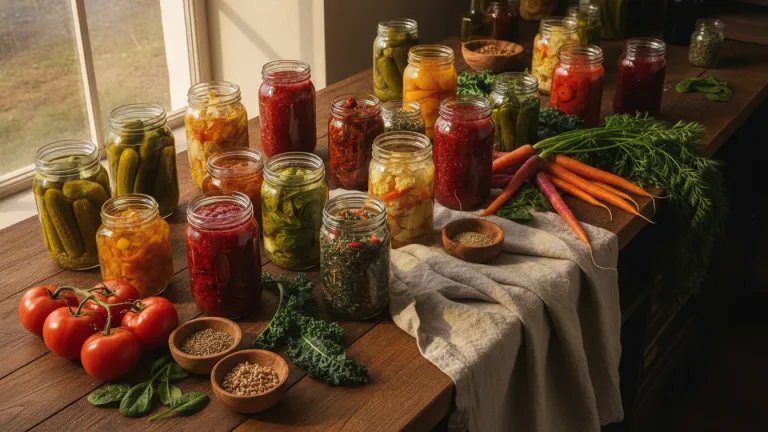
Fermentation is one of humanity’s oldest preservation techniques — and is experiencing a renaissance. In addition to extending food life, it produces probiotics beneficial for gut health.
- Sauerkraut: cabbage + salt. Simple, cheap, nutritious. Lasts months in the refrigerator.
- Pickled vegetables: cucumber, carrot, beet in vinegar, water, and salt solution.
- Homemade kefir and yogurt: utilize milk near expiration safely.
Dry Storage and Airtight Sealing
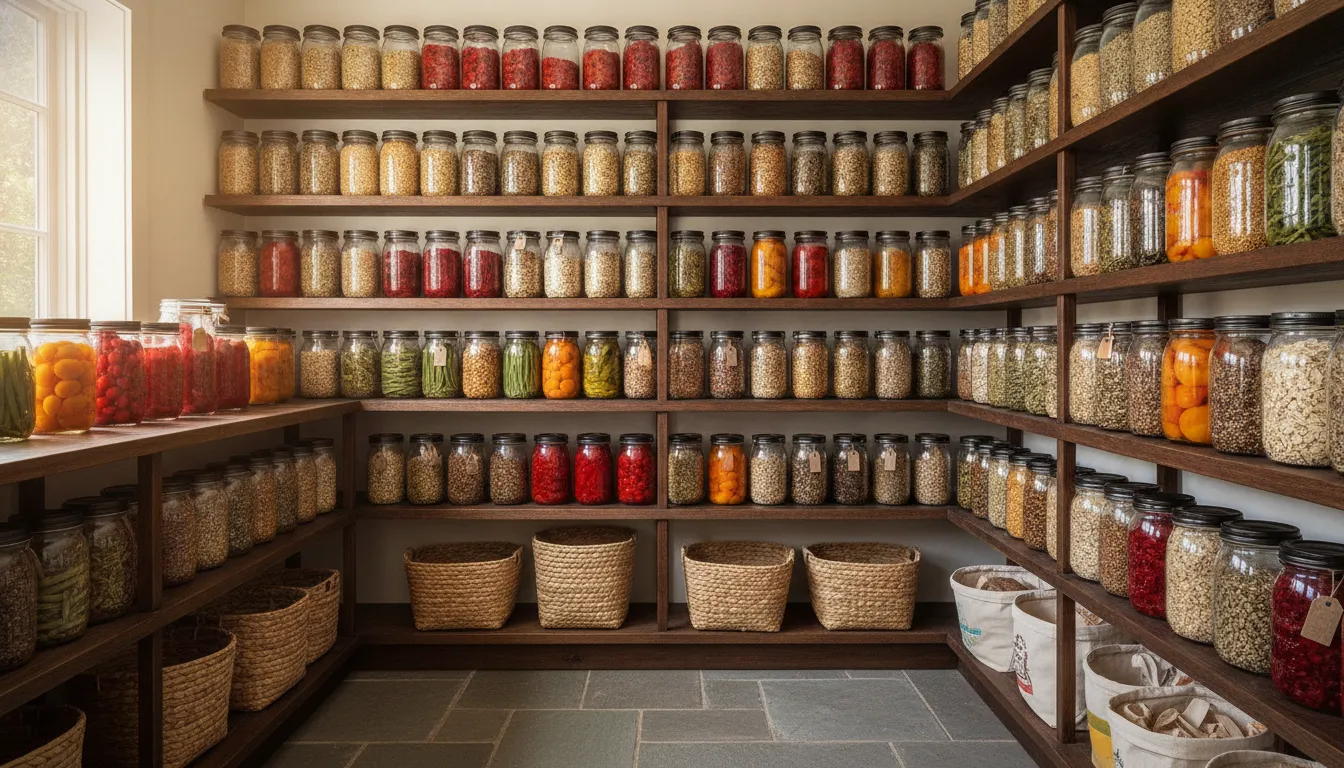
Products like grains, flours, nuts, and dry spices should be stored in airtight containers, in a cool, dry, dark place. Exposure to air, moisture, and light accelerates degradation and favors pests.
- Invest in reusable glass containers — they’re more durable, don’t absorb odors, and allow you to see contents.
- Add a piece of absorbent paper inside dried herb containers to control moisture.
- Bay leaves and other spices inside grain containers help repel insects naturally.
Foods You’re Probably Wasting (and How to Use Them)
Some foods have parts we usually throw away unnecessarily. See what can be reused:
- Kale, broccoli, and parsley stems: excellent for stir-fries, soups, and broths.
- Watermelon rind: can become candy, jelly, or be sautéed with garlic and olive oil.
- Stale bread: becomes breadcrumbs, croutons, French toast, or bread pudding.
- Beet and radish greens: rich in nutrients, can be sautéed like any green.
- Overripe banana: ideal for smoothies, cakes, pancakes, and banana ice cream.
- Vegetable trimmings and ends: save in the freezer and use to prepare homemade broths.
- Used cooking oil: don’t discard down the drain — store and take to collection points for biodiesel recycling.
How to Set Up an Anti-Waste System in Your Kitchen
Creating consistent habits is more powerful than applying isolated techniques. Here’s a simple system to implement progressively:
- Plan the week’s meals before going to the market. A shopping list based on the menu avoids impulse purchases and forgotten items at the back of the fridge.
- Do a weekly inventory of the refrigerator and pantry. Identify what needs to be consumed with priority.
- Designate a “clean out the fridge” day — usually before shopping day — to create creative recipes with what’s left.
- Freeze before losing: if you realize you won’t consume something in time, freeze immediately.
- Composting for the inevitable: even with all care, some organic leftovers can’t be used. Home composting transforms these scraps into fertilizer, closing the cycle responsibly.
- Involve the family: sustainable habits stick better when shared. Explain to children where food comes from and why utilizing it matters.
- Record what you discarded for a week: this simple exercise makes waste visible and motivates real behavior changes.
Preservation and Energy Consumption: The Connection Few Notice
Keeping food well preserved also impacts electricity consumption. A refrigerator with excess ice in the freezer, poorly sealed, or overloaded works harder and consumes more electricity. Likewise, frequently opening and closing the refrigerator — often searching for something hidden — increases consumption.
Keeping the refrigerator organized, with good air circulation and perfect seals on the door gaskets, reduces energy expenditure. If you want to go further in reducing your environmental footprint and cutting energy costs, it’s worth exploring how solar energy can truly reduce your electricity bill.
Conclusion: Small Choices, Big Impact
Preserving food intelligently doesn’t require high investment or radical life changes. It requires attention, organization, and a small dose of creativity — skills anyone can develop with practice.
Each banana utilized, each portion frozen in time, each recipe made with the week’s leftovers represents less waste, fewer emissions, and more resources — financial and natural — preserved. When multiplied by millions of households, these everyday choices become a real force for transformation.
Start with one thing today: reorganize your refrigerator, freeze what’s about to spoil, or try making broth with accumulated peels and stems. The planet thanks you — and so does your wallet.
