Why teaching sustainability to children is urgent — and possible
Imagine an 8-year-old who turns off the tap while brushing their teeth, or a teenager who asks their mom why the supermarket wraps fruit in plastic. These small gestures don’t happen by accident — they’re the result of environmental education that starts at home, even before school.
In 2026, climate change is no longer a future concern. The Intergovernmental Panel on Climate Change (IPCC) has already documented concrete impacts in every region of the planet: more intense heat waves, more frequent extreme weather events, and accelerated biodiversity loss. Today’s children will inherit this world — and they also have the potential to transform it, if they receive the right tools.
The good news is that teaching sustainability to children doesn’t require expensive resources, complex lessons, or environmental perfection from adults. Above all, it requires consistency, curiosity, and small everyday actions. This guide was created to help parents, educators, and caregivers take the first steps in a practical, fun, and accessible way.
Why childhood is the ideal time to build sustainable habits
Neuroscience confirms what educators have long intuited: the early years of life are crucial for forming values and habits. Young children are naturally open to the world, curious about nature, and receptive to new ideas — making them fertile ground for genuine environmental education.
Furthermore, there’s a well-documented phenomenon called the “reverse influence effect”: children who learn about the environment at home or at school often influence the behavior of their parents and family members. In other words, investing in children’s environmental education has an impact that goes beyond them alone.
Another important point is that habits formed in childhood tend to persist into adulthood. When a child learns early to separate recyclable trash, turn off lights when leaving a room, or value food without waste, these practices become part of their identity — not a conscious effort.
Sustainability for Kids: fundamental concepts to introduce by age group
There is no one-size-fits-all formula. What works for a 4-year-old is different from what engages a 14-year-old. The key is adapting the language and depth to each child’s stage of development.
For children ages 3 to 6: connection with nature
At this stage, concrete speaks louder than abstract. Instead of explaining the greenhouse effect, take the child to a park, show them a worm in the garden, let them water a plant. The goals are simple:
- Create an emotional relationship with nature
- Teach that resources have limits (“water runs out if we waste it”)
- Introduce the concept of care for others — animals, plants, people
For children ages 7 to 11: action and responsibility
With more developed logical reasoning, children this age can understand causes and consequences. This is the time to introduce:
- The waste chain: where it comes from, where it goes, what happens with what isn’t recycled
- The concept of food waste (Brazil is one of the world’s largest generators of food waste, according to FAO data)
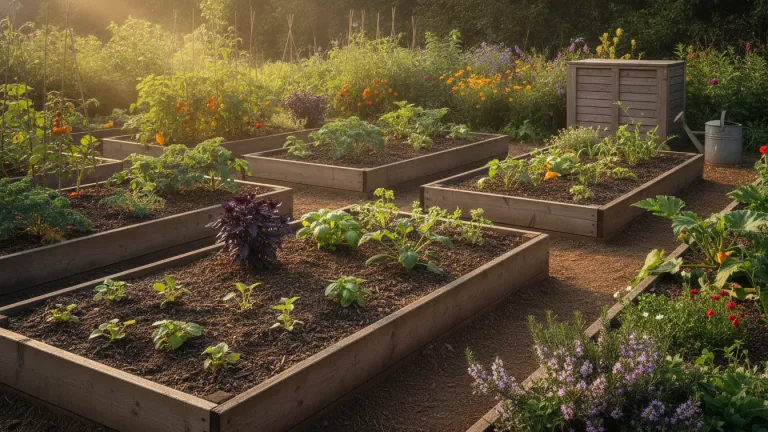
- Practical projects, such as a home or school garden
For teenagers: critical thinking and active participation
Young people between 12 and 17 can already handle complexity and contradictions. Here, engagement comes through taking action:
- Debate news about climate, biodiversity, and consumption
- Participate in school or community projects
- Question labels, packaging, and consumption choices
- Learn about real initiatives by youth who are changing the world
How to start at home: a step-by-step guide for parents and caregivers
You don’t need to be an environmental expert to begin this journey. The important thing is to start — with authenticity and without pressure for perfection.
- Observe your home’s daily life. Where is there the most waste? Electricity, water, food, single-use plastics? Choose a starting point.
- Involve the child in identifying the problem. Instead of giving orders, ask questions: “Do you know why we need to save water?” Let curiosity guide.
- Establish a short-term family challenge. For example: “For two weeks, we’re going to turn off all the lights in empty rooms.” Short, visible goals create a sense of achievement.
- Celebrate progress. Recognize when the child remembers to turn off the light, separate the trash, or not waste food. Positive reinforcement is more effective than punishment.
- Learn together. Watch documentaries, read books about nature, visit an environmental reserve or composting project. The humility of saying “I don’t know, let’s discover together” is powerful.
- Connect actions to real impact. “When we save water in the shower, we’re helping rivers and animals that depend on that water.” Children respond well when they understand the why.
- Be the example. Children observe far more than they listen. Your daily habits are the most powerful lesson you can offer.
Practical sustainability activities to do with children
Theory only makes sense when accompanied by experience. Below is a list of concrete and accessible activities, organized by difficulty level:
Simple activities (any age, any space):
- Plant an aromatic herb in a cup of soil (mint, basil, chives)
- Create a plastic bottle with holes for slow plant irrigation
- Separate trash at home and visit a selective collection point
- Make a conscious shopping list before going to the market, avoiding waste
Intermediate activities (require a bit more space or time):
- Set up a mini compost bin with fruit and vegetable scraps
- Create a “weather diary” — record temperature and weather for a month
- Make crafts from reusable materials (boxes, caps, containers)
- Research the origin of the food your family consumes at home
Advanced activities (for engaged families or schools):
- Implement a school or community garden
- Participate in cleanup events at beaches, parks, or rivers
- Map bird or insect species in your neighborhood using apps like iNaturalist
- Create an awareness project to present at school
If you want a complete guide on how to start a home garden with children, the article Planting at Home: The Complete Beginner’s Guide provides a detailed and accessible step-by-step guide.
The role of school and community in environmental education
Home is the first learning environment, but it’s not the only one. School plays a crucial role in environmental education — and in Brazil, Law No. 9,795/1999, which establishes the National Environmental Education Policy, determines that the subject should be addressed across all levels of education. In practice, however, implementation is still uneven.
As a family, you can:
- Talk with teachers and principals about environmental projects at school
- Support or propose the creation of school gardens, composting, or selective collection in the educational environment
- Connect the child to youth groups and collectives focused on the environment in your city
- Value when the school promotes outdoor activities, visits to parks, or science projects focused on nature
The community also matters. Neighborhood projects, exchange fairs, community composting groups, and environmental associations are spaces where children can see sustainability working in practice — and feel part of something bigger.
Conscious consumption: teaching children to make better choices
One of the most lasting lessons we can teach is the ability to question consumption. In a world saturated with advertising and disposable products, teaching children to ask “do I really need this?” is a revolutionary act.
Some starting points for conversations about conscious consumption with children:
- Where do things come from? Showing the supply chain of a product — whether a t-shirt, toy, or food — opens eyes to invisible impacts.
- What happens when we throw it away? Visiting a landfill or watching an educational video about trash disposal can be transformative.
- Trade instead of buy. Toy and clothing swap fairs teach in practice that the new doesn’t always need to be purchased.
- Repair before discarding. Fixing a broken toy, sewing a button, refurbishing furniture — these are lessons in care and waste reduction.
As the article Living ecologically costs less than you think shows, many sustainable choices are also economically smart choices — a message that resonates well with families of any income level.
Conclusion: every small action matters — and it starts with you
Teaching sustainability to children is not about creating a generation of perfect environmental defenders. It’s about raising people who care, who ask questions, and who believe their choices have real consequences.
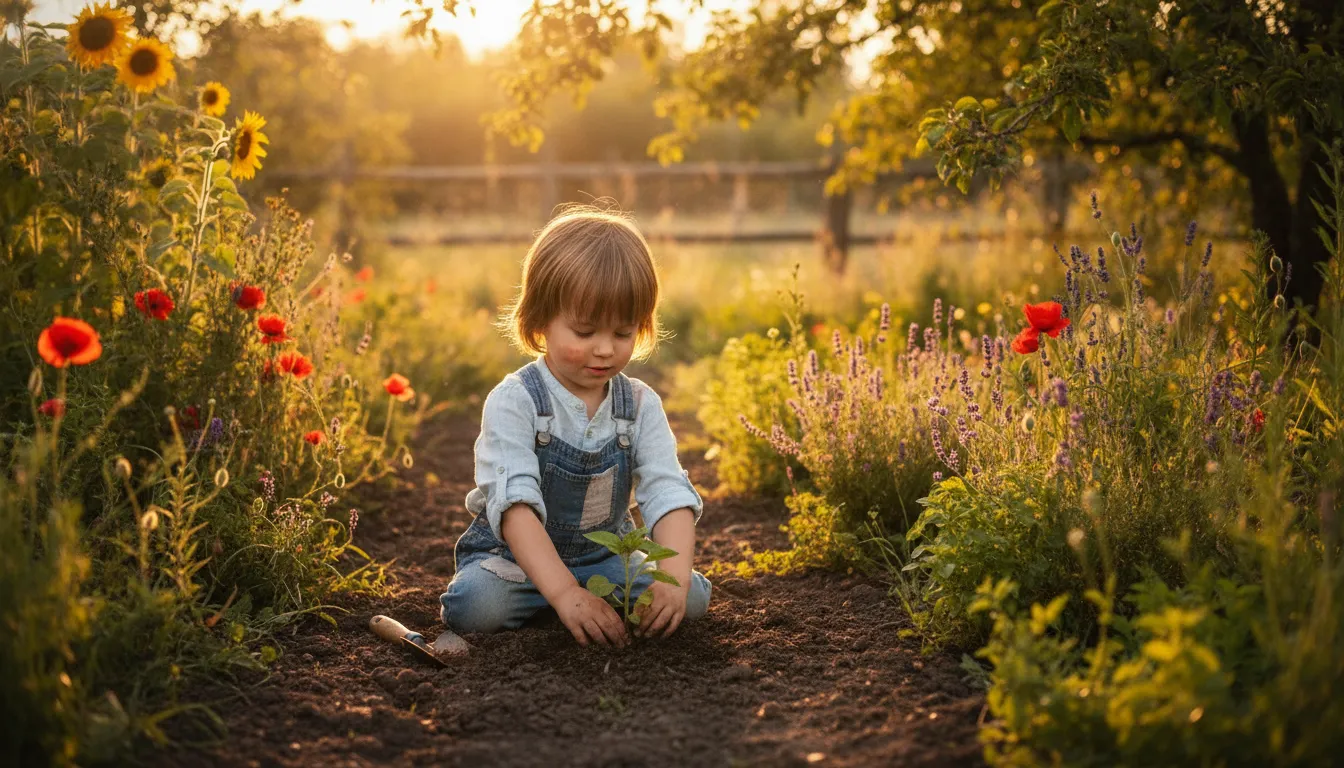
You don’t need to wait for the ideal school, the perfect city, or the right moment. You can start today, with what you have: a conversation at dinner time, a little seed planted in a yogurt cup, a visit to the nearest park.
Children in 2026 will grow up in a world that demands more creativity, more collaboration, and more environmental consciousness than any previous generation. But they don’t need to carry that weight alone — they need adults who walk alongside them, who show that it’s possible, and who believe in the power of small actions added together.
Start small. Start today. And let the curiosity of children be your guide.
