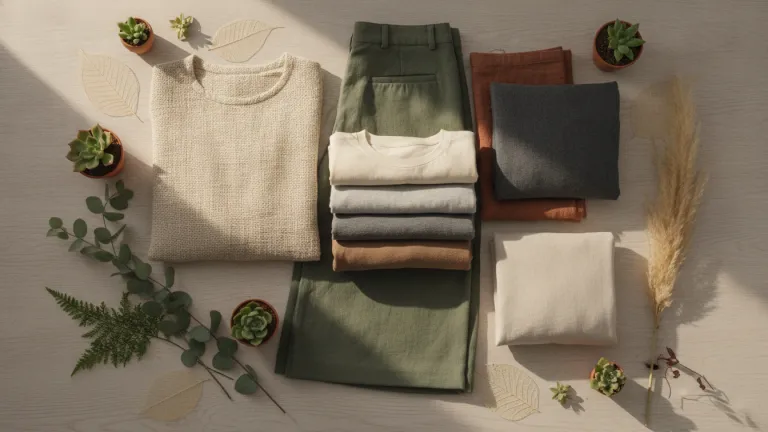
You open your wardrobe in the morning and look at those dozens of pieces — some still with tags, others you barely remember buying. It’s a common scene for millions of people, and it hides an environmental problem that few associate with the clothes they wear. The fashion industry is one of the most polluting in the world: it consumes enormous volumes of water, emits greenhouse gases throughout its production chain, and generates a staggering amount of textile waste each year. And the consumption model that dominated recent decades — known as fast fashion — has dramatically accelerated this cycle.
The good news is that your wardrobe is one of the areas where each person has real power to make change. Unlike some environmental issues that depend on public policies or major investments, fashion choices are made by you, in your daily life, with concrete effects. Buying less, buying better, taking good care of what you already have, and giving new life to used pieces are accessible attitudes that, combined with millions of other people doing the same, represent a significant transformation.
This article is a practical guide for anyone who wants to build a more conscious wardrobe — without having to throw everything away, without spending a fortune, and without giving up style. We’ll go from diagnosing the problem to concrete actions you can start today.
The Real Impact of Fashion on the Environment
To understand why your wardrobe matters, you need to see what’s behind each piece. Textile production involves extraction of raw materials, dyeing, sewing, transportation, and at the end of its useful life, disposal — each stage with its own environmental cost.
Conventional cotton, for example, is one of the crops that consumes the most pesticides in the world. The fabric dyeing process is responsible for a significant portion of river contamination in Asian producing countries. Synthetic fibers like polyester are derived from petroleum and release microplastics during home washing, which end up in the oceans and the food chain.
Disposal is another serious face of the problem. It’s estimated that a huge portion of globally produced clothing ends up in landfills or is incinerated within a few years — often without even being worn. Brazil, as one of the largest fashion consumer markets in the world, also faces this challenge: the volume of textile waste generated in the country is significant, although precise national data on the sector is still fragmented.
What Is Fast Fashion and Why It Depletes Resources
Fast fashion is a business model that replaced the traditional two annual fashion seasons with almost continuous launch cycles — some brands release dozens of collections per year. The logic is simple: low price + constant novelty = accelerated consumption. What seems like an advantage for your wallet has an invisible cost that’s extremely high.
This model pressures the entire production chain to be faster and cheaper, which frequently results in precarious working conditions in producing countries, intensive use of natural resources, and reduced quality of garments — which last less and are discarded sooner. It’s a self-feeding cycle.
The alternative isn’t necessarily spending more. It’s consuming differently: with more intention, less quantity, and greater attention to the origin and durability of what we buy. This mindset shift is the first step toward a sustainable wardrobe.
How to Build a Sustainable Wardrobe: Step by Step
Transforming your wardrobe doesn’t need to happen all at once. Here’s a practical path:
- Take an inventory of what you already have. Before buying anything, open your closet and see what’s there. Many people discover forgotten pieces that they happily start wearing again.
- Identify what you actually wear. A popular technique is to turn hangers backwards and, when you wear a piece, place it back the right way. After a few months, what’s still “backwards” you probably don’t need.
- Dispose responsibly. Clothes in good condition can go to thrift stores, donations to organizations, swap collectives, or resale platforms. Very worn fabrics can be delivered to textile waste collection points — which already exist in some cities through brand and municipal initiatives.
- Before buying something new, ask yourself: Do I need this? Do I already have something similar? Will I wear it more than 30 times? The honest answer prevents impulse purchases.
- Research the origin of the piece. Transparent brands inform where they produce, what materials they use, and how they treat their workers. This information isn’t always on the label, but it’s usually on the brand’s website.
- Prefer secondhand shopping when possible. Physical thrift stores and digital resale platforms have grown significantly in recent years and offer great options at accessible prices.
- Take good care of what you have. Washing with cold water, avoiding the dryer when possible, following washing instructions, and repairing before discarding are simple habits that greatly extend the life of clothes.
Fibers and Materials: What Makes a Difference in Your Choice
Not all fabrics have the same environmental impact. Understanding the differences helps make more conscious choices.
- Organic cotton: cultivated without synthetic pesticides, with lower impact on soil and the health of rural workers. Has recognized certifications like GOTS (Global Organic Textile Standard).
- Linen: natural fiber that requires relatively little water and agrochemicals in cultivation, with good durability.
- Tencel (Lyocell): fiber produced from wood cellulose in a closed-loop process, with good solvent recovery and lower environmental impact compared to other textile processes.
- Recycled polyester (rPET): made from recycled PET bottles, reduces the use of virgin petroleum. One limitation: it still releases microplastics during washing.
- Virgin polyester and conventional nylon: petroleum derivatives, with high carbon impact and microplastics problem. These are the most present materials in fast fashion.
- Wool and leather: can be durable options, but involve animal welfare issues and, in the case of bovine leather, connection to deforestation chains — a relevant topic in the Brazilian context, as discussed in Desmatamento na Amazônia: O Que Está em Jogo.
There’s no perfect material — each has advantages and limitations. The most important thing is the durability of the piece and how frequently you wear it.
Sustainable Brands and How to Identify Greenwashing
The sustainable fashion market has grown in Brazil, with brands adopting more responsible practices in local production, use of certified materials, fair payment to seamstresses, and transparency about the production chain. Getting to know these brands is a path to Marcas de Moda Sustentável no Brasil que Vale Conhecer.
But beware of greenwashing — when brands use environmental language without real practices behind it. Some tips to identify it:
- Be suspicious of vague terms like “eco,” “green,” or “conscious” without explanation of what that means in practice.
- Look for recognized certifications: GOTS, Fair Trade, B Corp, OEKO-TEX, among others.
- Check if the brand discloses concrete information about its supply chain.
- Research the company’s history — genuinely committed brands usually have consistency over time, not just occasional campaigns.
Practical List: Actions You Can Take Today
Here are concrete actions, organized by effort level:
Immediate (no cost):
- Wash clothes with cold water and in full cycles
- Use the washing machine with full loads to save water and energy
- Hang to dry instead of using the electric dryer
- Sew a fallen button or repair a hem before discarding
Short term:
- Organize a clothing swap with friends or colleagues
- Research physical thrift stores or resale platforms in your city
- Make a donation of items in good condition to local organizations
For your next purchases:
- Adopt the “one in, one out” rule to avoid accumulation
- Research the brand before buying
- Prioritize versatile pieces that match what you already have
- Opt for fewer pieces of higher quality
Clothing Care: The Most Underestimated Step
Much of a garment’s environmental impact happens during use, not just in production. Frequent washing, at high temperatures and with excess product, deteriorates fabrics faster and consumes water and energy unnecessarily.
Some practical guidelines:
- Not every item needs to be washed after each wear. Pieces like jeans, coats, and sweaters can usually be worn several times before washing, depending on use.
- Airing is an ally. Leaving clothes on the line or hanging after use can refresh the piece without needing to wash.
- Follow label instructions. Washing at the wrong temperature is one of the main causes of damage and shrinkage.
- Invest in repairs. Cobblers, seamstresses, and tailors can greatly extend the life of beloved pieces. This repair market also generates local income.
Conclusion: Your Wardrobe as an Act of Care
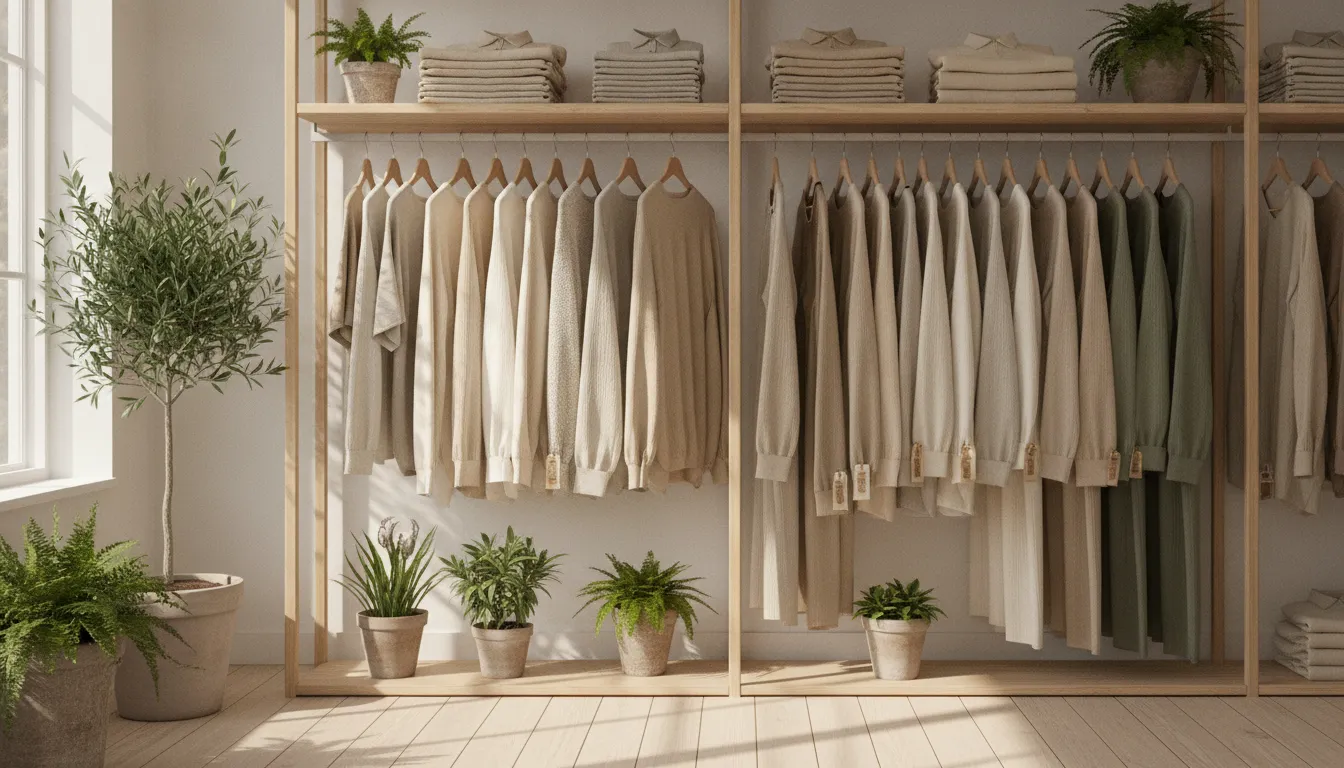
Building a sustainable wardrobe isn’t about perfection — it’s about direction. Every more conscious choice counts: the piece you decided not to buy on impulse, the clothing you repaired instead of throwing away, the local brand you chose to support. These decisions, individually, seem small. Collectively, they shape the market.
Sustainable fashion doesn’t ask you to give up style or comfort. It asks you to look at your wardrobe with more attention and intention. And this exercise, besides reducing real environmental impacts, usually brings an unexpected benefit: simplicity. More curated closets, with pieces you truly like and wear, make daily life lighter.
Start wherever possible. Check what you already have before buying. Research the origin of what you bring home. And when it’s time to renew, choose carefully — not just for yourself, but for the planet we share.
