Why Switching from Car to Bus Could Be One of the Most Powerful Actions for the Climate
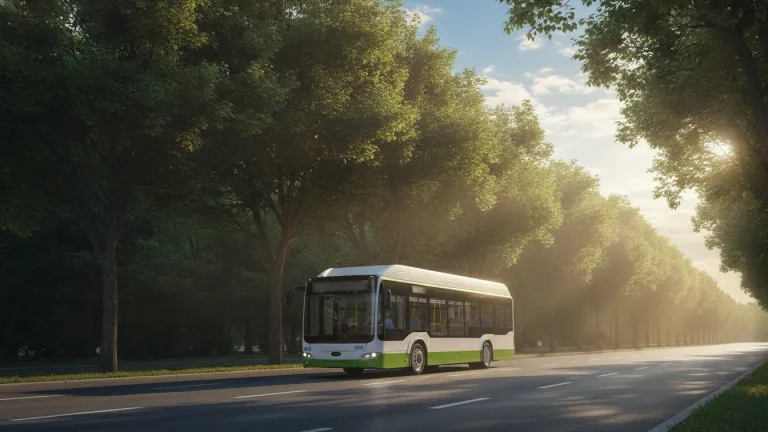
Imagine a busy avenue during rush hour: hundreds of cars lined up, each carrying, on average, fewer than two people, burning fuel and releasing greenhouse gases into the air. Now imagine that same corridor with subway lines, BRT, and electric buses circulating efficiently — moving dozens of times more people with a fraction of the emissions. This difference isn’t just visual: it’s measurable, significant, and at the heart of global decarbonization strategies.
Transportation is one of the sectors that contributes most to carbon dioxide emissions worldwide. According to the Intergovernmental Panel on Climate Change (IPCC), the transportation sector accounts for approximately 16% of global greenhouse gas emissions, and within it, road passenger transport — dominated by private cars — is one of the biggest culprits. In Brazil, the picture is similar: the energy sector, which includes transportation, has historically been one of the main sources of national emissions, according to inventories from the Ministry of Environment and Climate Change.
The good news is that the solution already exists, is available in many cities, and can be adopted today: public mass transit. More than a matter of convenience or cost, choosing the bus, subway, or train instead of a private car is a decision with real climate impact — and this article will show you exactly why, with concrete data and practical tips for you to start right now.
The Real Impact of Emissions in Urban Transportation
To understand why public transit matters so much, we need to put the numbers in perspective. A gasoline-powered passenger car emits, on average, about 120 to 180 grams of CO₂ per kilometer traveled, depending on the model and traffic conditions. When we consider that this vehicle often carries only the driver, the emission per passenger-kilometer is very high.
A conventional urban bus, even diesel-powered, divides these emissions among dozens of passengers — dramatically reducing the carbon footprint per person transported. When we talk about subways and electric trains powered by renewable sources, as is increasingly common in Brazil with the predominance of hydroelectric power in the energy matrix, the climate advantage becomes even more significant.
The International Association of Public Transport (UITP) and other specialized organizations consistently document that well-operated public transit systems emit significantly less CO₂ per passenger-kilometer than individual motorized transport. In cities where the subway is powered by renewable energy, this difference can be several times greater compared to combustion-engine cars.
Public Transit and the Climate Crisis: The Direct Connection
For those who want to understand what causes global warming in simple terms, urban transportation is a concrete, everyday example. Each liter of gasoline burned releases approximately 2.3 kg of CO₂ into the atmosphere. A Brazilian who travels 30 km per day by car throughout a year accumulates a considerable amount of emissions just from commuting — not counting the vehicle production, tires, and road infrastructure.
The IPCC, in its most recent reports, points out that limiting global warming to 1.5°C above pre-industrial levels will require deep and rapid transformations in all sectors, including transportation. This means electrifying fleets, investing in active transport (cycling and walking), and fundamentally, expanding and strengthening public transit systems.
Cities that have already advanced on this path — such as Vienna, Amsterdam, and Singapore — demonstrate that it’s possible to combine efficient mobility with low emissions. In Brazil, initiatives such as the expansion of the São Paulo metro and BRT corridors in various capitals point in the right direction, although there is still much room for growth.
Beyond CO₂: Other Resources Public Transit Saves
The discussion about public transit often focuses on carbon emissions, but the benefits go far beyond that.
Urban space usage: A private car occupies, on average, between 7 and 15 times more road space per passenger than a full bus. Fewer cars on the streets means less need for overpasses, parking lots, and avenue expansions — structures that consume natural resources, waterproof the soil, and contribute to urban heat islands.
Water consumption: The automotive industry is water-intensive, both in vehicle manufacturing and in fossil fuel production. Reducing dependence on private cars indirectly contributes to water conservation.
Air quality: Particulate matter and nitrogen oxides emitted by combustion vehicles are responsible for serious public health problems. The World Health Organization (WHO) classifies air pollution as one of the greatest environmental risks to human health. Fewer cars circulating means cleaner air — and less spending on public healthcare.
Space for urban nature: Areas previously allocated to parking lots and expressways can be converted into parks, gardens, and green corridors, increasing urban biodiversity and population well-being.
How Brazil Is Advancing in Sustainable Transportation
Brazil presents a diverse scenario. On one hand, it has one of the largest fleets of ethanol and natural gas buses in the world, as well as expanding metro systems in major capitals. On the other hand, it still faces historical challenges of underinvestment in public transit and a strong car culture.
Some recent developments deserve attention:
- Bus fleet electrification: Cities like São Paulo, Curitiba, and Belo Horizonte have made progress in introducing electric buses into their urban fleets, with significant reduction in local emissions.
- BRT and exclusive corridors: The Bus Rapid Transit system, when well implemented, combines high transport capacity with competitive travel times compared to cars.
- Fare integration: The ability to use different modes with a single ticket reduces costs for users and encourages migration from cars to public transit.
- Integrated cycling mobility: Cities that combine bike lane expansion with public transit access create a more robust low-carbon mobility ecosystem.
What You Can Do Now: Practical Guide to Sustainable Mobility
Change begins with individual choices — and every bus or subway trip counts. Here’s how to incorporate public transit into your routine smartly:
- Map your routes: Before concluding that “there’s no line to where I need to go,” explore apps like Google Maps, Moovit, or the official apps of your city’s transit companies. Often, there’s a combination of lines that solves your commute in reasonable time.
- Start with one trip per week: It doesn’t have to be a radical change. Choose one day of the week to leave the car at home and use public transit. Expand as you feel comfortable.
- Combine modes: Bicycle + subway, walking + bus. Intermodality is one of the most efficient ways to cover distances without depending on a private car.
- Calculate your savings: Consider the real costs of a car — fuel, insurance, maintenance, depreciation, parking — and compare with the cost of public transit. The difference often surprises positively.
- Advocate for improvements: Participate in public hearings, sign petitions, and support candidates who prioritize investments in public transit. Citizen pressure is fundamental to improving service quality.
- Use your time productively: On public transit, you can read, listen to podcasts, work, or simply rest — something impossible while driving. This changes the perception of commute time.
- Share the experience: Talk to friends, colleagues, and family about your mobility choices. Normalizing public transit use helps break cultural stigmas that still associate buses with “lack of options.”
The Numbers Add Up: Systemic Benefits of Public Transit
When we analyze public transit at scale, the numbers are eloquent — even without having to invent them. Metro and electric train systems operating at full capacity can move tens of thousands of people per hour in a single corridor, which would be impossible with private cars without total traffic collapse.
Cities with high public transit usage rates tend to show:
| Indicator | Cities with high public transit usage | Car-dependent cities |
|---|---|---|
| Emissions per capita (transportation) | Significantly lower | Higher |
| Average time in traffic | Generally lower | Higher (congestion) |
| Family spending on mobility | Lower | Higher |
| Urban air quality | Better | Worse |
| Green space per capita | Higher (less road infrastructure) | Lower |
These patterns are observed in comparative urban mobility studies conducted by organizations such as the Institute for Transportation and Development Policy (ITDP), with an office in Brazil, and by UITP itself.
Connecting the Dots: Sustainable Mobility Is Part of a Lifestyle
The choice for public transit doesn’t exist in a vacuum. It’s part of a set of decisions that, combined, build a lifestyle with lower environmental impact. Just as thinking about a sustainable wardrobe can reduce your carbon footprint in consumption choices, rethinking how you commute is one of the changes with the greatest individual and collective impact.
Transportation is, after all, one of the activities we perform most frequently and regularly. Small changes repeated day after day generate great transformations over time — both in your personal carbon account and in pressure on urban systems.
Conclusion: Every Trip Is a Choice for the Planet
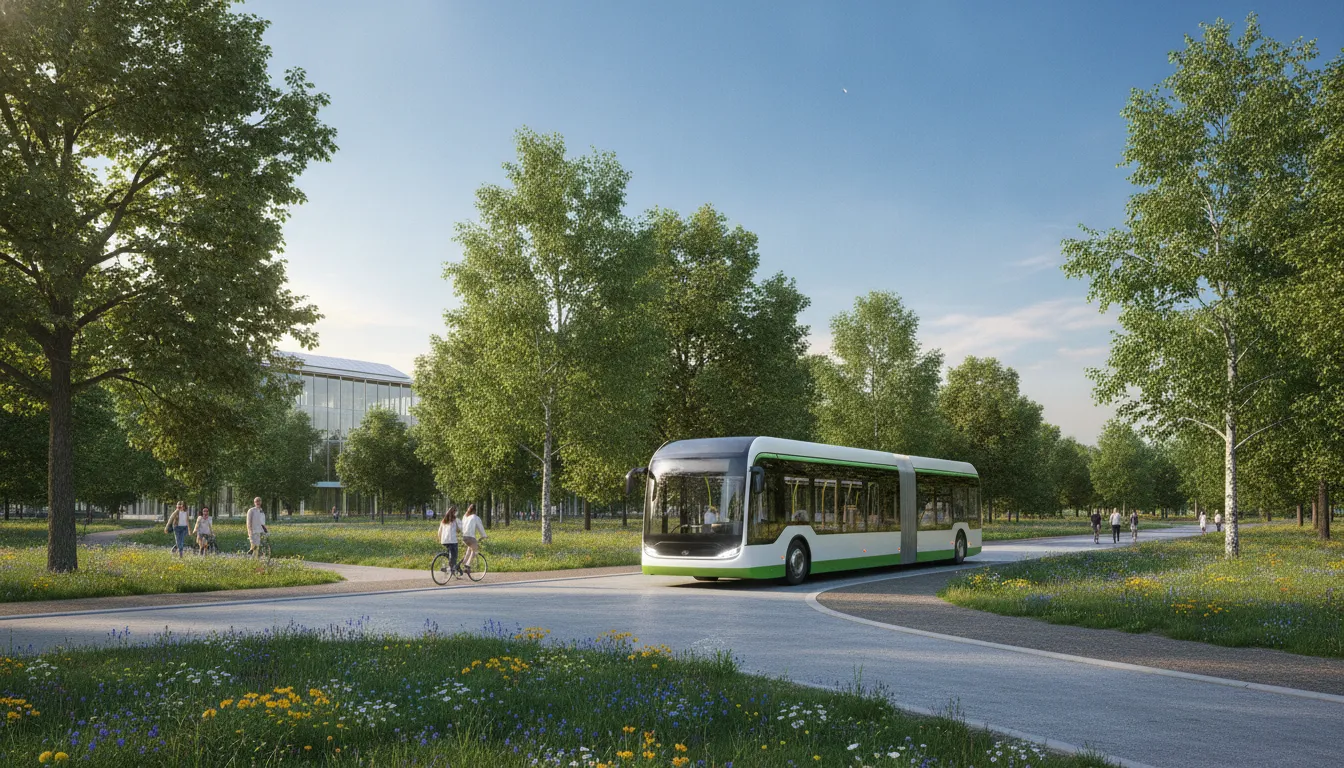
There’s no perfect solution, nor a change that solves everything at once. But public transit — especially when electrified and well integrated — is one of the most powerful and accessible tools we have today to reduce emissions, save natural resources, and build more livable cities.
You don’t have to be perfect. You need to start. Leaving the car in the garage once a week, exploring the bus line in your neighborhood, using the subway to go to work — these gestures matter. And when millions of people practice them, the impact is real, measurable, and transformative.
The next bus or subway trip you take is a vote for the type of city — and planet — you want to inhabit. How about starting this week?
