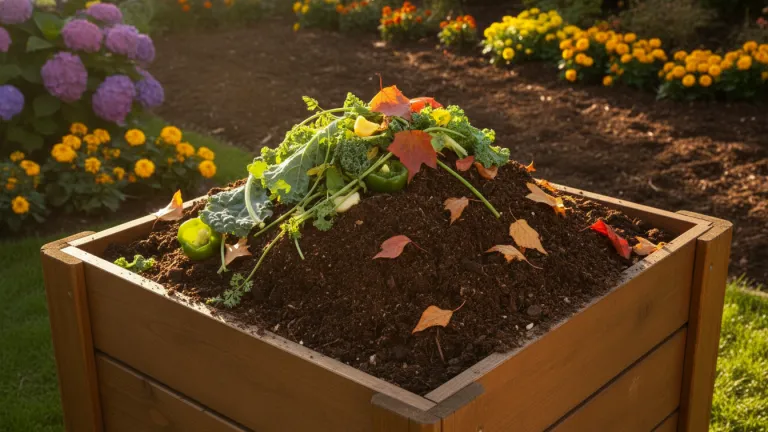
Composting: What It Is and Why the Planet Thanks You
Have you ever stopped to think about what happens to the fruit peels, coffee grounds, and wilted leaves you throw away every day? In most households, this material goes straight into the regular trash, mixed with plastic, paper, and everything else. The final destination is usually a landfill — where these organic residues decompose under inadequate conditions, releasing methane, a gas with a global warming potential far greater than carbon dioxide. The result is a double waste: we lose valuable nutrients that could return to the earth and still contribute to unnecessary emissions.
The good news is that there’s a simple, ancient, and surprisingly efficient solution to break this cycle: composting. Practiced for millennia by civilizations that intuitively understood the value of returning to the earth what was taken from it, composting is now recognized by experts, governments, and environmental organizations as one of the most accessible strategies for reducing waste, enriching soil, and decreasing greenhouse gas emissions.
If you’ve never tried it or think it’s too complicated, this article was made for you. We’ll explain what composting is, how it works, why the planet thanks you, and most importantly, how to start today — even if you live in an apartment.
What Is Composting and How Does It Work
Composting is the biological process of transforming organic matter into fertilizer — technically called compost or humus. Microorganisms such as bacteria and fungi, along with small invertebrates like worms and mites, decompose food scraps, leaves, grass clippings, and other organic materials into a nutrient-rich, stable, and odor-free substance.
The process works through a balance between two types of materials:
- Carbon-rich materials (“dry” or “brown”): dry leaves, unprinted cardboard, sawdust, straw, kraft paper scraps.
- Nitrogen-rich materials (“wet” or “green”): fruit and vegetable scraps, coffee grounds, eggshells, fresh grass clippings.
When these two groups are balanced — typically in a ratio of two parts dry material to one part wet material — microorganisms work actively, heat is generated inside the pile, and decomposition occurs quickly without unpleasant odors. Under ideal conditions, compost can be ready in just a few weeks. In simpler home composters, the process usually takes between two and four months.
Why the Planet Thanks You: Environmental Benefits of Composting
The benefits of composting go far beyond your garden or balcony. They have a real impact on climate, biodiversity, and ecosystem health.
Reduction of Organic Waste in Landfills
According to data from the Panorama of Solid Waste in Brazil, published annually by the Brazilian Association of Public Cleaning and Special Waste Companies (Abrelpe), organic waste represents more than half of everything collected in the country. When this material goes to landfills under oxygen-free conditions, it releases methane, a gas with a global warming potential estimated at dozens of times greater than CO₂ over a 20-year horizon, according to IPCC (Intergovernmental Panel on Climate Change) reports.
Composting at home or in the community removes this material from the landfill stream, directly reducing these emissions.
Soil Recovery and Health
The compost produced is an exceptional soil conditioner. It improves the physical structure of soil, increases its water retention capacity, and provides nutrients gradually and in a balanced way to plants. Embrapa (Brazilian Agricultural Research Corporation) points to organic matter as one of the most critical factors for sustainable productivity of Brazilian tropical soils, which naturally tend to have low humus content.
Less Need for Chemical Fertilizers
Soils fertilized with compost require fewer synthetic fertilizers, whose production is energy-intensive and emits greenhouse gases throughout the entire production chain.
Carbon Sequestration in Soil
When stabilized organic matter is incorporated into the soil, part of the carbon contained in it is retained longer than if it decomposed in an uncontrolled manner. It’s a modest but real and cumulative contribution.
Composting at Home: Step-by-Step Guide to Get Started
You don’t need a huge garden or expensive equipment. Here’s how to begin:
- Choose the composter model suited to your space. For those with a backyard, a wooden or plastic composter with a lid works very well. For apartments, vermicomposting (with red wiggler worms) in stacked plastic bins is the most practical solution.
- Separate organic waste in the kitchen with a small container with a lid. Empty it into the composter every one or two days to avoid odors.
- Add dry material with each addition of wet waste. Keep a bag of dry leaves or torn cardboard near the composter. Always cover food scraps with a layer of dry material.
- Check moisture regularly. The material should be moist like a lightly squeezed sponge — neither waterlogged nor too dry.
- Turn the pile every one or two weeks (for garden composters) to aerate the material and speed up decomposition.
- Wait and observe. Over time, the material at the bottom becomes dark, loose, and smells like earth — that’s the finished compost.
- Use the compost in pots, vegetable gardens, gardens, or donate to neighbors and community projects.
What Can and Cannot Go in the Composter
| Can compost | Avoid adding |
|---|---|
| Fruit and vegetable peels and scraps | Meat, fish, and dairy products |
| Coffee grounds and paper filters | Oils and fats in large quantities |
| Eggshells | Feces from carnivorous pets |
| Dry and fresh leaves | Treated or painted wood |
| Cardboard and paper without colored ink | Scraps with excessive pesticides |
| Grass clippings | Plants with severe fungal diseases |
Composting in an Apartment: Yes, It’s Possible
Many people believe that composting is only for those with outdoor space. That’s not true. Vermicomposting — done with worms of the species Eisenia fetida, known as red wigglers or California red worms — works perfectly in apartments.
The system consists of two or three stacked plastic bins with holes for drainage and ventilation. The worms live in the top bin and process organic waste efficiently and virtually odor-free when properly maintained. The liquid that drains to the bottom bin is called worm tea or “worm leachate,” a powerful liquid fertilizer that can be diluted in water and used directly on plants.
For those living in condominiums, it’s also worth checking if there are collective composting initiatives — many condominiums have already adopted community composters, reducing the volume of generated waste and even lowering collection costs. If this initiative doesn’t exist where you live, why not propose it? It’s a concrete action that can transform your building’s culture.
How to Use the Produced Compost
After all the work, the most rewarding part arrives: using the compost.
- In pots and planters: mix one part compost for every three or four parts soil.
- In home vegetable gardens: incorporate the compost into the soil before planting or use as mulch around plants.
- On trees and shrubs: spread a layer of compost around the base of plants, without touching the stem.
- As liquid fertilizer: dilute the worm tea from vermicomposting in water (about 1:10 ratio) and apply directly to the soil in pots.
- Donation: if you produce more than you use, offer it to neighbors with gardens, community vegetable gardens, or schools with environmental education projects.
Composting and Environmental Education: The Impact Beyond Compost
When you start composting, something interesting happens: you begin to see “trash” with different eyes. That banana peel stops being waste and becomes a resource. This change in perspective is exactly what environmental education experts call a mindset shift — and it tends to spread.
Children who see their parents composting learn from an early age that natural cycles can be respected and imitated. Curious neighbors ask questions. WhatsApp groups start sharing tips. The individual act of composting has a multiplier effect that goes far beyond the composter itself.
To build other habits that complement composting, also check out our Practical Guide to Sustainable Living in Daily Life and see how small everyday choices add up to a significant impact.
Conclusion: Your Composter Is an Act of Transformation
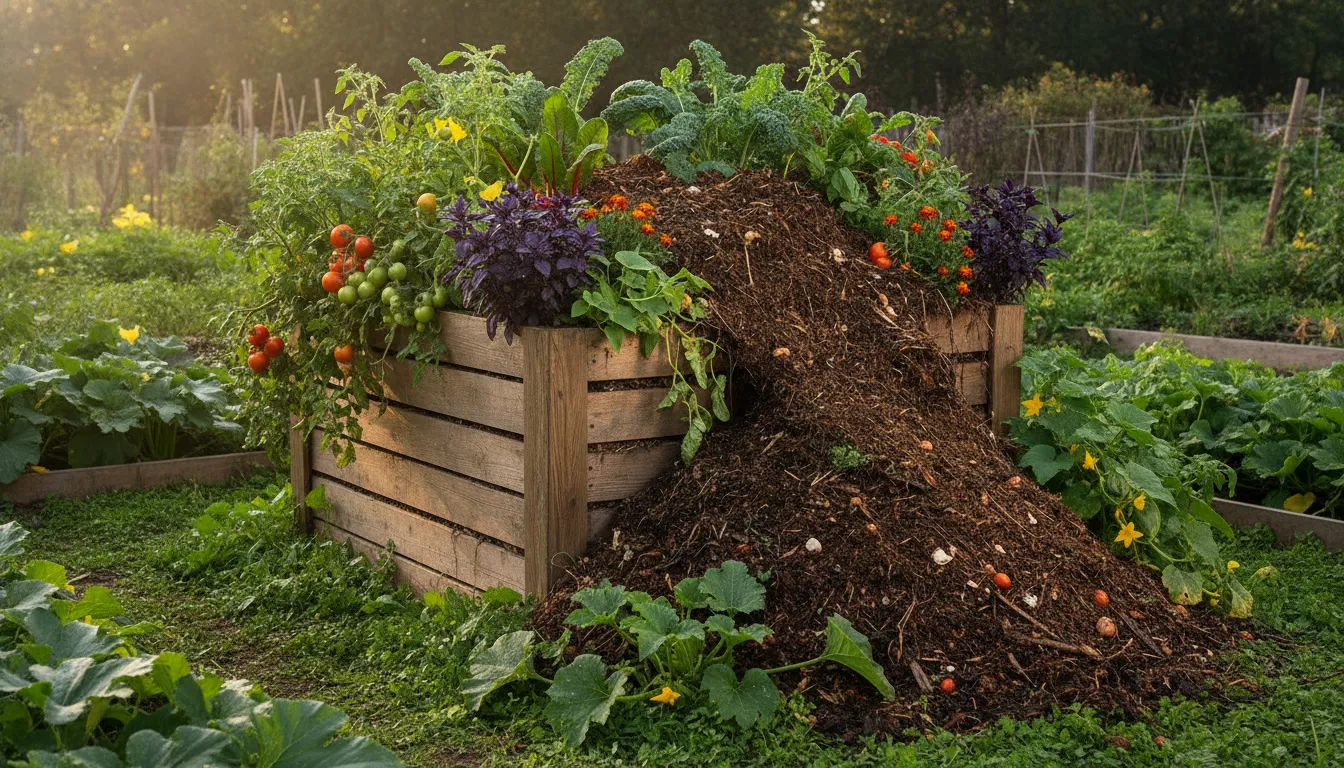
Composting is, in essence, returning to the earth what it gave us. It’s closing a cycle that industrialization had broken. And best of all: it’s something anyone can do, regardless of space size or available budget.
There’s no perfect composting from day one. There will be attempts, adjustments, perhaps an unwanted odor at some point — and all of this is part of the learning process. What matters is starting. A home composter, a pot with homemade compost, a worm working silently in your kitchen: all of this is a concrete declaration that you care about the future of soil, climate, and the planet.
If you want to take even more steps in this direction, don’t miss our article on how to Adopt Sustainable Habits and Live Better Now. Every action counts, and yours can start today.
