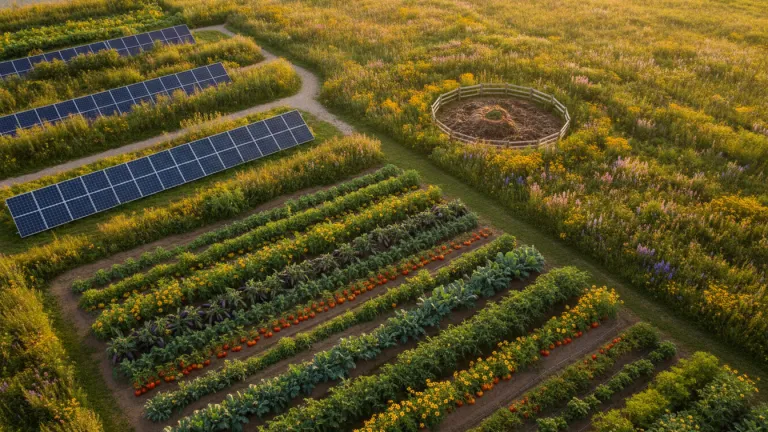
Practical Guide to Sustainable Living in Everyday Life
We live in a time when everyday choices have never mattered more. In 2026, the consequences of climate change are already visible in Brazil — in more intense heat waves, prolonged droughts in the Semi-Arid region, and floods affecting the South and Southeast regions with increasing frequency. The IPCC, in its most recent reports, reinforces that decisions made now, in this decade, will be decisive in limiting global warming to less catastrophic levels.
The good news is that sustainability doesn’t require you to abandon comfort or turn your life upside down. On the contrary: most of the most impactful changes start with simple habits that can be adopted today, in your kitchen, in your bathroom, at the neighborhood supermarket, or on your commute to work. This guide was created to be exactly that — practical, honest, and achievable.
Throughout the following sections, you’ll find actionable tips organized by the areas of life where environmental impact is most significant. It’s not about perfection, but about progress. Every step counts, and the combination of small individual actions, when multiplied by millions of people, truly moves the needle.
Sustainable Food: Where the Impact Is Enormous
The global food system is responsible for a significant share of greenhouse gas emissions — and beef production, in particular, is among the activities with the highest environmental impact in Brazil, a country that leads the world ranking in exports of this product. This doesn’t mean you need to become vegan overnight, but reducing red meat consumption a few times a week already makes a real difference.
What you can do now:
- Adopt at least two days per week without red meat (“Meatless Monday” is a good starting point)
- Prefer proteins like eggs, legumes (beans, lentils, chickpeas), and chicken, which have a considerably lower carbon footprint than beef
- Buy from local farmers’ markets and regional producers — food that travels shorter distances generates fewer transportation emissions
- Reduce waste: in Brazil, it’s estimated that tons of food are lost or wasted annually throughout the entire production chain, according to data from Embrapa and FAO
- Plan your weekly meals to buy only what’s necessary and prevent fruits and vegetables from spoiling in the refrigerator
An especially powerful habit is consuming seasonal foods. They tend to be cheaper, more nutritious, and produced with fewer artificial inputs.
Conscious Consumption: Buying Less and Better
The logic of excessive consumption is one of the biggest obstacles to sustainability. The fashion industry, for example, is internationally recognized as one of the most polluting in the world, especially in the “fast fashion” model, which encourages constant clothing changes at low prices and disposable quality.
How to practice conscious consumption in practice:
- Before buying any item, ask yourself: do I really need this? Do I already have something that serves the same function?
- Research the durability of the product. A quality item that lasts five years is almost always more sustainable than five cheap products that last one year each.
- Explore the second-hand market — physical thrift stores and digital platforms for selling used items have grown significantly in Brazil in recent years and offer great options.
- Repair before discarding — local tailors, cobblers, and repair shops can give new life to clothes, footwear, and electronics.
- Avoid products with excessive packaging and prefer refill versions or returnable packaging when available.
This mindset shift — from “accumulating” to “making good use of what I have” — is one of the most transformative for those who want to live with more lightness and less impact.
Energy at Home: Small Adjustments, Big Results
Brazil’s electricity sector has a matrix with significant participation from renewable sources, especially hydroelectric, wind, and solar — but unnecessary consumption still generates waste and pressure on the system. Additionally, in 2026, Brazil continues to expand its distributed solar generation capacity, making photovoltaic energy increasingly accessible for residences.
Practical tips to reduce energy consumption:
- Replace incandescent or fluorescent bulbs with LED, which consume much less energy for the same lighting
- Unplug devices when not in use — “standby mode” continuously consumes energy
- Use the washing machine with a full load and prefer the cold water cycle when possible
- Set the air conditioner between 23°C and 24°C — each degree below this significantly increases consumption
- Take advantage of natural light during the day and ventilate rooms before resorting to air conditioning
If you own your home or are interested in solar energy, it’s worth checking out the article Energia Solar em Apartamento É Possível e Acessível, which explains how this technology is already viable for different housing profiles.
Water: The Most Precious Everyday Resource
Brazil holds one of the largest freshwater reserves in the world, but distribution is unequal and water crises affect large and small cities with increasing regularity. Saving water is not just an environmental issue — it’s also a matter of justice for those with limited access to this resource.
Simple habits that save liters of water every day:
- Turn off the tap while brushing your teeth or soaping dishes
- Prefer shorter showers — reducing shower time by a few minutes can save dozens of liters per person per day
- Fix leaks as soon as they’re identified; a dripping faucet can waste hundreds of liters per month
- Reuse rinse water from clothes to wash floors or for toilet flushing
- If you have a garden or vegetable patch, water early in the morning or at dusk to reduce evaporation
Installing flow reducers on faucets and showerheads is one of the best cost-benefit measures available on the market, with accessible investment and quick return both environmentally and financially.
Waste and Recycling: Closing the Material Cycle
Brazil still faces serious challenges in solid waste management. A large part of the garbage produced in the country goes to sanitary landfills or, worse, to open-air dumps — a reality that especially affects smaller municipalities. Correct separation of waste at the source is the first step for the recycling system to work.
How to organize recycling at home:
- Have two distinct containers: one for recyclable waste (paper, plastic, glass, metal) and another for rejects (organic waste, contaminated items, toilet paper)
- Wash and dry packaging before discarding — dirty material greatly reduces the utilization rate at cooperatives
- Identify the nearest voluntary drop-off point or selective collection service (many municipalities have this service, but it’s not always widely publicized)
- For special waste — batteries, electronics, expired medications — look for eco-points or manufacturer reverse logistics programs
- Consider composting organic waste: home composting can be done in apartments with compact worm bins and transforms food scraps into fertilizer
To delve deeper into this topic, the article Separe o Lixo Reciclável e Reduza o Desperdício provides a complete guide on how to do proper separation.
Urban Mobility: Rethinking How You Get Around
Transportation is one of the main sources of greenhouse gas emissions in Brazilian cities. The intensive use of individual vehicles powered by fossil fuels contributes both to global warming and urban air pollution, which directly affects the population’s health.
More sustainable alternatives for daily life:
- Use public transportation whenever possible — crowded buses and subways still emit much less per passenger than individual cars
- For short distances, bicycles are one of the most sustainable, healthy, and economical options available
- Remote or hybrid work, when possible, eliminates commuting and directly reduces emissions
- When you need a car, consider vehicle sharing (carpooling with coworkers, for example)
- If changing vehicles is in your plans, electric and hybrid cars have become more accessible in the Brazilian market, with supply growing progressively
Even reducing one car trip per week already represents a real change over time.
Starting Today: A Personal Action Plan
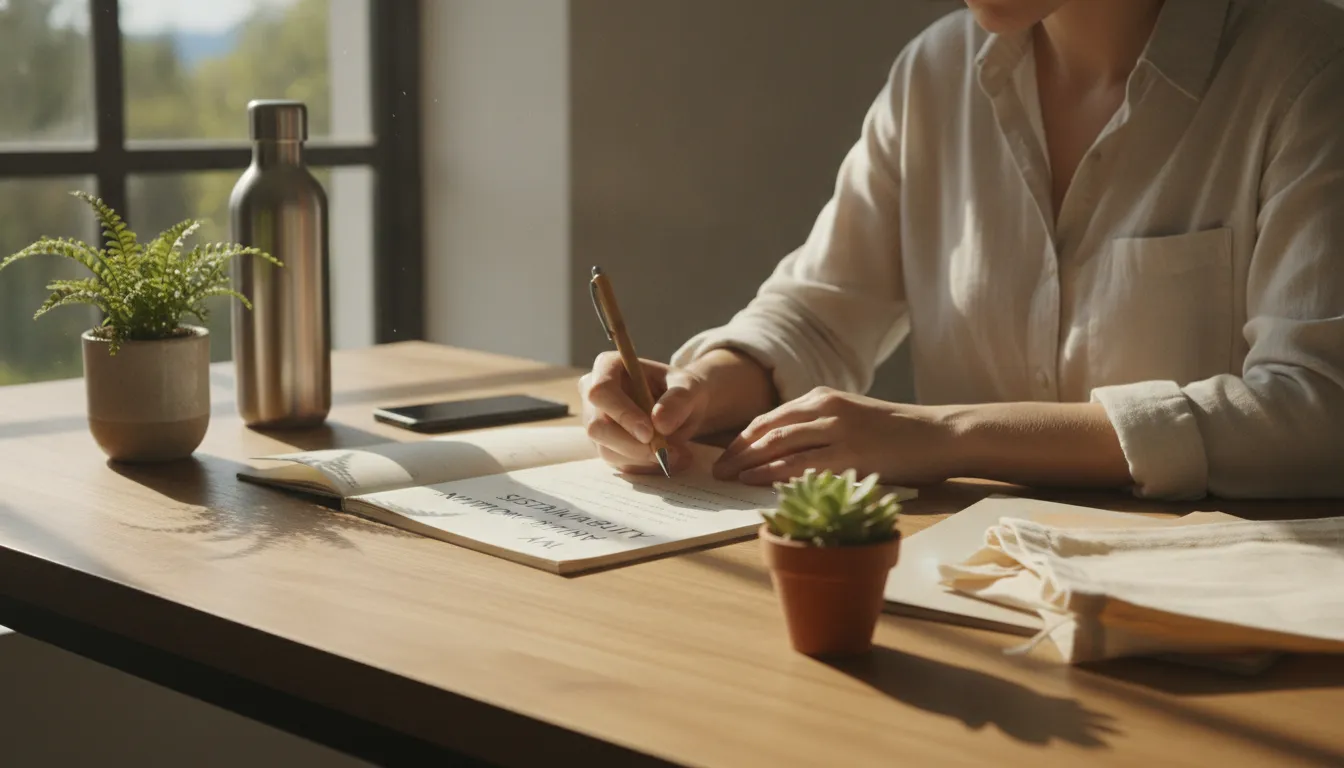
Sustainability is a journey, not a destination. And like any journey, it begins with a first step. Below is a list of actions you can start today — at no cost and without major disruptions to your routine:
- Today: Unplug devices that are on standby and reduce your next shower time by two minutes
- This week: Plan meals to reduce waste and include at least one day without red meat
- This month: Organize recyclable separation at home and identify the nearest collection point
- In the next three months: Evaluate your consumption patterns and identify one category where you can buy less or better
- In the long term: Research solar energy, home composting, or active mobility as investments for the future
Each of these actions, practiced consistently, becomes a habit. And habits, when shared with family, friends, and neighbors, create a wave of change that goes far beyond the individual.
Living more sustainably is not about sacrifice — it’s about more conscious choices and a more balanced relationship with the world around us. The planet needs engaged people, but also people who take care of themselves and find pleasure in this transformation. To continue on this journey, explore more content like Adote Hábitos Sustentáveis e Viva Melhor Agora and remember: you don’t need to do everything at once. You just need to start.
