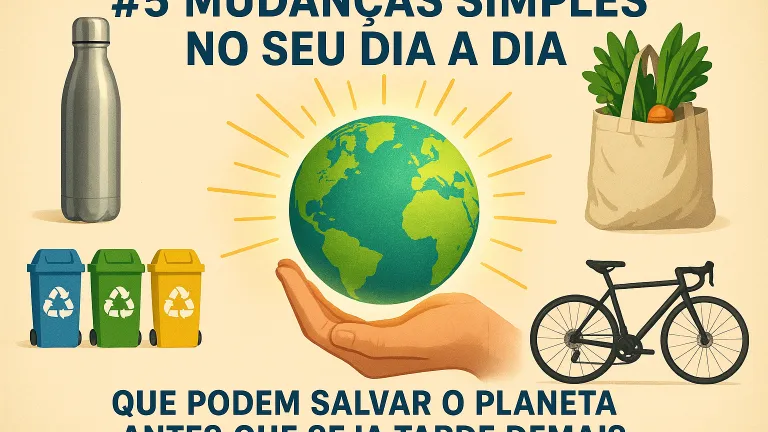
# 5 Simple Daily Changes to Help Save the Planet Before It’s Too Late
We are living in a crucial moment in human history. Climate change, pollution, and environmental degradation are no longer distant threats—they are happening now, right before our eyes. Devastating floods, prolonged droughts, extreme heatwaves, and the accelerated extinction of species are just some of the alarming signs that our planet is calling for help. But here’s the good news: it’s not too late to act, and you don’t need to be an environmental superhero to make a difference.
Many people believe that saving the planet requires monumental sacrifices or radical lifestyle changes. The truth is that small actions can have great impacts when multiplied by millions of people. Every choice we make—from what we eat for breakfast to how we commute to work—has a ripple effect on the environment. This article presents five simple, practical, and accessible changes you can implement immediately in your daily routine. Together, these small adjustments can transform not only your life but also significantly contribute to the preservation of our only home: the extraordinary Earth.
## 1. Reduce Disposable Plastic Use: The First Step to a Sustainable Future
Plastic has become one of the biggest environmental villains of the 21st century. According to the UN Environment Programme, we produce about 400 million tons of plastic globally each year, much of which ends up in the oceans, contaminating marine life and entering the food chain. But the good news is that reducing disposable plastic use is one of the simplest and most impactful changes you can make.
Start by identifying the disposable plastics you use most in your daily life. Water bottles, grocery bags, straws, coffee cups, and food packaging are the main culprits. The solution? Replace them with reusable alternatives. Invest in a stainless steel or glass water bottle that you can carry everywhere. Keep cloth bags in your car trunk or purse—many supermarkets now offer discounts for those who bring their own bags.
If you can’t live without your morning coffee, consider bringing your own thermal cup to the café. Many establishments are encouraging this practice with discounts. As for straws, if you really need one, opt for stainless steel, bamboo, or silicone versions that can be washed and reused indefinitely.
At the supermarket, choose products with less packaging or recyclable packaging. Buy fruits and vegetables in bulk whenever possible, avoiding those wrapped in unnecessary plastic. For those who love to cook, replacing plastic wrap with reusable silicone lids or waxed cloths can make a huge difference over the year.
These changes may seem small, but when you consider that a single plastic bottle can take up to 450 years to degrade in the environment, according to the Ocean Conservancy, each reusable item you adopt represents hundreds or even thousands of pieces of plastic that won’t end up polluting our oceans and landfills.
## 2. Rethink Your Diet: The Power of Conscious Eating
The way we eat has a profound impact on the environment, far beyond what most people imagine. Food production is responsible for approximately 26% of all global greenhouse gas emissions, according to studies published in the scientific journal Science. But you don’t have to become vegan overnight—small adjustments to your diet can already make a substantial difference.
Start by reducing red meat consumption, especially beef. Livestock is responsible for 14.5% of global greenhouse gas emissions, according to the Food and Agriculture Organization (FAO). Additionally, meat production requires enormous amounts of water and space. Try adopting “Meatless Monday,” a global movement encouraging people to skip meat at least one day a week. If everyone did this, the reduction in emissions would be equivalent to taking millions of cars off the roads.
Opt for local and seasonal foods whenever possible. Products that travel thousands of miles to reach your table leave a significant carbon footprint due to transportation. Visit local farmers’ markets, where you can buy fresh, seasonal foods directly from producers. Besides reducing emissions, you’ll be supporting the local economy and consuming more nutritious foods.
Reduce food waste. Approximately one-third of all food produced in the world is wasted, according to the FAO. Plan your meals, make shopping lists, and learn to store food properly to prolong its shelf life. Leftovers can be turned into new creative meals. Peels and vegetable scraps can become compost, which we will discuss later.
Avoid ultra-processed foods with lots of packaging. Besides generally being less healthy, these products require more resources to produce and generate more waste. Opt for whole and minimally processed foods—your body and the planet will thank you.
## 3. Sustainable Mobility: Rethink How You Commute
The transportation sector is one of the largest contributors to greenhouse gas emissions, accounting for about 24% of global CO2 emissions, according to the International Energy Agency. The way you choose to commute daily has a considerable impact on the environment, but it also offers incredible opportunities for positive change.
If you live relatively close to work or school, consider walking or biking. Besides completely eliminating carbon emissions from this route, you also gain health benefits, save money on fuel and parking, and reduce the stress associated with traffic. Many cities are investing in cycling infrastructure, making these options increasingly safe and viable.
For longer distances, public transportation is an excellent alternative. A single bus can replace dozens of individual cars on the streets, significantly reducing per capita emissions. Trains and subways are even more efficient. If public transportation in your city is not ideal, consider joining advocacy groups for improvements—systemic changes start with engaged citizens.
Carpooling is another powerful option. If you need to use a car, organize with colleagues, neighbors, or use carpooling apps. Sharing the vehicle with others dramatically reduces emissions per passenger. For those considering buying a new car, electric or hybrid vehicles are becoming more accessible and offer a much cleaner alternative to combustion engines.
Also reevaluate your travel habits. Airplanes are responsible for about 2.5% of global CO2 emissions, but this number is rapidly growing. When possible, choose closer destinations or alternative means of transportation for trips. If you need to fly, consider offsetting your carbon emissions through certified offset programs. And by respecting the planet in your mobility choices, you are exercising a transformative power.
## 4. Save Energy at Home: Small Adjustments, Big Impact
The energy we consume in our homes represents a significant portion of our individual carbon footprint. Electricity and heating generation is responsible for approximately 25% of global greenhouse gas emissions. Fortunately, there are numerous simple ways to reduce energy consumption at home, saving money and protecting the planet at the same time.
Start with lighting. Replace all incandescent bulbs with LEDs. Although the initial cost is a bit higher, LED bulbs consume up to 80% less energy and last much longer. Cultivate the habit of turning off lights when leaving a room—it seems obvious, but it makes a real difference.
Appliances are major energy consumers. When buying new appliances, look for those with an A++ energy rating or higher. Unplug electronic devices when not in use—many devices continue to consume energy in standby mode, known as “vampire consumption.” Use power strips with switches to easily turn off multiple devices at once.
Heating and air conditioning account for most residential energy consumption. Adjust the thermostat by just one or two degrees—you probably won’t notice the difference in comfort, but your energy bill and carbon emissions will decrease significantly. Dress appropriately for the temperature and use blankets before turning up the heat. In summer, use fans that consume much less energy than air conditioning, and keep curtains closed during the hottest hours to keep the house cool.
Properly insulate your home. Poorly sealed windows and doors allow warm air to escape in winter and enter in summer, forcing your HVAC systems
