
# 5 Creative Ways to Turn Trash into Treasure: The Ultimate Reuse Guide
Introduction: The Art of Seeing Value Where Others See Waste
We live in an era of accelerated consumption, where every day we produce tons of waste that could have a second life. According to the United Nations, humanity generates over 2 billion tons of waste annually, and this number keeps growing. However, a silent revolution is happening: more and more people are discovering that what we consider “trash” can become true treasures through creativity and reuse.
Reuse goes far beyond simple recycling. While recycling transforms materials into new raw materials through industrial processes, reuse gives new functions to objects without necessarily altering them chemically. This means energy savings, reduced carbon emissions, and, of course, significant financial savings for those who practice it.
This complete guide will present five creative and practical ways to turn what you would throw away into useful, decorative, and even profitable items. Get ready to change your perspective on what “disposable” really means and discover how turning trash into opportunity can save the planet and your wallet.
1. Upcycling Packaging: Turning Containers into Decorative and Useful Objects
Upcycling is the process of transforming discarded materials into products of higher value than the original. The packaging we consume daily is a goldmine for those who wish to practice this art.
Glass Bottles: From Waste to Design
Glass bottles, especially those for wine, beer, and soda, can be transformed into elegant vases, sophisticated lamps, romantic candle holders, or even stylized glasses. The process is surprisingly simple: with glass cutting techniques (which can be learned through online tutorials or with accessible tools found in craft stores), you can create unique pieces that would be sold for high prices in decor stores.
A lamp made with colored glass bottles not only saves the cost of a new piece but also creates a unique and personalized environment in your home. According to sustainable design experts, this type of reuse significantly reduces the carbon footprint compared to the production of new decorative items.
Aluminum and Tin Cans: Versatile Organizers
Aluminum and tin cans are incredibly versatile. Once cleaned and with edges properly protected, they can become:
– Pencil holders and desk organizers
– Pots for small plants and succulents
– Kitchen utensil holders
– Decorative lanterns when pierced with artistic designs
– Organizers for bathrooms and utility areas
Transforming cans into organizers can be a family activity, including children (with proper supervision), becoming an educational activity that teaches about sustainability from an early age. Painting, decoupage, fabrics, and other materials can be used to personalize these pieces, creating objects that reflect your personal style.
Cardboard Boxes: Creative Structure and Storage
Cardboard boxes, often discarded after deliveries, can be repurposed in surprising ways. Drawer organizers, decorative storage boxes, pet houses, and even temporary furniture can be created with this abundant material.
Cardboard is especially useful for those organizing spaces or moving, as it allows for creating temporary solutions without financial investment. When adequately reinforced and covered with fabric or decorative paper, cardboard can create pieces that look professional and last much longer than one might imagine.
2. Sustainable Fashion: Renewing Old Clothes and Fabrics
The fashion industry is one of the most polluting in the world, responsible for about 10% of global carbon emissions. Transforming old clothes into new pieces is a powerful way to reduce this impact while expressing your creativity.
Clothing Customization and Alterations
That pair of jeans that no longer fits can become a modern skirt, a stylish bag, or summer shorts. Stained t-shirts can gain new life with tie-dye techniques, embroidery, or fabric applications. Customizing clothes not only extends the lifespan of pieces but also ensures that you have unique items in your wardrobe.
Simple techniques like:
– Natural dyeing with ingredients like turmeric, beetroot, and avocado
– Hand or machine embroidery
– Application of patches and decorative mending
– Cutting and recombining different pieces
These practices allow even those with basic sewing skills to create amazing pieces. There are entire online communities dedicated to “refashioning,” where you can find inspiration and detailed tutorials.
Fabrics Transformed into New Products
Clothes beyond repair can have their fabrics repurposed to create completely new products. Cotton t-shirts can become reusable cleaning cloths, replacing disposable products. More structured fabrics can be transformed into:
– Reusable shopping bags
– Pillow covers
– Tablecloths and napkins
– Patchwork quilts
– Soft toys for children or pets
The art of patchwork is particularly rewarding, as it allows for combining different fabrics and creating pieces that tell stories. A quilt made with t-shirts from special events, for example, becomes a tangible keepsake of precious memories.
Unique Accessories from Unexpected Materials
Discarded textile materials can also be transformed into fashion accessories. Old belts can become bracelets or pet collars. Old ties can be sewn together to create cushions or even vests. Lonely socks (those that mysteriously lost their pair) can turn into thermal bottle protectors, arm warmers, or toys.
The “zero waste” movement in fashion has gained global traction, and just as renewable energy is transforming our future, sustainable fashion is revolutionizing how we dress and consume.
3. Composting and Reusing Organic Waste
Approximately 30-40% of household waste consists of organic waste. Instead of sending it to landfills, where it produces methane (a potent greenhouse gas), these materials can be transformed into valuable resources.
Home Composting: Black Gold for Your Garden
Composting is the natural process of decomposing organic matter that results in nutrient-rich fertilizer. Fruit and vegetable peels, coffee grounds, dry leaves, and even unbleached paper can be composted. The result is a natural fertilizer that enriches the soil without chemicals.
Even in small apartments, composting is possible through compact composters or worm bins (vermicomposting). These controlled systems do not produce unpleasant odors when managed correctly and can process significant amounts of organic waste.
The benefits are numerous:
– Reduction of waste sent to landfills
– Savings on commercial fertilizers
– Improvement of soil quality for plants
– Reduction of household carbon footprint
According to studies by the United States Environmental Protection Agency (EPA), home composting can reduce family waste by up to 30%.
Peels and Scraps: Alternative Uses Before Composting
Before even going to the composter, some organic waste can have additional uses. Citrus peels can be used to make natural cleaning products infused in vinegar, which work as powerful degreasers and leave a fresh scent. Coffee grounds serve as a body scrub, natural insect repellent, and odor neutralizer.
Banana peels can be rubbed directly on plants to provide nutrients or used to polish leather shoes. Vegetable cooking water (after cooling) is rich in nutrients and can be used to water plants. These practices extend the value of the food we consume and demonstrate that awakening our consciousness to new possibilities is within everyone’s reach.
Seeds and Sprouts: The Complete Cycle
Seeds from tomatoes, peppers, pumpkins, and many other fruits and vegetables can be washed, dried, and planted, creating a complete cycle of sustainability. Even in small spaces, it is possible to grow herbs and vegetables from scraps that would normally be discarded.
Some vegetables like lettuce, scallions, and celery can be regenerated just by placing their bases in water. This process not only provides fresh food for free but also connects people to the process of growing food, creating a deeper appreciation for nature.
4. Furniture and Pallets: Large-Scale Reuse
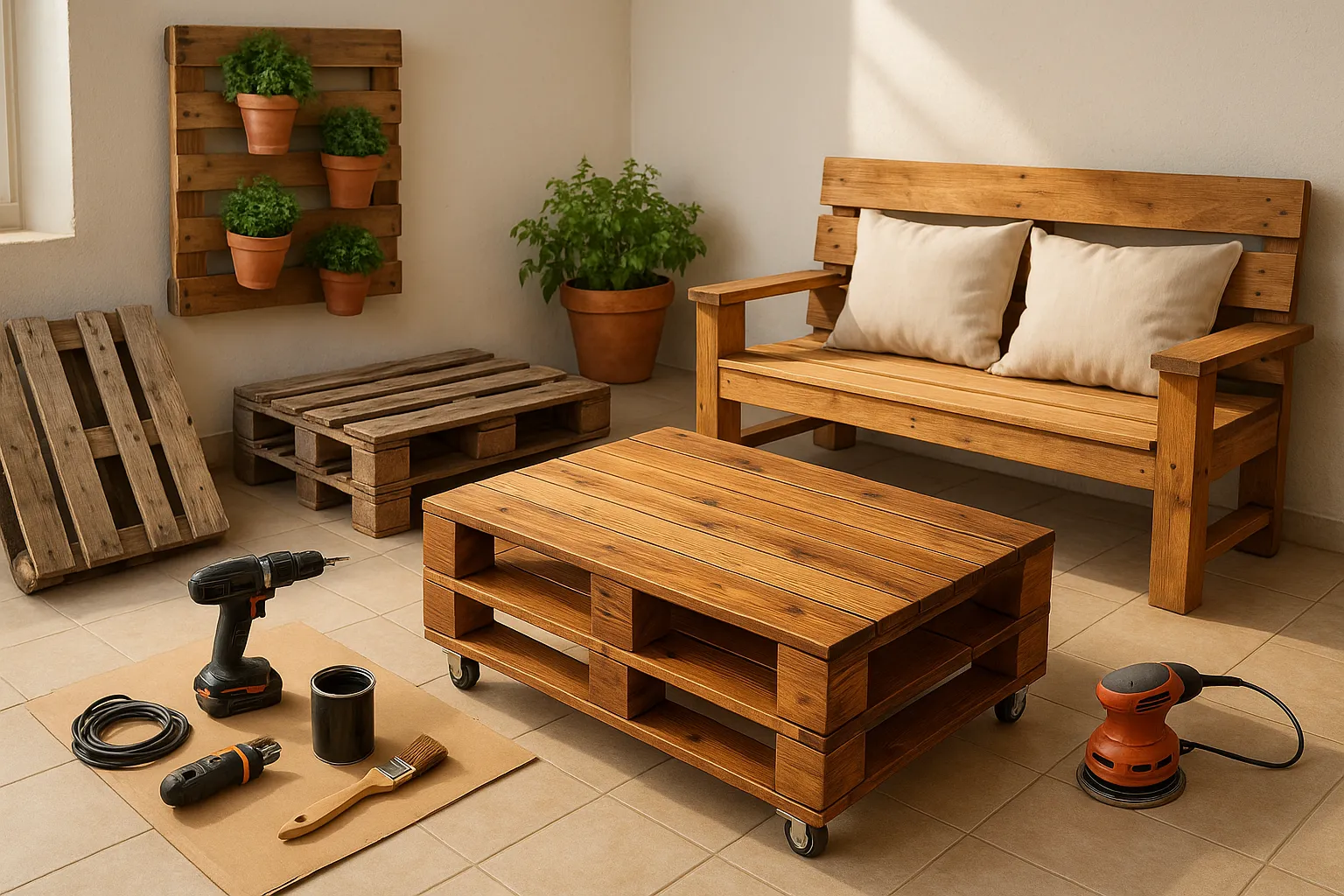
Old furniture and pallets
