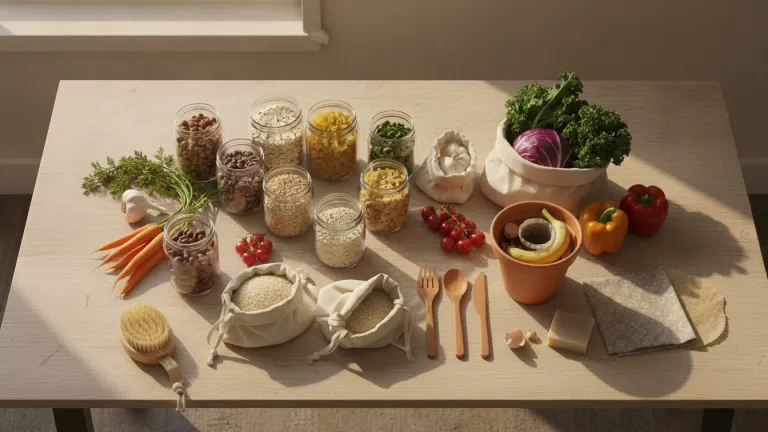
What is the Zero Waste movement?
Imagine opening your household trash bin at the end of an entire week and finding just a handful of waste — enough to fit in a small glass jar. Sounds like a utopia? For thousands of people around the world, this is already a reality. The Zero Waste movement proposes exactly this: rethinking our relationship with consumption and waste so profoundly that the amount of trash sent to landfills and dumps becomes minimal — or even nonexistent.
More than a trend or Instagram aesthetic, Zero Waste is a life philosophy based on concrete principles of reduction, reuse, recycling, and composting. In a context where Brazil generates more than 80 million tons of urban solid waste per year — according to data from the Panorama of Solid Waste in Brazil, published by the Brazilian Association of Public Cleaning and Special Waste Companies (Abrelpe) — adopting this philosophy has shifted from being an individual choice to a collective necessity.
The good news is that you don’t need to turn your life upside down overnight. Zero Waste is built through small steps, habits replaced one by one. This article is your entry guide: practical, honest, and judgment-free.
Why is waste such a serious problem?
To understand Zero Waste, you first need to face the problem it seeks to solve. Trash doesn’t disappear when the collection truck passes by your house. It goes somewhere — and that somewhere, most of the time, has serious consequences.
In Brazil, a significant portion of waste still ends up in open-air dumps or controlled landfills that lack the full infrastructure needed to contain soil and groundwater contamination. Additionally, the decomposition of organic matter in landfills releases methane, a greenhouse gas with global warming potential far superior to CO₂ over shorter time horizons, as noted by the IPCC in its assessment reports.
In the ocean, single-use plastics fragment into microplastics that have already been found in fish, sea salt, drinking water, and even human blood. The scale of the problem is global, but solutions start at home — literally.
The 5 Rs of Zero Waste: the philosophical guide of the movement
The theoretical foundation of Zero Waste is often attributed to activist and writer Bea Johnson, who popularized the concept with the book Zero Waste Home and developed a priority hierarchy known as the 5 Rs. Understanding this order is fundamental because it prevents the most common mistake: jumping straight to recycling without first questioning consumption.
| Principle | What it means in practice |
|---|---|
| Refuse | Say no to what is not necessary: freebies, plastic bags, straws, unnecessary packaging |
| Reduce | Buy less, choose products with more durability and purpose |
| Reuse | Prefer reusable items; repair before discarding |
| Recycle | Separate what cannot be avoided and dispose of it correctly |
| Rot | Compost organic waste to return it to the earth |
The order matters: recycling comes almost at the end of the list. This doesn’t mean recycling is useless — it means recycling without reducing consumption is like emptying a sinking boat with a teaspoon.
How to take your first steps in Zero Waste: a step-by-step guide
The transition to Zero Waste doesn’t happen in a weekend. It’s gradual, and every step counts. Here’s where to start:
- Conduct a trash audit. Before any changes, observe what you discard during one week. Separate by categories: plastics, organics, paper, glass, rejects. This exercise reveals the highest impact points in your routine.
- Replace the single-use items most present in your trash. For most people, this means: plastic bags (→ reusable bags), plastic bottles (→ reusable bottle), disposable cups (→ your own cup or mug), plastic stirrers and straws (→ stainless steel, bamboo, or glass versions).
- Put together an on-the-go kit. Always carry a reusable bag, bottle, mug, and cutlery with you. This simple action eliminates most waste generated outside the home.
- Rethink food shopping. Prefer farmers’ markets and stores that allow you to use your own containers. Buying in bulk drastically reduces packaging waste. Some cities already have bulk stores and conscious consumption cooperatives.
- Start composting. Organic waste represents a considerable portion of Brazilian household trash. Composting at home — even in apartments, with worm composters — transforms this leftover into fertile fertilizer. There are tutorials, support groups, and even municipal programs that distribute composters for free in some cities.
- Dispose of the unavoidable correctly. Learn to separate recyclables and locate the nearest selective collection point. For specific items like batteries and electronics, check specialized collection points — you can learn more by reading about how to dispose of batteries and electronics without harming the planet.
- Celebrate progress, not perfection. Zero Waste is not a state of absolute purity. It’s a direction. Anyone who reduces their waste by 50% is already making a real difference.
Practical and actionable habits for everyday life
Beyond the initial steps, there are habit changes that can be gradually incorporated and have a major impact on the volume of waste generated:
- In the kitchen: use food in its entirety (peels, stems, and seeds are versatile in cooking), plan meals to avoid waste, and make your own soap from used cooking oil — a practice that reuses common waste and also saves money.
- In the bathroom: replace hygiene products packaged in plastic with bar versions (shampoo, conditioner, soap), use a bamboo toothbrush, try reusable menstrual products like cups or period underwear.
- When shopping: prefer local products with less packaging and a smaller transportation footprint. Supporting local producers also strengthens the regional economy and reduces logistical waste.
- At the office and in studies: use paper on both sides, prefer digital documents when possible, and bring your own mug for coffee.
- When disposing of clothes and objects: donate, sell, or trade before throwing away. Thrift stores, swap groups, and resale platforms are powerful allies.
Zero Waste in the Brazilian context: challenges and opportunities
It’s important to recognize that the journey toward Zero Waste in Brazil has its specificities. Some solutions available in other countries are still limited here — bulk markets aren’t in every neighborhood, selective collection doesn’t reach all municipalities, and the cost of sustainable products is still often higher than conventional disposables.
This doesn’t invalidate the movement — on the contrary, it reinforces the importance of prioritizing what is within each person’s reach and understanding Zero Waste as a collective practice as much as an individual one. Pushing for public policies, supporting local community composting initiatives, participating in conscious consumption groups, and valuing businesses committed to waste reduction are equally valid ways to contribute.
Brazil’s National Solid Waste Policy (Law No. 12,305/2010) established important guidelines for waste management in the country, including recycling targets and the elimination of dumps. Implementation still faces obstacles, but the law represents a landmark that civil society can — and should — demand enforcement of.
Common myths about Zero Waste that deserve to be debunked
Many people shy away from the movement due to misconceptions. Let’s clear up a few:
- “Zero Waste is only for people with money.” False. Reducing consumption, avoiding disposables, and composting are practices that, in the medium term, save money. A reusable bottle pays for itself quickly compared to buying plastic bottles daily.
- “I need to buy everything zero waste all at once.” No. Use what you already have. Replace an item with its sustainable equivalent only when the current one runs out or breaks.
- “Recycling solves the problem.” Recycling is important but has technical and economic limits. Not everything is recyclable, and the process also consumes energy and water. The priority should be to prevent waste generation.
- “If I do this alone, it won’t change anything.” Cultural change starts with individual choices that inspire others. Additionally, every purchase is a market signal. Consumers who refuse disposables create demand for alternatives.
Conclusion: start with one step, not with perfection
Adopting Zero Waste doesn’t require a radical transformation overnight. It does require curiosity, willingness to question old habits, and patience with the process. Every package refused, every item reused, every portion of organic waste turned into compost represents a choice that multiplies over time.
Start with your trash audit this week. Then, choose just one substitution — the one that seems easiest for your routine. After a month, add another. In a year, you’ll look back and see how much has changed.
The planet doesn’t need a handful of people living Zero Waste perfectly. It needs many people doing what they can, with intention and consistency. You can start today.
