Have you ever stopped to count how many disposable plastic packages passed through your hands today? The morning coffee cup, the sauce sachet at lunch, the bread bag, the soda bottle cap. This count, multiplied by millions of people every day, results in an amount of plastic waste that the planet simply cannot absorb.
Plastic doesn’t disappear. It breaks down into smaller and smaller particles — called microplastics — that have already been detected in oceans, soils, drinking water, and even human blood, according to research published in peer-reviewed scientific journals. The single-use plastic crisis is one of the most concrete and visible faces of the global environmental crisis, and the good news is that it’s also one of the areas where individual choices have direct and immediate impact.
The purpose of this article is not to provoke guilt or preach an unattainable lifestyle. It’s to show, in a practical and honest way, where to start reducing single-use plastic in everyday life — with small steps, affordable costs, and without sacrificing convenience.
The Problem with Single-Use Plastic: Understanding What’s at Stake
Single-use plastic is any item made of plastic designed to be used once and thrown away: bags, straws, cutlery, cups, food packaging, plastic envelopes, among others.
According to the United Nations Environment Programme (UNEP), only a small fraction of all plastic ever produced in the world has been recycled. Most ends up in landfills, incinerators, or in the environment. Brazil, due to its territorial extension and population volume, ranks among the largest generators of solid waste in Latin America.
The impacts are varied:
- Oceans and rivers: marine animals ingest plastic fragments or become trapped in waste, causing deaths and ecological imbalances.
- Soil: buried plastics release chemical compounds that can contaminate groundwater.
- Human health: microplastics have already been found in human tissues, although long-term effects are still being studied.
- Climate: plastic production depends on fossil fuels and emits greenhouse gases throughout its chain.
Understanding this context helps give meaning to habit changes. This isn’t about trends — it’s about a rational response to a documented problem.
Diagnose Your Plastic Waste
Before changing anything, it’s worth observing. For one week, separate all the single-use plastic you generated and try to categorize:
- Food packaging (bags, trays, plastic films)
- Hygiene and cleaning product packaging (shampoo, liquid soap, detergent)
- Single-use items (cups, cutlery, straws, bags)
- Packaging from other products (clothing, electronics, stationery)
This exercise reveals where most of your disposal comes from — and where changes will generate the most results. For most people, food and personal hygiene concentrate the largest volume of household single-use plastic.
You can also take this opportunity to learn more about the concept of Zero Waste: What It Is and How to Take the First Steps, an approach that goes beyond plastic and proposes rethinking your entire relationship with waste.
Practical Substitutions: Where to Start Without Overcomplicating
The common trap is trying to change everything at once. This generates frustration and abandonment. The most effective strategy is to replace one item at a time, starting with what you use most frequently.
Kitchen Substitutions
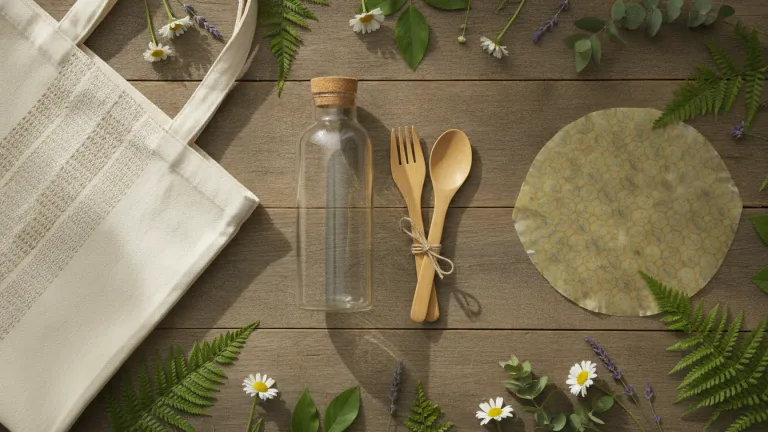
- Plastic bags: replace with cotton eco-bags or reusable non-woven fabric bags. Keep one or two in your purse or backpack so you’re not caught off guard at the store.
- Plastic wrap (PVC): switch to reusable silicone lids, beeswax wraps, or simply invert a plate over the bowl.
- Freezer bags: glass containers with lids work well and last for years.
- Store-bought sponges: vegetable cellulose sponges or natural loofah have lower environmental impact and are compostable.
- Disposable water bottles: a reusable stainless steel or glass bottle solves the problem and keeps water temperature longer.
Bathroom Substitutions
- Liquid shampoo and conditioner in bottles: try solid bar versions, which last longer and don’t generate plastic packaging.
- Liquid soap: traditional bar soap is an effective and economical alternative.
- Dental floss in plastic packaging: there are versions with refills in compostable or glass packaging.
- Toothpaste in tubes: tablet or powder toothpaste exists on the market and comes in glass or paper packaging.
- Plastic toothbrush: bamboo-handled brushes are a direct replacement, with replaceable nylon bristle heads.
How to Shop While Generating Less Plastic: Step by Step
Changing how you shop is one of the actions with the greatest impact on the volume of single-use plastic generated. Here’s how to reorganize this routine:
- Plan before leaving home: list what you need and, whenever possible, prefer bulk stores or farmers’ markets for dry foods, grains, cereals, and spices.
- Bring your own containers: glass jars or sturdy reusable plastic containers work well at bulk stores. Many accept tare (weighing the empty container before filling).
- Prefer larger packages when necessary: if there’s no plastic-free alternative, buying in larger packages reduces the total amount of plastic per unit of product.
- Avoid individually wrapped fruits and vegetables: at farmers’ markets and produce shops, it’s common to find the same products without packaging.
- Check the label: some packages are made from post-consumer recycled plastic or are recyclable in your city — this doesn’t eliminate the problem, but it’s better than virgin plastic with no destination.
- Find out where there’s selective collection in your neighborhood: when plastic cannot be avoided, ensuring it goes to recycling is the next best step.
Habits Outside the Home: The Challenge of Urban Daily Life
Modern life makes it difficult to avoid single-use plastic when we’re away from home. But some habits help a lot:
- Carry a basic kit: reusable bottle, collapsible silicone cup, compact bamboo or stainless steel cutlery, and a reusable straw fit in any bag.
- Proactively refuse: when ordering something at a restaurant or snack bar, let them know upfront that you don’t want a straw, disposable cup, or unnecessary plastic packaging. Most establishments comply without issue.
- Prefer establishments with good practices: coffee shops that offer discounts for bringing your own cup, restaurants that use compostable packaging for delivery — these choices also work as market signals.
- For delivery: add notes to your order requesting they don’t send disposable cutlery or extra packaging. It’s simple and it works.
Cleaning Products: An Area with Great Reduction Potential
Household cleaning products account for a significant amount of plastic packaging: detergent, disinfectant, multi-purpose cleaner, bleach, fabric softener, among others.
Some concrete alternatives:
- Concentrates and refills: several manufacturers already offer concentrated versions that reduce packaging volume, or refills to replenish existing bottles.
- Multi-purpose products: a single versatile product replaces several specialized bottles.
- Homemade recipes: diluted white vinegar cleans surfaces, removes buildup, and deodorizes. Baking soda is a gentle abrasive and effective deodorizer. Both are cheap, safe, and come in smaller packages or in bulk.
- Dish soap bars: they work well with a sponge or loofah and eliminate the liquid detergent bottle.
You Don’t Have to Be Perfect: The Rule of Progress
One of the biggest obstacles to habit change is the pursuit of perfection. Those who think they need to eliminate 100% of plastic from their lives for it to “be worth it” end up changing nothing.
The most useful rule is progress, not perfection. Reducing 30% of the single-use plastic you used to generate is already a real contribution. And each substitution made becomes automatic over time, freeing up energy for the next one.
Some perspectives that help maintain focus:
- Mistakes happen: forgot the bag? That’s okay. The next shopping trip can already be different.
- Compare with yourself, not others: the starting point is different for each person and reality.
- Share with people close to you: habit changes are better sustained in groups. Talking about the topic with family or friends multiplies the impact.
If you want to go beyond plastic and understand a broader approach to waste reduction, the concept of Zero Waste offers a consistent and well-documented path.
Conclusion: Your Choice Today Matters

Reducing single-use plastic in daily life doesn’t require an immediate revolution in your routine. It requires attention, curiosity, and willingness to try alternatives — many of which cost less than the products they replace.
Start with the diagnosis of your week of waste. Choose one substitution to make this week. Observe the result. Then, choose another. This pace is sustainable — in the most practical sense of the word.
The planet doesn’t need a few people living in completely impeccable ways. It needs many people making better choices, consistently, in everyday life. And you’re already on the right path just by reading and thinking about this.
How about starting today?
