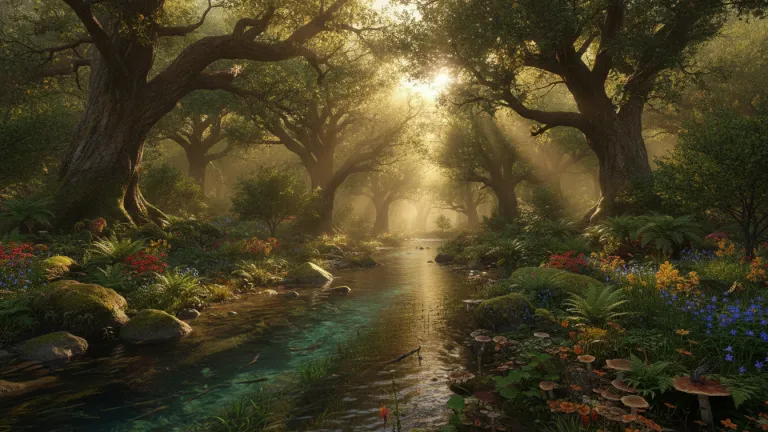
Imagine walking through a dense forest: listen to the birds, watch the ants carrying leaves, feel the moisture of the soil beneath your feet. What seems like simply a beautiful scene is actually a living machine of extraordinary complexity. Every being there — from the invisible bacterium to the canopy of a centuries-old tree — plays a precise role within a network of relationships that sustains life. This set is what we call an ecosystem, and understanding how it works is the first step toward protecting it.
The word “ecosystem” was coined by British botanist Arthur Tansley in 1935, but the concept has gained increasing scientific weight over the following decades — and has never been as urgent as it is now. In 2026, with climate pressures increasingly visible on forests, oceans, and savannas, understanding what an ecosystem is has moved beyond classroom topics and become essential knowledge for any citizen who wants to act consciously about the planet.
The good news is that you don’t need to be a biologist to understand the logic behind ecosystems. This article will explain the concept clearly, show how each piece of this mechanism connects — and most importantly, what you can do in your daily life to help keep it running.
What Is an Ecosystem, Exactly?
An ecosystem is the set formed by all living beings in a given area — plants, animals, fungi, microorganisms — and the non-living elements that surround them, such as soil, water, sunlight, temperature, and air. The central point is that these two groups do not exist separately: they interact constantly, exchanging energy and matter in ways that make life possible.
Ecosystems can vary greatly in size. A lake, a forest, a coral reef, an arctic tundra, a puddle in your backyard — all are ecosystems. What defines them is not the size, but the existence of functional interactions between living and non-living components.
Scientists organize these interactions into two major blocks:
- Biotic components: all living beings (plants, animals, fungi, bacteria, algae)
- Abiotic components: physical and chemical elements (light, temperature, humidity, soil pH, nutrient availability)
Neither block functions without the other. Plants need soil, water, and sunlight. Soil needs microorganisms to remain fertile. Microorganisms depend on organic matter that animals and plants leave behind. It’s a chain with no defined beginning or end.
How Energy Flows Within an Ecosystem
One of the most fascinating functions of an ecosystem is transforming solar energy into life. This process begins with producers — mainly plants, algae, and cyanobacteria — which capture sunlight through photosynthesis and convert it into chemical energy stored in their cells.
From this base, energy flows through levels called trophic levels:
- Producers (plants, algae): capture solar energy
- Primary consumers (herbivores like grasshoppers, deer, caterpillars): eat the producers
- Secondary consumers (carnivores that eat herbivores, such as frogs and snakes): eat the primary consumers
- Tertiary consumers (large predators, such as jaguars and harpy eagles): top of the food chain
- Decomposers (fungi, bacteria, earthworms): break down dead organic matter and return nutrients to the soil
A crucial detail: at each trophic level, a significant portion of energy is lost as heat. That’s why the higher up the food chain, the more energy is needed to sustain a population — which explains why there are far more plants than herbivores, and far more herbivores than large predators in any healthy ecosystem.
The Matter Cycle: The Ecosystem Wastes Nothing
Unlike energy, which flows in only one direction, matter circulates in closed cycles within ecosystems. The chemical elements essential to life — carbon, nitrogen, phosphorus, water — are constantly reused.
The Carbon Cycle and Forests
Carbon is perhaps the most discussed cycle today because of climate change. Tropical forests, like the Amazon, function as immense carbon reservoirs: trees absorb CO₂ from the atmosphere and store it in their trunks, roots, and leaves. When a forest is cut down or burned, this carbon is released back into the atmosphere, intensifying the greenhouse effect.
The Water Cycle and Invisible Services
Vegetation also plays a central role in the water cycle. Forests release water vapor through leaf transpiration, feeding cloud formation and rainfall — including in distant regions. Researchers use the term “flying rivers” to describe these moisture flows that the Amazon projects over much of South America. The degradation of these forests, therefore, doesn’t just affect local biodiversity: it affects the rainfall patterns of entire states and countries.
Biodiversity: The Ecosystem’s Resilience
The more diverse an ecosystem is in species, the greater its capacity to recover from disturbances — whether droughts, fires, pests, or diseases. Biodiversity functions as a safety net: if one species disappears, others can take on similar functions and keep the system running.
The opposite is also true. Ecosystems with low diversity — such as extensive agricultural monocultures — are much more vulnerable to cascading collapses. A single pest can devastate a monoculture plantation because there aren’t enough natural predators to control it.
According to the IUCN (International Union for Conservation of Nature), thousands of species are classified as threatened with extinction in their updated reports. Each extinction is, in practice, the removal of a link from this network. In some cases, the disappearance of a keystone species — one that exerts disproportionate influence on the ecosystem — can trigger drastic changes throughout the entire biological community.
Ecosystem Services: What Nature Does for You for Free
Perhaps the most practical way to understand the importance of ecosystems is to think about what they deliver to us at no cost. These benefits have a technical name: ecosystem services. They are generally divided into four categories:
| Category | Examples |
|---|---|
| Provisioning | Food, drinking water, timber, natural medicines |
| Regulating | Climate control, air and water purification, pollination |
| Supporting | Soil formation, nutrient cycling, oxygen production |
| Cultural | Recreation, tourism, mental well-being, spiritual and aesthetic value |
Pollination is an especially relevant example: bees, butterflies, bats, and other pollinating animals are responsible for the reproduction of a large portion of the plants that make up our food supply. Without them, global agricultural production would be severely compromised.
When Ecosystems Collapse
Ecosystems are resilient, but they have limits. When human pressures exceed the system’s recovery capacity, the effects can be irreversible. The main threats identified by science include:
- Deforestation and habitat fragmentation: reduces available space for species and cuts connections between populations
- Soil, water, and air pollution: alters ecosystem chemistry and eliminates sensitive species
- Invasive species: compete with native species and disrupt relationships built over millennia
- Overexploitation: predatory fishing, illegal hunting, and uncontrolled extraction remove species faster than they can reproduce
- Climate change: alters temperatures, rainfall patterns, and synchronization between species (such as flowering and pollinator arrival)
The IPCC (Intergovernmental Panel on Climate Change) has documented in its reports how climate change amplifies and accelerates all other threats, creating increasingly difficult-to-reverse degradation cycles.
What You Can Do to Protect Ecosystems
The good part is that individual and collective actions make a real difference. Here are practical and actionable steps you can take:
- Reduce red meat consumption — extensive cattle ranching is one of the main causes of deforestation in Brazil and worldwide
- Plant native species in your garden or balcony — they attract pollinators and strengthen local fauna. Learn more at Planting a Tree the Right Way Makes All the Difference
- Avoid pesticides at home and in the garden — they kill pollinators and contaminate soil and water
- Compost your organic waste — it returns nutrients to the soil and reduces methane emissions from landfills; see how at Composting: What It Is and Why the Planet Thanks You
- Reduce plastic disposal — plastic fragments contaminate aquatic and terrestrial ecosystems on a global scale
- Support producers who practice sustainable agriculture — buying from those who respect soil and water is voting with your money
- Participate in or support forest restoration projects — even from a distance, there are organizations that allow direct contributions to reforestation of degraded areas
- Respect preservation areas — don’t dispose of trash on trails, rivers, or beaches; every fragment of habitat matters
Conclusion: You Are Part of the Ecosystem
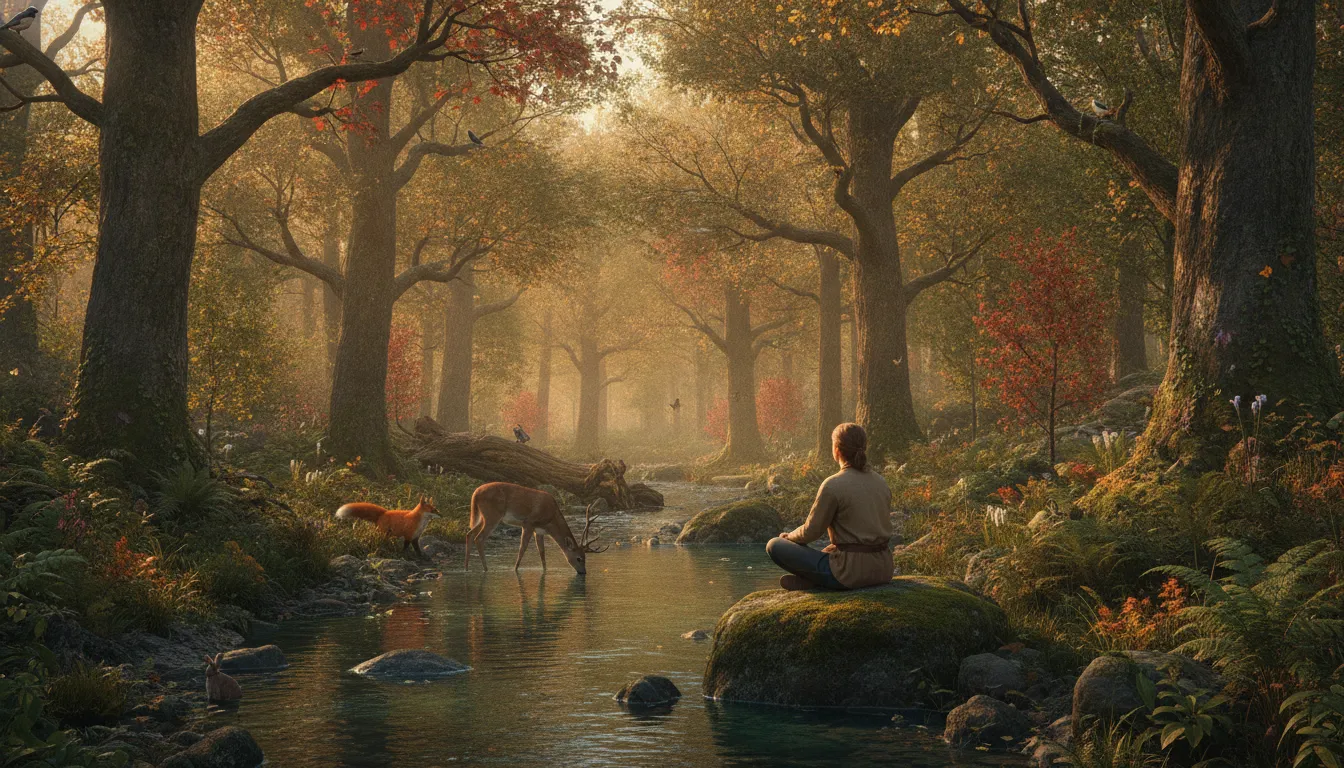
It’s easy to see ecosystems as something external — a forest far away, an ocean on the other side of the world. But the reality is different: we are part of ecosystems. We breathe the oxygen they produce, eat the food they make possible, drink the water they filter and regulate. Our health and well-being are intertwined with the health of these systems.
Understanding how an ecosystem works is not an academic exercise — it’s an act of collective self-knowledge. When we protect a riparian forest, reduce food waste, or choose less polluting products, we are literally strengthening the network that sustains us.
Nature has spent billions of years perfecting these connections. Our task now is to learn to respect them, restore them where they are weakened — and ensure that generations after us can also walk through that forest, hear the birds, and feel the living soil beneath their feet.
