
Imagine waking up one day and realizing that summer has become hotter than the previous year, the rains came at the wrong times, and that beach you visited as a child has lost several meters of sand. It’s not a coincidence, nor bad luck. It’s global warming manifesting in real life — and it has well-defined causes that science already understands in depth.
Global warming is the progressive increase in the Earth’s average surface temperature, driven primarily by human activities. According to the Intergovernmental Panel on Climate Change (IPCC), the global average temperature has already increased by approximately 1.1°C compared to pre-industrial levels up to the most recent years of analysis. Seems like little? This degree and some decimals is already enough for accelerated glacier melting, sea level rise, and more frequent extreme weather events.
The good news is that understanding the causes is the first step to taking action. And taking action is within reach of every person, family, and community. In this article, we’ll explain in a simple and direct way what’s behind global warming — without complicated jargon, but without sacrificing scientific accuracy.
The Greenhouse Effect: The Mechanism Behind Global Warming
To understand global warming, you first need to understand the greenhouse effect — and it’s important to make clear: the greenhouse effect itself is not the villain. It’s a natural and essential process for life on Earth.
It works like this: the Sun sends energy to Earth in the form of light. Part of this energy is absorbed by the soil and oceans, which warm up and release heat back into the atmosphere. The so-called greenhouse gases (GHG) — such as carbon dioxide (CO₂), methane (CH₄), and nitrous oxide (N₂O) — form a kind of blanket around the planet, retaining part of this heat and keeping the temperature stable enough to support life.
The problem arises when this blanket becomes too thick. With the increase in GHG concentration in the atmosphere — a direct result of human activities — more heat is retained, and global temperature rises beyond what ecosystems can keep up with.
The Main Greenhouse Gases and Their Origins
Not all gases contribute equally to warming. Each has different characteristics and comes from specific sources.
Carbon Dioxide (CO₂): the most abundant
CO₂ is the greenhouse gas most emitted by human activity. Its main source is the burning of fossil fuels — coal, oil, and natural gas — used to generate electricity, move vehicles, and power industries. Deforestation is also a huge source: when trees are cut down and burned, the carbon stored in them is released all at once.
Methane (CH₄): potent and underestimated
Methane has a much higher global warming potential than CO₂ in the short term — IPCC estimates indicate that, over a 20-year horizon, it’s about 80 times more potent. Its main sources include livestock farming (enteric fermentation in cattle), landfills, and oil and natural gas extraction.
Nitrous Oxide (N₂O) and others
N₂O comes mainly from the use of nitrogen fertilizers in agriculture and has a considerably high warming potential compared to CO₂. Fluorinated gases (HFCs, PFCs), used in refrigeration and air conditioning systems, also contribute, although in smaller volumes.
Burning Fossil Fuels: The Number One Cause
If there were a single factor to point to as the main culprit behind current global warming, it would be the burning of fossil fuels. Coal, oil, and natural gas took millions of years to form and accumulated enormous amounts of carbon. When we burn them, we release this carbon almost instantaneously on a geological scale.
This relationship between CO₂ emissions and average global temperature has been documented for decades by hundreds of independent studies. The concentration of CO₂ in the atmosphere has reached levels not seen for at least 800,000 years, according to analyses of air bubbles preserved in ice cores from Antarctica.
In the transportation sector, dependence on internal combustion engines is still very high. In energy generation, despite the advance of renewables, fossil fuels continue to dominate a large part of the global electricity matrix. The energy transition is underway, but it has not yet occurred at the necessary speed.
Deforestation and Land Use: A Problem Brazil Knows Well
Brazil has a complex and urgent relationship with this issue. The Amazon is often called the “lungs of the world” — not because it literally produces oxygen for the entire planet, but because it functions as an immense carbon reservoir and regulates regional and global climate.
When forests are cleared to make way for agriculture or urban expansion, this carbon ends up in the atmosphere. Additionally, the vegetation that would be responsible for absorbing CO₂ simply ceases to exist.
Deforestation is one of the main causes of GHG emissions in Brazil. Data from agencies like the National Institute for Space Research (INPE) regularly monitor deforestation rates in the Amazon and Cerrado, and although there have been advances and setbacks over the years, the problem remains structural and relevant.
Agriculture and Food: Emissions on Your Plate
The way we produce and consume food has a significant and often underestimated climate impact. Livestock farming, especially cattle raising, is one of the world’s largest sources of methane. Each animal emits methane through the digestion process — enteric fermentation — and manure also releases this gas and nitrous oxide.
Rice production in flooded fields also generates methane in relevant quantities. The intensive use of synthetic nitrogen fertilizers, essential for feeding the current world population, is the main source of N₂O emissions in the agricultural sector.
This doesn’t mean we need to abandon agriculture or stop eating meat tomorrow. But it does mean that food choices have real climate weight, and that more sustainable agricultural practices — such as crop-livestock-forest integration, efficient fertilizer use, and proper soil management — can significantly reduce these emissions.
What’s Within Our Control: Individual and Collective Actions
Understanding the causes of global warming can seem overwhelming. But the same science that documents the problem also points to concrete solutions — and many of them start at home.
Here are practical actions anyone can start adopting:
- Reduce red meat consumption, especially beef, a few times a week. You don’t need to become vegetarian overnight — small reductions add up to real impact.
- Prefer public transportation, cycling, or walking whenever possible, reducing fossil fuel burning in daily commutes.
- Avoid food waste: wasted food represents GHG emissions that served no purpose. Plan your shopping and use leftovers creatively.
- Use energy consciously: turn off devices on standby, use LED lighting, and consider renewable sources. Learn more at Residential Solar Energy: Understand How It Works.
- Reduce the waste you generate, especially plastics and disposable packaging, which involve emissions in their production and disposal.
- Support and demand climate public policies — voting and citizen engagement carry weight in decisions that affect emissions at a systemic scale.
- Plant trees or support reforestation projects if you have the opportunity, contributing to carbon reabsorption from the atmosphere.
Adopting sustainable habits to transform your routine today doesn’t need to be radical or expensive. Every conscious choice creates a cumulative effect — and when added up at a collective scale, these choices have real transformative power.
Why There’s Still Hope
It would be irresponsible to end this article without acknowledging what science also tells us: it’s still possible to limit the damage. The IPCC states that keeping warming below 1.5°C compared to the pre-industrial period is technically feasible — but it requires rapid action at a large scale.
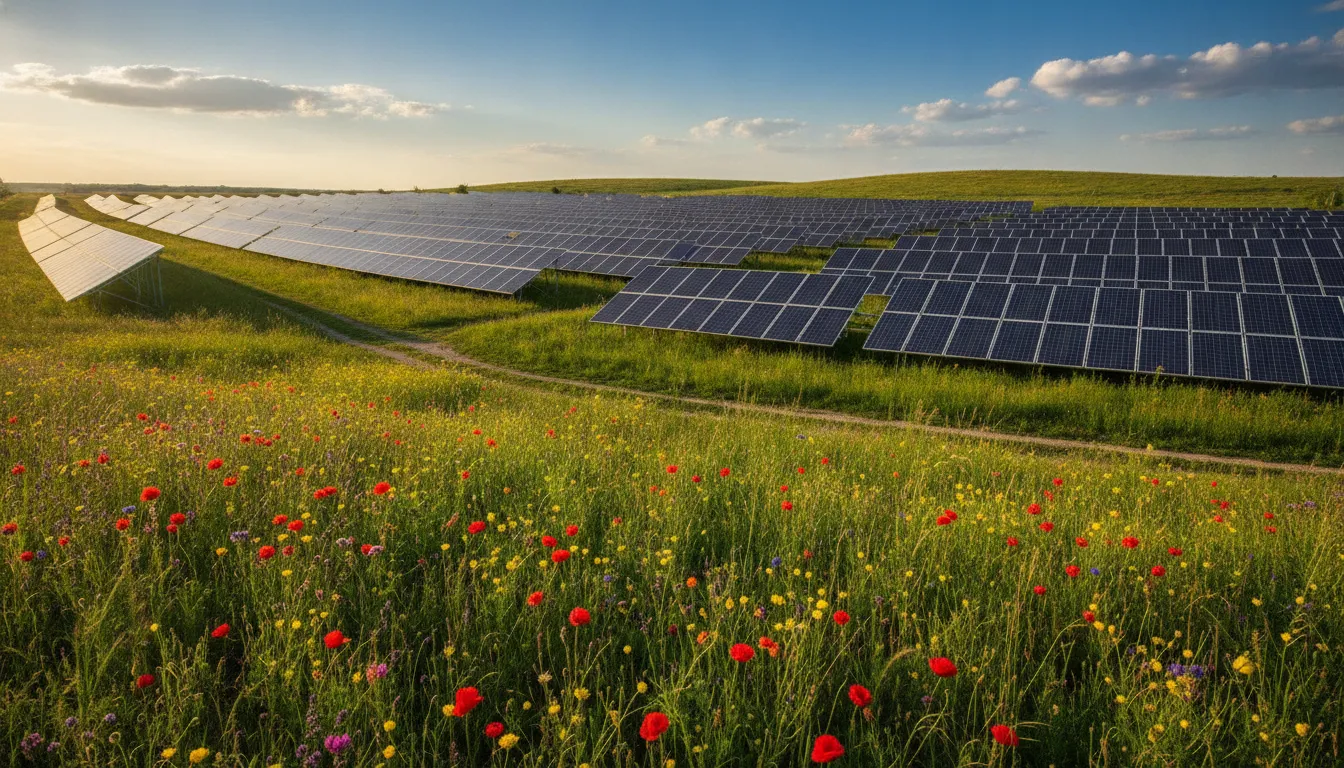
Renewable energies are growing at an accelerated pace globally. Energy efficiency in buildings and industries has improved considerably. More countries and cities have adopted net-zero emission targets. Public awareness on the topic has grown enormously in recent decades.
Global warming is a problem caused by human decisions — which means it can also be addressed by human decisions. Science gives us the diagnosis and the tools. What we do with this knowledge depends on each of us, the governments we elect, and the companies we choose to support with our consumption.
Start with what’s within your reach today. Get informed. Share this knowledge. And remember: acting for the planet is not a sacrifice — it’s an investment in the only home we all have.
