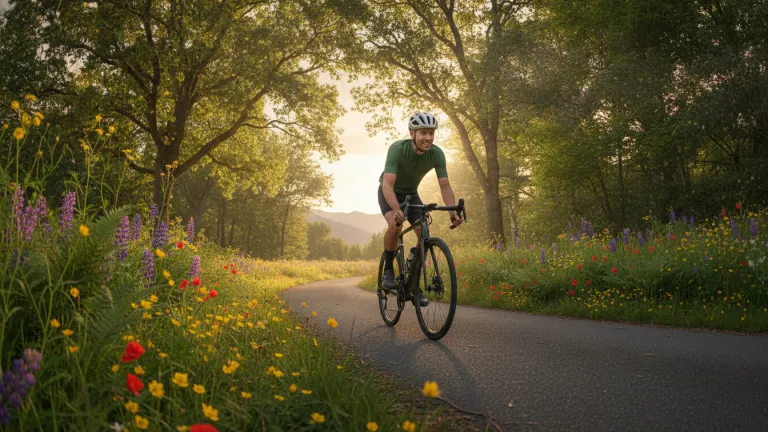
Cycling Is More Beneficial Than You Think
Imagine trading your daily traffic jams, the ever-rising gas bills, and commuting stress for fresh air, real savings in your pocket, and a daily dose of exercise — all at the same time. It sounds too good to be true, but that’s exactly what cycling offers millions of people around the world. And the best part: you don’t need to be an athlete, live in a European city with perfect bike lanes, or have a state-of-the-art bike to start reaping these benefits.
Using bicycles as urban transportation has been growing consistently in Brazil and worldwide. Cities like São Paulo, Rio de Janeiro, and Curitiba have expanded their cycling networks in recent years, and the culture of daily commuting by bike — different from weekend recreational cycling — is gaining more and more followers. This isn’t a passing trend: it’s a practical and smart response to real challenges like the cost of living, air pollution, and sedentary lifestyles.
In this article, we’ll show you why cycling goes far beyond an ecological choice. It’s a decision that positively impacts your health, your wallet, your time, and the planet — and we’ll give you concrete information and practical tips so you can start today, in your own way.
Why the Bicycle Is One of the Cleanest Forms of Transportation on Earth
When we talk about reducing daily greenhouse gas emissions, transportation is a central point. The transportation sector is responsible for a significant share of global CO₂ emissions — and within that sector, private automobiles carry enormous weight.
The bicycle, on the other hand, emits no CO₂ during use. From a complete life cycle perspective — including manufacturing and maintenance — it remains one of the vehicles with the lowest carbon footprint available to the average consumer. A car emits, on average, dozens of times more CO₂ per kilometer traveled than a bicycle, even considering that bike production also consumes energy and materials.
To better understand how transportation choices connect to global warming, it’s worth reading O Que Causa o Aquecimento Global, Explicado Simples. The article helps contextualize why every bike trip, even a short one, is part of a larger and necessary change.
The Real Financial Benefits of Daily Cycling
This is the argument that convinces many people who are still hesitant: the bicycle is extraordinarily cheaper than any other motorized vehicle. Let’s put this in perspective:
- Gasoline: with the fuel prices Brazil has been facing, keeping a car running in the city is a considerable monthly expense, adding up fuel, parking, and tolls.
- Car maintenance: vehicle tax, insurance, inspections, tires, and parts represent costs that often exceed the value of a new bicycle per year.
- Public transportation: for those who use buses or subway daily, fare expenses accumulate throughout the month — and cycling can eliminate or reduce much of that cost.
A simple and efficient bicycle for urban use can be found at accessible prices, and its maintenance — tube replacements, brake adjustments, chain lubrication — is much cheaper and simpler than any automotive maintenance. In many cases, the initial investment pays for itself in just a few months through savings on fuel or fares alone.
Health in Motion: What Cycling Does for Your Body and Mind
The bicycle is not just a means of transportation — it is, literally, a mobile gym. Cycling is a low-impact aerobic exercise, which means it works the cardiovascular system efficiently without overloading the joints as happens with running, for example.
Some of the scientifically documented benefits include:
- Improved cardiovascular health: regular cycling strengthens the heart and contributes to maintaining healthy blood pressure and cholesterol levels.
- Weight control: it’s an activity that burns calories consistently, especially when incorporated into the daily routine.
- Mental health: aerobic exercises stimulate the release of endorphins and other neurotransmitters associated with well-being. Many urban cyclists report arriving at work more energized and less stressed than when they used cars or crowded public transportation.
- Better sleep: regular physical activity is associated with healthier sleep patterns.
- Muscle strengthening: glutes, quadriceps, calves, and core are worked in a balanced way during cycling.
The great advantage of urban cycling is that you don’t need to set aside extra time to exercise: the commute itself is the workout. For those who complain about not having time to go to the gym, this is an elegant and efficient solution.
Cycling in the City: How to Start Safely and Confidently
If you’re thinking about starting to use a bicycle for commuting, some steps can make this transition much smoother and safer.
- Plan your route before leaving. Use apps like Google Maps (with bicycle mode activated) or Strava to identify paths with bike lanes, quieter streets, and less traffic. Prefer routes with lower vehicle volume until you gain confidence.
- Invest in basic safety equipment. A helmet is non-negotiable. Add front and rear lights — they’re essential for riding at night or on cloudy days — and wear visible colored clothing or reflective vests.
- Know the traffic laws for cyclists. In Brazil, the Brazilian Traffic Code provides specific rights and duties for those who ride bicycles. Knowing these rules protects you and avoids risky situations.
- Start with short distances. Don’t try to replace all your commutes at once. Start with trips of 2 to 5 km, which are quite manageable even for those who aren’t in shape. Gradually increase the distance.
- Learn to do basic maintenance. Knowing how to inflate tires, lubricate the chain, and adjust brakes is simple and avoids setbacks. There are accessible video tutorials for all of this, and many bike shops offer free or low-cost workshops.
- Consider day-to-day logistics. Think about where to store the bike at work, how to carry your belongings (backpacks, panniers, or baskets are great options), and how to deal with rainy days — a lightweight rain jacket solves most of the problem.
- Connect with other cyclists. Urban cycling groups exist in practically all medium and large Brazilian cities. Riding in a group, especially at the beginning, increases safety and makes the experience more fun.
Electric Bicycles: Worth Considering?
Electric bicycles (e-bikes) have been gaining significant ground in both the Brazilian and global markets. They combine conventional pedaling with an electric assist motor, which reduces effort on hills or longer distances — making urban cycling accessible to more types of people.
From an environmental standpoint, e-bikes still have a much lower carbon footprint than cars, even considering the energy used to charge the battery. If the electricity used comes from renewable sources — which is increasingly viable in Brazil with the expansion of energia solar residencial — the environmental impact becomes even smaller.
The initial cost is higher than a conventional bike, but for those who need to travel longer distances or have physical limitations, it might be exactly the push needed to leave the car in the garage more often.
The Collective Impact: When More People Cycle, Everyone Wins
The benefit of cycling isn’t limited to those who pedal. When a city has more cyclists and fewer cars on the streets, the positive effects are widespread:
- Less congestion: each car removed from traffic reduces wait times for all other vehicles.
- Less noise and air pollution: urban centers become quieter and have cleaner air, benefiting even those who don’t cycle.
- Less pressure on the healthcare system: more active populations have lower rates of chronic diseases associated with sedentary lifestyles, such as hypertension, type 2 diabetes, and obesity.
- More urban space: bicycles occupy a fraction of the space that a car uses, both in motion and when parked.
- Savings in public resources: fewer cars mean less road wear and reduced need for major road infrastructure projects.
Every person who chooses a bicycle for a daily commute is contributing, in practice, to a more breathable and more humane city.
Practical List: 10 Things You Can Do Today to Start Cycling
- Check if your bicycle (if you have one) is in working condition: inflate the tires and test the brakes.
- Research your city’s cycling network and identify a safe route to work, school, or the supermarket.
- Download a navigation app with bicycle mode and map out your route.
- List your current monthly transportation costs and calculate how much you could save by cycling.
- Look for a bike shop or community cycling workshop near you.
- Search for urban cycling groups in your city on social media.
- Buy or check if you have the essential safety items: helmet, lights, and reflectives.
- Commit to cycling at least one trip per week during the first month.
- Talk to coworkers about the possibility of cycling together.
- Explore other hábitos sustentáveis para transformar sua rotina that pair well with choosing to cycle.
Conclusion: One Pedal Stroke at a Time, a Better World

The bicycle is perhaps one of the most democratic and efficient inventions humanity has ever created. It simultaneously solves problems of mobility, health, personal finances, and the environment — without requiring sophisticated technology or large investments.
In 2026, with so many urgent challenges before us — climate, economic, and public health — choosing to cycle is one of the most concrete, accessible, and immediate answers any person can give. It’s not about giving up comfort, but about discovering a new kind of comfort: one that comes from moving through the world in a lighter, healthier, and more connected way.
You don’t need to cycle every day or abandon the car completely tomorrow. Start with one trip, once a week. Feel the difference. And let the experience speak for itself — because those who try it rarely go back.
