Urban Farming: How to Grow Food in Your City
Imagine harvesting ripe tomatoes on your apartment balcony, cutting fresh herbs straight from a pot in your kitchen, or participating in a community garden just a few blocks from home. This scenario, which seemed alternative or eccentric a few decades ago, has become a growing and vibrant reality in cities around the world. Urban agriculture has evolved from just a weekend hobby to a concrete strategy for food security, sustainability, and reconnection with nature within urban spaces.
The context we live in as of 2026 makes this practice even more relevant. According to UN data, more than 55% of the world’s population lives in urban areas — and that number continues to grow. In Brazil, the percentage is even higher: approximately 87% of Brazilians are city dwellers, according to IBGE estimates. This means that most of us are increasingly distant from the processes that put food on the table, depending on long production and distribution chains to access fresh food. Urban farming emerges as a smart and accessible response to this disconnection.
In this article, you’ll understand what urban agriculture is in practice, what its real benefits are for the environment and your life, and — most importantly — how to start today, regardless of the space you have available. Because yes, it’s possible to grow food in the city, and the results go beyond the plate.
What Is Urban Farming and Why Does It Matter
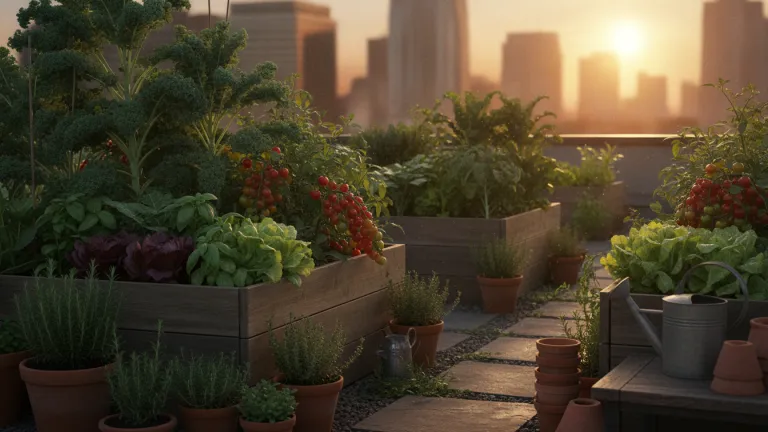
Urban farming is the cultivation of food — vegetables, herbs, fruits, mushrooms, and even raising small animals like bees and chickens — within or on the outskirts of urban areas. It can happen in pots in apartments, home backyards, rooftops and terraces, community gardens in squares and parks, and even in vertical systems installed in commercial buildings.
Beyond the individual aspect, urban agriculture plays an important collective role. The Food and Agriculture Organization of the United Nations (FAO) recognizes the practice as a strategic tool for strengthening food security in urban contexts, especially among low-income populations facing greater barriers to accessing fresh, nutritious food.
In Brazil, Embrapa (Brazilian Agricultural Research Corporation) has developed research and guidelines specifically aimed at urban and peri-urban cultivation, with technical materials accessible to the public. Cities like São Paulo, Curitiba, Belo Horizonte, and Recife already have municipal programs encouraging community urban gardens, integrating the practice into public policies for healthy eating and sustainability.
Real Benefits of Urban Farming for the Planet and for You
Growing food in the city isn’t just an aesthetic or philosophical choice. The benefits are concrete, measurable, and span different dimensions.
Environmental benefits of urban farming
- Reduced food transportation: When you grow what you consume, you eliminate part of the logistics chain involving fossil fuels, packaging, and losses during transit.
- Less food waste: Harvesting only what you’ll use drastically reduces food disposal.
- Increased urban vegetation: Plants on balconies, rooftops, and backyards help regulate local temperature, reducing the heat island effect — a growing problem in cities.
- Utilization of organic waste: Composting, often integrated with urban gardens, diverts organic matter from landfills and generates quality fertilizer.
- Local biodiversity conservation: Cultivated plants attract pollinators like bees and butterflies, contributing to healthier urban ecosystems.
Benefits for health and well-being
- Access to fresh food, pesticide-free, harvested at the right point of maturity.
- Encouragement of light physical activity and contact with nature, associated with stress reduction.
- Food education for children and adults: those who grow tend to eat more consciously.
- Strengthening of community bonds in collective gardens.
Types of Urban Farming: Find the Right Model for You
There isn’t a single model of urban garden. The choice depends on the available space, the time you can dedicate, and your goals.
| Model | Space needed | Ideal for |
|---|---|---|
| Pots and planters | Balcony, window, countertop | Apartments without a yard |
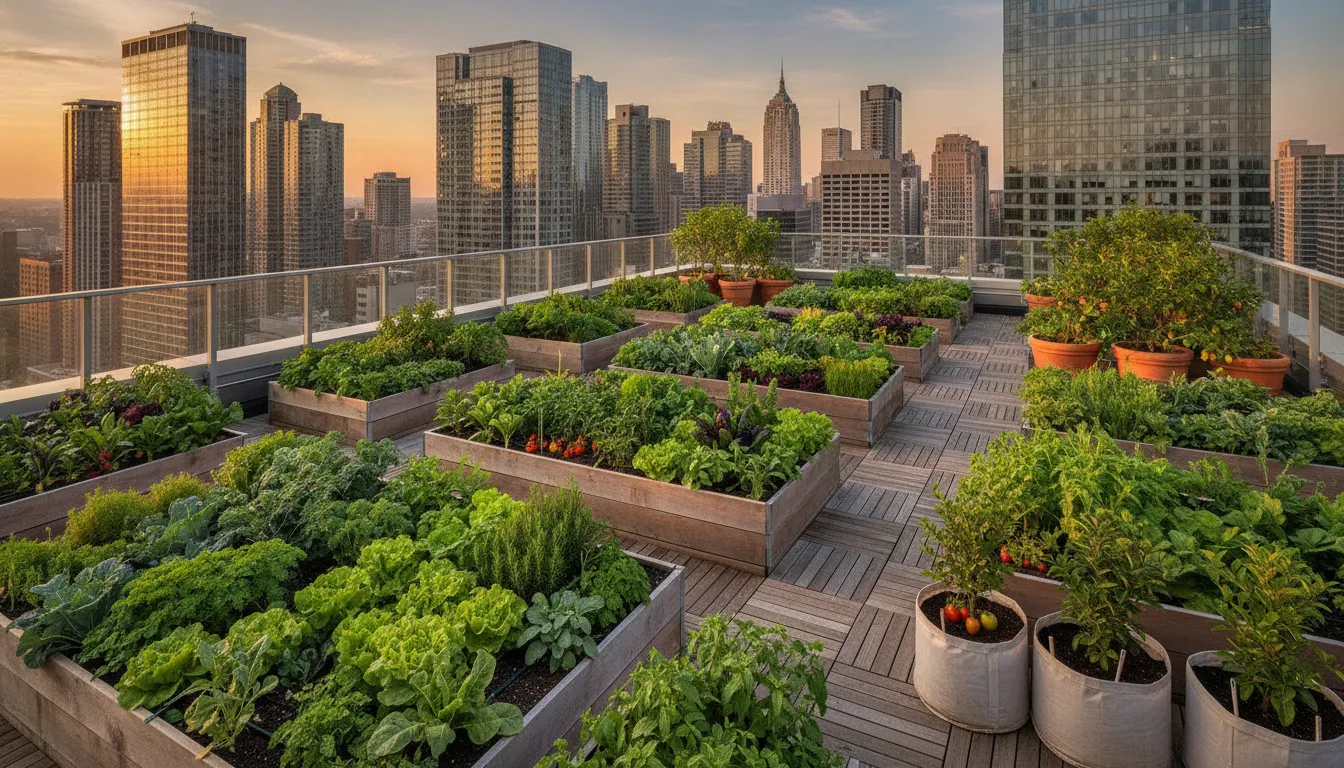
| Raised bed garden | Small backyard or terrace | Houses with limited space |
| Vertical garden | Walls, railings, panels | Those with little horizontal space |
| Hydroponic cultivation | Indoor area or balcony | Those wanting continuous production |
| Community garden | Public or collective space | Those without their own space |
| Urban agroforestry | Larger backyard or collective area | Those wanting diversity and long-term results |
For apartments, pots and vertical gardens are the most practical entry points. For houses with backyards, raised wooden beds offer excellent soil control and easy management. And if you don’t have any space, it’s worth researching community gardens in your neighborhood or municipality — many accept new members and offer free training.
How to Start Your Urban Garden: Step by Step
If you’ve never grown anything before, don’t worry. Getting started is simpler than it seems. Follow this guide:
- Assess your available space. Identify where you get direct sunlight for at least four to six hours a day. Balcony, window, backyard, or terrace — any of these work.
- Choose plants suited to your context. For beginners, herbs like basil, chives, parsley, mint, and cilantro are the easiest to manage. Lettuce, arugula, and spinach also adapt well to pots and partial shade environments.
- Prepare the correct substrate. Avoid using only common garden soil in pots. Mix potting soil with organic compost (or worm castings) and a draining material like perlite or coarse sand. Embrapa provides free guidance on substrates for container growing on their portal.
- Choose containers with drainage. Every pot needs holes at the bottom. Water accumulation is the main cause of plant death in pots.
- Plant seedlings or sow directly. For herbs and leafy vegetables, direct sowing in pots is simple. For tomatoes and peppers, it’s more practical to start with seedlings.
- Establish a watering routine. Frequency varies with climate, pot, and plant, but generally vegetables in pots need daily watering on hot days. Touch the substrate: if it’s dry up to two centimeters deep, it’s time to water.
- Start composting your organic waste. Fruit peels, coffee grounds, vegetable scraps, and unprinted cardboard can be transformed into nutrient-rich fertilizer. A small composter fits in any kitchen or balcony.
- Observe, learn, and adjust. The garden is a living system. Yellow leaves, pests, or slow growth are messages from the plant. Over time, you’ll learn to read these signs and respond to them naturally.
Common Mistakes Beginners Make (and How to Avoid Them)
Even with good intentions, some slip-ups are common among those just starting out. Knowing them beforehand saves time and frustration.
- Overwatering: Excess water is more lethal than lack of it. Most vegetables prefer moist soil, not waterlogged.
- Choosing plants incompatible with available light: Tomatoes and peppers need full sun. On balconies with partial shade, prefer leafy greens.
- Using poor or compacted substrates: Common garden soil hardens in pots and suffocates roots.
- Neglecting fertilization: Plants in pots deplete substrate nutrients more quickly than in open ground. Fertilize regularly with organic compost.
- Giving up too soon: Every garden goes through adaptation phases. A plant that didn’t develop well in the first cycle may flourish in the second with small adjustments.
Urban Farming and Community: The Power of Collective Gardens
When the garden extends beyond apartment limits and reaches public space, its benefits multiply. Community urban gardens are collective initiatives where residents grow together in areas provided by municipalities, condominiums, churches, or other institutions.
Besides producing food, these spaces create social bonds, promote environmental education, and are often managed by vulnerable populations, expanding access to fresh food in peripheral territories. Researching whether there’s a community garden near you — or organizing one with neighbors — can be as transformative as growing at home.
To discover initiatives in your city, it’s worth consulting the Municipal Department of Environment or Agriculture, as well as local groups on social media. In many Brazilian municipalities, there are technical support programs and seed donations for this type of initiative.
Adopting urban farming also fits perfectly into a broader set of sustainable habits you can adopt today, transforming your routine progressively and meaningfully.
Conclusion: Your City Can Also Be Fertile
Urban farming won’t replace rural agriculture or single-handedly solve global food security challenges. But it is a real and powerful piece in a larger mosaic of changes we need to make as a society. And most importantly: it’s a piece you can put in place today, with modest resources and a pot of basil on your windowsill.
Every urban garden is an act of reconnection — with food, with natural cycles, with your community, and with the planet. Growing food in the city is also a way to regain autonomy over what you eat and how you live. And in this process, almost inevitably, you begin to see the world around you with different eyes.
If this article sparked your curiosity to go beyond the garden, it’s worth exploring how reforestation and ecosystem restoration connect with the choices we make inside and outside cities.
Start small. Start today. The earth — even in a pot on your balcony — is waiting.
