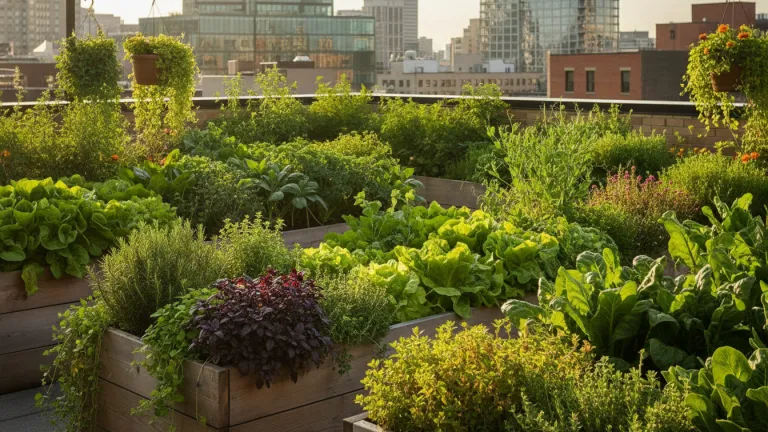
Imagine harvesting fresh tomatoes in your apartment, preparing tea with herbs grown on your balcony, or sharing a community garden with your neighbors. What once seemed like something from a futuristic movie is now a growing reality in cities around the world. Urban agriculture is transforming people’s relationship with food, the environment, and the very spaces where they live.
On a planet where more than half the population already lives in urban areas — and where cities face growing challenges of food security, heat islands, and social inequality — growing food within city limits has moved beyond being just an alternative hobby to become a serious sustainability strategy. Organizations like the FAO (Food and Agriculture Organization of the United Nations) recognize urban agriculture as a legitimate tool for more resilient food systems.
In this article, you’ll understand what urban agriculture is, how it works in practice, what its real benefits are, and how you can get started — regardless of your space size or experience level.
What Is Urban Agriculture: Definition and Context
Urban agriculture is defined as the practice of cultivating, processing, and distributing food within or around urban and peri-urban areas. It includes a wide variety of activities: home gardens on balconies and backyards, community gardens, productive rooftops, vertical farms, and even raising small animals like chickens and bees in urban settings.
According to the FAO, urban agriculture is practiced in various forms around the world and plays a relevant role in supplying fresh food to urban populations, especially in regions with limited access to quality food. It doesn’t replace rural agriculture at scale but complements the local food system with advantages that distant production cannot offer: freshness, reduced transportation, and connection between producer and consumer.
In Brazil, initiatives such as the National Urban and Peri-urban Agriculture Program (PNAUP) and projects supported by Embrapa have encouraged the expansion of these practices in cities of different sizes. Municipalities like São Paulo, Belo Horizonte, and Recife already have municipal policies promoting community and school gardens.
How Urban Agriculture Works in Practice
Urban agriculture operates through different systems and scales, adapted to available space and the grower’s objectives. Here are the main models:
Home and Balcony Gardens
These are the most common entry point. They use pots, boxes, planters, or raised beds to grow herbs, vegetables, and even some fruits in small spaces. They don’t require ground soil — just proper substrate, light, and regular watering.
Community and Collective Urban Gardens
These operate in shared spaces such as plazas, underutilized lots, schools, and community centers. They are collectively managed, promoting not only food production but also strengthening social bonds and environmental education.
Rooftop Farming
Building rooftops are transformed into growing areas, often combined with rainwater harvesting systems and composting. This model is more structurally complex but has been growing in major metropolitan areas as part of sustainable architecture initiatives.
Vertical Farms and Urban Hydroponics
Closed systems that use stacked shelves, artificial LED lighting, and techniques such as hydroponics (soilless cultivation in nutrient solution) or aeroponics. They allow high productivity in very reduced spaces, with lower water consumption compared to conventional cultivation. They are common in controlled environments such as adapted containers and urban warehouses.
Real Benefits of Urban Agriculture
The benefits go far beyond “eating something you grew yourself.” Research and experiences around the world document positive impacts across various dimensions:
Environmental benefits:
- Reduction of the so-called “food carbon footprint” by decreasing food transport between rural and urban areas
- Increased vegetation cover in cities, contributing to the reduction of urban heat islands
- Stimulus for local biodiversity, especially when native and pollinator plants are cultivated
- Use of organic waste through composting integrated with gardens
Social and economic benefits:
- Access to fresh food in regions with limited supply of fresh produce (so-called “food deserts”)
- Income generation in community and small-scale commercial projects
- Strengthening of local food security
- Promotion of mental well-being: studies in different countries associate contact with cultivation to stress reduction and mood improvement
Educational benefits:
- Reconnecting children and adults with the origin of food
- Practical learning about natural cycles, soil, and biodiversity
What Foods to Grow in Urban Environments
Not everything needs a farm to grow well. Some species adapt very well to cultivation in urban spaces:
- Aromatic herbs: basil, mint, parsley, chives, rosemary, thyme — grow well in small pots with good lighting
- Leafy greens: lettuce, arugula, spinach, kale — short cycle and easy to manage
- Cherry tomatoes: productive and adapted to larger pots or hanging planters
- Peppers and bell peppers: tolerant to urban heat and productive in pots
- Radishes and carrots: possible in deeper pots with loose, well-drained substrate
- Strawberries: ideal for balconies, including in hanging pots
Embrapa provides free technical guides with recommendations for varieties adapted to different regions of Brazil, including specific options for cultivation in enclosed and high-heat environments.
How to Start Your Urban Garden: Step by Step
You don’t need much space, money, or experience to take the first step. Follow this initial guide:
- Assess the available space: Balcony, window, backyard, rooftop, or indoor bed. Observe how many hours of sun the location receives per day — most vegetables need at least 4 to 6 hours of direct light.
- Choose the appropriate system: For small spaces, pots and planters are sufficient. For larger spaces, wooden boxes (raised beds) or ground beds are more productive.
- Prepare the substrate: Avoid using only garden soil. A mixture of commercial substrate, organic compost, and coarse sand ensures good drainage and nutrition. The classic ratio is 1/3 of each.
- Choose your first plants wisely: Start with herbs and leafy greens — they are the easiest, have a fast cycle, and are used daily in the kitchen.
- Establish a watering routine: In pots, watering is usually daily during warmer months. The finger test (sticking your finger 2 cm into the substrate — if it’s dry, water) is simple and effective.
- Fertilizer and maintenance: Use home composting as organic fertilizer. Avoid pesticides — in home cultivation, they are unnecessary and harm beneficial insects like bees.
- Observe, adjust, and expand: Record what works and what doesn’t. After the first successful harvests, gradually expand the number of species and cultivated space.
Urban Agriculture and Sustainability: An Essential Connection
Urban agriculture doesn’t exist in isolation from the major environmental issues of our time. It connects directly to topics such as sustainability in daily life, conscious consumption, and climate resilience.
In a context where climate change increasingly impacts rural production — with more frequent extreme events, prolonged droughts, and supply chain instability — diversifying food sources and strengthening local production becomes a smart strategy for both individuals and municipalities.
Cities that integrate urban agriculture into urban planning also gain in terms of green infrastructure: more permeable areas, fewer heat islands, greater absorption of intense rainfall, and more biodiversity. These are co-benefits that go beyond food production and reinforce the importance of public policies that encourage these practices.
Additionally, when combined with other sustainable practices — such as home composting, rainwater harvesting, and reducing food waste — urban agriculture becomes part of a lifestyle more consistent with the challenges of the 21st century.
Challenges and Limitations: What to Consider
It’s important to be honest: urban agriculture is not a magic solution and has real limitations.
- Scale: Urban production doesn’t have the capacity to replace rural agriculture in terms of volume. It complements but doesn’t substitute.
- Soil contamination: In cities with industrial history or intensive pesticide use, soil may be contaminated. In these cases, cultivation in raised beds with imported substrate is safer.
- Water access: In regions with water scarcity, cultivation needs to be planned with water-saving techniques such as drip irrigation and mulching (soil cover).
- Time and dedication: A garden requires regular attention. Without maintenance, pests and diseases can quickly compromise production.
- Space and light: Not every apartment has adequate conditions. In these cases, participating in community gardens is a viable and even more socially enriching alternative.
Conclusion: Plant a Seed, Cultivate Change
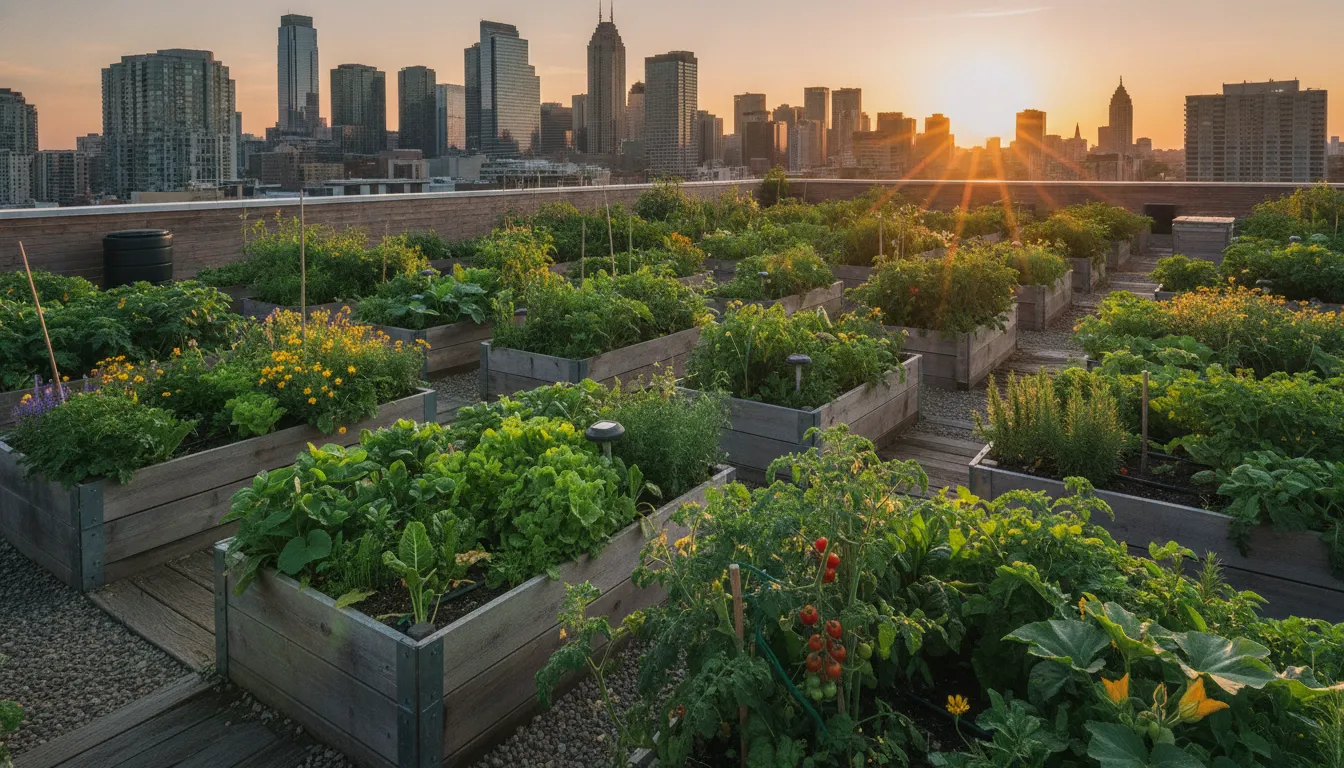
Urban agriculture is much more than growing food — it’s a concrete way to reconnect people with nature, strengthen communities, and build more resilient cities. Whether with a pot of basil on the window or a community garden in the neighborhood, every initiative counts.
The most important thing is to start. You don’t need land, experience, or generous space. You need curiosity, willingness, and a little patience. The first harvests have a flavor that goes far beyond the food itself — they carry the satisfaction of having been part of the process.
If you want to deepen your sustainable journey, also explore how other everyday practices can transform your relationship with the planet. A good way to start is to better understand what it means to live more sustainably, in practice and with accessible steps.
Plant. Share. Harvest. The planet — and your plate — will thank you.
