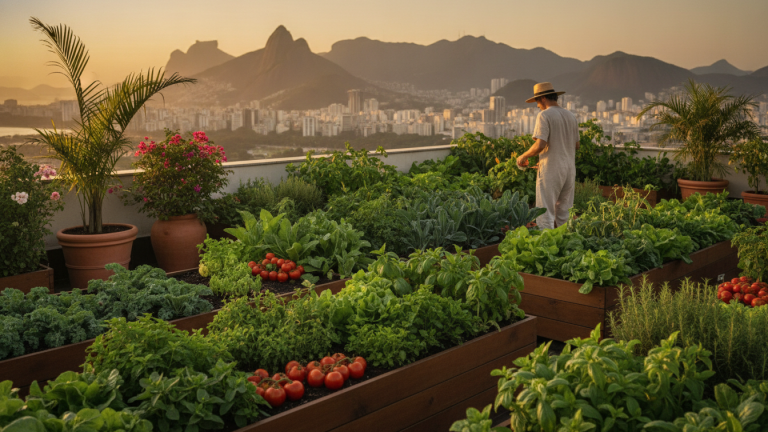
Why so many people are planting tomatoes on balconies in 2026
Have you ever stopped at a farmer’s market and been surprised by the price of tomatoes, fresh herbs, or even lettuce? It’s not just your impression. The cost of food in Brazil has risen consistently over the past few years, and many people have started looking at balconies, windows, and yards with new eyes. Growing your own food is no longer something only done on farms or by grandmothers in the countryside—it has become a real, accessible, and growing practice in Brazilian cities.
Urban agriculture is exactly that: producing food within or near urban spaces, whether in a pot on an apartment window, in a community garden in your neighborhood, or in an improvised greenhouse on a rooftop. According to the United Nations Food and Agriculture Organization (FAO), about 800 million people around the world practice some form of urban agriculture, and a significant portion of this group lives in middle-income countries like Brazil. Embrapa has also documented the growth of these initiatives in the country, especially after the pandemic, when interest in home food production skyrocketed.
By the end of reading this article, you’ll know exactly how to start your own urban garden, which plants adapt best to your space, which mistakes to avoid, and what to expect in terms of savings and practicality in your daily life.
What urban agriculture represents for Brazilian cities
Brazil is a predominantly urban country: according to IBGE, over 87% of the population lives in cities. This creates a huge distance between those who produce and those who consume food, with direct impacts on price, freshness, and the environmental footprint of what reaches your plate.
When you grow at home, you shorten this distance. A bunch of fresh herbs that traveled hundreds of kilometers in a refrigerated truck to a supermarket shelf has an environmental cost that doesn’t appear on the label. The little garden on your window doesn’t have that cost.
City councils in cities like São Paulo, Belo Horizonte, and Curitiba already have official programs to encourage urban agriculture, offering everything from free training to distribution of supplies for community gardens. If you live in one of these cities, it’s worth researching what your city government offers before buying your first pot.
How to start: step-by-step for any size space
There’s no space too small to begin. An apartment without a balcony can produce aromatic herbs on a shelf near a window. A sunny balcony allows you to go much further. The logic is always the same: light, quality soil, water in the right amount, and patience.
Basic materials:
- Pots, wooden crates, or cut PET bottles (reusable)
- Garden substrate (found in any agricultural or garden center store)
- Seeds or seedlings (street fairs often have cheap seedlings)
- Small watering can or bottle with holes in the cap
Approximate cost to start: between R$ 30 and R$ 80, depending on the number of pots and whether you reuse packaging.
- Choose the right location. Observe where the sun hits the most in your home. Most vegetables need at least four hours of direct light per day. Windows facing north or east usually work well in Brazil.
- Start with the easiest plants. Chives, parsley, basil, mint, and lettuce are tolerant of beginner mistakes and grow quickly. This keeps motivation high.
- Prepare the substrate. Mix garden soil with organic compost if you have it. A substrate rich in organic matter makes a huge difference in results.
- Plant the seeds or seedlings. Follow the planting depth instructions on the package. With seedlings, the process is faster and easier for beginners.
- Water carefully. The most common mistake is overwatering. Touch the substrate with your finger: if it’s moist two centimeters deep, it doesn’t need watering yet.
- Observe and adjust. Yellowing leaves can indicate lack of nutrients or too much water. Wilted leaves during the hot part of the day are normal; if they’re still wilted at night, then there’s not enough water.
- Harvest frequently. Plants like basil and chives produce more when you harvest regularly. Don’t wait to accumulate; use them daily.
Which plants work best in each type of space
Not every plant adapts to every condition. The good news is there’s an option for every situation, from a compact apartment to a generous backyard.
| Available space | Recommended plants | Difficulty level |
|---|---|---|
| Indoor window | Chives, parsley, mint | Easy |
| Small balcony | Lettuce, arugula, basil, cilantro | Easy |
| Large balcony or terrace | Cherry tomato, bell pepper, cucumber, eggplant | Medium |
| Backyard | Squash, okra, beans, corn | Medium to easy |
In the Brazilian climate, most cities allow cultivation year-round, with small adjustments in variety between the rainy summer and dry winter. Embrapa provides planting calendars by region, which helps a lot in making the right choice for each season.
Composting: the fuel for your urban garden
An urban garden that uses organic compost produced at home closes a beautiful cycle: what’s left over in the kitchen feeds the soil that feeds you. Home composting doesn’t smell bad when done correctly and fits in very small spaces.
Fruit scraps, vegetable peels, coffee grounds, and paper filters are great composting materials. If you have questions about what can and can’t go in a compost bin, the guide what can’t go in a compost bin and why explains it in great detail.
Finished compost in two to four months can be mixed into your pot substrate. This reduces the need for purchased fertilizers and also decreases the amount of organic waste going to landfills, contributing to the goals of the National Solid Waste Policy (Law 12.305/2010), which aims to reduce organic waste in landfills.
The most common mistakes for those starting a home garden
Starting with enthusiasm and losing motivation quickly is the most frequent pattern among beginner urban gardeners. Almost always the abandonment happens due to one or two avoidable mistakes.
- Buying too many seedlings at once. Start with two or three species and master basic care before expanding.
- Choosing pots without drainage holes. Standing water at the bottom rots the roots. Every container needs an outlet for excess water.
- Ignoring light. Planting in a dark location is the number one cause of failure in apartment gardens. Observe the sun before deciding where to plant.
- Using pure garden soil. It compacts in pots and suffocates roots. Always use substrate specific for gardens or a mix with compost.
- Watering at the wrong time. In hot summers, watering at midday evaporates the water before it reaches the roots. Prefer early morning or late afternoon.
- Giving up after the first failure. A plant that died is information, not defeat. Note what happened and try again with the necessary adjustment.
The real gains: health, savings, and well-being
Growing at home has benefits that appear quickly. A chive seedling bought for about R$ 3 at the market can produce fresh seasoning for months, while an industrialized bunch lasts days. The difference is small each time, but consistent over time.
From a health perspective, own production allows you to control pesticide use. According to data from the Phytosanitary Pesticide System (Agrofit) of the Ministry of Agriculture, Brazil is one of the world’s largest pesticide consumers. Having at least some of your herbs and vegetables free from these substances is a concrete gain for your diet.
There’s also a less obvious but well-documented effect: caring for plants reduces stress. Research in environmental psychology, such as that conducted in the field of study called “horticultural therapy,” points to this benefit consistently. In accelerated urban daily life, fifteen minutes caring for a garden works as a real break.
And when you reduce consumption of industrial cleaning products to keep your garden and kitchen sustainable, there’s also savings. If you want to see how this works in practice for other household items, it’s worth checking out the options for homemade cleaning products that cost almost nothing.
Frequently asked questions about urban agriculture
Is it possible to have a garden in an apartment without a balcony?
Yes, as long as there’s a window with good natural light. Herbs like chives, parsley, and mint grow well in small pots on countertops or shelves near windows. The secret is to ensure at least a few hours of direct light per day.
Do I need special soil or can I use any soil?
Using substrate specific for gardens makes a significant difference. Common garden soil compacts in pots and makes drainage and root growth difficult. Garden substrates have a looser texture and are enriched with organic matter, which favors plant development.
How long does it take to harvest the first food?
It depends on the plant. Chives and arugula can be partially harvested in about 30 days. Lettuce takes between 45 and 60 days. Cherry tomato can take 70 to 90 days from planting to first harvest. Starting with short-cycle species keeps motivation high in the first months.
Can I use rainwater to water the garden?
Yes, and it’s a great practice. Collecting rainwater in buckets or simple reservoirs reduces treated water consumption and is perfectly safe for watering vegetables. Just avoid using water collected near roofs with a lot of soot or contaminating materials.
Take your first step today
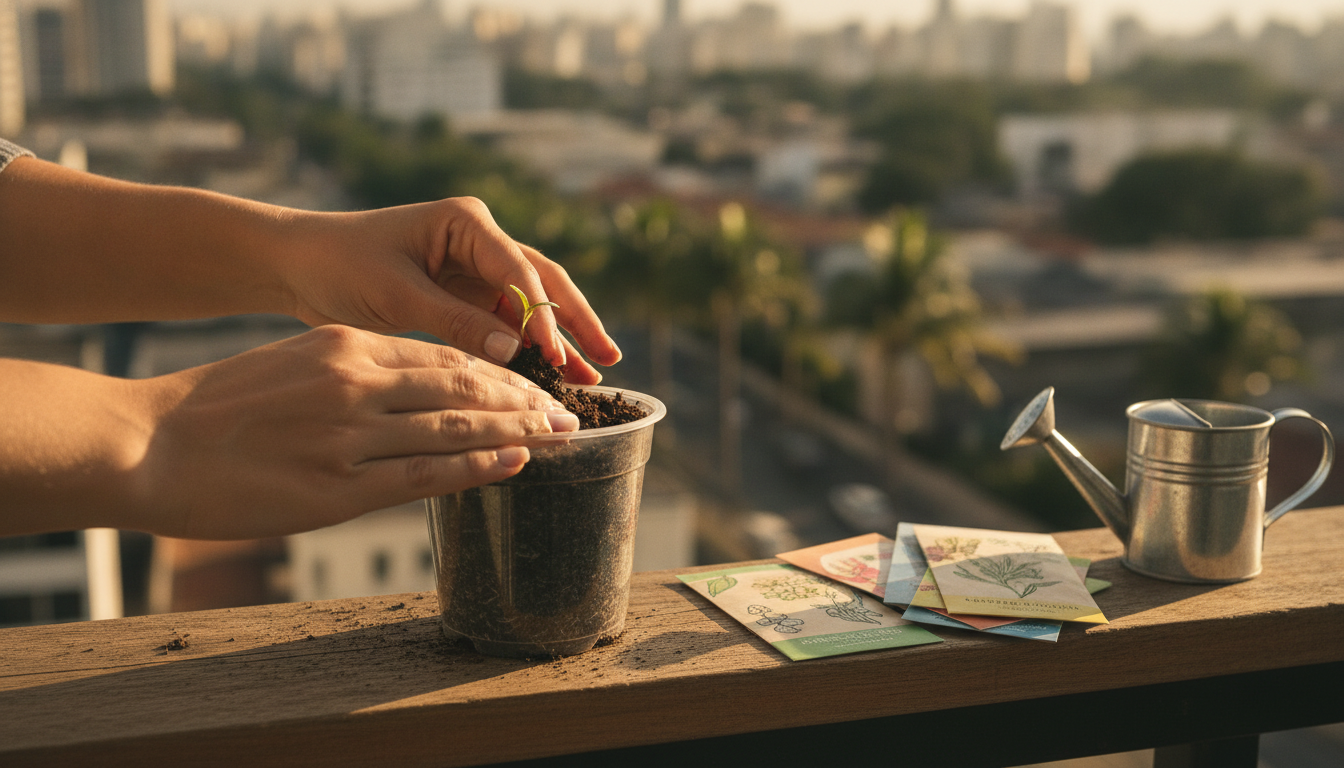
You don’t need a backyard, a lot of money, or previous experience to get started. The simplest and most effective action is this: the next time you pass a market or plant store, buy a chive or parsley seedling, put it in a pot with substrate in a sunny window, and water with moderation.
This small gesture is the beginning of a different relationship with food, with the space where you live, and with the planet that sustains all of this. The garden grows with you.
