Urban farming: what it is and why it’s growing in Brazilian cities
Have you ever stopped to think where the lettuce on your table comes from? Most of the time, it has traveled hundreds of kilometers in trucks before reaching the supermarket, losing nutrients and generating emissions along the way. Now imagine harvesting that same lettuce from your window, balcony or backyard, in less than thirty days, at practically no cost after the initial investment.
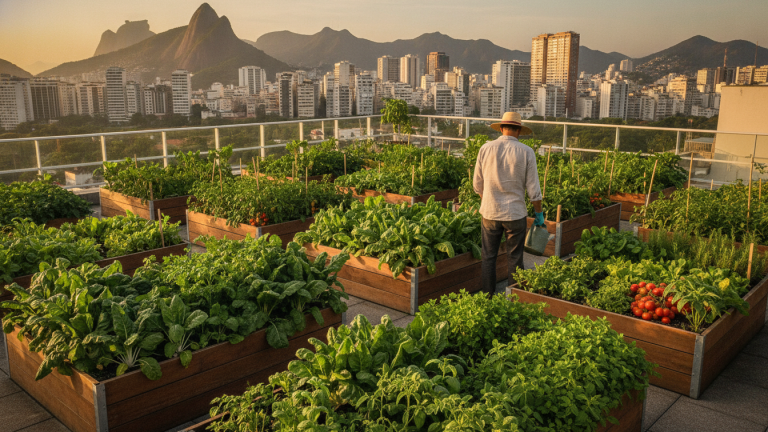
Urban agriculture is exactly that: producing food within or on the edges of cities, whether in a potted garden in an apartment, in a community garden bed in the neighborhood square, or on the green roof of a commercial building. The movement has existed for decades, but has gained enormous momentum in recent years, and by 2026 it is already part of public policy in several Brazilian capitals. By the time you finish reading this article, you’ll understand why this practice is growing so much, what are the real benefits for those who adopt it, and how to take the first step today, regardless of the size of your space.
What urban agriculture really is
The term may sound technical, but the idea is simple: cultivating food in urban spaces, using anything from a ceramic pot on a windowsill to larger structures like vertical gardens, container gardens, hydroponic systems and community gardens in public areas.
Embrapa, which has been monitoring the topic for years in Brazil, classifies urban agriculture on different scales: domestic production (for own consumption), community production (groups of residents who share a space) and peri-urban production (on the outskirts of cities, with a more commercial character). For those living in apartments, domestic production is already sufficient to cover much of the herbs and greens consumed on a daily basis.
An important detail: urban agriculture is not gardening. The focus is on edible foods, whether vegetables, herbs, small fruits or even mushrooms. This changes the relationship a person has with the space, with food and with the money spent at the market.
Why this movement is growing now
Several factors have combined in recent years to accelerate the adoption of urban agriculture in Brazil and around the world.
Food security became a priority issue. According to UN data, the world will need to produce much more food in the coming decades to feed a growing urban population, and cities cannot remain on the sidelines of this production. In Brazil, IBGE data shows that more than 87% of the population already lives in urban areas, making the issue even more urgent.
The rise in food costs also pushed many people toward home gardening. When the price of fresh herbs, chives or basil goes up at the market, growing at home becomes a concrete economic choice, not just a hobby. A basil seedling bought for a few reais produces for weeks, replacing several bunches purchased throughout the month.
Finally, the Covid-19 pandemic left an unexpected legacy: millions of Brazilians who stayed home began growing plants and discovered it was possible, enjoyable and useful. Many never stopped. This accumulated experience created a favorable cultural foundation for the expansion of urban agriculture as an everyday practice.
Real benefits for those who grow in the city
It’s not just an environmental issue. The gains are practical and appear quickly.
Direct savings: herbs like basil, mint, parsley and chives have very low production costs and are frequently bought at the supermarket or market. Growing them at home reduces this expense consistently over the months.
Healthier eating: food harvested fresh maintains more nutrients than food that has traveled for days in cold storage. Nutritional studies have already documented that vegetables lose vitamins progressively after harvest. Eating what you grow yourself also tends to increase consumption of fresh vegetables, especially in families with children.
Mental well-being: caring for plants has a proven effect on stress reduction. A study published in the Journal of Health Psychology showed that gardening activities reduce cortisol levels, the stress hormone, in a way comparable to other active leisure practices. For those living the accelerated pace of large Brazilian cities, this benefit is not insignificant.
Environmental impact: producing locally reduces food transportation, which is one of the sources of carbon emissions in the food chain. Urban gardens also help reduce the so-called “heat islands” in cities, according to data from the Ministry of Environment itself. If you’re interested in reducing resource consumption in your daily life, it’s also worth checking out tips for saving water in the shower and toilet, since irrigating the garden efficiently is part of a complete sustainable routine.
How to start: step by step for any space
You don’t need a backyard, soil or experience. You need light, water and a little patience.
- Assess available light: observe how many hours of direct sun your space receives per day. Less than two hours? Choose herbs like parsley, chives and mint, which tolerate partial shade. More than four hours? You can grow cherry tomatoes, lettuce, arugula and even bell peppers.
- Choose the right containers: pots of at least 15 cm deep work for most herbs. Larger vegetables, like lettuce and arugula, need containers 20 to 30 cm deep. Wooden boxes, buckets and even cut PET bottles work very well.
- Prepare the substrate: mix garden soil with organic compost or worm humus. Avoid using only garden soil, which compacts in pots and suffocates roots. This substrate can be found in any garden store or supermarket.
- Plant seedlings, not seeds, to start: seedlings already germinated reduce waiting time and increase the chances of success for those starting out. The seedling market has grown a lot in recent years; today you can find them at markets, garden stores and even in online exchange groups.
- Water carefully: the most common mistake is overwatering. Most herbs prefer the substrate to dry slightly between waterings. Put your finger in the soil: if it’s moist two centimeters deep, wait another day.
- Harvest regularly: this stimulates plant growth. In the case of basil, for example, removing the tips prevents the plant from flowering and becoming bitter.
Estimated cost to start a small potted garden:
| Item | Approximate cost |
|---|---|
| 3 medium pots | $5 to $10 USD |
| Substrate (5 liters) | $4 to $6 USD |
| 4 herb seedlings | $3 to $5 USD |
| Initial total | $12 to $21 USD |
After this initial investment, the monthly maintenance cost is minimal, practically limited to the water used for irrigation.
Common mistakes and how to avoid them
Some pitfalls appear frequently for those just starting out.
- Choosing plants that don’t match your space: tomatoes need intense sun and won’t do well in shady windows. Start with what your light allows.
- Neglecting drainage: every container needs holes in the bottom. Without drainage, roots rot.
- Giving up at the first pest: aphids and fungi are common, but have simple controls. A mixture of water with neutral detergent sprayed on the leaves solves most aphid cases without pesticides.
- Using pure garden soil in pots: as mentioned, it compacts and prevents healthy root growth.
- Waiting months to see results: herbs like chives and parsley can be harvested in three to four weeks after planting the seedling. The return is quick.
If you want to delve deeper into types of cultivation and possibilities for different urban spaces, the complete guide on urban agriculture: how to grow food in the city provides practical details for each situation.
The role of public policies and community gardens
Beyond the home garden, an important part of urban agriculture growth in Brazil comes from collective and public initiatives.
Cities like São Paulo, Belo Horizonte and Curitiba already have municipal programs to support community gardens, with allocation of public spaces, provision of seedlings and technical training. Embrapa maintains technical support projects for urban agriculture in partnership with city halls in different regions of the country.
On the legal front, Federal Law 14.620/2023 included urban agriculture as a component of housing and food security policies, which opens the way for more public investment in the sector. Community gardens also serve as a meeting point and strengthening of bonds between neighbors, something that in large cities has become increasingly rare.
If you live in a condominium, it’s worth proposing a collective garden to the building manager. Underutilized spaces, such as garden beds or common areas, can be used at low cost and high social return.
Frequently asked questions about urban agriculture
Do I need a lot of space to get started?
No. A shelf near a window with good light is enough to grow herbs like basil, mint and chives. Small apartments accommodate a garden of three to five pots very well.
Does an urban garden attract insects or pests indoors?
It’s possible that small insects like aphids or fungus gnats may appear, but this is controllable with good drainage and regular monitoring. The practice does not attract cockroaches or mosquitoes if irrigation is done correctly, without standing water accumulation.
Can I grow organically at home even without certification?
Yes. You control what you apply to your garden. By avoiding pesticides and using organic compost as fertilizer, your home production already follows organic farming principles, even without formal seals. Certification is only required for those selling the product.
What plants are easiest for beginners?
Chives, parsley, basil, mint and arugula are the best choices for beginners. They grow quickly, tolerate some management errors and are frequently used in Brazilian cooking.
A simple step to get started today
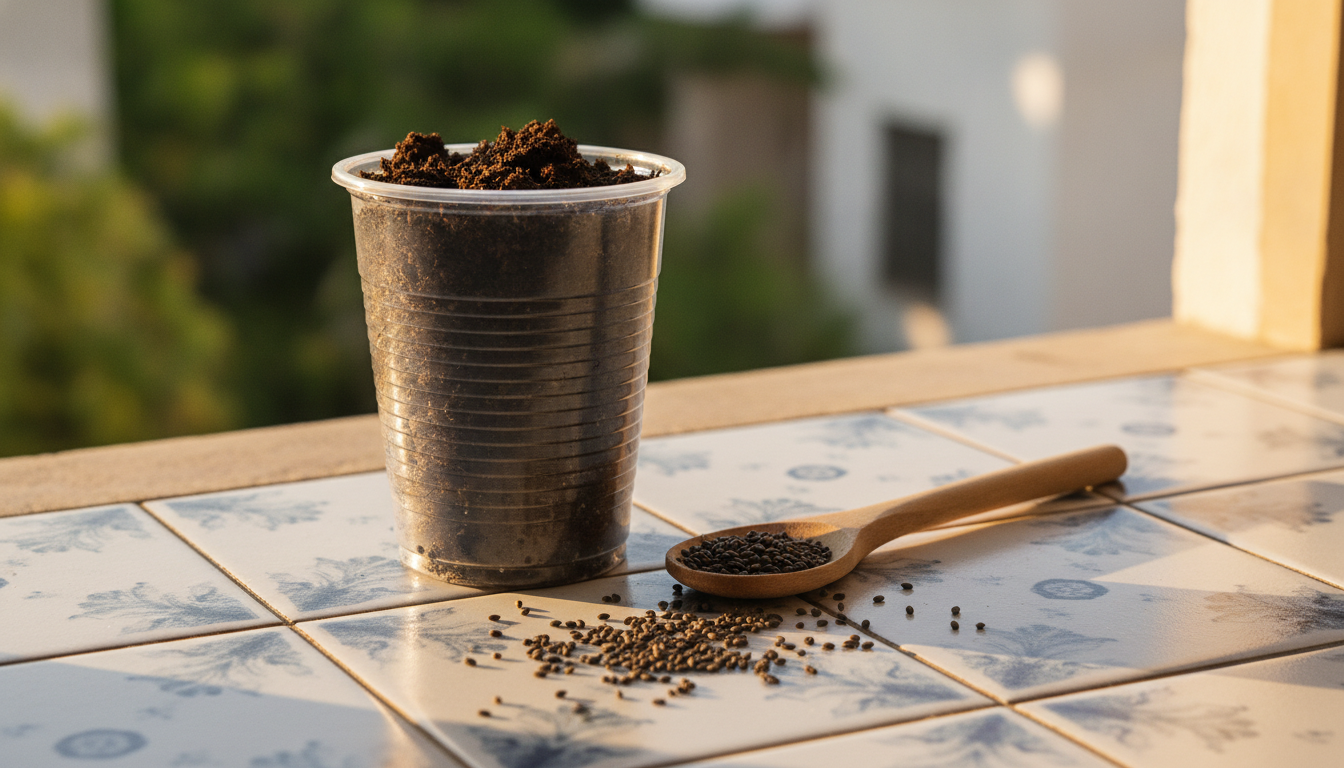
You don’t need to turn your balcony into a farm. Start with one thing only: buy a chives or parsley seedling the next time you pass a market or supermarket, plant it in a pot with proper substrate and place it near a window.
In three weeks, you’ll already be harvesting your first handful. And that moment, however small it may seem, changes the relationship you have with food and with the space where you live.
