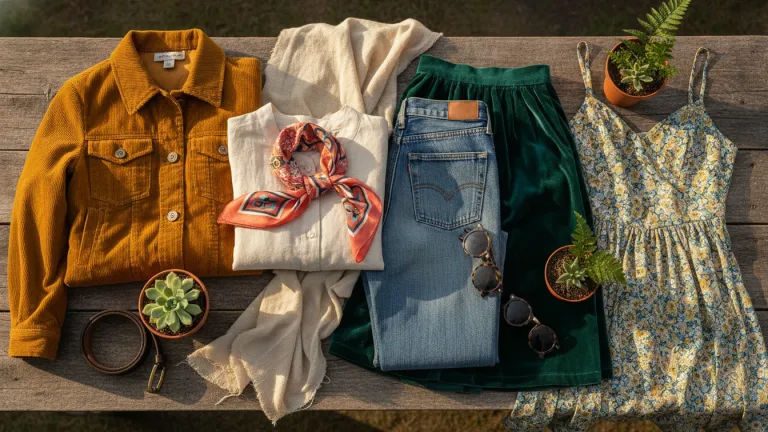
Thrift Store Shopping: Real Advantages of Buying Used Clothes and Items
Have you ever stopped to think about what happens to a t-shirt after it’s discarded? In most cases, it ends up in a landfill, where it can take decades to decompose — especially if it’s made of synthetic fibers like polyester. The textile industry is one of the most polluting in the world: it consumes enormous volumes of water, emits greenhouse gases on a large scale, and generates waste that ends up in oceans and soil. And Brazil, one of the world’s largest fashion consumers, feels this impact firsthand.
It’s in this scenario that thrift stores — physical or virtual — emerge as a concrete, accessible, and increasingly popular alternative. Far from the old image of “secondhand clothes smelling of mothballs,” today’s thrift stores are curated spaces with selected pieces, competitive prices, and a proposal that goes far beyond financial savings. Buying used is a choice with real impact on the environment, your wallet, and even how we relate to consumption.
If you still have doubts about whether thrift store shopping is really worth it, this article was made for you. We’ll explore the real advantages — with serious data and concrete arguments — so you can make this decision with awareness and confidence.
The Environmental Impact of Fashion and Why It Matters to You
The fashion industry is responsible for a significant share of global greenhouse gas emissions. According to the United Nations Environment Programme (UNEP), the textile and clothing sector accounts for approximately 10% of global carbon emissions — more than aviation and maritime transport combined. Additionally, it’s responsible for about 20% of the world’s industrial water pollution.
The production of a single conventional pair of jeans can consume more than 7,500 liters of water — equivalent to what a person drinks in approximately seven years, according to UNEP estimates. This doesn’t even count the use of pesticides in cotton cultivation, the dyeing processes with chemicals, and the international transportation of the pieces.
In Brazil, the disposal of clothes and textiles represents a growing problem. The country generates millions of tons of solid waste per year, and textile waste is a portion that still receives little attention in public policies. Most discarded pieces go to landfills or dumps, where decomposition is slow and releases substances that contaminate soil and groundwater.
When you shop at a thrift store, you’re essentially interrupting this cycle. The piece that already exists doesn’t need to be manufactured again. This means less water consumed, less carbon emitted, and less waste generated. It’s a simple — and powerful — environmental equation.
Thrift Stores and Real Savings: How Much Can You Save
One of the most direct arguments in favor of thrift stores is financial. In a context of persistent inflation and pressure on household budgets, buying quality pieces for a fraction of the original price is a concrete advantage.
It’s not uncommon to find brand-name clothes in thrift stores, in good condition, for 30% to 70% of the original value. This is especially true for higher-quality pieces — precisely those that, when new, have high prices, but last much longer. A well-made blazer that would cost R$ 400 in a conventional store can be found for R$ 80 to R$ 150 in a well-curated thrift store.
In addition to clothes, the thrift store universe includes:
- Furniture and decorations — with restoration and customization possibilities
- Books and records — items with excellent value for money
- Small household appliances and electronics
- Toys and children’s items — which children use for a short time
- Kitchen utensils and household objects
In all these cases, savings can be significant. And contrary to what many think, buying used doesn’t mean giving up quality — often, it means the opposite.
Circular Fashion: The Concept Transforming the Industry
The circular economic model proposes that products and materials remain in use for as long as possible, reducing waste to a minimum. In fashion, this translates into practices such as clothing rental, repair, donation, and resale — and thrift stores are central to this mechanism.
The so-called circular fashion or secondhand fashion has grown globally consistently. Digital resale platforms emerged en masse in recent years, and in Brazil the thrift store market had notable expansion, especially after the pandemic, when e-commerce became established in practically all sectors.
This growth is not just a passing trend. It reflects a real cultural shift: especially among younger generations, there is growing awareness of the impacts of excessive consumption and greater openness to sustainable alternatives. Shopping at thrift stores has gone from being taboo to being, in many circles, a sign of good taste and responsibility.
How to Shop at Thrift Stores Intelligently: Step by Step
Shopping at thrift stores has a small learning curve, but knowing what to do helps you get the most out of the experience. See a practical guide:
- Define what you need before you go. Keep in mind which pieces or items are missing from your wardrobe or home. This avoids impulse purchases — even at thrift stores, excessive consumption isn’t sustainable.
- Research thrift stores in your city or region. Many thrift stores have active social media profiles where they announce new arrivals. Follow those that match your style.
- Visit with available time. Unlike conventional stores, thrift stores require searching. Reserve a calm time to explore the space without rushing.
- Check the condition of the item carefully. Check seams, fabric, closures, and stains. Ask the seller about the item’s history if possible.
- Try on whenever possible. Since the pieces are secondhand, there may be variations in size different from the standard.
- Consider the cost of any repairs. A good piece that needs minor repair can still be a great deal, as long as you calculate that value.
- For online thrift stores, verify the seller’s reputation. Read reviews, ask for additional photos, and confirm the return policy before buying.
- Sanitize the pieces when you get home. Wash or clean according to the fabric’s instructions. It’s a simple and important habit.
Thrift Stores Are Also About Community and Conscious Consumption
Shopping at thrift stores goes beyond the commercial transaction. In many cases, these spaces are run by small entrepreneurs, cooperatives, social organizations, or people who found searching for items a source of alternative income. When you buy, you’re often supporting local economies and microentrepreneurs.
There are also thrift stores linked to social causes — where income is returned to community projects, shelters, health institutions, or education. In these cases, the act of buying has a direct social impact beyond the environmental one.
This community dimension connects the thrift store to a broader concept of responsible consumption — which involves thinking about the lifecycle of products, the people who produced them, and the fate they’ll have at the end of their useful life. Just as reducing food waste is a form of more conscious consumption in everyday life, opting for secondhand pieces is an equally powerful attitude within your home.
What to Do with Your Clothes Before Going to the Thrift Store
The thrift store logic works both ways: you can buy and you can also sell or donate. Before discarding clothes, utensils, and other items, it’s worth following a simple routine:
- Assess the actual condition of the piece. Is it in good condition? It can be sold or donated. Is it very worn? Look for textile recycling collection points.
- Separate by category. Clothes, shoes, accessories, and objects have different destinations.
- Research thrift stores that accept consignment or direct purchases. Many pay on the spot or offer store credit.
- Use digital platforms for selling used items. There are several accessible options in Brazil for selling used items safely.
- Donate to institutions with serious screening. Prefer organizations that actually use the pieces — not all accept any type of item.
This practice of giving new life to what you already have before discarding is one of the pillars of the circular economy — and can earn you extra income while helping the planet.
Conclusion: A Small Choice with Real Impact
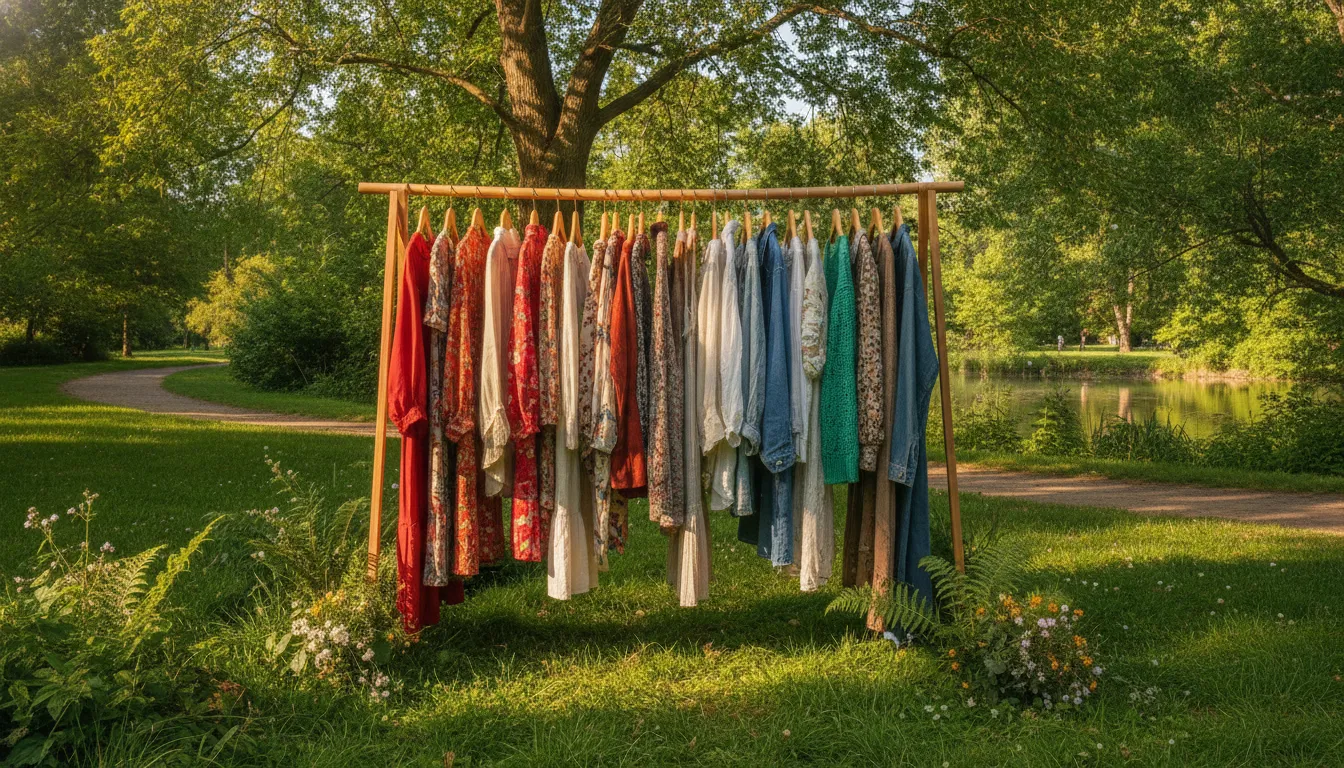
Shopping at thrift stores is one of the easiest consumption decisions to make — and with benefits that go far beyond what appears at first sight. You save money, reduce the environmental impact of fashion, support small entrepreneurs, and contribute to a consumption model that makes more sense for the planet.
You don’t need to transform your entire life at once. Start slowly: next time you need a piece of clothing, a book, or an item for your home, give a thrift store a chance before going to a conventional store. You may be surprised at what you’ll find — and how much this choice can mean.
Conscious consumption is made of daily choices, and each one counts. Why not start today?
