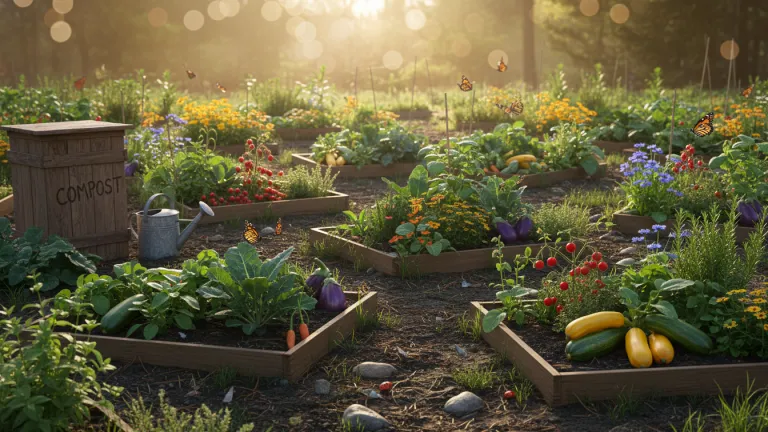
Imagine a seven-year-old asking why the river near their home “looks ugly.” Or a teenager who saw images of turtles trapped in plastic on their phone and doesn’t know what to do with that feeling. These questions and emotions are gateways. They are the exact moments when an adult can plant a seed that will grow for decades—not of guilt or fear, but of responsibility and curiosity for the natural world.
The good news is that teaching sustainability to children doesn’t require a college degree, an elaborate backyard garden, or a solar-powered home. It requires, above all, consistency in small daily actions and language that makes sense for each age group. Children learn by observing, touching, questioning, and imitating—and these four verbs are, coincidentally, the foundation of any good environmental education.
In this article, you will find practical strategies, organized by age and context, to make sustainability a natural part of your family’s or classroom’s daily life. Without alarmism, without difficult jargon, and without needing to reinvent your routine from scratch.
Why Teaching Sustainability to Children Is Urgent and Possible
The Intergovernmental Panel on Climate Change (IPCC) has made it clear in its recent reports that decisions made in the coming decades will be crucial for the planet’s climate. Today’s children will be the decision-makers—as consumers, voters, managers, parents—exactly during this critical period.
Furthermore, research in environmental psychology indicates that values and habits related to the environment tend to consolidate in childhood. It’s not about overburdening children with adult responsibilities, but about offering a repertoire of values and practices that become natural over time—just like brushing teeth or saying thank you.
The United Nations, through UNESCO, recognizes Education for Sustainable Development (ESD) as a fundamental pillar for achieving the Sustainable Development Goals (SDGs) of the 2030 Agenda. In Brazil, the National Common Curricular Base (BNCC) already incorporates socio-emotional skills and contemporary themes—among them, the environment—as mandatory transversal axes in basic education.
Adapting Language by Age Group
One of the biggest mistakes when talking about the environment with children is using the same language for all ages. A four-year-old and a fourteen-year-old process the world in completely different ways.
Sustainability for Young Children (2 to 6 years)
At this stage, the concrete is everything. Abstract concepts like “carbon” or “biodiversity” don’t make sense—but water, plant, animal, and trash do.
- Show the dripping faucet and say: “Look, the water is escaping. It’s precious.”
- Let the child water a plant and observe its growth over weeks.
- Play sorting recyclable trash, turning it into a color game.
- Read illustrated books with nature characters (there are great national options, like the Bichos do Brasil collection and titles from Pequena Zahar publisher).
The goal is not to convey concepts but to create an affection for the natural world.
Sustainability for School-Aged Children (7 to 12 years)
Here, it’s possible to introduce cause and effect. “If we throw plastic on the ground, it can reach the river, then the sea, and it can hurt the fish.” See our article on Plastic in the Oceans: What is the Real Impact? for more accessible arguments.
- School or home garden projects are ideal at this stage.
- Explain where the house’s electricity comes from—and what happens when we waste it.
- Encourage questions without judgment: “Why does the sky turn orange when there’s a fire?” is an excellent entry point.
- Involve the child in family choices: “Shall we buy this product with less packaging?”
Sustainability for Teenagers (13 to 17 years)
Teenagers need autonomy and relevance. They want to know that their actions truly matter—and fortunately, they do.
- Connect sustainability to topics they are already interested in: fashion, technology, food, music.
- Discuss real news without catastrophism, but with honesty about the challenges.
- Encourage school or community projects with measurable impact.
- Introduce examples of young people who are taking action: there are numerous Brazilian youth environmental initiatives that can serve as inspiration.
Practical Sustainability Activities to Do at Home
Theory needs practice to stick. Below is a list of actionable activities organized by effort level:
Low effort (start today):
- Turn off lights when leaving the room—and explain why to the child.
- Reuse glass jars and bottles as organizers or small pots.
- Create a simple “composting corner” with a recycled plastic box.
- Choose a seasonal fruit or vegetable at the market together—and research where it comes from.
Medium effort (weekend):
- Plant herbs (basil, chives, mint) in PET bottles by the window.
- Conduct a home energy audit: which appliances are unnecessarily on standby?
- Create a “trash diary” for a week to see how much the family discards.
- Visit a Conservation Unit, ecological park, or nearby reserve.
Greater involvement (long-term project):
- Set up a small garden in wooden crates on the terrace or balcony.
- Participate in beach, river, or park cleanup efforts organized by local NGOs.
- Create a selective collection project at school in partnership with waste pickers’ cooperatives.
How to Turn Everyday Life into an Environmental Classroom
Using the kitchen as a sustainability laboratory
The kitchen is one of the richest spaces to learn about environmental impact practically. Food waste is a serious problem in Brazil—according to Embrapa data, the country loses or wastes about 30% of the food produced throughout the production chain.
Involving children in meal planning, fully utilizing food (watermelon rind, beet stalks, carrot leaves), and understanding why buying only what is necessary are lessons that last a lifetime.
Turning outings into natural discoveries
A park outing can become an ecology lesson. Ask children: “Why does this tree have such large roots? What are these insects doing on this flower?” The goal is not to have all the answers but to cultivate the habit of observing and asking.
Free apps like iNaturalist (available in Portuguese) allow identifying plants, animals, and fungi with the phone camera—a technological and engaging way to connect children to local biodiversity.
The Role of Schools and Educators in Sustainable Environmental Education
Educators have an irreplaceable—and often underestimated—role in shaping the environmental awareness of new generations. In Brazil, the National Environmental Education Policy (Law No. 9.795/1999) establishes that environmental education must be present at all levels of formal and non-formal education.
Some approaches that work well in school practice:
- Interdisciplinary projects: combining science, geography, mathematics, and Portuguese around a local environmental theme (the city’s river, regional deforestation, air quality).
- Technical visits: water treatment plants, recycling cooperatives, and national parks make the abstract concrete.
- Student protagonism: delegating responsibility for actions like the school garden or selective collection to classes motivates much more than just receiving information.
- Non-judgmental discussion circles: creating space for children to express fears, doubts, and ideas about the planet’s future without ready-made answers.
To support discussions about climate change in the classroom, the article Greenhouse Effect: What It Is and How It Works on Earth is an accessible and accurate resource for teachers and parents.
Common Mistakes When Talking About the Environment with Children (and How to Avoid Them)
Common Mistake Why It’s Problematic What to Do Instead Exaggerating catastrophism Generates anxiety and paralysis, not action Speak with honesty and focus on solutions Blaming the child Creates unproductive guilt Show that we all are part of the solution Promising “everything will be okay” without basis Loses credibility Acknowledge challenges and celebrate progress Only talking, never acting Sends a contradictory message Act together, even if imperfectly Ignoring difficult questions Frustrates natural curiosity Answer at the child’s level, with honesty Building a Family Culture of Sustainability
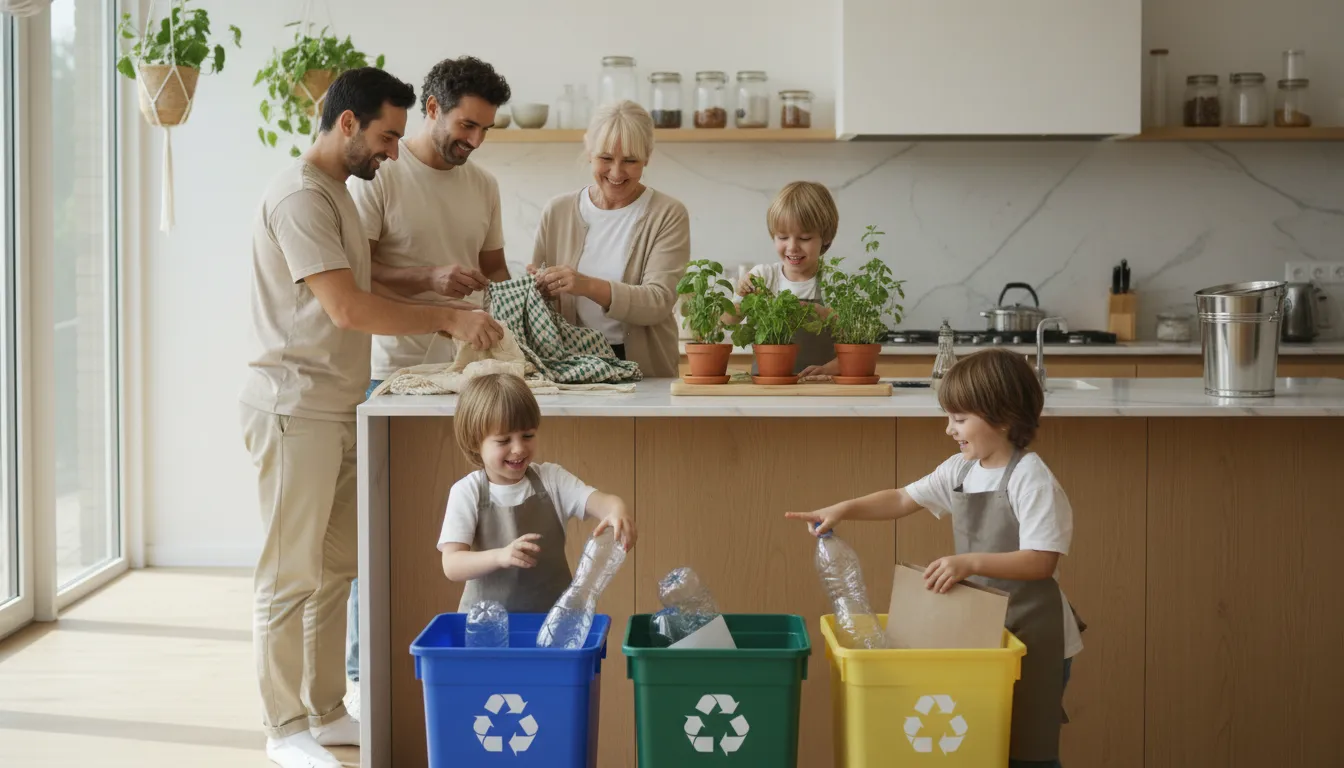
Sustainability taught only with words has little effect. What truly transforms is the culture of the environment in which the child grows up—the visible habits of the adults around, the daily choices, the conversations at the dinner table.
This doesn’t mean perfection. A family that separates trash but sometimes forgets, that tries to reduce waste but doesn’t always succeed, that talks about the subject naturally—this family is doing much more than they imagine.
Small consistencies accumulated over years build solid values. And solid values produce adults capable of making more conscious decisions—as consumers, as citizens, and, in the future, as parents and educators too.
Teaching sustainability to children is, at its core, teaching them to care. About the river, the forest, the air, the people who will come after us. And that is one of the most beautiful and necessary lessons any generation can pass on to the next.
Start today, with what you have, where you are. Turn off the light when you leave, ask where the lunch tomato comes from, plant a seed over the weekend. Each gesture observed by a child is a silent lesson that can last a lifetime.
Back To Top - Technical visits: water treatment plants, recycling cooperatives, and national parks make the abstract concrete.
- Interdisciplinary projects: combining science, geography, mathematics, and Portuguese around a local environmental theme (the city’s river, regional deforestation, air quality).
