# 10 Simple Ways to Teach Environmental Education and Shape the Planet’s Future
Environmental education is one of the most powerful tools we have to ensure a sustainable future for upcoming generations. At a time when climate change, biodiversity loss, and ecosystem degradation threaten our planet’s balance, teaching children, youth, and adults about the importance of environmental conservation has become an urgent priority.
According to data from the United Nations, environmental education not only raises awareness about ecological issues but also empowers individuals to make informed decisions and adopt responsible behaviors. This article presents ten simple and effective ways to teach environmental education, transforming complex concepts into practical actions that can be implemented in schools, homes, and communities.
The transformation of the planet’s future begins with small educational steps that, when multiplied by millions of people, create a significant impact. By integrating the principles of natural resource conservation into daily life, we build a more conscious society prepared to face the environmental challenges of the 21st century.
1. Create School and Community Gardens
One of the most effective ways to teach environmental education is through the practical experience of growing food. School and community gardens offer a unique opportunity for children and adults to understand the life cycle, the importance of healthy soil, responsible water use, and the relationship between food and the environment.
By planting seeds, caring for plants, and harvesting fruits, participants develop a tangible connection with nature. This process teaches patience, responsibility, and respect for the work required to produce food. Additionally, gardens can be spaces to discuss topics such as organic farming, composting, biodiversity, and the importance of pollinators.
Studies by the Food and Agriculture Organization of the United Nations show that children involved in school garden programs develop healthier eating habits and demonstrate greater environmental awareness. These initiatives can also be integrated with resource conservation practices, teaching water reuse and natural fertilizer production.
2. Implement Educational Recycling Programs
Recycling is a fundamental pillar of environmental education, but teaching it goes far beyond simply separating waste. Effective educational programs should explain the complete cycle of materials, from the extraction of natural resources to final disposal or reuse.
Creating colorful and well-marked recycling stations in schools and community spaces is just the first step. The real learning happens when participants understand the impact of their choices: how much waste they produce, how much can be recycled, what happens to non-recyclable materials, and how they can reduce their consumption.
Practical activities like visits to recycling centers, workshops transforming recyclable materials into useful objects, and waste reduction challenges make learning more meaningful. Schools can set measurable goals, such as reducing landfill waste by 30%, engaging the entire school community in this common objective.
3. Organize Field Trips and Nature Experiences
No book or video can replace the direct experience of being in nature. Field trips to parks, nature reserves, beaches, or even urban green areas allow students to observe functioning ecosystems, identify native species, and understand ecological relationships firsthand.
These experiences create lasting memories and emotional connections with the natural environment, which are crucial for developing a desire to protect the planet. During these activities, educators can teach about local biodiversity, food chains, organism adaptations, and human impact on ecosystems.
The National Wildlife Federation reports that children who regularly spend time in nature perform better academically, have greater concentration capacity, and experience reduced stress levels. Additionally, they develop a conservation ethic that accompanies them throughout life, aligning with simple actions to save the planet.
4. Integrate Technology and Environmental Apps
The digital generation responds exceptionally well to technological tools that make learning interactive and gamified. There are numerous apps and online platforms that turn environmental education into an engaging and modern experience.
Apps for identifying plants and animals, like iNaturalist, allow students to become citizen scientists, contributing real data to biodiversity research. Educational games about climate change, water conservation, and renewable energy teach complex concepts in an accessible and fun way.
Moreover, carbon footprint monitoring tools help individuals and families understand the impact of their daily choices. Video conferences with environmental experts, virtual tours of remote ecosystems, and simulations of future climate scenarios expand educational possibilities beyond the classroom walls.
5. Promote Water and Energy Conservation Projects
Teaching about the conservation of essential resources like water and energy should combine theory with practical action. School or community projects that monitor the consumption of these resources and implement saving measures offer valuable lessons on sustainability.
Students can conduct water consumption audits in their schools, identifying leaking faucets, waste areas, and improvement opportunities. Installing rainwater harvesting systems for garden irrigation or implementing timers to reduce electricity consumption are practical projects that demonstrate measurable results.
These initiatives teach not only about environmental conservation but also about financial responsibility, as reduced consumption results in resource savings. For more information on how to conserve resources and save money, it is essential to integrate these concepts early in education.
6. Develop Composting Programs
Composting is an extraordinarily rich educational tool, teaching about natural cycles, decomposition, soil fertility, and waste reduction. Establishing a composting system in schools or communities allows participants to directly observe how organic waste transforms into nutritious compost.
This process demystifies the concept of “waste,” showing that many discarded materials are actually valuable resources. Children learn about microorganisms, the importance of worms in the soil ecosystem, and how to create a closed nutrient cycle.
Composting programs also offer opportunities for discussions about food systems, food waste, and the difference between biodegradable and non-biodegradable materials. The compost produced can be used in school gardens, completing a full educational cycle and demonstrating the practical application of learned concepts.
7. Tell Stories and Use Environmental Literature
Stories have a unique power to convey values and inspire change. Environmental literature, for both children and adults, can be a powerful tool in environmental education, creating empathy and awareness through engaging narratives.
Picture books for children featuring animals in their natural habitats, stories about conservation, or adventures in nature spark curiosity and love for the natural world. For older students, works by authors like Rachel Carson, Aldo Leopold, or contemporaries like Amitav Ghosh offer deep reflections on the relationship between humanity and nature.
Book clubs focused on environmental themes, outdoor storytelling sessions, and creative projects where students write their own ecological narratives are ways to integrate language, creativity, and environmental education. These activities develop critical thinking about environmental issues while strengthening communication skills.
8. Implement Green Challenges and Competitions
Gamifying environmental education through challenges and competitions can generate significant enthusiasm and engagement. Competitions between classes to see who recycles more, challenges to reduce disposable plastic use, or sustainability project contests create a sense of collective purpose.
These events can include challenges like “zero waste days,” where participants try not to generate any disposable waste, or “sustainable transport weeks,” encouraging walking, biking, and carpooling. Symbolic prizes and public recognition motivate participation and celebrate environmental effort.
Competitions can also involve the broader community, creating partnerships between schools, local businesses, and environmental organizations. This community engagement amplifies the impact of environmental education and demonstrates that sustainability is a shared responsibility that benefits everyone.
9. Invite Environmental Experts and Activists
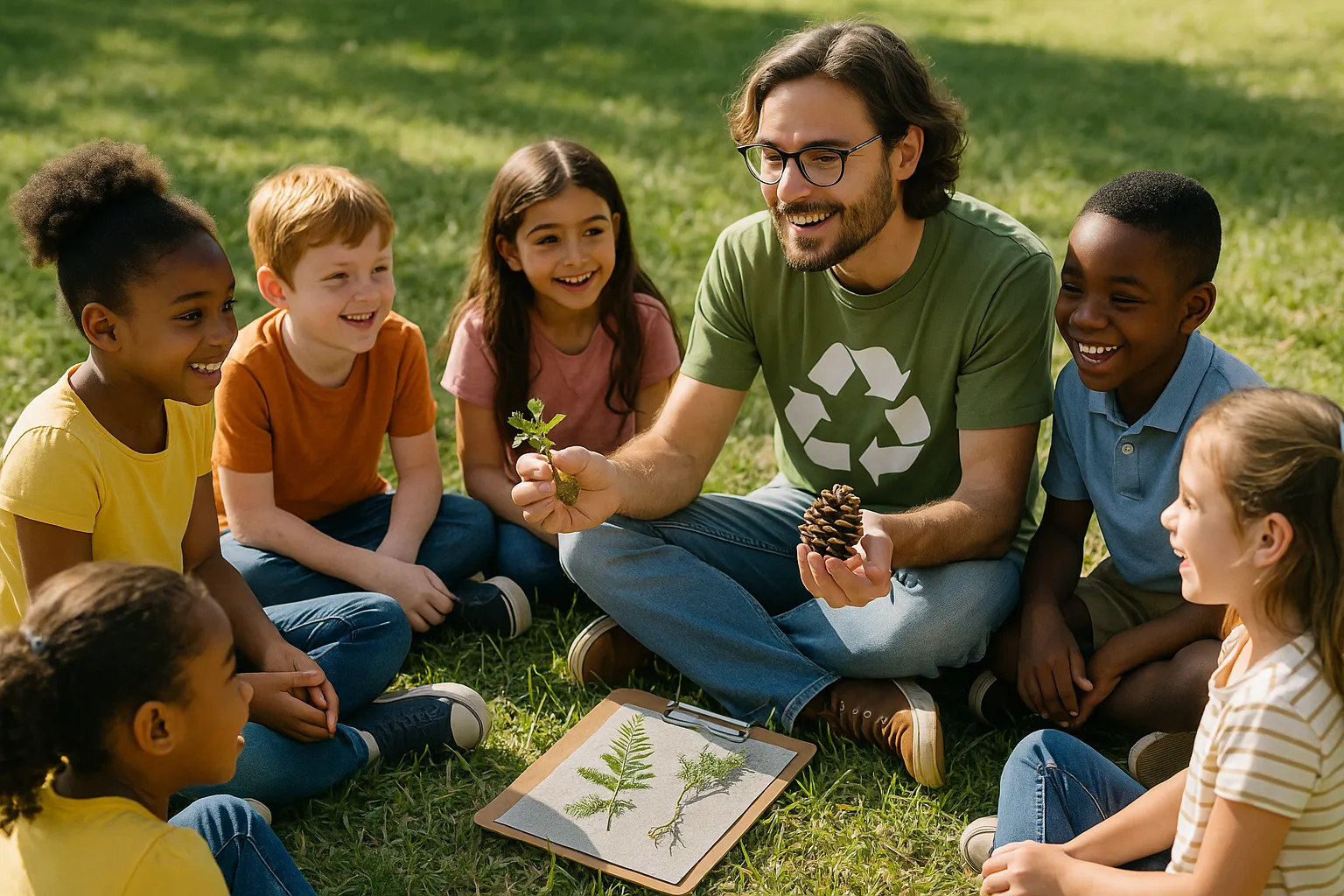
Bringing in specialized and passionate voices to share knowledge and experiences can deeply inspire students of all ages.
