# 10 Simple Actions You Can Take Today to Save Our Planet
We are living in a critical time for the future of our planet. Climate change, widespread pollution, and the depletion of natural resources are realities that can no longer be ignored. Although these problems may seem overwhelming, the truth is that each of us has the power to make a difference through simple, everyday actions.
The good news is that you don’t need to radically change your lifestyle or make huge sacrifices to contribute to environmental preservation. Small changes in our daily habits, when multiplied by millions of people, can have an extraordinary impact on the planet’s health. This article presents 10 practical and accessible actions you can start implementing today to help save our planet.
1. Reduce Disposable Plastic Consumption
Plastic is one of the biggest environmental villains today. It is estimated that approximately 8 million tons of plastic enter the oceans each year, causing irreparable damage to marine life and aquatic ecosystems. The UN warns that if we continue at this pace, there will be more plastic than fish in the oceans by 2050.
To combat this problem, start by eliminating disposable plastics from your routine. Replace plastic bags with reusable cloth bags, swap plastic bottles for glass or stainless steel ones, and avoid disposable straws and cutlery. When shopping, choose products with minimal or recyclable packaging. These small changes can drastically reduce your plastic footprint.
Additionally, invest in reusable containers to store food at home. Often, properly storing food not only prevents waste but also reduces the need for disposable packaging.
2. Adopt a More Conscious Diet
The food industry, especially meat production, is responsible for a significant portion of global greenhouse gas emissions. According to data from the Food and Agriculture Organization of the United Nations (FAO), livestock contributes about 14.5% of human-induced greenhouse gas emissions.
You don’t need to become vegetarian or vegan overnight, but you can start by reducing meat consumption, especially red meat. Try adopting “Meatless Mondays” or reduce the portions of animal protein in your meals. When consuming meat, opt for locally sourced products from producers who adopt sustainable practices.
Additionally, prioritize organic and seasonal foods whenever possible. These products generally have a lower environmental impact as they use fewer pesticides and require less transportation. Buying at local markets also strengthens your community’s economy and reduces the carbon footprint associated with food transport.
3. Save Electricity
Energy consumption is directly linked to greenhouse gas emissions, as a large part of electricity is still generated from fossil fuels. Fortunately, there are numerous simple ways to reduce your energy consumption at home.
Start by replacing incandescent bulbs with LED bulbs, which consume up to 80% less energy and last much longer. Unplug electronic devices when not in use, as many continue to consume energy in standby mode. Set your computer, TV, and other devices to automatically enter energy-saving mode.
Take advantage of natural light whenever possible by opening curtains and blinds during the day. In the summer, use fans instead of air conditioning when possible, and in the winter, dress in extra layers before turning up the heat. These simple actions can significantly reduce your electricity bill and carbon footprint.
4. Practice the 3 Rs: Reduce, Reuse, and Recycle
The concept of the 3 Rs is fundamental for a more sustainable life. The order is important: first, we must reduce our consumption, then reuse what we already have, and finally recycle what can no longer be used.
**Reduce** means consuming less and more consciously. Always ask yourself, “Do I really need this?” before making a purchase. Avoid impulse buying and prioritize quality over quantity, investing in durable products that won’t need to be replaced quickly.
**Reuse** involves finding new uses for items you already own. Glass jars can become storage containers, old clothes can be turned into cleaning rags, and old furniture can be refurbished instead of discarded. Be creative and think twice before throwing something away.
**Recycle** should be the last resort, but it is still crucial. Familiarize yourself with your city’s recycling rules and correctly separate paper, plastic, glass, and metal. Clean materials before placing them in recycling to ensure they are processed properly.
5. Conserve Water
Water is a finite and precious resource. Although 70% of the Earth’s surface is covered by water, only 2.5% is freshwater, and an even smaller fraction is available for human consumption. The World Health Organization estimates that billions of people still lack access to safe drinking water.
There are various ways to save water daily. Turn off the tap while brushing your teeth or soaping your hands. Take shorter showers and consider installing low-flow showerheads. Fix leaks immediately – a dripping tap can waste thousands of liters of water per year.
In the kitchen, reuse water used to wash vegetables to water plants. Use the dishwasher and washing machine only when full, as this maximizes water efficiency. Consider collecting rainwater for garden watering or washing outdoor areas.
6. Choose Sustainable Transportation
The transportation sector is responsible for a significant share of global carbon emissions. According to the U.S. Environmental Protection Agency, transportation accounts for almost 29% of greenhouse gas emissions in the country.
Whenever possible, opt to walk or bike for short distances. Besides reducing emissions, you’ll be getting exercise and improving your health. For longer distances, consider public transportation, carpooling, or vehicle sharing.
If you need a car, plan your trips to combine multiple destinations in a single outing, reducing the total number of trips. Keep your vehicle well-maintained, with properly inflated tires and up-to-date maintenance, to ensure greater fuel efficiency. When it’s time to change cars, consider hybrid or electric options.
7. Support Sustainable Companies and Brands
As consumers, we have the power to influence the market through our purchasing choices. By preferring companies that adopt sustainable practices, we send a clear message that environmental responsibility is important.
Research brands before buying. Look for certifications like organic products, fair trade, recyclable packaging, or companies with carbon offset programs. Many companies now publish sustainability reports detailing their environmental efforts.
Support local businesses whenever possible. Besides strengthening your community’s economy, local products generally have a smaller carbon footprint due to reduced transportation. Shopping at farmers’ markets, local craft stores, and small shops is an excellent way to contribute to a more sustainable future.
8. Plant Trees and Care for Plants
Trees are essential for the planet’s health. They absorb carbon dioxide, produce oxygen, provide habitat for wildlife, prevent soil erosion, and help regulate temperature. Research shows that a single tree can absorb up to 22 kilograms of CO2 per year.
You don’t need a large yard to make a difference. Even growing plants in pots in apartments contributes to improving air quality. If you have space, consider planting native trees, which are adapted to the local climate and require less maintenance.
Participate in tree planting initiatives in your community or support organizations that carry out reforestation. Many NGOs offer programs where you can sponsor tree planting in conservation areas. Caring for plants and trees also reconnects us with nature and reminds us of the importance of protecting it.
9. Reduce Food Waste
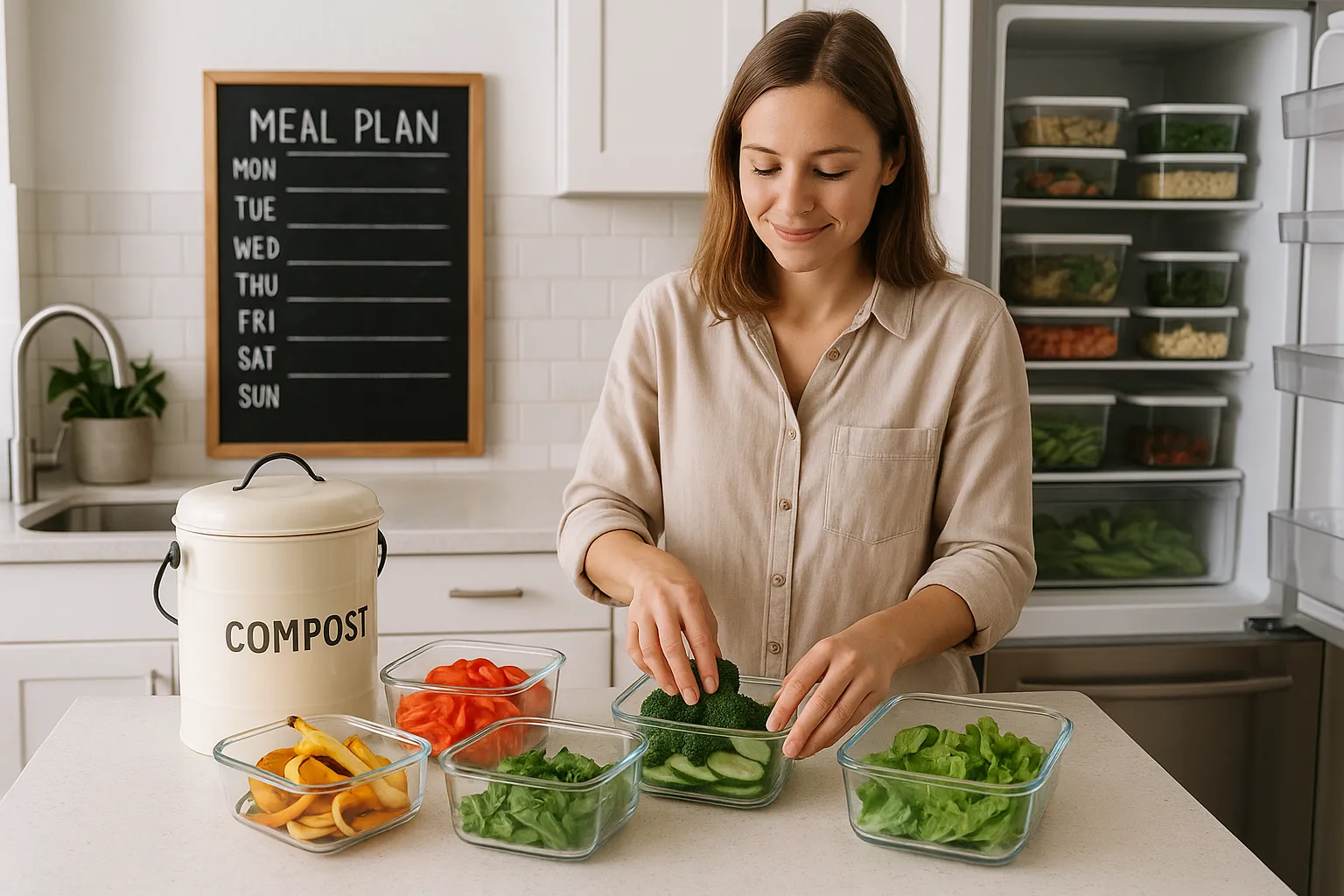
Food waste is a serious environmental and social problem. Approximately one-third of all food produced globally is lost or wasted, according to the FAO. When food goes to landfills, it decomposes and produces methane, a greenhouse gas much more potent than carbon dioxide.
Plan your meals in advance and make shopping lists to avoid buying more than you need.
