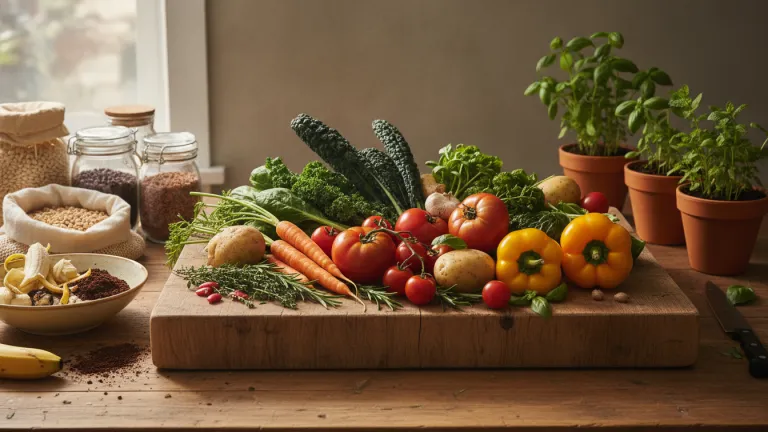
Every week, something silently disappears from your refrigerator. A shriveled carrot forgotten in the drawer, half a loaf of bread that hardened, that serving of rice no one wanted to repeat. It seems like a small thing — and that’s exactly what makes food waste so difficult to combat. It happens gradually, in invisible doses, until it becomes such a normalized habit that we barely notice it anymore.
The problem, however, is of impressive scale. According to the United Nations Food and Agriculture Organization (FAO), approximately one-third of all food produced in the world for human consumption is lost or wasted throughout the supply chain — from farm to table. In Brazil, estimates from the Akatu Institute and academic research indicate that waste in the domestic environment is one of the most significant stages in this chain, accounting for an expressive portion of what is thrown away. And each discarded food item carries with it all the water, energy, soil, and labor that were necessary to produce it.
The good news is that your home kitchen is also the place where change is most accessible. You don’t need expensive technology, government subsidies, or a revolution in the food system to start. You need information, organization, and some new habits. This article is your starting point.
Why food waste matters for the environment
When we throw food away, we’re not just wasting money — we’re wasting entire natural resources. Food production is one of the main sources of environmental pressure on the planet: it accounts for a large portion of global freshwater use, extensive deforestation, and a significant share of greenhouse gas emissions.
Furthermore, when food ends up in regular trash and winds up in landfills, it decomposes under anaerobic conditions and releases methane, a gas with global warming potential far superior to CO₂ in the short term, according to the IPCC. In other words, that forgotten carrot in the drawer has a real climate footprint, however small individually.
Reducing food waste at home is therefore one of the most direct actions any person can take to decrease their environmental footprint. And unlike other behavior changes — such as switching cars or renovating your home — this one doesn’t require large financial investments.
Understand first: where waste happens in your routine
Before changing any habit, it’s worth doing an honest diagnosis. Household waste typically has well-identified origins:
- Buying in excess, especially when shopping without a list and while hungry
- Lack of visibility about what’s in the refrigerator — what’s hidden spoils
- Poor food organization, without criteria for expiration date or use priority
- Miscalculated portions, generating leftovers that aren’t reused
- Confusion about expiration dates: many people discard safe food by misinterpreting “expiration date” and “best before” labels
This last point deserves special attention. The “expiration date” on products like milk, meats, and cold cuts indicates a safety limit. On the other hand, the expression “best before” (or “best consumed before”), used on foods like cookies, pasta, and canned goods, merely indicates that quality may decrease — the product is usually still safe to consume after that date. Knowing the difference can prevent a lot of unnecessary waste.
How to organize your refrigerator to waste less
Refrigerator organization is probably the step with the greatest immediate impact. A well-organized refrigerator makes you see what you have — and use it before it spoils.
FIFO principle: first to expire, first to go
Adopt the same system used by supermarkets: when storing new groceries, push the oldest items to the front and place the new ones in the back. This way, you always use first what’s closest to expiring.
Practical organization tips:
- Top shelf: ready leftovers, dairy, eggs — items that need priority attention
- Middle shelf: ready-to-eat foods, cold cuts, cheeses
- Bottom shelf: meats and seafood (lowest temperature)
- Drawers: fruits and vegetables separated (ethylene released by some fruits accelerates ripening and deterioration of others)
- Door: sauces, preserves, beverages — areas of more unstable temperature
- Use transparent containers whenever possible: what you don’t see, you don’t remember to eat
A good practice is to reserve a specific shelf or small basket with the mental label “use first” — and put there anything close to expiration or that needs immediate use.
Meal planning: the habit that saves the most
Planning your weekly menu might seem tedious, but it’s the most efficient strategy against waste. When you know what you’ll eat before going to the market, you buy only what you need.
Step-by-step to get started:
- Choose a fixed day to plan — Sunday evening or Saturday morning work well for most people
- Check what you already have at home before anything else: refrigerator, freezer, and pantry
- Create a simple menu for 5 to 7 days, considering ingredients you already have
- Make a shopping list based only on what’s missing to execute this menu
- Go to the market with list in hand — and without being hungry, if possible
- Prep base ingredients on the same day you shop (wash greens, chop vegetables, cook beans) to facilitate use throughout the week
Planning doesn’t need to be rigid. Leave one or two “wildcard” days to use creative leftovers or improvise with what’s left over.
Techniques for whole ingredient utilization
Much of what goes to the trash is perfectly edible. Whole food utilization is a traditional practice in Brazilian kitchens — and is more popular than ever, with chefs and nutritionists rescuing this knowledge.
What you’re probably throwing away (but shouldn’t):
- Kale, broccoli, and spinach stems: can be sautéed, used in soups or smoothies
- Beet, zucchini, and cucumber peels: are edible if well washed
- Carrot tops: bitter but nutritious — great in vegetable broth
- Watermelon rind: the white part can be cooked and become dessert or sauté
- Stale bread: grated becomes breadcrumbs; in cubes becomes croutons; softened in milk becomes puddings and pies
- Vegetable cooking water: rich in nutrients, excellent base for broths and soups
By incorporating parts you previously discarded, you not only reduce trash — you also increase the nutritional value of your food.
The freezer as an ally against waste
The freezer is underutilized in most homes and can be your greatest ally against waste. Practically any cooked food can be frozen, as well as many raw foods.
What to freeze before it spoils:
- Overripe bananas (peeled and sliced): perfect for smoothies and cakes
- Sliced bread: goes straight from freezer to toaster
- Cooked beans, lentils, and chickpeas: in individual portions, ready to use
- Excess soups, broths, and sauces
- Meats close to expiration: freeze immediately if not using soon
- Fresh herbs like parsley and chives: chopped and frozen in ice cube trays with a drizzle of olive oil
Important tip: label everything with date and contents. A freezer without identification becomes a cemetery of unknown foods.
Composting: the right destination for what remains
Even with all care, there will always be organic waste: peels, coffee grounds, pulp, bones, plate scraps. Composting is the most responsible way to handle these materials — instead of sending them to landfills where they’d become methane, they transform into rich fertilizer for plants.
You don’t need a backyard to compost. There are compact worm bins suitable for apartments, as well as countertop composters. Many Brazilian municipalities have organic collection programs or drop-off points — it’s worth checking what exists in your city.
If you want to know how other daily choices connect to a more sustainable life, also check out our guide on how to reduce meat consumption gradually, since animal production is one of the chains with the greatest environmental impact per unit of food produced.
Quick list: 10 actions you can apply today
- [ ] Make a list before going to the supermarket — and follow it
- [ ] Reorganize your refrigerator with the FIFO principle (oldest in front)
- [ ] Use transparent containers to store leftovers
- [ ] Freeze what’s close to expiring
- [ ] Use stems, peels, and leaves in your next meal
- [ ] Plan the menu for at least three days of the week
- [ ] Learn the difference between “expiration date” and “best before” on packages
- [ ] Turn stale bread into homemade breadcrumbs
- [ ] Reserve one day a week to “clean out the refrigerator” with a creative meal
- [ ] Research composting options available in your city
Conclusion: small choices, real impact
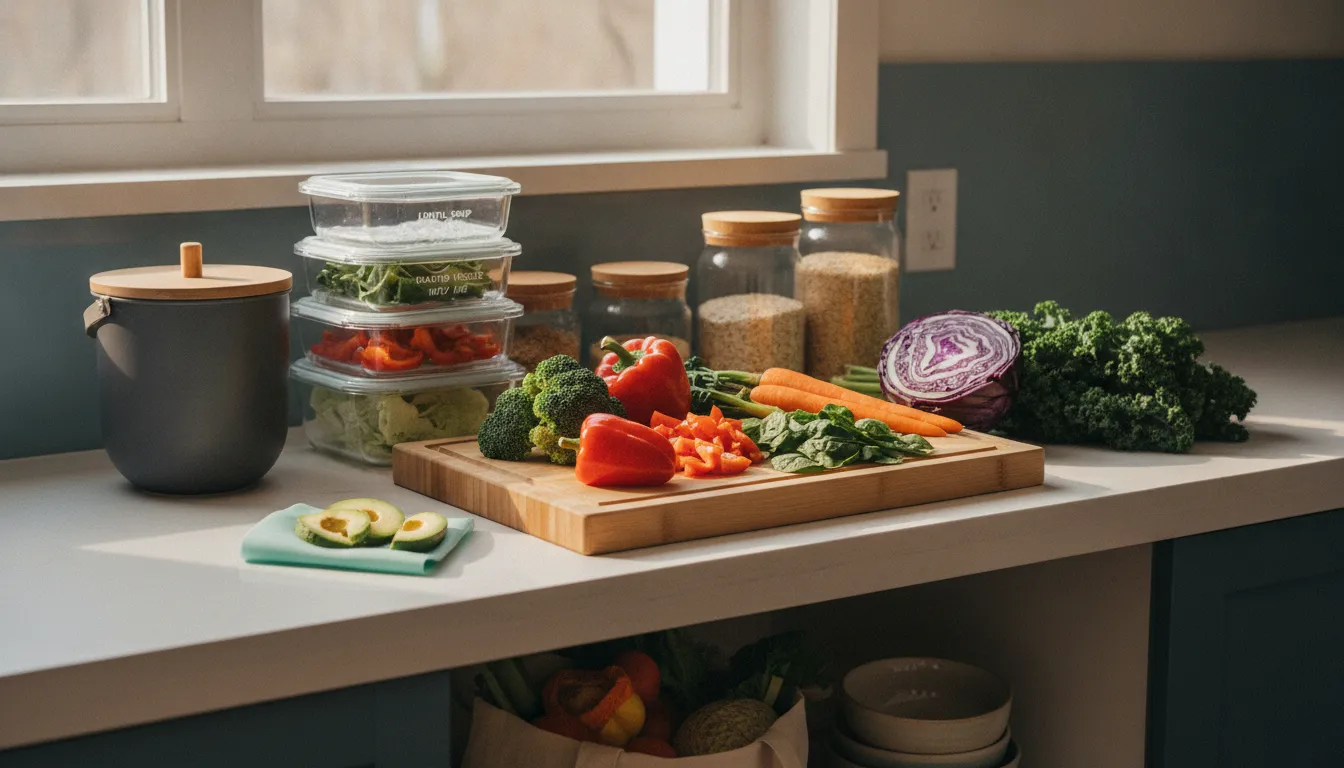
Wasting less begins with attention — to what we buy, what we store, and what we discard. There’s no single perfect solution, and no one will eliminate 100% of waste overnight. But each used carrot, each soup made from leftovers, each banana frozen before rotting is a choice that makes real difference.
And when multiplied by millions of kitchens, that difference becomes significant — for household budgets, for the planet’s natural resources, and for the generations that come after us.
Start with just one change, the one that seems easiest for your routine. Organize your refrigerator today. Make a list before your next shopping trip. Freeze what’s left over. The path to a less wasteful kitchen is made of simple steps, taken one at a time — and you can take the first one right now.
