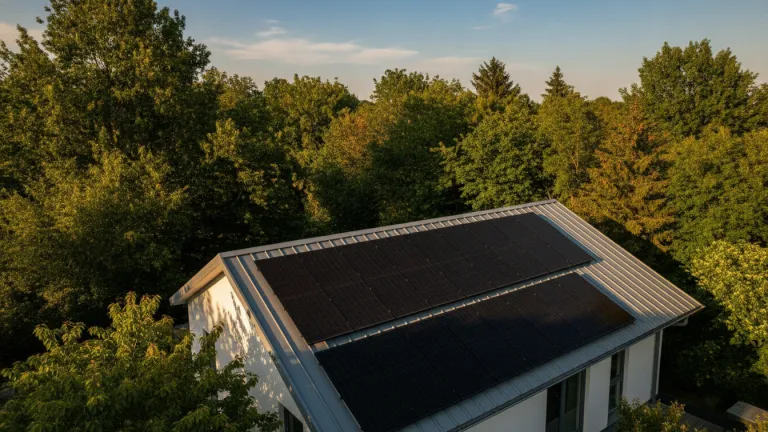
Solar Panels for Home: Is It Worth Investing in 2026?
The electricity bill arrived and, once again, you felt that knot in your stomach seeing the amount. If this scene is familiar, know that millions of Brazilians are in the same situation — and many have already found a solution that combines real savings with environmental responsibility: residential photovoltaic solar energy. In 2026, this technology has definitively stopped being a privilege of the few and has become one of the smartest financial decisions a property owner can make.
Brazil has one of the most renewable electrical matrices in the world, but that doesn’t protect us from rising energy rates. With accumulated increases over the past years and the tariff flag that fluctuates according to reservoir levels, the electricity bill has become an unpredictable expense for most families. It’s in this scenario that solar panels appear as an increasingly accessible alternative, with measurable financial return and positive environmental impact.
In this article, we’ll answer honestly and practically the question many people ask: is it worth installing solar panels at home in 2026? We’ll analyze costs, benefits, payback periods, what changed in legislation, and how to take the first steps — all based on real information so you can make a well-informed decision.
How Residential Photovoltaic Solar Energy Works
Before talking about numbers, it’s important to understand the basics of the system. Solar panels (or photovoltaic modules) capture sunlight and convert it directly into electricity. This energy can be used immediately, stored in batteries, or injected into the electrical grid through the energy compensation system, regulated in Brazil by ANEEL.
The main components of a residential solar system
- Photovoltaic modules: the panels that capture solar light
- Inverter: converts energy from direct current (generated by the panels) to alternating current (used in household appliances)
- Mounting structure: support to install the panels on the roof
- Bidirectional meter: installed by the distributor to measure what you consume and what you inject into the grid
- Wiring and electrical protections: system safety components
In the most common model in Brazil — the on-grid system (grid-connected) — you remain connected to the distributor, but the energy you produce and don’t consume is credited to your account. These credits can be used in months of lower generation, such as in winter or on cloudy days.
What Changed with Law 14,300/2022 and Its Effects in 2026
Law 14,300/2022, known as the Legal Framework for Microgeneration and Distributed Minigeneration, established the rules for those who install solar energy in Brazil. In 2026, the effects of this legislation are already fully felt by consumers and the market.
An important point: the law guaranteed that consumers who installed systems by the end of 2022 follow the old rules for 25 years. Those who installed after that date operate under the new framework, which provides for a gradual charge for the use of electrical infrastructure — the so-called TUSD Fio B — on the energy injected and later withdrawn from the grid.
Even with this change, the investment remains advantageous. The discount may be lower for systems installed after 2022 compared to the previous model, but the savings are still substantial — especially for those who consume a lot of energy or live in regions with high rates.
How Much Does It Cost to Install Solar Panels at Home in 2026?
The cost of a residential solar system varies greatly depending on the system size, region of the country, equipment brands, and installation company. In general terms, the Brazilian market operates in the following ranges:
| Monthly consumption profile | Estimated system power | Approximate investment range |
|---|---|---|
| Up to 200 kWh | 1.5 to 2 kWp | R$ 10,000 to R$ 18,000 |
| 200 to 400 kWh | 2 to 4 kWp | R$ 18,000 to R$ 30,000 |
| 400 to 700 kWh | 4 to 7 kWp | R$ 28,000 to R$ 45,000 |
| Above 700 kWh | 7 kWp or more | Starting at R$ 40,000 |
> Attention: these values are market estimates and may vary significantly. Always request at least three quotes from certified companies before closing a deal.
The price of photovoltaic modules has fallen significantly over the last decade on a global scale. According to historical data from the International Renewable Energy Agency (IRENA), the cost of photovoltaic solar energy has dropped dramatically since 2010, making the technology one of the most competitive power generation sources in the world. In Brazil, this reflection reached the consumer with some lag, but the domestic market today offers much more accessible prices than five years ago.
Investment Return Period: When Do You Start Profiting?
The payback — the time to recover the invested amount — is one of the most frequent questions from those considering installing solar energy. In 2026, the average payback period for residential systems in Brazil ranges, in general, between 4 and 7 years, depending on factors such as:
- Value of the electricity rate in your region
- Local solar irradiation level (the Northeast has an advantage here)
- Size and efficiency of the installed system
- Whether there was financing and the interest rate applied
Considering that quality photovoltaic modules have performance guarantee of 25 years and useful life that can exceed that period, you’ll be generating savings for 18 to 20 years after paying off the investment. This makes the solar system one of the applications with the best cost-benefit available to the property owner.
Factors that accelerate the return
- High monthly consumption (above 300 kWh)
- Residence in states with high solar irradiation (North, Northeast, and Center-West have a major advantage)
- Financing with low interest rates, such as lines from Banco do Brasil, Caixa Econômica, or agricultural credit for rural systems
- Use of high-efficiency equipment
Environmental Benefits: The Real Impact of Your Choice
The decision to install solar energy is not just financial — it has genuine environmental weight. Photovoltaic generation does not emit greenhouse gases during operation, directly contributing to the reduction of emissions that drive climate change.
Although the manufacturing of modules involves some energy and emissions, sector studies indicate that the energy return time — the period needed for the panel to generate as much energy as was spent to produce it — is, on average, 1 to 3 years for crystalline silicon technologies, according to IPCC analyses. As the panel operates for 25 years or more, the environmental balance is widely positive.
In the Brazilian context, it’s worth remembering that our electrical grid is already predominantly renewable (with strong participation of hydroelectric plants), but growing demand and increasingly frequent droughts — a direct reflection of climate change — make distributed solar generation an intelligent way to diversify and strengthen the national electrical system.
How to Install Solar Energy at Home: Step by Step
If you’ve decided to move forward, here’s the practical path:
- Analyze your energy bill — Gather bills from the last 12 months. Calculate your average monthly consumption in kWh. This number is the basis for sizing the system.
- Evaluate your roof — Check the orientation (roofs facing geographic north take better advantage of the sun in Brazil), the inclination, and the state of conservation. Roofs in poor condition need renovation before installation.
- Request quotes — Ask for proposals from at least three installation companies. Verify that the company and professionals are registered with CREA or CFT and that the equipment has INMETRO certification.
- Analyze the financing — If you don’t have capital available, research specific credit lines for solar energy. Many banks offer special conditions for this purpose.
- Sign the contract and monitor the installation — Installation of a typical residential system takes 1 to 3 days. Make sure the contract includes warranties for equipment and labor.
- Request connection to the distributor — After installation, the company or you yourself must file the connection request with the local distributor. The timeline for installing the bidirectional meter varies by region.
- Monitor generation — Most modern inverters have an app to track in real time how much your system is generating. Use this data to verify that the system is performing as designed.
Is It Worth Financing Solar Panels?
Yes — as long as you calculate carefully. The logic is simple: if the financing installment is less than the amount you save on your electricity bill, you’re already making a profit from the first month.
Practical list: what to consider before financing
- Compare the financing interest rate with the estimated monthly savings
- Prefer shorter terms whenever the budget allows
- Check if there’s a possibility of early repayment without penalty
- Consider Banco do Brasil’s Eco+ Program and Caixa Econômica lines, which have historically offered favorable conditions for solar energy
- Be wary of proposals with rates well above the market
Conclusion: 2026 Is a Good Time to Take This Step
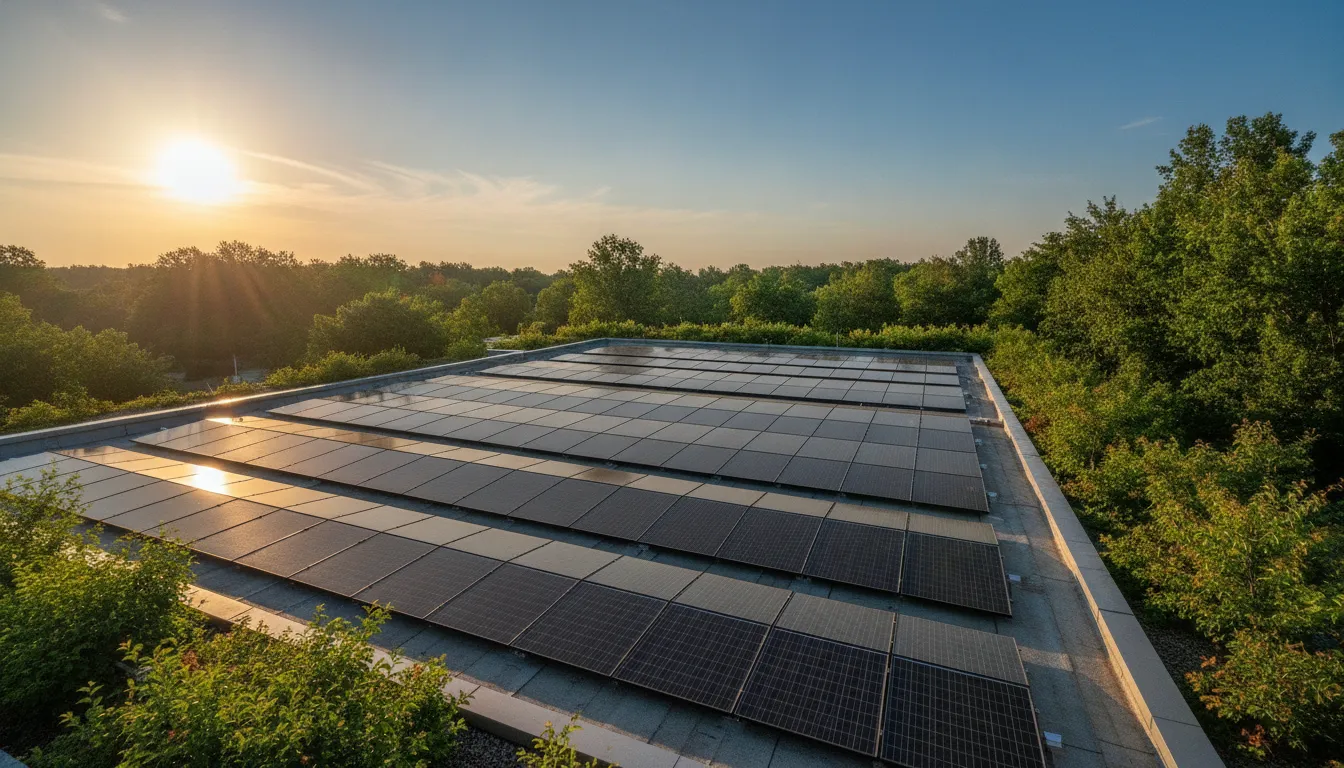
The honest answer to the question in the title is: yes, for the vast majority of property owners, installing solar energy in 2026 is an investment that’s worth it. Equipment prices are more accessible than ever, the regulatory framework provides legal certainty for the investment, and electricity bill savings start in the first month after installation.
More than that, each roof that generates its own energy is a concrete contribution to a more resilient electrical system and to reducing emissions that fuel climate change. There’s no need to wait for public policies or major transformations to act — you can start by analyzing your electricity bill today.
If you want to explore other ways to make your routine more sustainable while researching solar energy, also check out our tips on how to reuse packaging creatively — small actions that, added together, make a real difference.
The sun rises for free every day. How about starting to take advantage of this energy?
