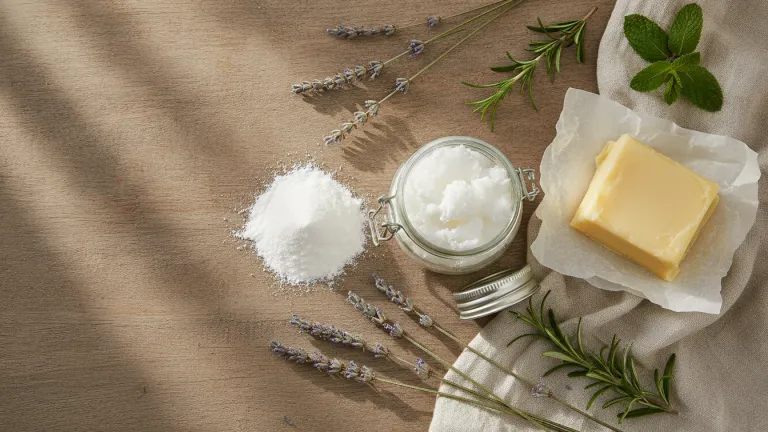
Have you ever stopped to think about the ingredients in the deodorant you use every day? Most commercial products contain synthetic compounds like parabens, aluminum, and artificial fragrances — substances that end up in your body, in wastewater, and inevitably in the environment. At a time when every consumption choice matters, learning to make your own natural deodorant at home is a simple gesture that combines health, savings, and environmental responsibility.
The good news is that the recipe doesn’t require a laboratory, a chemistry degree, or exotic imported ingredients. With items easily found in grocery stores, natural product shops, or even online, anyone can prepare an effective deodorant with a pleasant scent and surprising longevity. And best of all: you know exactly what you’re putting on your skin — and what you’re not releasing into the environment.
In this article, you’ll learn everything you need to get started today: from the ingredients and their real benefits, through the step-by-step of the most tested recipes, to tips for adapting to sensitive skin and guidelines for conscious disposal of packaging. Shall we begin?
Why Homemade Natural Deodorant is a Sustainable Choice
The environmental impact of conventional cosmetics goes far beyond plastic packaging. Aerosols, for example, contain propellants like hydrocarbons (butane and propane) that contribute to tropospheric ozone formation — a pollutant harmful to human health and atmospheric balance. Additionally, compounds like triclosan, present in some antiperspirants and antibacterial soaps, have been detected in water bodies and shown harmful effects on aquatic organisms in peer-reviewed studies.
Packaging also weighs heavily on the scale. Plastic bottles with multiple material layers, caps made of different polymers, labels with adhesives — all of this is rarely recyclable as an integrated whole. When you switch to a homemade deodorant stored in a reusable glass jar or aluminum tube, you directly cut this waste chain.
From an economic standpoint, the advantage is also concrete. A 100g jar of homemade deodorant — enough for two to three months of use — can cost between $2 and $5 in ingredients, depending on your region and suppliers. Equivalent natural commercial products easily reach $10–20 in retail stores.
What Makes a Natural Deodorant Work
Before getting hands-on, it’s worth understanding the science behind the formulation. Body odor doesn’t come from sweat itself, but from the action of bacteria that inhabit the skin and metabolize secretions from the apocrine glands, mainly found in the armpits. A good deodorant, natural or not, works on two fronts:
- Inhibiting or controlling bacterial proliferation — without necessarily eliminating all local microbiota
- Absorbing moisture — reducing the humid environment that favors bacterial growth
The ingredients in the homemade recipe fulfill exactly these functions:
| Ingredient | Main Function | Notes |
|---|---|---|
| Baking soda | Antibacterial and absorbent | May irritate sensitive skin in excess |
| Cornstarch | Moisture absorption | Gentle, great for delicate skin |
| Coconut oil | Emollient base and antibacterial | Prefer virgin, cold-pressed |
| Shea butter | Moisturizing and creamy texture | Rich in vitamins A and E |
| Carnauba or beeswax | Solid consistency | Carnauba wax is vegan |
| Essential oils | Fragrance and antimicrobial action | Lavender, tea tree, peppermint, etc. |
Essential Ingredients for Homemade Natural Deodorant
Baking Soda: The Antibacterial Ally
Baking soda works by creating a slightly alkaline pH environment on the skin, unfavorable for the growth of odor-causing bacteria. It’s cheap, widely available, and highly efficient. However, since armpit skin tends to be sensitive and slightly acidic (pH between 5 and 6), some people experience irritation with high concentrations. The solution is simple: reduce the proportion and compensate with more cornstarch.
Coconut Oil: Base and Protection
Virgin coconut oil contains lauric acid, a fatty acid with antimicrobial properties documented in scientific research. Additionally, it serves as a base that gives the deodorant a creamy texture, facilitates application, and moisturizes the skin. In hot climates, coconut oil may liquefy at room temperature — this doesn’t compromise effectiveness, just changes the consistency.
Essential Oils: Fragrance with Purpose
They’re not just perfume. Tea tree (melaleuca) essential oil has proven antifungal and antibacterial action. Lavender combines mild antibacterial action with a calming aroma. Peppermint offers immediate freshness. Always use pure essential oils, not diluted synthetic fragrances. Check the source — prefer brands that detail the extraction method and botanical species on the label.
Basic Recipe: Creamy Homemade Natural Deodorant
This is the most popular recipe, tested by thousands of people around the world, including zero waste communities and natural formulators. It yields approximately 100–120g.
Ingredients
- 4 tablespoons of virgin coconut oil (about 60g)
- 3 tablespoons of cornstarch
- 2 tablespoons of baking soda
- 1 tablespoon of shea butter (optional but recommended)
- 15–20 drops of essential oil of your choice
Instructions
- Measure all ingredients and separate into clean bowls before starting.
- Melt the coconut oil in a double boiler or microwave in 15-second intervals until completely liquid. If using shea butter, melt together.
- Remove from heat and let cool for 5 minutes. The oil should be warm, not hot.
- Add the baking soda and cornstarch to the oil mixture and stir well with a spoon or spatula until you get a homogeneous paste with no lumps.
- Add the essential oils and mix again.
- Transfer to a sterilized glass jar with an airtight lid. Reused preserving jars work perfectly.
- Let it solidify at room temperature (or in the refrigerator for 30 minutes if the environment is very hot).
- Apply with fingertips in circular motions to clean, dry armpits. A small amount the size of a bean is enough for each armpit.
Alternative Recipe: Solid Version (Stick Style)
For those who prefer not to use fingers for application, it’s possible to make a solid version. The difference is in adding wax.
- Melt 1 tablespoon of carnauba wax (for vegan version) or beeswax with the oils from the basic recipe.
- Mix the powders (cornstarch and baking soda) into the warm liquid.
- Add the essential oils.
- Pour into silicone molds, recyclable cardboard tubes, or old deodorant tubes that have been thoroughly cleaned.
- Refrigerate for 1–2 hours until completely solid.
- Apply directly to armpits like conventional deodorant.
Adaptations for Sensitive Skin and Special Cases
Not everyone reacts well to baking soda. Reddish spots, itching, or burning are signs that your skin needs a gentler formulation. Here’s how to adapt:
- Reduce baking soda to 1 teaspoon or eliminate completely
- Increase cornstarch to compensate for absorption
- Add 1 teaspoon of white clay (kaolin) — it absorbs moisture and has soothing action
- Avoid citrus essential oils (lemon, bergamot) on armpits, as they can cause photosensitivity
- Test on a small area before full application, waiting 24 hours
If you do laser hair removal or use other techniques that leave skin sensitive, wait 48–72 hours before applying any deodorant, natural or not.
Practical Tips for Success with Homemade Deodorant
The transition to natural deodorant can take one to four weeks. During this period, the sweat glands go through an adaptation process — the so-called “armpit detox” — and the odor may seem more intense before normalizing. This is common and temporary.
- Maintain regular hygiene of armpits during the adaptation period
- Always apply to clean, dry skin for best effectiveness
- Reapply if necessary on very hot days or during intense physical activity
- Store away from direct heat and sunlight to preserve ingredients
- Use within 3–4 months — without industrial preservatives, shelf life is shorter
- Clean the jar regularly to avoid contamination
- Reuse the container — that’s part of the point!
This philosophy of conscious consumption connects to other everyday choices, such as learning to keep food fresh longer without waste — small habits that, combined, make a real difference.
Where to Buy Ingredients Responsibly
Ingredients like coconut oil and shea butter have production chains that deserve attention. Prefer brands that:
- Inform the geographic origin of the raw material
- Have fair trade or organic certifications (ECOCERT, USDA Organic, Fair Trade)
- Work with local suppliers when possible — look for options with traceability
Natural product stores, family farming cooperatives, and platforms specializing in natural cosmetics usually have good supplies of ingredients with clear sourcing. Buying in larger quantities reduces packaging and usually the cost per gram.
Conclusion: A Simple Choice with Real Impact
Making your own natural deodorant is, at its core, an act of autonomy. You decide what goes into the formula, control the ingredients, reduce disposable plastic in your routine, and still save money. You don’t need to be a chemistry specialist or have an equipped kitchen — just a bowl, a spoon, and accessible ingredients.
Each reused glass jar, each plastic package not purchased, and each formula without unnecessary chemicals is a small concrete victory. And when we multiply these choices by thousands of people, the collective effect is significant. Start with the basic recipe, adapt to your body and taste, share with whoever wants to try — and inspire one more person to experiment.
If you enjoyed this approach to conscious consumption in daily life, it’s also worth exploring how other household choices can have a positive impact: from food to the energy you use at home. Every step counts, and the first one can be taken today.
