Solar Energy in Apartments: Is It Possible and Worth It?
Living in an apartment and wanting to invest in solar energy seems, at first glance, like a contradiction. After all, the roof isn’t yours, the available space is limited, and decisions about the building go through the condo association meeting. But the reality of the photovoltaic market in Brazil has changed significantly in recent years — and in 2026, apartment dwellers have more options than ever to generate or consume clean energy without needing to own a house with a spacious roof.
Brazil is one of the countries with the highest solar incidence in the world, which makes any advancement in this area especially promising. According to ANEEL (National Electric Energy Agency), distributed photovoltaic generation has grown significantly in the country over the past decade, and legislation has evolved to accommodate collective and remote generation models. This opens real doors for those living in vertical condominiums.
If you live in an apartment and have ever thought “solar energy isn’t for me,” this article was made to change that perception. We’ll explore the available options, how they work, how much they can save, and what you need to do to get started — still in 2026.
What Is Distributed Generation and Why It Changes the Game for Apartments
Distributed generation is the model where electrical energy is produced close to the point of consumption, by small generators connected to the utility’s grid. In Brazil, this system is regulated by ANEEL and allows excess energy generated to be injected into the electrical grid in exchange for credits that offset the electricity bill — the so-called energy compensation system.
Law No. 14,300, enacted in January 2022, was an important milestone: it created the legal framework for micro and mini distributed generation in Brazil, establishing clearer rules and guaranteeing consumer rights. Among the most relevant points for apartment dwellers is the regulation of remote self-consumption and condominiums with shared generation.
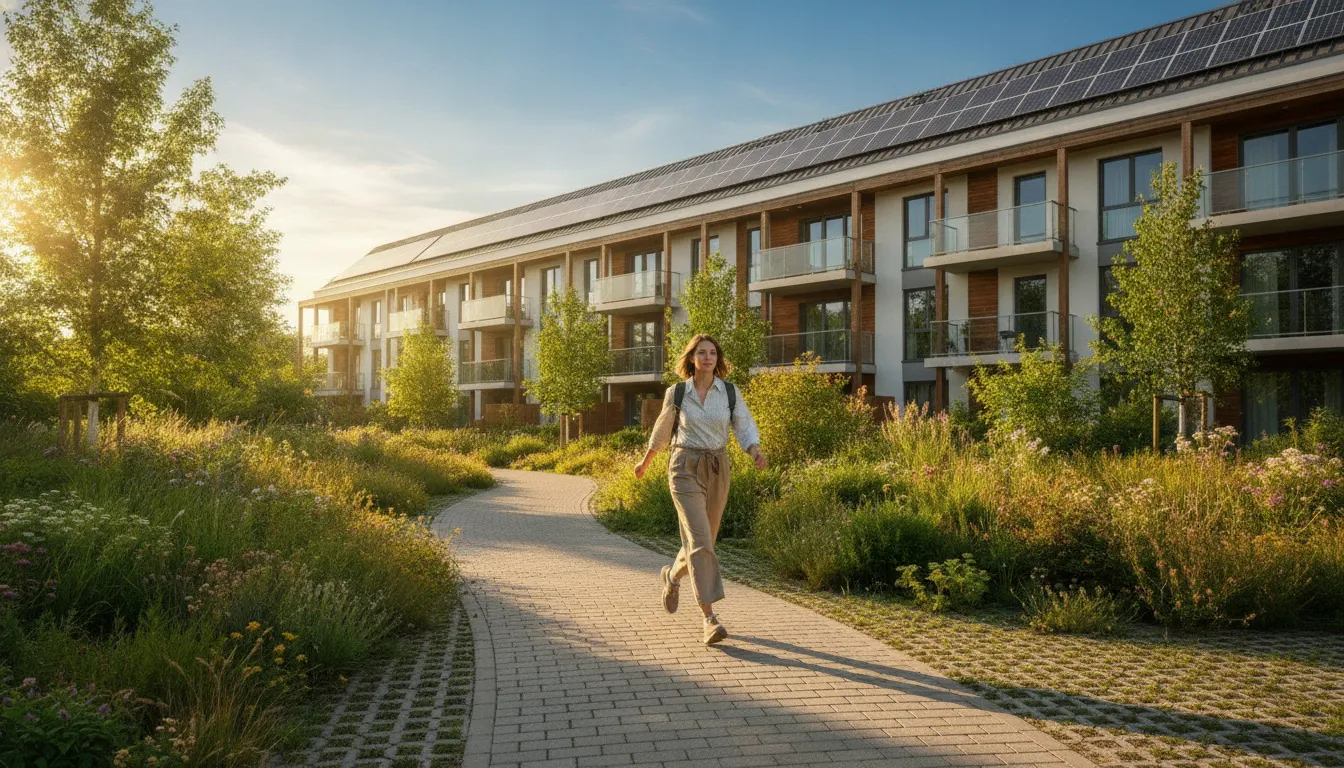
In practice, this means a condominium can install solar panels in common areas — roof, rooftop, covered leisure area — and distribute the generated credits among the units. Each apartment receives a fraction of the credits proportionally, reducing the value of their individual bill. It’s a collective solution with individual benefits.
The Three Main Options for Apartment Dwellers
Not every solar solution requires construction work in your apartment. Here are the most accessible models in 2026:
1. Solar System in the Condominium (Collective Roof)
The condominium installs panels on the roof or in common areas, and credits are shared among residents. It’s the most efficient option in terms of space utilization and cost per unit.
- Advantages: shared cost, single professional installation, centralized maintenance
- Disadvantages: requires approval at the assembly meeting (usually simple majority for useful improvements), requires initial investment from the condominium
2. Remote Solar Farms (Solar Energy Subscription)
Specialized companies build solar farms in other locations and sell energy shares to urban consumers. The apartment dweller signs up for a plan, receives energy credits on their bill, and pays less to the utility.
- Advantages: no construction needed, no high initial investment, can be contracted individually
- Disadvantages: depends on the availability of partner farms in your region and utility
3. Solar Panels on Balcony or Window (Individual Microgeneration)
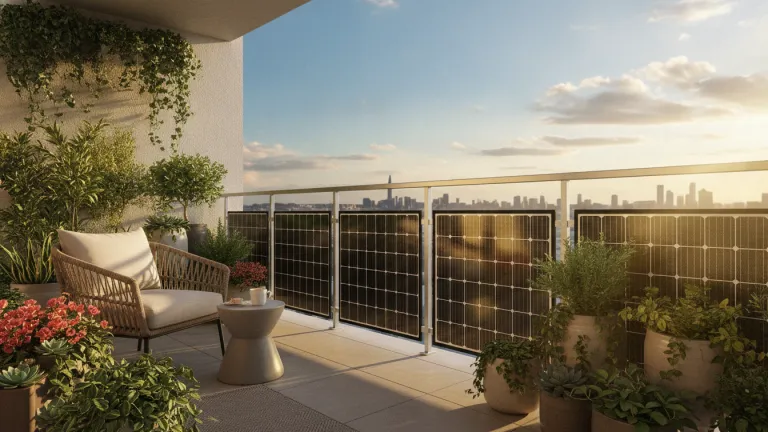
Compact and flexible solar panels installed on balconies, parapets, or windows with good solar exposure. The generation is smaller but can contribute to reducing individual consumption — especially for charging devices and lighting.
- Advantages: individual installation, no dependence on the condominium
- Disadvantages: very limited generation; not always permitted by the condominium’s internal regulations; grid connection requires utility approval
How to Propose Solar Energy in Your Condominium: Step by Step
If the collective roof option seems most viable — and it usually is — the path goes through condominium management. Here’s how to increase chances of approval:
- Research before the assembly. Gather basic data: how many apartments are in the building, what’s the average consumption of common areas, whether the roof has adequate structure and orientation (preferably facing north).
- Request quotes from certified companies. Look for installers certified by INMETRO and registered with the local utility. Request at least three comparative quotes with financial return projections.
- Calculate the return on investment. A good installer presents a payback simulation — the time to recover the investment through bill savings. For condominium systems, this period tends to vary but is usually competitive when the cost is divided among many units. Learn more about this at How Long Does Solar Energy Take to Pay Off in Brazil?.
- Prepare a clear presentation for the assembly. Show the numbers: total investment, share per unit, estimated monthly savings, payback period, and environmental benefits. Concrete data overcomes resistance.
- Check available financing options. Banco do Brasil, Caixa Econômica Federal, and private banks offer specific credit lines for solar energy. In 2026, access to financing for this type of project is broader than in previous years.
- Take it to a vote at the assembly. According to the Civil Code, useful improvements in condominiums can be approved by simple majority of those present, but it’s important to check your specific condominium’s bylaws.
- Monitor installation and registration with the utility. After installation, the system needs to be approved by the local utility before it starts generating credits.
Solar Energy Subscription: The No-Construction Option
For those who don’t want — or can’t — wait for a collective decision from the condominium, solar energy subscription (also called shared remote generation) is an increasingly present alternative in the Brazilian market.
The model works like this: a company builds or operates a solar farm in another location, and you “subscribe” to a share of that farm. The credits generated by your share are transferred directly to your energy bill at the utility, reducing the amount you pay monthly.
What to check before subscribing:
- Whether the partner company operates in your energy utility (each utility has its own rules)
- The discount percentage guaranteed in the contract and whether there’s a minimum commitment period
- The company’s reputation: look for records at PROCON, complaints on Reclame Aqui, and whether it’s properly registered with ANEEL
- Whether there are enrollment fees or hidden costs in the contract
This model has grown in Brazil, especially in capitals and metropolitan regions where most properties are vertical. It’s a way to participate in the energy transition without depending on your own physical infrastructure.
How Much Can You Save? A Realistic View
Let’s be honest about expectations: the financial impact varies greatly depending on the model chosen, the system size, your utility, and your current consumption. There’s no single number valid for all cases.
What industry experts and certified company simulations typically indicate:
- Collective systems in condominiums tend to significantly cover common area consumption (lighting, elevators, water pumps), which often represents a substantial portion of the condo fee
- Depending on system size and number of units, residents can see relevant reductions in both individual bills and condo fees
- In the subscription model, discounts vary according to the contract and company but generally range between 10% and 25% off the utility rate — values that may change; always request a personalized simulation
The important thing is to request simulations based on your actual consumption and not accept vague promises of “guaranteed savings” without documentation.
Benefits Beyond the Electricity Bill
The decision to adopt solar energy in an apartment isn’t just financial. There are gains that go beyond your wallet:
- Carbon footprint reduction: photovoltaic energy doesn’t emit greenhouse gases during generation. Understanding how the greenhouse effect works in practice helps dimension the importance of each energy choice
- Partial independence from tariffs: with self-generation or credits, you’re less exposed to rate adjustments and energy surcharge flags
- Property appreciation: properties with renewable energy infrastructure have been increasingly valued in the Brazilian real estate market
- Contribution to the electrical grid: when your system injects energy into the grid, other consumers benefit from this clean energy
- Education and collective engagement: the process of implementing solar energy in a condominium can strengthen the sustainability culture among residents — something that, like teaching sustainability to children at home, starts with small daily decisions
Frequently Asked Questions Before Starting
Can the condominium prohibit panel installation on my balcony? Yes. The condominium bylaws may restrict façade alterations. Check before any individual installation.
Do I need utility approval even for a small system? For grid-connected systems (that generate credits), yes. Completely isolated systems (off-grid), without connection to the electrical grid, have different rules but also practical usage limitations.
What if the condominium is rented? You can individually contract solar energy subscription. For building systems, the process involves the owner and management — more complex but not impossible.
Do panels need constant maintenance? No. Photovoltaic panels have very few moving parts and mainly require periodic cleaning and connection checks. Maintenance is simple and low-cost.
Take the First Step Today
Solar energy in apartments has gone from utopia to becoming a concrete, regulated, and financially viable option for millions of Brazilians. The path can be collective — through the condominium — or individual, through remote farm subscriptions. In both cases, the legal and commercial tools to move forward already exist.
Start with the simplest step: check your average monthly energy consumption, research whether there are solar subscription companies authorized in your utility, and if you want to go further, talk to the building manager about the possibility of presenting the topic at the next assembly meeting.
The energy transition doesn’t happen only in large power plants or government policies. It also happens in the decision of each apartment dweller who decides to ask: “Why not me?”
