Imagine receiving your electricity bill at the end of the month and feeling relief instead of shock. For apartment dwellers, this scene may seem like a distant dream — after all, the idea of installing solar panels seems like something for a house with a large backyard and its own roof. But reality has changed considerably, and in 2026 there are concrete, accessible, and legally backed solutions for those living in vertical condominiums to also take advantage of solar energy.
Brazil occupies a privileged position on the global solar map. Even cities with the lowest solar irradiation in the country receive more solar energy per square meter than much of Europe — and Europe is already a consolidated powerhouse in photovoltaic energy. This enormous potential, combined with the continuous drop in equipment costs and regulatory changes over recent years, opened a real window of opportunity for apartment dwellers who want to reduce their energy bills and decrease their carbon footprint.
In this article, you will understand how solar energy works in apartments, what models are available, what Brazilian legislation allows, how much you can save, and how to take the first step today — without needing to own a penthouse or have authorization to drill through the slab.
How photovoltaic solar energy works: the basics you need to know
Before talking about apartments specifically, it’s worth understanding the mechanism. Photovoltaic solar energy systems convert sunlight directly into electricity through panels composed of semiconductor cells, usually silicon. When photons of sunlight hit these cells, they release electrons, generating a direct electric current. A device called an inverter converts this direct current into alternating current — the type of electricity used in your home’s outlets.
The system connected to the electrical grid (called grid-tie) is the most common in Brazil. In it, the energy generated that is not used immediately is injected into the distributor’s grid, generating energy credits that can be used to reduce your bill in following months. This mechanism is regulated by ANEEL through Normative Resolution No. 1,059/2023, which updated the rules for distributed microgeneration and minigeneration in the country.
What changed for apartment dwellers: the legal framework
For many years, solar energy in apartments was restricted to penthouses or residents with parking spots with installed outlets. ANEEL’s Normative Resolution No. 1,059/2023 consolidated a set of possibilities that significantly changed this scenario.
The main changes that impact apartment dwellers are:
- Remote self-consumption: allows the resident to generate energy in a different location from where they consume — for example, at a solar plant outside the city — and use the credits on their apartment bill.
- Shared generation in condominiums: the condominium can install panels in common areas (roof, rooftop, covered garage) and distribute credits among participating units.
- Solar energy consortiums and cooperatives: groups of people can unite to invest in a collective plant and divide the benefits.
These three modalities made solar energy accessible to anyone with a CNPJ, CPF, and active electricity bill — regardless of whether they live in an apartment, are a tenant, or don’t have their own physical space to install panels.
Shared generation in the condominium: how it works in practice
This is probably the most direct path for apartment dwellers. In shared generation, the condominium installs a photovoltaic system in common areas — usually on the building’s roof or above the garage — and the credits generated are divided among units that joined the project.
The process works like this:
- Feasibility assessment: a specialized company evaluates the available area, the building’s solar orientation, and the average consumption of interested units.
- Assembly approval: installation in common areas must be approved by condo owners, usually by qualified majority (according to each condominium’s bylaws).
- Contract with the distributor: the condominium or a legal representative formalizes registration with the local energy distributor, following ANEEL rules.
- Installation and grid connection: a qualified company installs the panels, inverter, and metering system. Connection time varies by distributor.
- Credit distribution: after connection, credits are automatically allocated to participating units’ accounts, in the proportion defined in the contract.
Important: even if you’re a tenant, you can participate as long as the owner authorizes and the contract is in your name with the distributor. It’s worth talking to the property manager and checking if the condominium already has or is studying such a project.
Remote self-consumption: solar energy without needing your roof
If the condominium has no interest or feasibility for installing panels, remote self-consumption is the most powerful individual alternative. In this modality, you invest — alone or with others — in a system installed at another address (a farm, rural area, collective plant) and the credits generated go directly to your apartment’s electricity bill.
Some Brazilian companies and startups already offer this service in a simplified way, functioning almost like a subscription: you pay a monthly fee and receive proportional credits on your energy bill, without needing to buy equipment, hire installation, or perform maintenance. This model is popularly called solar energy by subscription and has grown significantly in Brazil in recent years.
Points of attention when hiring this service are:
- Verify that the company is registered and regularized with ANEEL
- Read the contract carefully, especially fidelity and adjustment clauses
- Confirm that the plant is connected to the same distributor serving your apartment (credit compensation occurs within the same distributor’s concession area)
- Ask what the timeframe is for starting to receive credits on your bill
How much can you save with solar energy in your apartment?
The honest answer is: it depends a lot on your consumption, the chosen modality, and the contracted system. There’s no single number that applies to everyone.
What we can affirm based on market dynamics:
- In well-sized shared generation systems, it’s common for participating units to cover between 50% and 80% of their electricity consumption with generated credits — but this varies depending on available roof area in the building and number of participants.
- In the solar energy subscription model, companies generally promise discounts between 10% and 20% compared to the conventional distributor rate — real savings, but more modest than own system installation.
- In own systems (penthouse, for example), investment return in Brazil has historically varied between 4 and 7 years, depending on the region and consumption.
Electricity costs in Brazil are subject to frequent adjustments. The higher the tariff, the higher the value of each solar credit — which makes investing in solar progressively more attractive over time.
Panels on balconies or windows: does this work?
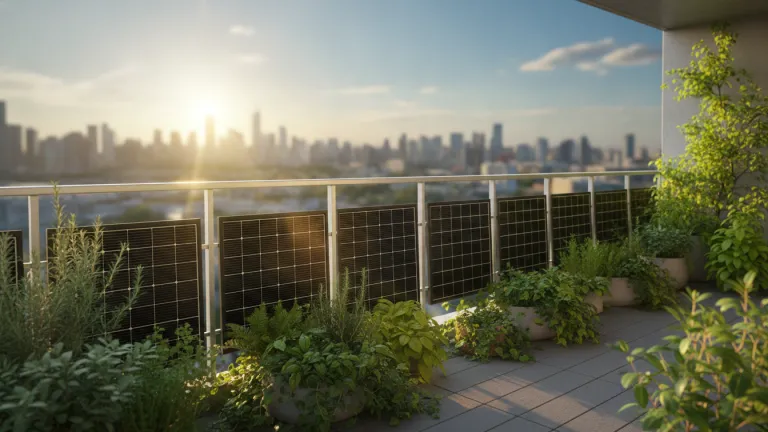
There’s a third, less conventional option that has gained visibility: compact solar panels for balconies and windows. These are smaller modules, designed for installation on railings or walls, that generate a modest amount of energy — enough to power some appliances or slightly reduce your bill.
This solution has important limitations:
- Generation is significantly lower than in rooftop-installed systems, due to angle and partial shading
- Not all condominiums allow installation (check the condominium bylaws first)
- Grid connection requires distributor approval, even for small systems
- Financial return is slower than conventional systems
Still, for those who want to take a concrete first step and have a balcony with good sun exposure, it can be a valid option — especially the plug-and-play models already arriving in Brazil from European and Asian markets.
How to take the first step today
If you’re convinced that solar energy in apartments is possible and makes sense for you, here’s a practical roadmap to start:
- Review your electricity bills from the last 12 months and calculate your average monthly consumption in kWh.
- Talk to your property manager and ask if the condominium has or is considering a shared generation project.
- Research solar energy subscription companies that serve your local distributor — compare contracts, discounts, and timeframes.
- Consult your region’s energy distributor to understand local connection requirements and timeframes.
- Attend or propose a condominium assembly to discuss installing panels in common areas, presenting feasibility data.
- Find a certified solar integrator (you can find professionals credentialed by the Brazilian Photovoltaic Solar Energy Association, ABSOLAR) for a free quote.
Just like making conscious consumption choices — whether by opting for secondhand products (learn more about this in Thrift stores worth it: real advantages of buying used) or understanding how companies are changing their practices in What ESG means in companies today — adopting solar energy is a decision that connects personal benefit and collective impact.
Conclusion: solar energy has arrived at your apartment
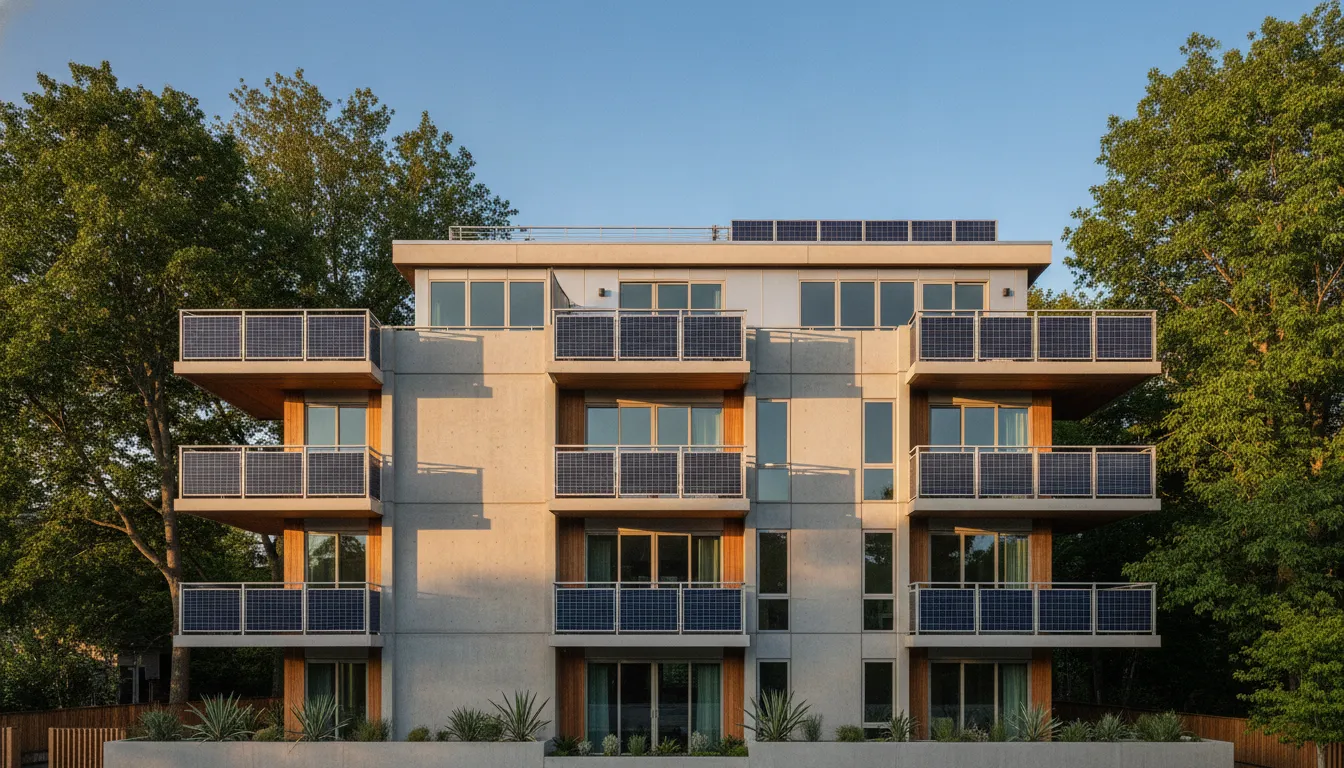
Living in an apartment is no longer an obstacle to accessing solar energy. In 2026, options are real, regulated, and growing: shared generation in the condominium, remote self-consumption, solar subscription, and even compact panels for balconies. Each model has its advantages and limitations, but all point in the same direction — less dependence on conventional grids, lower electricity bills, and less carbon emissions on the planet.
The sun rises for everyone. And now, it can also reach the outlet in your apartment. How about taking the first step this week — starting with a conversation with your property manager?
