Every time you discard packaging, you’re throwing away much more than it seems. You’re wasting the material, the energy used to produce it, and almost always, the money that came out of your pocket to buy it. In Brazil, the generation of urban solid waste is an immense challenge: according to the Panorama of Solid Waste in Brazil, published by the Brazilian Association of Public Cleaning and Special Waste Companies (Abrelpe), the country generates tens of millions of tons of waste per year, and packaging represents a significant slice of that volume. Much of this material could have a second useful life before being recycled or discarded.
The good news is that reusing packaging doesn’t require special talent, expensive tools, or much time. It requires only a different look at what already exists at home. An empty glass jar is not garbage: it’s a future spice organizer, a mini plant pot, a pencil holder, or even a sourdough container. A sturdy cardboard box can become an improvised drawer, a toy for children, or a seedbed for seedlings. Small decisions like these, repeated in daily life, generate real savings and reduce pressure on collection and recycling systems.
This article brings together practical, tested, and accessible ideas to transform common packaging into useful objects — without spending almost anything. In addition to saving money, you will contribute to a more conscious cycle of consumption. Let’s get started?
Why reusing packaging matters beyond the obvious
Recycling is important, but reusing is even better in the waste hierarchy. According to the concept of the “5 Rs” — Rethink, Refuse, Reduce, Reuse, and Recycle — popularized by conscious consumption movements and recognized by the National Solid Waste Policy (Law 12.305/2010), reuse comes before recycling precisely because it prevents the material from needing to be reprocessed. Recycling still consumes energy, water, and generates some type of emission. Reusing simply prolongs the life of what already exists.
From a financial perspective, the impact is also real. Organizers, vases, storage containers, decorative boxes — all these items have a cost in stores. By replacing them with reused packaging, you avoid expenses that, over the course of a year, can represent a considerable amount in your household budget.
And there’s also the aspect of creativity. Reusing packaging is a practice that stimulates inventive thinking, can become a family project with children, and transforms the act of consuming into something more intentional.
Glass jars: the darlings of creative reuse
Glass jars are, without a doubt, the champions of household reuse. Versatile, hygienic, durable, and beautiful, they accept practically any function you want to give them.
Practical uses for glass jars at home
- Storage of dry foods: grains, flours, seeds, coffee, tea, and spices are better preserved in glass than in open plastic bags.
- Kitchen utensil holder: larger jars, such as palm heart or olive jars, are perfect for wooden spoons, spatulas, and other utensils.
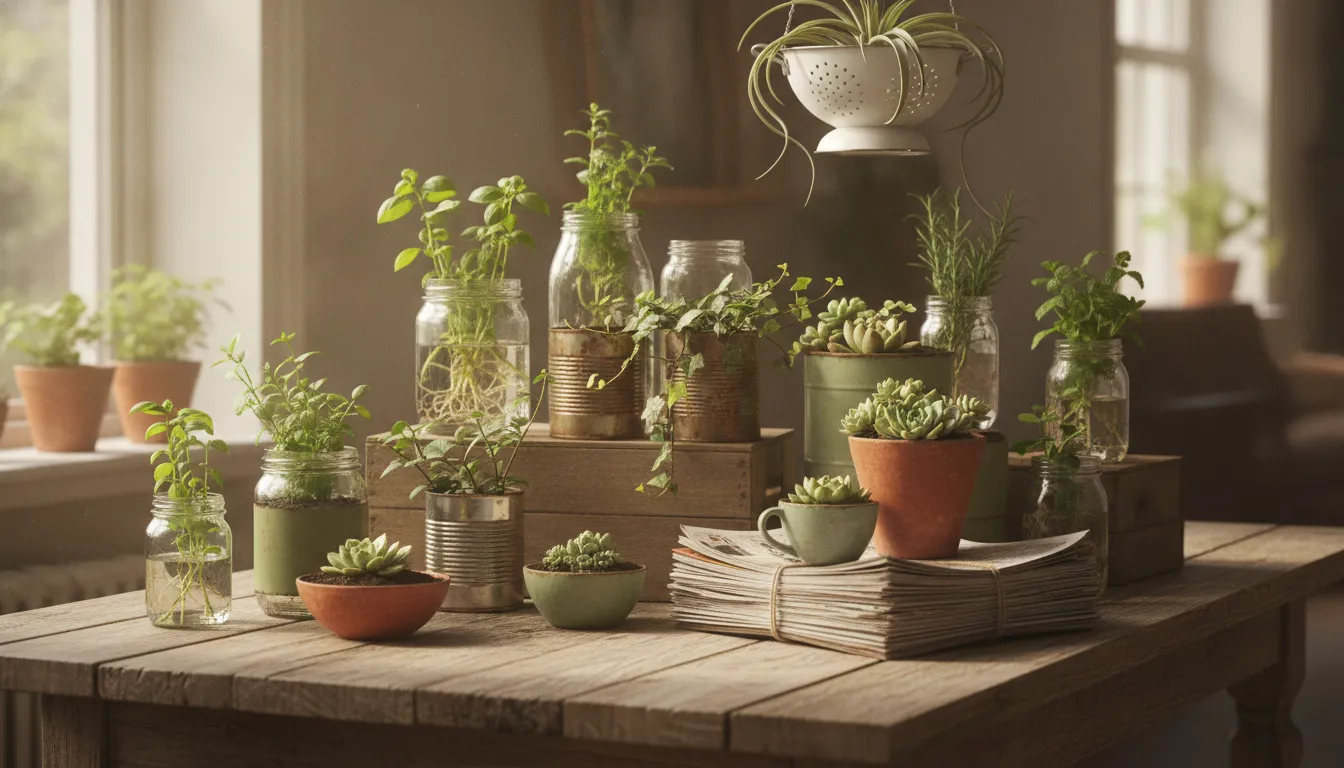
- Vases for plants and aromatic herbs: with a little gravel at the bottom for drainage, any glass jar becomes a charming vase for seasonings like basil, chives, and mint.
- Bathroom organizers: cotton swabs, cotton buds, elastic bands, and hair accessories stay much neater in transparent glass pots.
- Candle holders: a jar with a citronella candle inside, for example, repels insects and decorates at the same time.
- Seed germination: wide-mouth jars are ideal for germinating beans, lentils, and chickpeas at home.
How to properly sanitize before reusing:
- Wash the jar with hot water and neutral detergent, removing all residue.
- Remove the label: soak in warm water for a few minutes and use a sponge to remove glue residue.
- For persistent odors (like tomato sauce), leave the jar in the sun for a few hours or place a mixture of baking soda and water inside for 30 minutes.
- Dry completely before using to store dry foods.
Cardboard boxes: structure, organization, and even gardening
Sturdy cardboard boxes are excellent raw material for organization and gardening projects. Many people discard them without thinking, but they have a long life when used intelligently.
How to transform cardboard boxes into organizers
- Choose boxes of a size compatible with the space where they will be used — drawers, shelves, or cabinets.
- Line internally with craft paper, fabric, or gift paper to finish and increase durability.
- Cut the lids to a lower height to create internal dividers.
- Label each box to facilitate location of items.
Cardboard boxes also work very well as temporary seedbeds. Just position them in an appropriate location, line with newspaper sheets (to hinder weeds) and fill with soil. The cardboard decomposes over time, enriching the soil — a method widely used in urban gardens and known as “raised bed lasagna”. If you want to delve deeper into this topic of gardening reuse, check out the article on homemade organic fertilizer: turn trash into nutrition.
Plastic packaging: what’s worth keeping and how to use it well
Not all plastic packaging should be reused to come into contact with food — especially those for single use, which were not designed for reuse. But there are many safe and creative applications for household plastics.
Safe and creative uses for plastic packaging
- Large PET bottles: excellent for mini hanging gardens, tool organizers in workshops, or feeders and water bowls for small animals.
- Ice cream and margarine containers: ideal for storing plant seeds, nails, screws, and small office items — but avoid using for food, as many are not manufactured for prolonged food reuse.
- Shampoo and conditioner bottles: with the cap cut off, they become toothbrush holders, makeup brush organizers, or even small plant pots.
- Plastic bags: can be reused as trash bags for small bins, avoiding the purchase of specific bags.
To better understand why disposable plastic is problematic and what alternatives are available today, it’s worth reading the article disposable plastic has better ecological substitutes.
Cans: strength and charm for decoration and gardening
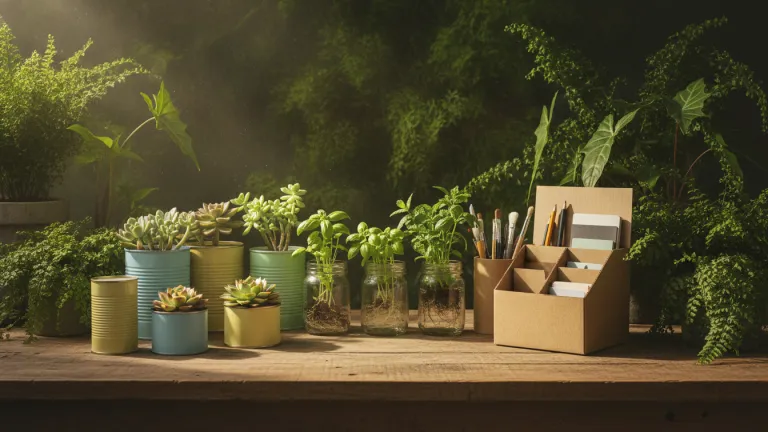
Steel cans of different sizes — from tomato extract, powdered milk, coffee, oil — are robust materials that resist well outdoors and accept customization with paint, twine, burlap, or fabric.
Step by step: plant pot with a can
- Wash the can well and remove the label.
- With a nail and hammer (or drill), make 3 to 5 holes in the bottom for drainage.
- Sand the internal edges with fine sandpaper to prevent cuts.
- Paint with spray paint or metal paint if you want to personalize. Let dry completely.
- Place a layer of gravel or small stones at the bottom and fill with soil.
- Plant herbs, succulents, or small flowers.
Cans also serve as pencil holders and desk organizers, luminaries with decorative holes (using a candle or LED light), and countertop composting collectors — to store organic waste before taking it to the composter.
Juice and milk cartons (Tetra Pak): more versatile than they seem
Long-life packaging, made from layers of cardboard, aluminum, and plastic, is difficult to recycle in many Brazilian municipalities because it requires specific technology. That’s why reusing them before disposal makes even more sense.
- Bread and cake molds: smaller cartons, open at the top, function as disposable pans for bread preparation.
- Seed holders and small vases: ideal for germinating seeds before transplanting.
- Refrigerator organizers: cartons cut to the right height help organize sauces, sachets, and small items on shelves.
- Toys and children’s projects: with creativity, they become houses, cars, and constructions for children.
Comparison: how much you can save by reusing
| Reused item | Replacement you avoid | Estimated savings |
|---|---|---|
| Large glass jar | Purchased plastic hermetic container | R$ 15 to R$ 40 per unit |
| Lined cardboard box | Plastic organizer box | R$ 20 to R$ 60 per unit |
| Coffee can as a vase | Small ceramic decorative vase | R$ 25 to R$ 80 per unit |
| PET bottle as a watering can | Small plastic watering can | R$ 20 to R$ 45 per unit |
| Reused plastic bag as trash bag | Roll of trash bags | Reduction in monthly consumption |
Values estimated based on market prices in 2026; may vary by region.
Tips for creating a habit of reusing packaging in daily life
Transforming reuse into a habit is easier when you create a simple system at home. Some strategies that work:
- Create a “packaging bank”: reserve a box or shelf to temporarily store clean packaging with reuse potential. Avoid accumulating more than you’ll actually use.
- Think before discarding: before throwing packaging in the trash, ask “is there an immediate use for this?”. If yes, save it. If not, dispose of it properly.
- Involve the family: projects with children using packaging are educational and fun. Vases, toys, and art with reused materials teach sustainability in practice.
- Combine reuse with composting: peels and organic waste left over while you prepare containers for reuse can go straight to the compost bin.
- Document and share: recording your creations and sharing with friends and on social media creates a community of mutual encouragement.
Conclusion: small choices, big results
Reusing packaging is one of the most accessible, economical, and immediate practices of household sustainability. It requires no initial investment, doesn’t depend on public policies, and can start today, with what you already have at home. A glass jar, a can, a cardboard box — all have the potential for a second useful life before disposal.
Over the course of a year, these choices accumulate savings in your budget, reduce the amount of waste generated, and create a more organized home environment with more personality. The most important thing is to start with small steps and gradually incorporate the habit naturally, without pressure.
Start today: look at the trash you were about to generate and ask what else you can do with that packaging. You’ll be surprised by the possibilities — and by how much you can save while helping the planet.
