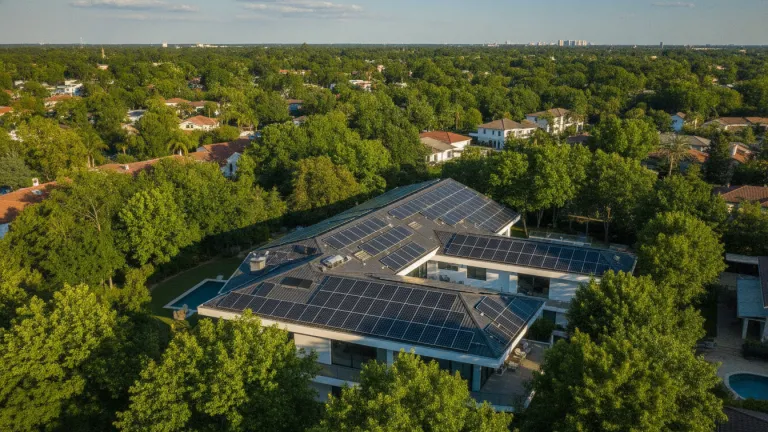
Why More and More People Are Generating Their Own Energy
Imagine opening your electricity bill and seeing a value close to zero — or even receiving credits from the previous month. For millions of homeowners, this is no longer a fantasy: it’s the reality for those who have installed residential solar energy. In 2025, Brazil surpassed the mark of 4 million photovoltaic systems installed across the country, establishing itself as one of the largest solar energy markets in the world, according to data from ANEEL (National Electric Energy Agency).
This growth is no coincidence. Brazil has one of the highest solar radiation levels on the planet — even less sunny regions, like the South of the country, receive enough irradiation to make the investment viable. Combined with the constant drop in photovoltaic panel costs over recent decades and the regulatory framework established by Law No. 14,300/2022, the scenario has never been more favorable for those wishing to generate clean energy at home.
This article explains, in a practical way without unnecessary jargon, how residential solar energy works: from the basic physics of panels to the installation process, real costs, and the return you can expect. If you’re considering taking this step, keep reading — the information here can help you make a safer and more informed decision.
How the Photovoltaic Solar System Works
The Photovoltaic Effect: The Physics Behind the Panels
Everything starts with a phenomenon called the photovoltaic effect, discovered by Alexandre Edmond Becquerel in 1839. When photons from sunlight hit cells made of silicon (the predominant material in modern panels), they transfer energy to the electrons in the material, creating a direct current (DC).
However, this current is not directly compatible with your household appliances, which run on alternating current (AC). That’s where the inverter comes in, one of the most important components of the system: it converts the direct current generated by the panels into usable alternating current.
The Main Components of a Residential System
A typical residential photovoltaic system consists of:
- Photovoltaic modules (panels): capture sunlight and generate electricity
- Inverter: converts DC to AC and monitors system performance
- Mounting structure: support for installing panels on the roof or ground
- Wiring and electrical protections: ensure safety and energy conduction
- Bidirectional meter: records both consumption and energy injected into the grid (for grid-connected systems)
- Battery bank (optional): allows storing energy for nighttime use or cloudy days
Most residential installations in Brazil are on-grid (connected to the electrical grid), which allows injecting surplus energy into the local utility company and receiving credits to offset nighttime consumption — a system regulated by ANEEL.
The Brazilian Regulatory Framework: Microgeneration Law
Law No. 14,300/2022, known as the Legal Framework for Distributed Micro and Mini Generation, was a watershed for the sector in Brazil. It established clear rules about the Electric Energy Compensation System (SCEE), ensuring that consumers who generate solar energy can offset credits on their electricity bill.
Here’s how it works in practice:
- The energy you generate during the day and don’t consume immediately is injected into the electrical grid of the utility company
- In exchange, you receive energy credits, which are deducted from what you consume at night or on days with low generation
- Credits are valid for 60 months (five years) to be used
- The law ensured a gradual transition in billing rules, protecting those who already had systems installed before 2023
This regulatory structure is what makes the system economically viable for most Brazilian homes without the need for expensive batteries.
How Much It Costs and What the Return on Investment Is
Average Installation Values in 2026
The cost of a residential solar system varies significantly depending on the family’s consumption, equipment quality, and region of the country. Generally, for a home with average monthly consumption of 300 to 400 kWh, the investment usually ranges from $3,500 to $7,000 USD, including equipment, installation, and approval with the utility company.
These values have dropped significantly over the years. The fall in photovoltaic module prices in the global market has been significant over the last decade, making solar energy increasingly accessible.
Payback Time
The investment return period — called payback — depends on factors such as:
- Your current energy bill value
- Solar irradiation in your city
- Quality and efficiency of chosen equipment
- Financing method used
In Brazil, the average payback for residential systems has ranged between 4 and 7 years, according to industry estimates. Since modern panels have a performance warranty of 25 to 30 years, there’s a long window of virtually free energy generation after the investment return.
Available Financing Options
- Bank financing: specific lines for solar energy at banks like Banco do Brasil, Bradesco, and Caixa Econômica Federal, with variable terms and rates
- Solar energy consortium: interest-free alternative, ideal for those who aren’t in a hurry
- Leasing and system rental: companies that install at no initial cost and charge a monthly fee lower than the current electricity bill
- Own resources: for those who prefer to maximize financial return
How to Install Solar Energy at Home: Step by Step
If you’ve decided to move forward, here’s the complete residential installation process:
- Analyze your energy consumption: get the last 12 electricity bills and calculate the average monthly consumption in kWh. This will define the size of the system needed.
- Request quotes from certified companies: look for installers with professionals certified by NABCEP (international certification) or registered with CREA. Compare at least three quotes.
- Evaluate the roof: a qualified installer will check the orientation (north-facing roofs have better performance in the Southern Hemisphere), the tilt angle, the support structure, and any shading from trees or neighboring buildings.
- Sign the contract and wait for installation: the physical installation of a typical residential system takes 1 to 3 business days.
- Request the access opinion from the utility: after installation, the installing company (or you yourself) must file the connection request with the local utility. This process can take 30 to 90 days, depending on the utility and system complexity.
- Replace the meter: the utility will install a bidirectional meter capable of recording both consumption and generation.
- Activate monitoring: most modern inverters come with an app that allows you to track your system’s generation in real-time on your phone.
What to Consider Before Installing: Practical Checklist
Before closing the deal, check these essential points:
- Roof age and condition: if it will need renovation in the coming years, it’s better to do it before installing the panels
- Roof type: ceramic, metal, fiber cement, and flat roofs have different solutions — confirm with the installer
- HOA restrictions: in homes within associations, check if there are restrictions in the bylaws
- Shading: trees, water tanks, walls, and neighboring buildings can significantly reduce generation
- Equipment warranties: demand manufacturer product warranty (usually 10 to 12 years for panels) and performance warranty (25 years is the industry standard)
- Invoice and documentation: keep all documents for possible maintenance, property sale, or access to future financing
- Reputable installing company: verify registrations, references, and whether the company will issue the ART (Technical Responsibility Annotation) from the responsible technician
Real Environmental Benefits of Residential Solar Energy
Beyond financial savings, solar energy brings concrete environmental gains. Photovoltaic generation emits no greenhouse gases during operation — unlike gas or coal thermal power plants that are part of the energy mix during periods of water scarcity.
ANEEL and the electricity sector use the concept of grid emission factor to calculate how much equivalent CO₂ is avoided per locally generated kWh. This factor varies according to the energy mix at the time, but replacing grid energy with solar photovoltaic contributes to reducing national emissions — something relevant for Brazil to meet its climate commitments under the Paris Agreement.
There’s also a systemic benefit: by reducing pollution in cities with real actions, distributed generation decreases pressure on large power plants and transmission lines, making the electrical system as a whole more resilient.
Maintenance and System Lifespan
The good news is that photovoltaic systems require minimal maintenance. The main recommendations are:
- Panel cleaning: on average every 6 months (or whenever there’s visible accumulation of dust, soot, or bird droppings), as dirt can reduce generation efficiency
- Electrical inspection: annually, done by an electrician or the installer itself
- Continuous monitoring: use the inverter app to identify unexpected drops in generation
- Inverter replacement: conventional inverters have an average lifespan of 10 to 15 years, being the component most likely to be replaced over the system’s lifetime
The photovoltaic modules themselves have very slow natural degradation — manufacturers guarantee that after 25 years the panels will maintain at least 80% of their original generation capacity.
Conclusion: A Concrete Step Toward Energy Independence
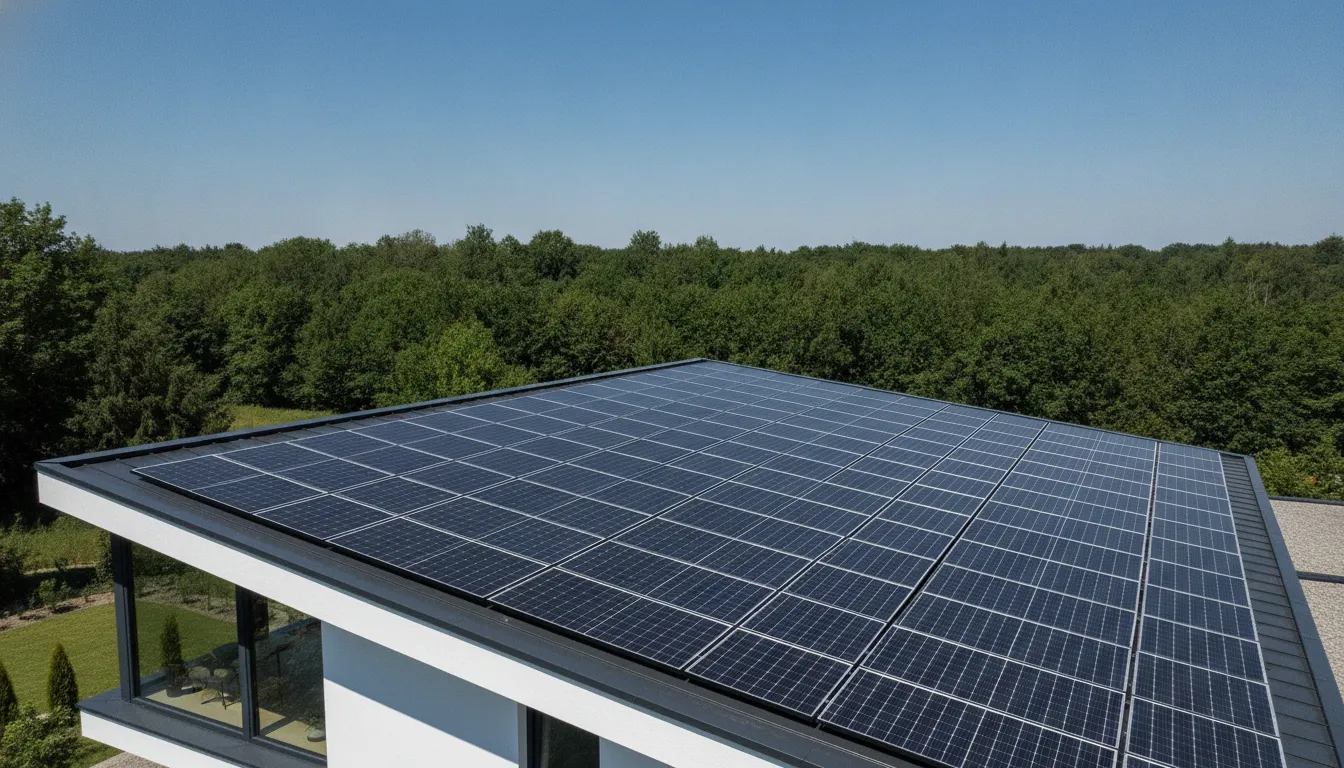
Installing residential solar energy is one of the most impactful decisions a family can make today — both for the wallet and the environment. The process is simpler than it seems, the market is mature, regulations are consolidated, and financing options have made access viable for different income profiles.
The first step is the easiest: analyze your energy bill, research certified installers in your city, and request at least three quotes. With the right information in hand, the decision becomes much clearer.
And remember: every roof with solar panels is a small collective victory. By preserving the environment with simple choices, you contribute to a cleaner, fairer energy system that’s less dependent on polluting sources. The sun rises every day — why not take advantage of it?
