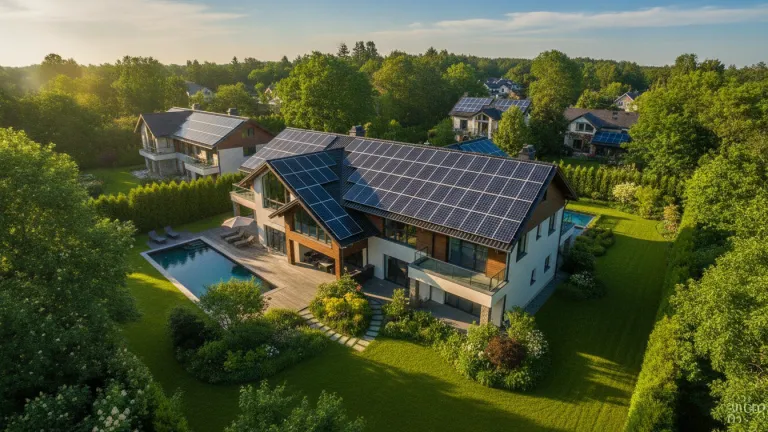
Residential Solar Energy: How It Works and Why It Matters
Imagine looking at your rooftop and seeing not just shingles, but a small clean energy power plant working silently in your favor. This reality is already part of daily life for millions of homeowners — and the number grows every year. Countries blessed with high solar irradiance have an abundant and largely untapped resource in the sun. Harnessing this energy is no longer a privilege reserved for large corporations or tech enthusiasts: it’s an increasingly accessible option for ordinary families.
Residential solar energy is no longer a novelty — it has become one of the smartest financial and environmental decisions a homeowner can make. With consistent cost reductions in equipment over the past decade and evolving regulatory frameworks that have established legal guidelines for micro and mini distributed generation, installing solar panels at home has become much simpler and more advantageous.
But how does all of this actually work in practice? What are the steps, costs, real benefits, and precautions you need to take? In this article, we’ll demystify residential solar energy in a clear and objective way, so you can make an informed decision — and perhaps take your first step today.
What Is Solar Energy and How Is It Generated
Solar energy is produced by converting sunlight into electricity. In a residential context, this conversion happens through photovoltaic cells, which are the basic elements that make up solar panels. The name comes from the Greek phos (light) and physicist Alessandro Volta — and the principle is elegantly simple.
The Photovoltaic Effect: The Physics Behind Solar Panels
When photons from sunlight strike the photovoltaic cells — usually made of silicon — they release electrons, generating a direct current (DC). This current passes through a device called an inverter, which transforms it into alternating current (AC), the type of electricity used by household appliances. This is how energy from the sun ends up powering your refrigerator, television, and electric water heater.
The main components of a residential photovoltaic system are:
- Solar panels (photovoltaic modules): capture solar radiation
- Inverter: converts direct current into alternating current
- Mounting structure: supports the panels on the roof or ground
- Bidirectional meter: records both consumption and energy fed into the grid
- Wiring and electrical protection devices: ensure safety and efficiency
How the System Works in Practice: From Generation to Consumption
In most regions, residential systems operate using the “on-grid” model (connected to the electrical grid). In this model, energy generated by the panels supplies the home during the day. When there’s excess production — for example, while residents are away — this energy is fed into the utility grid.
In return, the utility company registers this energy credit. At night, or on cloudy days when the panels generate less electricity, the home consumes energy from the grid as usual, deducting the accumulated credits. This mechanism is called energy compensation or net metering, and is regulated by energy authorities in most countries.
According to typical regulations, generated credits are valid for several years from the date of generation, giving consumers considerable flexibility to manage their electricity bills throughout the year.
What About Battery Systems (Off-Grid and Hybrid)?
There’s also the “off-grid” system, which operates completely independently from the electrical grid, using batteries to store excess energy. This model is more common in rural areas or locations without grid access. Hybrid systems combine grid connection with storage batteries, offering greater autonomy — but also a higher initial cost.
How Much Does It Cost to Install Solar Energy at Home
The cost of a residential photovoltaic system varies according to the installation size, equipment quality, and location. Generally, the investment is proportional to the home’s monthly energy consumption.
For a qualitative reference: families with average monthly consumption in the range of 300 to 500 kWh typically need systems with 3 to 6 panels, with total power varying from 2 to 4 kWp (kilowatt-peak). The solar market has consistently shown declining equipment prices, making the payback (return on investment) increasingly attractive.
Factors that influence total cost:
- System power (kWp)
- Quality and brand of panels and inverters
- Roof type and installation complexity
- Geographic location (regional solar irradiance)
- Labor and installation company
A recommended practice is to request at least three quotes from certified companies and those associated with recognized solar industry associations, ensuring technical safety and competitive prices.
Step by Step: How to Install Solar Energy in Your Home
If you’ve decided to move forward, the installation process follows a well-defined sequence. Here’s how it works:
- Assess your current consumption: Gather your last 12 electricity bills and calculate the average monthly consumption in kWh. This number is the basis for sizing the system.
- Request quotes: Contact specialized companies and ask for the complete project, including calculation specifications, equipment details, and financial return timeline.
- Analyze financing options: Many banks offer specific credit lines for solar energy. Compare interest rates and terms.
- Get project approval from the utility: The installation company needs to submit the project to your local utility for approval and bidirectional meter installation. This process can take a few weeks.
- Complete the physical installation: After approval, installing the panels, inverter, and other equipment typically takes 1 to 3 days, depending on the system size.
- Request inspection and connection: The utility performs a technical inspection before connecting the system to the grid and officially enabling operation.
- Monitor generation: Most modern inverters allow you to track energy production in real time via smartphone, making it easy to monitor and identify any issues.
Real Benefits of Residential Solar Energy
Beyond savings on your electricity bill — which can reach very significant reductions depending on the system and consumption profile — the benefits of residential solar energy go beyond your wallet.
Financial benefits:
- Significant reduction or elimination of electricity bills
- Property value increase (industry research indicates higher values for properties with installed systems)
- Protection against future rate increases
- Energy credits that can be used at other consumption units under the same account holder, according to regulatory rules
Environmental benefits:
- Reduction of greenhouse gas emissions during system operation
- Less pressure on thermal power plants, especially during water shortage periods
- Contribution to decarbonizing the electrical grid
Practical benefits:
- Very low maintenance system (periodic panel cleaning is sufficient in most cases)
- Panel lifespan generally exceeding 25 years, with manufacturer performance warranties
- Silent operation with no moving parts
Adopting solar energy is one of the most concrete ways to align household economics with environmental responsibility — and fits very well with other sustainable changes in daily life, like those you can discover in Sustainable Habits to Transform Your Routine Today.
Precautions and Frequently Asked Questions Before Deciding
Before signing a contract, it’s worth being clear about some important points:
Is my roof suitable? Roofs with good solar exposure (ideally facing south in the northern hemisphere or north in the southern hemisphere), with a favorable angle and without shading from trees or neighboring buildings are most suitable. A reputable company will perform this analysis before making any proposal.
What if I live in an apartment? Recent regulations have allowed the creation of solar condominiums and remote self-consumption, enabling apartment residents to join solar farms and receive credits on their own electricity bills. This is an expanding modality in many countries.
Do I need frequent maintenance? No. Solar panels require periodic cleaning — the frequency depends on the region and the presence of dust, soot, or leaves — and annual inspection of electrical components. Nothing that requires great effort or high recurring costs.
Does the system work on cloudy days? Yes, but with reduced efficiency. The panels capture diffuse light, not just direct light. On completely overcast days, generation drops considerably but doesn’t go to zero. The grid-connected system ensures continuous supply during these periods.
The Solar Energy Landscape Today
Many countries have consolidated themselves as major solar energy markets in recent years. Installed photovoltaic capacity has grown significantly since the beginning of the decade, driven both by large-scale power plants and, especially, by residential and commercial distributed generation.
Industry associations and energy agencies regularly track and publish data on the sector’s evolution, and the numbers show a consistent growth trajectory. Solar generation already represents a relevant portion of national electrical grids — a structural change that benefits all of society by reducing dependence on more polluting sources and those subject to water scarcity.
For those still in doubt, the current moment combines technological maturity, falling prices, established regulatory frameworks, and abundant financing options — a combination rarely this favorable.
Conclusion: The Sun Is Already There — Take Advantage of It
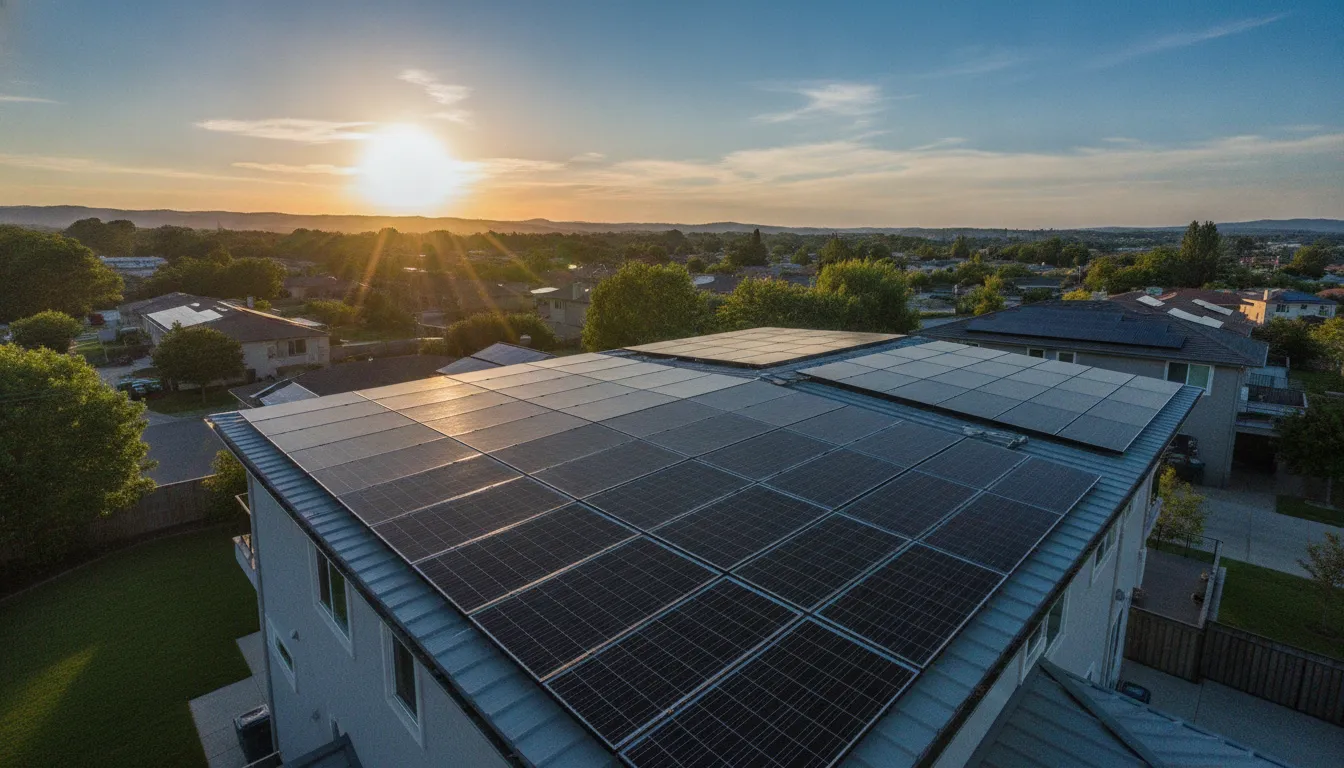
Residential solar energy is no longer a futuristic bet. It’s a mature, regulated, accessible, and proven technology. It allows families to reduce expenses, increase their energy independence, and contribute concretely to a more sustainable planet.
The first step is simple: gather your electricity bills from recent months, calculate your average consumption, and seek quotes from certified companies in your area. With this information in hand, you’ll have what you need to make a conscious decision.
And remember: every sustainable choice you make at home adds up with many others. If you want to continue this journey, also see how Reusing Packaging and Reducing Waste at Home can transform your routine with small actions of great impact.
The sun rises every day for everyone. Putting it to work in your favor — and for the planet — has never been as viable as it is now.
