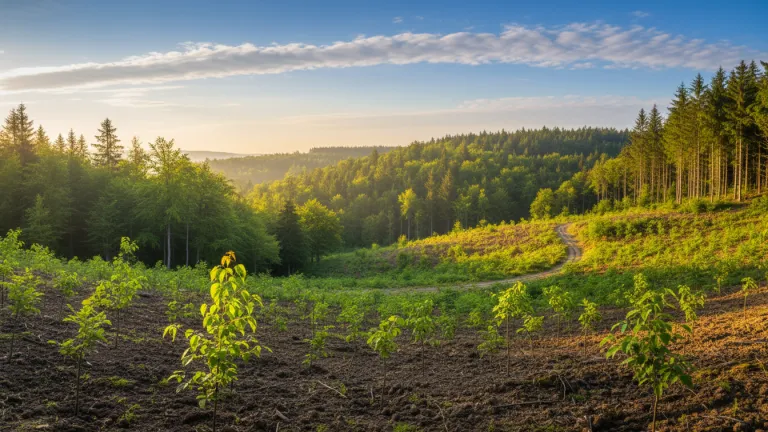
Imagine flying over a region that, two decades ago, was a mosaic of degraded pastures and sun-cracked soil. Today, from above, you see a dark green carpet of interwoven canopies, rivers running clear again, and birds not seen there for years. This is not a scene from science fiction: it is the tangible result of reforestation initiatives transforming landscapes in various parts of Brazil and the world.
Reforestation — the process of replanting trees in deforested or degraded areas — has gained increasing momentum in recent decades as one of the most powerful responses to the climate crisis and biodiversity loss. Governments, companies, indigenous communities, and ordinary citizens have discovered that returning forests to the land is both an act of environmental repair and an investment in the future. But doing it well requires much more than simply burying seeds in the ground.
In this article, you will understand how reforestation works in practice, what its real and verified benefits are, what precautions are essential to avoid common mistakes, and, most importantly, how you can be part of this transformation right now — whether in your backyard, your neighborhood, or by supporting larger initiatives.
Why Reforestation Is Urgent in 2026
The loss of forest cover remains one of the planet’s greatest environmental challenges. According to data from the United Nations Environment Programme (UNEP), the world has historically lost about half of its original forests. Brazil, which holds approximately 60% of the Amazon, still faces significant deforestation pressures, although monitoring policies implemented since 2023 have helped reduce rates in biomes like the Legal Amazon.
Besides the impact on the climate — tropical forests are key carbon sinks — deforestation disrupts hydrological cycles, pushes species toward extinction, and weakens communities that depend on the forest for survival. The IPCC, in its most recent reports, emphasizes that forest ecosystem restoration is one of the nature-based solutions with the greatest potential for climate mitigation and adaptation available today.
In this context, reforestation has moved from being a secondary issue to becoming a priority in international agreements, national legislation, and corporate sustainability strategies. Fortunately, the techniques and knowledge available have never been more advanced.
How Reforestation Transforms Ecosystems in Practice
Ecological Restoration: Much More Than Planting Trees
A common misconception is that reforestation means just planting seedlings in uniform rows. Quality ecological restoration goes far beyond that. It seeks to rebuild the complexity of an ecosystem: species diversity, the relationships between fauna and flora, soil quality, and water dynamics.
Techniques such as nucleation — which involves creating small “nuclei” of vegetation that naturally expand — and direct seeding have shown promising results in studies conducted by institutions like Embrapa and Brazilian universities. Another powerful approach is Assisted Natural Regeneration, which leverages the regrowth potential of native vegetation already present in the soil, reducing costs and accelerating recovery.
The use of native species is crucial. Planting eucalyptus or pines in areas that were originally Cerrado or Atlantic Forest may increase green cover in numbers, but does not restore biodiversity or original ecosystem services. Each biome has its identity, and reforestation must respect it.
Concrete Benefits Confirmed by Science
The gains from well-conducted reforestation are documented and span multiple dimensions:
- Carbon sequestration: mature tropical forests store significant volumes of carbon in biomass and soil, directly contributing to climate change mitigation.
- Water regulation: trees act as “water pumps,” promoting soil infiltration, reducing erosion, and maintaining river and spring flow — a crucial benefit for regions facing increasing water stress.
- Biodiversity protection: habitat restoration creates ecological corridors that allow the movement of endangered species, reducing the risk of local extinction.
- Income generation: communities involved in restoration projects can earn income from native seeds, nurseries, ecotourism, and verified carbon credits.
- Improvement of local microclimate: urban areas with more trees record milder temperatures, which is especially relevant as global warming intensifies heatwaves.
To learn more about how forest restoration connects to other sustainability strategies, see our full article: Reforestation: What It Is and Why It Saves the Planet.
Initiatives Changing the Landscape in Brazil and Worldwide
Brazil has one of the world’s most robust environmental legislations on paper. The Brazilian Forest Code, for example, establishes the obligation of Legal Reserve and protection of Permanent Preservation Areas (APPs), creating a legal basis for restoration. The Atlantic Forest Restoration Pact brings together hundreds of organizations around concrete recovery goals for this biome, which has already lost most of its original cover.
Globally, the Bonn Challenge Initiative — launched in 2011 and expanded over the years — has mobilized countries to commit to voluntary forest restoration targets in millions of hectares. Brazil is one of the signatories with formal commitments in this context.
Community projects in regions like the semi-arid Northeast show that it is possible to recover degraded caatinga with low-cost, high-impact techniques. Indigenous peoples and quilombola communities, recognized as historical forest guardians, play a central role in these initiatives — and increasingly receive technical and financial support to expand them.
Common Mistakes in Reforestation (and How to Avoid Them)
Not all reforestation is successful. Some projects, despite good intentions, make mistakes that compromise their long-term results. Knowing these pitfalls is crucial to avoid them:
- Using exotic species or monocultures: planting a single non-native species is better than nothing, but it still does not rebuild the ecological web of a healthy forest. Prioritize diversity of native species.
- Ignoring soil preparation: in very compacted or low-fertility soils, seedlings struggle to establish. A simple soil analysis before planting can make a big difference.
- Failing to ensure post-planting monitoring: planting and abandoning is one of the most common mistakes. Seedlings need monitoring, invasive plant control, and, in many cases, irrigation in the first months.
- Disregarding fauna: the presence of seed-dispersing animals — such as birds and bats — is essential for the forest to self-regulate over time. Projects that include fauna attraction have more lasting results.
- Not involving the local community: projects imposed without the participation of people living in the territory tend to fail. Local engagement ensures vigilance, maintenance, and continuity.
How You Can Participate in Reforestation Today
The good news is that you don’t need to own a farm or be an ecology expert to contribute to reforestation. There are practical and accessible ways to get involved right now:
Step-by-Step to Plant at Home or in Your Neighborhood
- Identify your region’s biome — Atlantic Forest, Cerrado, Amazon, Caatinga, Pampa, or Pantanal — and research which native species are suitable for your climate and soil.
- Look for municipal or local NGO nurseries, which often offer native seedlings at low cost or for free. Many Brazilian cities have distribution programs.
- Prepare the planting site: remove invasive plants, dig an appropriate hole (usually 40x40x40 cm for most species), and add organic matter if the soil is poor.
- Plant at the right time: the start of the rainy season is the ideal period in most Brazilian regions, as it reduces the need for artificial irrigation.
- Monitor and care: in the first six months, regularly check the seedling’s development, water during dry periods, and control weeds around the base.
- Document and share: photographing and documenting the seedlings’ growth over time is motivating and can inspire others to do the same.
Other Ways to Contribute
- Financially support verified projects: platforms selling carbon credits or “tree adoption” exist in Brazil, but research beforehand — ensure the project has recognized certification and transparency in reports.
- Join planting efforts: organizations like SOS Mata Atlântica, Instituto Socioambiental (ISA), and local conservation groups often organize public collective actions.
- Advocate for public policies: consumers, voters, and citizens have the power to demand public managers implement and meet forest restoration targets.
- Choose products with sustainable origins: conscious consumption reduces pressure on native forests throughout the production chain.
Urban Reforestation: Cities Can Be Forests Too
Thinking of reforestation only in rural areas limits the concept too much. Brazilian cities — where most of the population lives — also need and can be greener. Urban trees reduce the heat island effect, improve air quality, absorb some rainwater, and have a proven positive impact on residents’ mental and physical health.
Urban greening initiatives with native species, creating green corridors between parks and squares, and encouraging community gardens and orchards are strategies anyone can support or start in their own neighborhood. Some Brazilian municipalities already have formal participatory greening programs — it’s worth researching what’s available in your city.
The integration of solutions like reforestation and other sustainable practices — such as using solar energy — shows that responses to the climate crisis are more effective when combined and applied on multiple fronts simultaneously.
Conclusion: Every Tree Counts, and You Can Plant the Next One
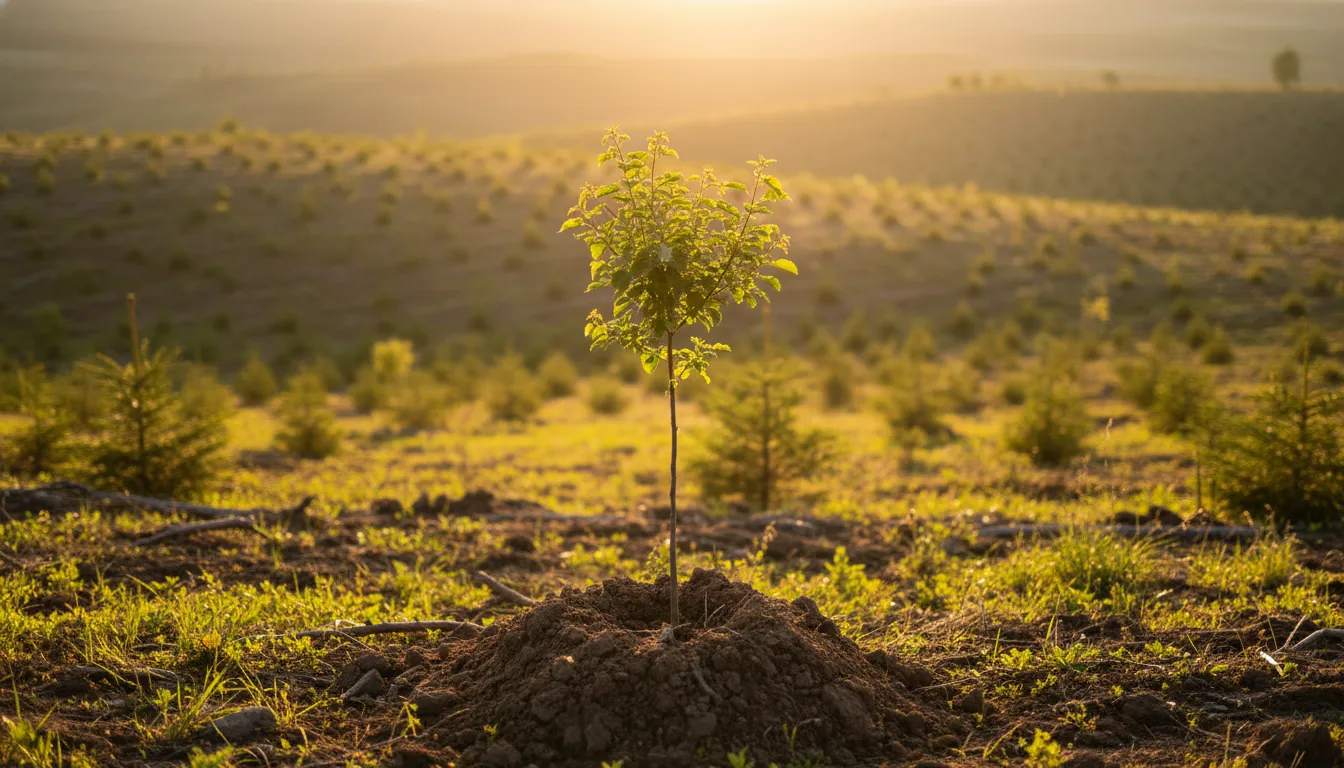
Reforestation is not a magical and isolated solution to all environmental problems, but it is undoubtedly one of the most powerful tools we have. When well-planned, executed with native species, and supported by local communities, it has the ability to transform degraded landscapes into vibrant ecosystems — and to do so on a time scale that we, humans, can observe and celebrate.
Science confirms the benefits. The techniques exist. The success stories are real and inspiring. What makes the difference now is the number of people and institutions willing to act.
Plant a native tree this month. Support a restoration project in your region. Share this knowledge with those you know. Every gesture counts, and together, these gestures redraw the green map of our planet — one canopy at a time.
- Join planting efforts: organizations like SOS Mata Atlântica, Instituto Socioambiental (ISA), and local conservation groups often organize public collective actions.
- Look for municipal or local NGO nurseries, which often offer native seedlings at low cost or for free. Many Brazilian cities have distribution programs.
- Ignoring soil preparation: in very compacted or low-fertility soils, seedlings struggle to establish. A simple soil analysis before planting can make a big difference.
- Water regulation: trees act as “water pumps,” promoting soil infiltration, reducing erosion, and maintaining river and spring flow — a crucial benefit for regions facing increasing water stress.
