Have you ever stopped to count how many plastic items you use in a single day? From the shampoo bottle to the bread bag, from the disposable water bottle to the sauce sachet — plastic is in practically everything around us. It’s no coincidence: it’s lightweight, cheap, versatile, and durable. The problem is precisely that last attribute. A disposable plastic cup can take hundreds of years to decompose in the environment, releasing microparticles over that time that have already been found in oceans, soils, the air we breathe, and even in human blood.
The scale of the problem is hard to imagine. According to data from the United Nations Environment Programme (UNEP), global plastic production has more than doubled over the past two decades, and most of what is produced still ends up in landfills, in the natural environment, or is incinerated. In Brazil, the scenario is equally challenging: the country ranks among the largest generators of plastic waste in the world, with a significant portion of urban solid waste composed of plastic materials, many of them single-use.
The good news — and this is the central point of this article — is that real changes begin at home. You don’t need to be perfect or do everything at once. Small substitutions and new habits, when adopted by many people, create a significant collective impact. Check out practical, accessible strategies below that you can start applying today.
Why reducing plastic at home is urgent and possible
Plastic isn’t the villain itself — it’s the disposable consumption model surrounding it that needs to change. A large portion of plastics produced worldwide are single-use items: packaging, straws, cutlery, bags. According to UNEP, about 36% of all plastic produced is used for packaging, and most of this packaging is discarded shortly after first use.
In the home environment, the kitchen is usually the main entry point for plastic. Next come the bathroom, the office, and everyday shopping. The advantage of focusing on the home is that you have direct control over purchasing and disposal decisions — something that doesn’t always happen in other contexts.
Beyond the environmental impact, there’s a real economic incentive: replacing disposable products with durable ones represents savings over time. A set of washable dish sponges, for example, lasts months and costs less than buying synthetic sponges repeatedly. Sustainability, in this case, is also financial.
How to reduce plastic in the kitchen: the heart of change
The kitchen holds the largest volume of disposable plastic in a typical home. That’s why it’s the most strategic place to start.
Practical substitutions to reduce plastic packaging in the kitchen
- Reusable or silicone bags instead of disposable zip bags for food storage
- Glass, stainless steel, or ceramic containers to store leftovers and pantry items
- Parchment paper or beeswax wraps as an alternative to plastic wrap
- Mesh bags, cloth bags, or baskets for fruits and vegetables at the market
- Reusable glass or stainless steel bottle instead of disposable bottles
- Loofah or vegetable fiber sponges to replace synthetic nylon sponges
Bulk shopping: a habit that makes a difference
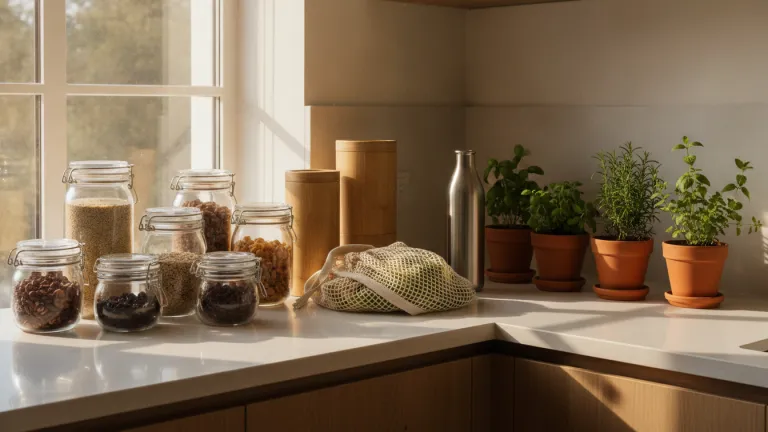
One of the most effective ways to reduce plastic in the kitchen is to buy in bulk. Beans, rice, granola, nuts, flours, spices — all these items can be purchased at bulk stores using your own jars or reusable bags. Besides eliminating packaging, the bulk model often costs less per kilogram. Research bulk stores in your city; they have been growing in number in Brazilian urban centers in recent years.
Plastic-free bathroom: simple and effective substitutions
The bathroom is the second largest generator of household plastic, mainly due to personal hygiene packaging. The bathing, hair care, and skincare routine involves dozens of bottles that are regularly discarded.
Solid products: the growing market alternative
Solid shampoo, solid conditioner, bar soap, and even solid or stick deodorant completely eliminate the need for plastic bottles. These products have greatly improved in formulation and are increasingly accessible in pharmacies, natural markets, and online stores. A bar of solid shampoo is equivalent, on average, to two or three conventional bottles — which also represents savings.
Other bathroom substitutions
- Bamboo toothbrush instead of conventional plastic ones
- Natural silk dental floss in reusable packaging as an alternative to nylon floss in plastic packaging
- Cloth pads or menstrual cup instead of disposable ones with plastic
- Safety razor with replaceable blades instead of disposables
- Glass jars for creams and beauty products bought in bulk or refill
Everyday shopping: how to avoid plastic before it enters your home
One of the most powerful ways to reduce plastic at home is to prevent it from entering. This requires a bit of planning before going to the market or placing online orders.
Step by step for shopping with less plastic
- Make a list before leaving. Planned shopping avoids impulse items that often come in unnecessary packaging.
- Bring your reusable bags — both the large bag and smaller ones for fruits and vegetables.
- Prefer products in larger packaging when possible. A large yogurt container, for example, generates less packaging per serving than several individual containers.
- Choose glass, tin, or paper packaging when there’s an equivalent option to plastic.
- Check if the brand offers refills for cleaning products, cosmetics, and personal hygiene items.
- Avoid products with double or triple packaging (packaging within packaging without functional necessity).
- When ordering delivery, request “no disposable cutlery” — most delivery apps already offer this option.
To delve deeper into this topic, also see our article on plástico de uso único: como reduzir no dia a dia, with more strategies for different everyday situations.
House cleaning with less plastic and fewer chemicals
Cleaning products are major generators of plastic packaging. The good news is that there are effective, affordable alternatives that use simple ingredients.
Basic cleaning recipes with less packaging
| Product | Main ingredients | What it’s for |
|---|---|---|
| Homemade all-purpose cleaner | Water, white vinegar, baking soda | Surfaces, tiles, stovetop |
| Degreaser | Vinegar + concentrated detergent | Stovetop, grill |
| Bathroom cleaner | Baking soda + lemon | Drains, toilets, shower enclosure |
| Natural fabric softener | White vinegar in the rinse water | Clothes, towels |
Besides homemade recipes, the refill market for cleaning products has grown considerably in Brazil. Many brands now offer concentrated or sachet versions that you dilute at home using the same container for years. Look for this option on supermarket shelves or in specialized stores.
Organize your home to facilitate conscious consumption
Sustainable habits are easier to maintain when the surrounding environment supports them. Organizing your home intentionally reduces plastic consumption almost automatically.
- Keep reusable bags visible, near the door or inside your bag, so you don’t forget to take them.
- Keep a reusable water bottle always full and accessible, avoiding the temptation to buy disposable when thirsty.
- Create a composting station — even in apartments, there are compact composters. This reduces the use of plastic bags for organic waste.
- Separate recyclables and dispose of them at the correct collection points. Clean and dry plastic has a better chance of being effectively recycled.
- Do a “plastic inventory” at home: observe what you discard most in a week and choose one item to replace per month.
The logic of the “5 Rs” applied to household plastic
A useful framework to guide consumption decisions is the “5 Rs” hierarchy, popularized by zero wasters around the world and increasingly referenced by waste management experts:
- Refuse — Say no to what you don’t need (bag, straw, disposable cutlery)
- Reduce — Buy less and choose products with less packaging
- Reuse — Give new life to packaging and products before discarding
- Recycle — Separate and properly dispose of what cannot be avoided
- Rethink — Question consumption habits and seek systemic alternatives
This logic is valuable because it reminds us that recycling, although important, is the last line of defense — not the main solution. Reducing and refusing have a much greater impact.
Conclusion: one step at a time, one habit at a time
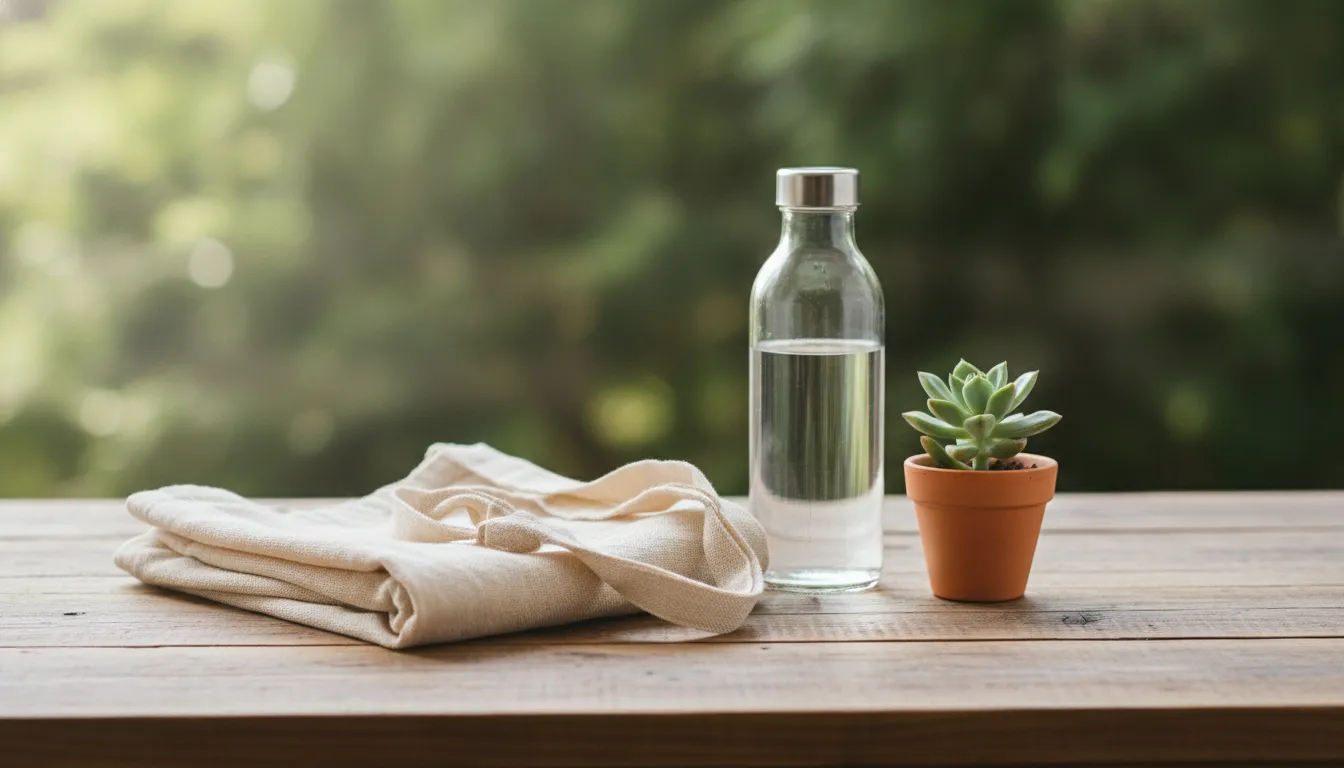
No one needs to transform their entire home at once to make a difference. Real change happens when small decisions become habits and when those habits spread to those around us. Starting in the kitchen, replacing one personal hygiene product per month, bringing a reusable bag to the market — each of these gestures matters and accumulates.
Share what you already do with friends and family. Recommend a bulk store to a neighbor. Suggest to your building management the creation of a selective collection point. Individual impact has more power when it connects to the collective.
Want to continue exploring ways to live with less plastic? Also check out our complete guide on single-use plastic: how to reduce it in your daily life for a broader perspective on the topic. The planet thanks you — and so does your routine.
