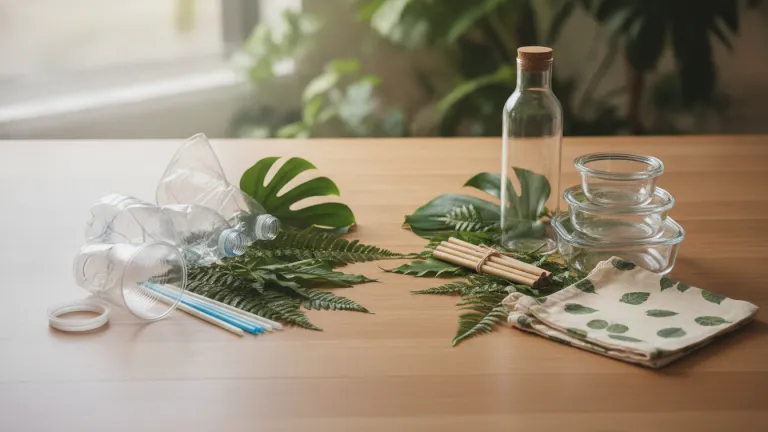
Have you ever stopped to count how many plastic items you throw away in a single day? A cup at breakfast, the bread bag, the juice straw, the yogurt container, the ketchup packet at lunch. Before noon, you can easily accumulate a dozen objects that will take centuries to decompose in the environment. This reality, repeated by billions of people around the world, lies at the heart of one of the most urgent environmental crises of our time.
Single-use plastic — designed to be used once and discarded — represents one of the most problematic forms of global pollution. According to the United Nations Environment Programme (UNEP), more than 400 million tons of plastic are produced globally each year, and a large portion of this volume consists of disposable items. It’s estimated that less than 10% of all plastic ever produced has been recycled; the rest has ended up in landfills, incinerators, rivers, and oceans.
The good news is that each person has real power to create change. Small choices, repeated daily, add up to collective impact. This article was created to help you identify the main plastic villains of everyday life and adopt practical, accessible, and lasting substitutions — without guilt, but with awareness.
Why single-use plastic is so problematic
The environmental impact of disposable plastic on ecosystems
Plastic doesn’t biodegrade the same way organic materials do. Instead, it breaks down into smaller and smaller particles known as microplastics, which contaminate soils, rivers, oceans, and even the air we breathe. Research published by scientific institutions around the world has detected microplastics in human blood, breast milk, and remote places like the summit of Mount Everest and the depths of ocean trenches.
In Brazil, the situation is concerning. The country is among the largest generators of solid waste in Latin America, and improper plastic disposal in rivers directly contributes to ocean pollution — since most Brazilian rivers flow into the Atlantic. The impacts on marine wildlife are well documented: sea turtles, seabirds, and cetaceans are found dead with stomachs full of plastic fragments.
Beyond wildlife, terrestrial and aquatic ecosystems are affected by the constant presence of plastics, which alter soil composition and interfere with entire food chains. The issue is not merely aesthetic — it’s a structural threat to biodiversity and human health.
The main plastic villains of everyday life
Identifying the most common single-use items in Brazil
Before taking action, you need to identify the problem. Most people underestimate the amount of disposable plastic they consume out of habit, not necessity. The most common items include:
- Plastic bags from supermarkets and pharmacies
- Disposable cups and cutlery from parties, fast-food restaurants, and offices
- Plastic water bottles and PET soda bottles
- Plastic straws
- Food packaging such as plastic wrap, small bags, and styrofoam trays
- Single-use coffee pods made of plastic or aluminum
- Cotton swabs with plastic stems
- Sanitary pads and diapers with plastic components
- Shampoo, conditioner, and cleaning product bottles
- Individual sachets and packets of food and condiments
Looking at this list carefully is already the first step. The goal isn’t to eliminate everything at once — but to choose one item at a time to replace.
How to reduce single-use plastic: a practical step-by-step guide
Accessible substitutions that work in daily life
Transitioning to a daily routine with less disposable plastic doesn’t require major investments or a radical lifestyle change. Here’s a progressive and realistic approach:
- Start with the bag. Always keep a reusable bag or eco-bag in your purse, backpack, or car. It’s the simplest substitute with the greatest immediate impact.
- Replace disposable bottles with reusable ones. Stainless steel, glass, or high-durability plastic bottles (like Tritan) can last for years. Take yours to work, the gym, and on outings.
- Bring your own cup to the coffee shop or office. Many coffee shops already offer discounts to customers who bring their own cups — ask before ordering.
- Replace plastic straws. Stainless steel, glass, bamboo, or paper straws are available in stores and markets. If you don’t need a straw, simply refuse one.
- Plan your shopping to avoid individual packaging. Buying in larger quantities (in bulk when possible) reduces the number of packages per product.
- Transition your hygiene products. Shampoo and conditioner bars, solid soaps, and deodorant sticks or roll-ons in glass packaging are increasingly accessible alternatives.
- Replace plastic wrap with alternatives. Silicone lids, glass containers, and beeswax or plant-based wraps cover food effectively without waste.
- Reconsider coffee pods. French press coffee makers, reusable cloth or stainless steel filters produce quality coffee without generating waste with each serving.
- Prefer recyclable or returnable packaging. When you can’t avoid packaging, choose glass, aluminum, or cardboard — materials with higher recycling rates than plastic.
- Talk to those around you. Sharing these choices with family, friends, and coworkers amplifies your individual impact exponentially.
Smart substitutions: a comparison table
Disposable plastic vs. reusable alternatives
| Single-use item | Reusable alternative | Average durability |
|---|---|---|
| Plastic bag | Cotton or non-woven eco-bag | 2 to 5 years |
| PET bottle | Stainless steel or glass bottle | 5 to 10 years |
| Disposable cup | Stainless steel or glass cup | 5 to 10 years |
| Plastic straw | Stainless steel or bamboo straw | 2 to 5 years |
| Plastic wrap | Silicone lid / plant-based wax wrap | 1 to 3 years |
| Bottled shampoo | Shampoo bar | reduces ~80% of packaging |
| Plastic cotton swab | Cotton swab with paper or bamboo stem | biodegradable single-use |
| Coffee pod | Reusable cloth filter | 1 to 2 years |
The role of public policies and what to expect in the coming years
Legislation and global agreements on plastics in 2026
It’s not just individual consumers who need to act — public policies play a fundamental role. In 2022, UN member countries approved a historic resolution to develop a binding global treaty on plastic pollution, with negotiations extending through subsequent years. In 2026, discussions for finalizing this agreement continue to be monitored by experts and environmental NGOs around the world.
In Brazil, the National Solid Waste Policy (PNRS), established by Law 12.305/2010, already provided for shared responsibility throughout the product life cycle and encouraged reverse logistics. Municipalities like São Paulo and Rio de Janeiro have passed local legislation restricting the use of plastic straws and bags in commercial establishments, and other municipalities have followed suit.
While the regulatory framework advances, conscious consumers exert market pressure. Companies respond to demand: when more people choose products with less packaging, brands and retailers adapt their models. Your choice at the supermarket is also a vote for the type of market you want to see.
Conscious consumption beyond plastic: a systemic view
The connection between disposal and other consumption patterns
Reducing single-use plastic is part of a broader mindset shift regarding consumption. The same reasoning that leads us to refuse an unnecessary straw invites us to question other patterns of accelerated disposal — such as fast fashion, which also generates enormous volumes of waste and pollution. If you want to better understand this parallel, it’s worth reading about the environmental impact of fashion.
The “use and throw away” logic was built over decades for convenience and by an economic model that didn’t account for the environmental costs of disposal. Reversing it takes time, but it begins with everyday gestures that, combined, rewrite this pattern.
Being a more conscious consumer doesn’t mean living in deprivation. It means making more informed choices, preferring quality over quantity, and cultivating the habit of asking: “Do I really need this? And if I do, is there a less disposable way to get it?”
Conclusion: your action matters — and you can start now

The disposable plastic crisis seems enormous when viewed from above. But it’s made up of billions of small individual decisions — and can be undone the same way. You don’t need to be perfect or change everything at once.
Choose one item from the list of plastic villains in your daily life and make the substitution this week. Just one. After a few weeks, add another. Over time, what was effort becomes habit — and what was the exception becomes routine.
Every bag refused, every bottle reused, every cup brought from home represents a choice that protects rivers, oceans, animals, and the health of future generations. And when these choices multiply and gain voice on social media, in family conversations, and in collective purchasing decisions, they transform into a real force for change.
The planet doesn’t need a handful of people doing everything perfectly. It needs millions of people doing what they can, with what they have, where they are.
Start today. One item at a time.
