Why Reducing Food Waste Also Protects Your Wallet
Have you ever opened the fridge and found wilted vegetables, forgotten leftovers, or that jar of sauce nobody remembered existed? This seemingly ordinary scenario hides a much greater impact than it appears — both for the environment and for your finances. Food waste is one of the most underestimated problems in our daily lives, and also one of the easiest to combat once we become aware of it.
According to the Food and Agriculture Organization of the United Nations (FAO), approximately one-third of all food produced worldwide is lost or wasted throughout the supply chain. In Brazil, estimates from the agri-food sector itself indicate that tons of food are discarded every year, from harvest to the consumer’s table. This food that ends up in the trash carries embedded within it all the water, energy, land, and labor used to produce it — resources that simply evaporate.
The good news is that most household waste can be avoided with simple habit changes. And when you reduce what you throw away, you naturally spend less at the supermarket. In this article, we’ll show you how to do this practically, without sacrifices, and with real benefits for your daily life.
The Real Impact of Food Waste on the Environment
When we throw food away, we rarely think about what it represents beyond kitchen trash. But the complete cycle of a food item — from planting to disposal — consumes natural resources on a large scale.
Food production accounts for a significant portion of global greenhouse gas emissions. The IPCC (Intergovernmental Panel on Climate Change) recognizes the food system as one of the main contributors to global warming, including deforestation for agricultural land, use of nitrogen fertilizers, and transportation. When this food is wasted, all these emissions were generated without any purpose.
Additionally, organic food discarded in landfills decomposes under anaerobic conditions, releasing methane — a gas with a warming potential much higher than CO₂ in the short term, according to IPCC data. Reducing waste at home, therefore, is not just a matter of personal savings: it’s also a concrete climate action.
How Much Money You Might Be Losing Without Realizing
Think of it this way: every time you discard a rotting tomato or throw away half a loaf of bread, you’re literally throwing money in the trash. The food was already bought, already paid for — and it’s not coming back.
Brazilian families who adopt simple food planning strategies report noticeable reductions in their grocery bills over a few months. Savings vary according to family size and consumption habits, but the principle is universal: buying only what will be consumed and using what’s already at home is the most direct formula for spending less.
Some points that help visualize the problem:
- Perishable foods like fruits, vegetables, and dairy are the most discarded at home
- Unplanned shopping often generates duplicate items and inventory that expires
- Poorly portioned meals result in leftovers that often aren’t reused
- Large packages don’t always represent real savings if part of the product is wasted
How to Plan Your Shopping to Waste Less
Planning is the foundation of everything. Before going to the market, a few minutes of organization make a huge difference in what you will or won’t throw away during the week.
Step by Step for Efficient Food Planning
- Take inventory of your pantry and fridge before any shopping. Note what you already have, especially items close to expiration.
- Plan the week’s meals based on what already exists at home. If you have leftover potatoes, plan a dish that uses potatoes.
- Write a detailed shopping list and follow it. Avoid impulse purchases, especially of perishables.
- Buy realistic quantities. “Buy 3, pay for 2” promotions are only worthwhile if you’ll actually use all three items before they expire.
- Prioritize products with shorter shelf life for immediate consumption, leaving those with longer shelf life for later.
- Review planning weekly and adjust according to what was left from the previous week.
This process doesn’t need to take more than 15 minutes per week, but it can completely transform your relationship with food.
Storage Techniques That Extend Food Life
It’s useless to buy right if storage is inadequate. Many foods spoil before their time simply because they were stored the wrong way.
Practical Conservation Tips
- Separate fruits and vegetables: many fruits release ethylene, a gas that accelerates the ripening of nearby vegetables. Store them in separate places.
- Fresh herbs in water: place herbs like parsley and cilantro in a glass of water inside the refrigerator, as if they were flowers. They last much longer this way.
- Organize the fridge by priority: items that expire faster should be at the front, visible. What’s hidden in the back tends to be forgotten.
- Use airtight containers: transferring food to containers with proper lids prevents drying out and cross-contamination.
- Freeze before spoiling: meats, breads, ripe fruits, and even herbs can be frozen. Freezing stops deterioration without compromising most nutrients.
- Know the difference between “expires on” and “best before”: the second indicates quality decline, not necessarily a health risk. Trusting only your senses (smell, texture, appearance) can prevent unnecessary discards.
Whole Food Utilization: Use Everything You Bought
One of the most powerful changes you can make is to start seeing parts of foods you normally discard as potential ingredients. Stems, peels, leaves, and seeds often have nutritional and culinary value.
- Broccoli and cauliflower stems can be used in stir-fries, soups, and creams
- Pumpkin and zucchini peels are great roasted with olive oil and seasonings
- Carrot and beet leaves can be used in pesto, omelets, and toasted flour dishes
- Stale bread becomes croutons, breadcrumbs, or French toast
- Citrus peels serve to flavor olive oil, make syrups, or clean surfaces naturally
- Vegetable cooking water is a nutritious base for soups and risottos
This approach, known as whole food utilization, is aligned with the philosophy of less waste at home, which starts with small habits — and has a surprising cumulative impact over time.
What to Do with Leftovers: Creative Zero-Waste Meals
Leftovers aren’t a problem — they’re an opportunity. With a little creativity, what remained from last night’s dinner can become a completely different lunch today.
Ideas for Reusing Leftovers
| Leftover | Can become |
|---|---|
| Cooked rice | Rice balls, baked rice, soup |
| Shredded chicken | Pie filling, tacos, salad |
| Cooked vegetables | Quiche, omelet, creamy soup |
| Beans | Bean mash, refried beans, bread spread |
| Pasta | Frittata, cold salad, gratin |
The key is not seeing leftovers as “scraps,” but as ingredients with potential. Setting a fixed day of the week for a “fridge cleanout” meal is a simple strategy that many families adopt with great results.
Composting: When Waste Is Inevitable, Close the Loop
Even with all the care, some organic waste will always exist: eggshells, coffee grounds, scraps that have no culinary use. For these cases, composting is the best alternative to landfills.
Composting at home doesn’t require much space. There are compact worm bins for apartments, countertop composters, and even collective systems in condominiums and communities. The result is a rich fertilizer that can be used on plants, vegetable gardens, and gardens — naturally closing the nutrient cycle.
For those who want to go further and integrate the fight against food waste within a broader vision of conscious consumption, it’s worth exploring the principles of zero waste and where to start today. Food is, after all, one of the areas with the greatest potential impact within this lifestyle.
Start Today: Small Actions with Big Results
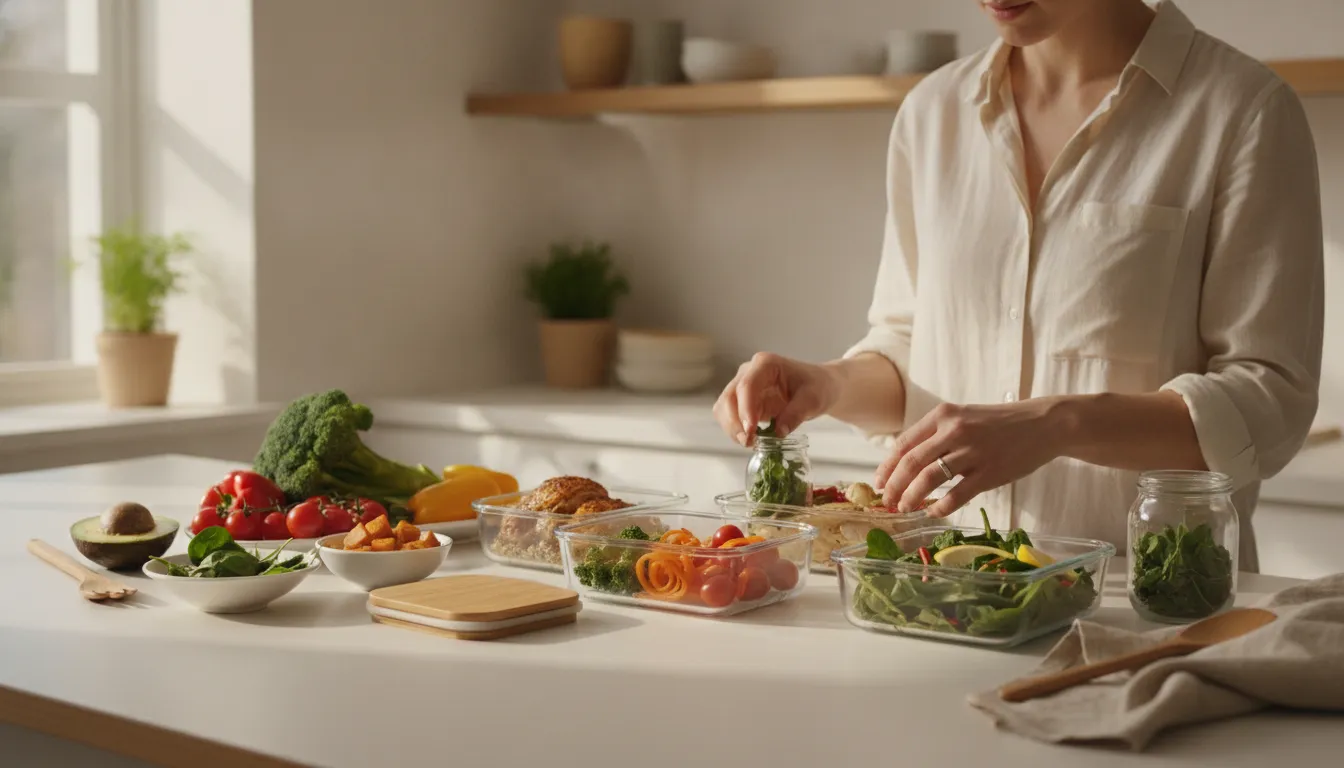
Reducing food waste doesn’t require a revolution in your routine. It mainly requires attention and intentionality. Every peel used, every leftover that becomes a meal, every more planned purchase represents a choice that takes care of your wallet and the planet at the same time.
You don’t need to do everything at once. Choose one of the strategies from this article and start this week. It can be as simple as organizing the fridge by expiration priority or planning meals before going to the market. The important thing is to start.
Over time, these habits become natural — and the results appear both in your grocery bill and in the satisfaction of knowing you’re doing your part. The planet thanks you. Your budget does too.
