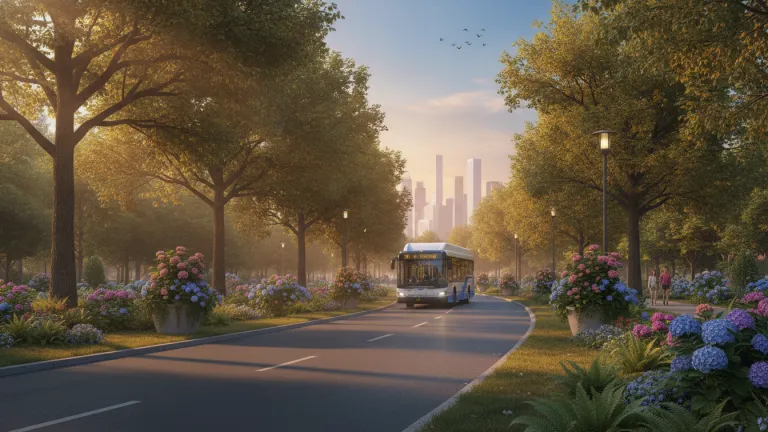
Public Transportation Reduces Emissions and Improves Climate
Imagine trading an hour stuck in traffic, inside a car emitting gases, for a subway ride where you read, rest, or simply watch the city pass by. It seems too simple to be a relevant climate solution, but the numbers don’t lie: how we choose to get around every day is one of the most powerful decisions we make regarding our planet. The transportation sector is one of the largest emitters of greenhouse gases in the world — and changing this scenario is, in large part, in the hands of those who decide how they’ll get to work tomorrow.
Brazil is experiencing a moment of contradictions in this field. On one hand, cities like São Paulo and Curitiba have public transportation systems that have served as international references. On the other, the rapid growth of private vehicle fleets in recent decades has choked urban traffic, worsened air quality, and deepened inequalities. In 2026, with the climate targets of the Paris Agreement becoming increasingly urgent, rethinking public transit has shifted from being a secondary political agenda to becoming a matter of urban — and climate — survival.
The good news is that the transition is already happening. Electric buses are running in more Brazilian cities, new BRT corridors are being planned, and awareness about the impact of individual transportation is growing among the population. In this article, you’ll understand why public transportation is one of the most effective tools in fighting climate change and what you can do today to be part of this change.
The Transportation Sector and CO₂ Emissions: What the Data Says
The transportation sector accounts for a significant share of global greenhouse gas emissions. According to data from the IPCC (Intergovernmental Panel on Climate Change), transportation is responsible for about 14% of global GHG emissions, with most coming from road transport — cars, trucks, and buses powered by fossil fuels.
In Brazil, the picture has important particularities. The Brazilian electrical energy matrix is predominantly renewable, which puts the country in a favorable position to electrify transportation. However, the vehicle fleet has grown rapidly in recent decades, and road transport still dominates both passenger and cargo movement. The intensive use of gasoline and diesel contributes significantly to national CO₂ emissions, in addition to generating local pollutants that directly affect the health of city dwellers.
The logic is simple: a full bus can replace dozens of individual cars, proportionally reducing emissions per passenger transported. When that bus is electric and powered by renewable energy, the equation improves even more.
How Public Transportation Reduces Emissions in Practice
The efficiency of public transit in terms of emissions comes from a basic principle: distributing the environmental impact among many passengers. A private car typically carries one or two people, consuming fuel to move a structure weighing over a ton. A full subway or bus covers the same route with much lower emissions per passenger.
Emissions per Passenger-Kilometer: Why This Indicator Matters
The “emissions per passenger-kilometer” indicator is the fairest metric for comparing transportation modes. It shows how much CO₂ (or equivalent) is emitted to transport one person for one kilometer. Collective modes like subway, train, and BRT perform significantly better than individual cars on this indicator — especially when operating at high occupancy rates.
Furthermore, when the fleet is electrified and powered by renewable energy, operational emissions drop dramatically. Brazil, with its electrical matrix predominantly consisting of hydro, wind, and solar power, has privileged conditions to make electric buses a very low carbon footprint solution.
Fewer Cars, Less Congestion, Lower Total Emissions
There’s another important effect that is often underestimated: cars stuck in traffic consume fuel without moving. The more people migrate to public transportation, the fewer vehicles circulate, which reduces congestion and, consequently, the time engines stay running without advancing. It’s a virtuous cycle: more passengers on public transit means fewer cars, less traffic, and lower total emissions.
Real Examples of Cities That Made a Difference
Curitiba is frequently cited as a pioneer in Brazil for efficient public transit. Its BRT (Bus Rapid Transit) system, developed starting in the 1970s, became a worldwide reference and demonstrated that it’s possible to move large volumes of people with efficiency and dignity — without necessarily relying on subway systems, which have much higher implementation costs.
In São Paulo, the expansion of the subway network and bus corridors along the marginal highways have contributed to reducing traffic pressure in specific areas of the city. The advancement of the electric bus fleet in the state capital, accelerated from 2023 onward with targets for the following years, represents a concrete step in reducing local and global emissions.
Internationally, cities like Amsterdam, Seoul, and Bogotá show that integrating quality public transportation with bike lanes and policies restricting private cars generates measurable climate, economic, and social benefits. Bogotá, in particular, is a reference for having built a robust BRT system in a developing country — proof that you don’t need to be wealthy to have quality public transportation.
Benefits Beyond Climate: Health, Economy, and Equity
Talking about public transportation as a climate solution is important, but it would be incomplete not to mention the other benefits it brings — benefits that touch the daily lives of millions of people.
- Air quality: Fewer combustion vehicles means less emission of pollutants like particulate matter and nitrogen oxides, directly linked to respiratory and cardiovascular diseases.
- Savings for families: Maintaining a car in Brazil involves significant costs — financing, insurance, vehicle tax, fuel, maintenance, and parking. Using public transportation can represent real savings in the monthly budget.
- Social equity: Well-structured public transportation is the main form of mobility for a large portion of the lower-income population, connecting people to jobs, schools, and health services.
- Fewer accidents: Statistically, traveling by bus or subway is much safer than by private car, considering the number of deaths per kilometer traveled.
- Productivity: Time on public transit can be used for reading, resting, or working — unlike the stress of driving in traffic.
Just as household choices make a difference — like opting for solar energy to reduce your electricity bill or adopting habits that reduce household waste —, choosing public transit is one of those decisions that adds up collectively.
The Future of Public Transportation in Brazil: Electrification and Integration
The outlook for the coming years points to a profound transformation in Brazilian urban mobility. Bus electrification is advancing at an increasing pace, driven both by public policies and by falling battery costs and the growing competitiveness of electric vehicles.
Beyond electrification, the future of public transportation involves:
- Fare integration: Systems where passengers pay a single fare to use subway, bus, and train on the same trip, reducing costs and encouraging use.
- Digitalization: Real-time route planning apps, contactless payment, and fleet monitoring make public transit more convenient and accessible.
- BRT and light rail in new cities: Many medium-sized Brazilian cities still lack structured public transit systems — and BRT, due to its flexibility and lower cost than subway, is a viable option.
- Integration with bike lanes: The “first and last mile” model combines public transit with bicycles (personal or shared), making the system more efficient and reaching more destinations.
What You Can Do Today: Practical and Accessible Actions
Changing a city’s transportation system is a task for governments and public managers. But each person has a role to play — both in their daily choices and in the pressure they exert as a citizen. Here’s what you can do now:
- Try public transportation for a week: If you have access to buses, subway, or trains in your city, try using them for a few days. Evaluate the cost, time, and comfort with open eyes.
- Combine transportation modes: Use a bicycle to get to the subway station or bus stop. Integration between modes is one of the most efficient ways to get around.
- Leave the car at home on days of lesser need: Not every day requires the car. Identify the days when public transportation or cycling work well for your routine.
- Support urban mobility policies: Participate in public consultations, sign petitions, and vote for candidates who advocate for investment in public transit and bike lanes.
- Share information: Talk to friends and family about the benefits of public transportation. Cultural change starts in everyday conversations.
- Push for improvements: If your city’s public transportation is poor, complain through official channels. Bodies like municipal ombudsmen and regulatory agencies exist for this purpose.
- Consider living closer to work or a transit line: This is a long-term decision, but one that can transform your quality of life and permanently reduce your carbon footprint.
Conclusion: Your Choice Today Builds Tomorrow’s City
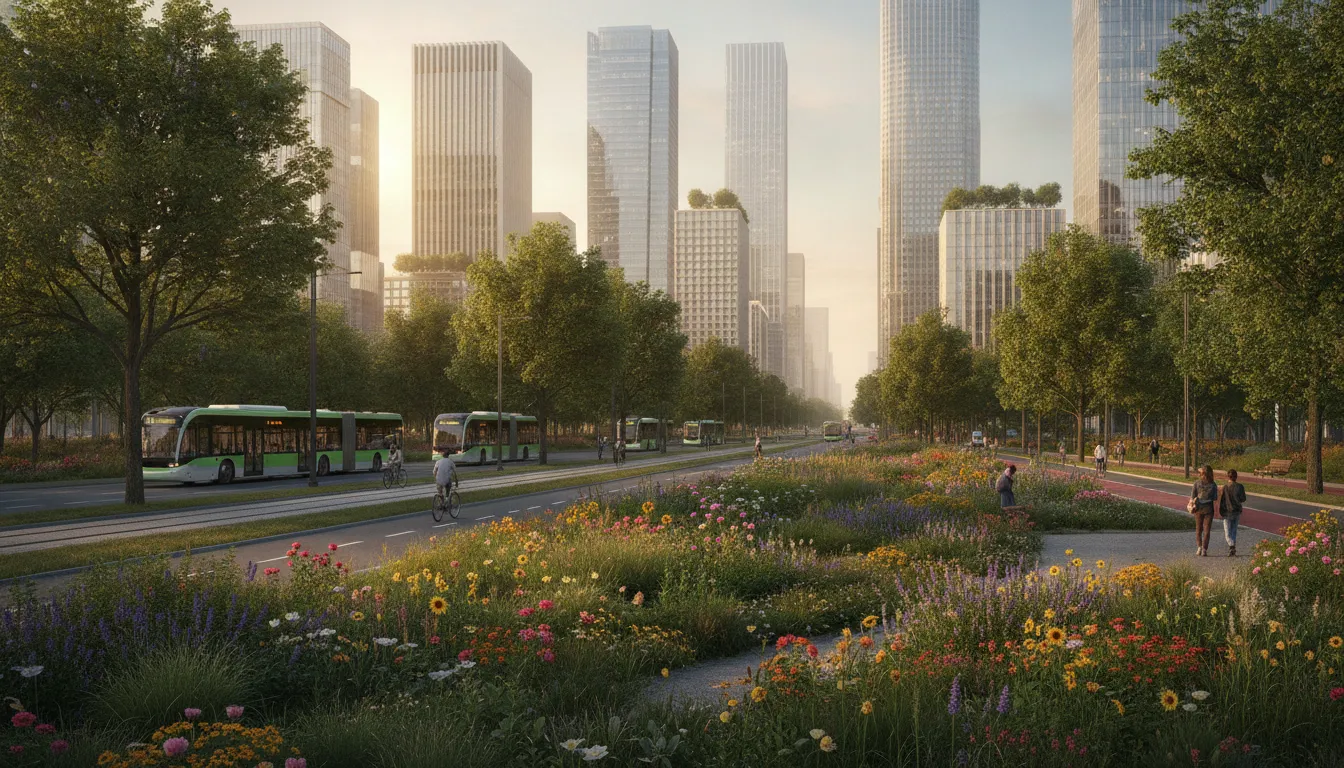
Public transportation is not just a climate solution — it’s a choice about what kind of city we want to live in. Cities with robust public transit systems tend to have cleaner air, smoother traffic, fewer accidents, and higher quality of life for all residents, regardless of income.
In 2026, with the impacts of climate change becoming increasingly visible — in heat waves, extreme events, and changes in rainfall patterns — every decision counts. Swapping the car for the bus or subway a few days a week may seem small, but multiplied by millions of people, it represents a real transformation in urban emissions.
You don’t need to do everything at once. Start where possible, experiment, adapt to your routine. And remember: every sustainable choice you make is a brick in building a better future — for you, for your city, and for the planet we all share.
