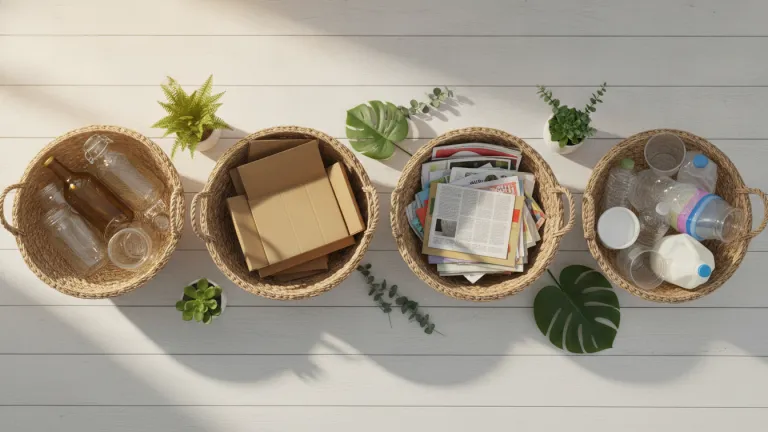
Have you ever stopped to think about how much waste your home produces each week? Bag after bag goes out to the curb without us questioning much about what’s inside them. In Brazil, according to data from the Solid Waste Panorama released by the Brazilian Association of Public Cleaning and Special Waste Companies (Abrelpe), each Brazilian generates more than 1 kg of waste per day on average — a volume that, when added up across the country, represents tens of millions of tons per year. A significant portion of this material still goes directly to landfills or, worse, to open-air dumps.
The good news is that a significant portion of this waste can be avoided, reused, or properly disposed of before it even leaves your home. Small habit changes, when adopted by many people, have a real impact on the amount of waste reaching landfills, greenhouse gas emissions, and natural resource consumption. This guide was designed to be practical: no judgments, no perfectionism, no guilt — just concrete steps you can start applying today.
Whether you’re just starting out or want to deepen what you already do, this article will help you understand the problem clearly, learn the method that structures waste reduction, and act progressively and sustainably within your routine and budget.
Why Reducing Household Waste Really Matters
When waste goes to a landfill, it doesn’t simply “disappear.” Decomposing organic waste releases methane, a gas with global warming potential much higher than CO₂ in the short term, according to the IPCC. Plastics that escape into the environment can persist for hundreds of years, fragmenting into microplastics that have already been found in oceans, soils, animals, and even in the human body.
Beyond the environmental impact, there’s an invisible economic cost that citizens pay: urban cleaning and solid waste management are funded with public resources. When we generate less waste and better dispose of what we generate, we relieve this system and free up resources for other areas.
Reducing household waste isn’t about sacrifice — it’s about awareness and habit. And often, those who adopt this approach discover they spend less money throughout the process.
The 5 Rs: The Hierarchy That Organizes Everything
Before talking about selective collection or composting, it’s essential to understand the logic that should guide decisions. The 5 Rs of sustainability model (popularized in Brazil by activist and writer Bea Johnson, adapted to the national context) proposes an order of priority:
- Refuse — avoid what you don’t need: the plastic bag offered at checkout, the promotional item you won’t use, unnecessary extra packaging.
- Reduce — consume less and more consciously. Fewer impulse purchases, fewer disposables.
- Reuse — give objects a second (or third) life before discarding them.
- Recycle — when it’s no longer possible to use, ensure the material enters the correct cycle.
- Rot the rest responsibly — what remains should be properly disposed of: composting, voluntary drop-off points, special disposal.
This hierarchy is important because there’s a tendency to jump straight to recycling, forgetting that it still consumes energy and generates waste. Refusing and reducing come first.
How to Reduce Waste in the Kitchen (Largest Source of Waste)
The kitchen is usually the biggest waste generator in a home: packaging, food scraps, used oil, disposable containers. It’s also where changes have the most visible impact.
Shopping planning and food waste
Food waste is a global problem of enormous scale. The FAO (Food and Agriculture Organization of the United Nations) estimates that about one-third of all food produced in the world is lost or wasted. In Brazil, the scenario is similar, with significant losses occurring both in the production chain and within households.
To reduce waste at home:
- Make a shopping list based on what you already have in the fridge and what you’ll cook during the week.
- Buy quantities appropriate to actual consumption — especially fruits and vegetables.
- Store food correctly to extend shelf life.
- Use parts that would normally be discarded: stems, peels, and outer leaves of many vegetables are nutritious and can go into soups, stir-fries, and broths.
- Freeze what you won’t consume before it spoils.
If you want to go further on this topic, the article Reduce Food Waste and Save More Money offers very useful complementary strategies.
Packaging: practical and progressive substitutions
| Disposable item | Reusable alternative |
|---|---|
| Plastic produce bag | Fabric bags (non-woven or cotton) |
| Aluminum foil and plastic wrap | Silicone lids, glass containers |
| Synthetic sponge | Vegetable cellulose sponge or loofah |
| Individual seasoning packet | Bulk spices in reusable jars |
| Disposable cup | Reusable cup or bottle |
The substitution doesn’t need to happen all at once. Replace items as the disposables run out — without guilt and without rush.
What to do with used cooking oil
Frying oil is a waste that should never go down the drain: it contaminates water and damages sewer networks. Store it in PET bottles and take it to collection points (supermarkets, gas stations, and cooperatives often accept it). Another creative and economical option is to turn it into homemade soap. If you’re curious about how to do this, check out the article Sabão Caseiro com Óleo Usado: Vale a Pena Fazer?
Home Composting: Turn Scraps into Fertilizer
Organic waste (fruit and vegetable scraps, coffee grounds, eggshells, dry leaves) accounts for a significant portion of household waste. Instead of going to the landfill, it can be transformed into organic compost — a rich fertilizer useful for gardens, vegetable patches, and potted plants.
How to set up a simple composter at home
- Choose the container: it can be a wooden box, a bucket with holes, or a ready-made composter. It needs ventilation and a lid.
- Alternate layers: intersperse wet waste (food scraps) with dry waste (dry leaves, shredded cardboard, sawdust). This controls odor and speeds up decomposition.
- Avoid: meat, dairy, fats, and highly processed foods, which attract pests and take longer to decompose.
- Stir regularly: once or twice a week to aerate the mixture.
- Wait: under proper conditions, in a few weeks you’ll have dark compost with no unpleasant odor, ready to use.
Those living in apartments can use worm composters (vermicomposting), which are compact, odor-free when well managed, and even more efficient at producing humus.
Selective Collection: Sorting Correctly Makes a Difference
Selective collection only works when material arrives clean and separated at recycling cooperatives. A lot of material that goes to selective collection ends up in landfills due to contamination — food scraps, moisture, mixtures of materials that don’t separate easily.
Best practices for selective collection:
- Lightly rinse food packaging before sorting (no need to wash with soap).
- Crush packaging to save space and facilitate transportation.
- Know what doesn’t go in conventional selective collection: mirrors, carbon paper, used toilet paper, diapers, metallic packaging (like chip bags) — these items have specific destinations or go to regular trash.
- Batteries, electronics, light bulbs, and expired medications have specific voluntary drop-off points (PEVs). Look for the nearest ones in your city.
Conscious Consumption: Less Buying, Less Waste
Much of the waste starts long before disposal — it starts with the purchase decision. Products with excessive packaging, single-use items, fast fashion, and electronics with short lifespans generate waste on an industrial scale.
Some questions that help before buying:
- Do I really need this or do I just want it now?
- Can I find this function in something I already have?
- Is there a version with less packaging or more durable?
- Can I buy it secondhand?
Fashion consumption, in particular, deserves special attention. The textile industry is one of the most polluting in the world, and quickly discarded clothes represent an enormous volume of waste. If you want to better understand this impact, the article Moda Rápida: o Preço Ambiental que Você Não Vê provides a clear and in-depth analysis.
List of Practical Actions to Start Today
Don’t wait to have everything perfect to start. Choose one or two actions from this list and start now:
- Bring your own bag on your next grocery shopping trip.
- Do a quick audit of what you throw away this week — observe the patterns.
- Make a small list before your next supermarket visit.
- Set aside a PET bottle to start saving used oil.
- Research the nearest selective collection point or collection day on your street.
- Buy in bulk at least one item (rice, beans, coffee) next opportunity.
- Donate or sell clothes and items you no longer use instead of throwing them away.
- Try a week without disposables in the kitchen.
Conclusion: Every Choice Counts — and It Starts at Home
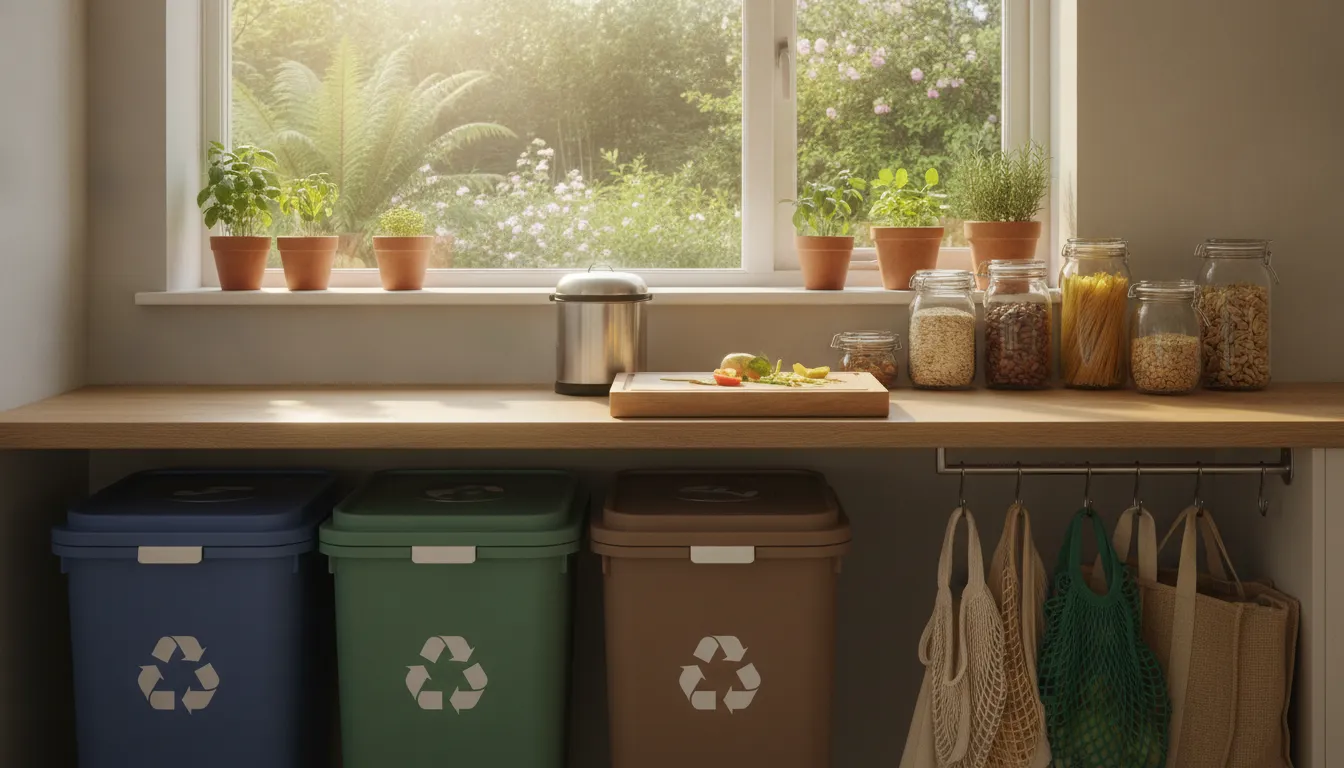
Reducing household waste doesn’t require a radical life transformation. It requires attention, intention, and consistency. The sum of small daily choices — a reusable bag here, refused packaging there, food scraps turned into fertilizer — creates a real impact when practiced by thousands of people.
You don’t need to be perfect. You need to be consistent. And the more you practice, the more natural it becomes: what seems like effort today becomes habit tomorrow. Start with what’s easiest for your reality, adjust at your own pace, and gradually expand.
The planet thanks you — and so does your wallet. Which action from this list will you put into practice today?
