Why Sustainable Habits Are the Best Decision You Can Make Right Now
We live in a time when everyday choices have never mattered more — for the planet and for our own well-being. In 2026, the scientific evidence is undeniable: the lifestyle we adopt at home, at work, and in transportation has a direct impact on climate, biodiversity, and the air we breathe. But here’s the good news: change doesn’t have to be painful, expensive, or radical.
Sustainability has taken on a new face in recent years. It’s no longer about sacrifice — it’s now synonymous with household savings, health, quality of life, and connection with what truly matters. Those who adopt more conscious habits tend to spend less energy, generate less waste, eat better, and even sleep better — no exaggeration.
This article brings together practical, verified guidelines for you to start today. Whether you live in an apartment or a house, whether your budget is tight or ample: there’s always a possible step forward. Shall we begin?
Understand Your Environmental Footprint Before Changing Anything
Before adopting new habits, it’s useful to understand where your biggest impacts come from. The so-called ecological footprint considers how many natural resources — land, water, energy — are needed to sustain your lifestyle.
According to the United Nations Environment Programme (UNEP), the sectors that contribute most to greenhouse gas emissions at the individual level are food, transportation, housing, and consumption of industrialized products. Knowing this map is the first step to acting intelligently.
How to Discover Your Carbon Footprint
- Access a reliable carbon footprint calculator — UNEP provides one on their official website, as do some recognized NGOs.
- Fill in data about your home energy consumption (electricity bill, gas).
- Report your transportation habits — how many kilometers you travel by car, plane, or public transport per month.
- Include information about your diet — how often you consume red meat, ultra-processed foods, or imported products.
- Analyze the result and identify the two or three points with the greatest impact in your specific case.
This personalized analysis prevents you from wasting energy changing things that matter little and focuses on what really makes a difference for your profile.
Sustainable Eating: Simple Changes with Major Impact
The way we eat is one of the most important pillars of personal sustainability. Food production accounts for a significant share of global greenhouse gas emissions, according to IPCC (Intergovernmental Panel on Climate Change) reports.
The good news is that you don’t need to become vegan overnight. Small adjustments already make a measurable difference.
More Sustainable Eating Habits You Can Adopt
- Reduce red meat consumption — you don’t need to eliminate it, but decreasing weekly frequency already significantly reduces your water and carbon footprint.
- Value local and seasonal products — food produced near you travels less distance to your plate, generating fewer transportation emissions.
- Avoid food waste — enormous amounts of food are wasted throughout the entire production chain. At home, planning purchases, storing properly, and reusing leftovers are practical and economical actions.
- Prefer smaller packages or bulk items — less single-use plastic in the trash.
- Grow herbs at home — even in small apartments, basil, chives, and mint grow in small pots on a sunny windowsill.
Energy at Home: How to Consume Less and Pay Less on Your Bill
Brazil’s electrical sector has a matrix with significant participation from renewable sources — especially hydroelectric, wind, and solar — which already places the country in a relatively favorable position in terms of emissions per kWh generated, according to ANEEL data. Still, reducing electricity consumption saves natural resources, relieves the system, and of course, reduces your bill.
Practical Measures to Save Energy
- Replace incandescent or fluorescent bulbs with LED — they consume much less energy and last longer.
- Turn off devices from standby mode — televisions, microwaves, and chargers plugged in consume energy even without active use.
- Use the washing machine with full load and prefer cold water when possible.
- Set the air conditioner between 23°C and 24°C — each degree lower significantly increases consumption.
- Take advantage of natural light during the day by opening curtains and positioning work furniture near windows.
- Consider solar energy — even in apartments, accessible solutions already exist. Learn more at Energia Solar em Apartamento É Possível e Acessível.
Transportation and Mobility: Choices that Transform Cities
The transportation sector is one of the largest emitters of air pollutants in urban centers. Cars powered by fossil fuels contribute to worsening air quality, especially in large cities.
Changing how you get around is one of the actions with the greatest visible impact — both for the climate and for your health and time.
Sustainable Alternatives for Daily Life
- Walk or bike on short trips — besides not polluting, it’s good for body and mind.
- Use public transportation whenever possible — a full bus removes dozens of cars from the road.
- Try remote work or hybrid arrangements — each day without commuting saves fuel and time.
- If you need a car, consider carpooling with colleagues who travel the same route.
- For purchases and shorter trips, consider electric or hybrid cars — the electric fleet is growing, with more options and charging points available.
For more concrete urban sustainable mobility options, check out Transporte Sustentável: Opções para Poluir Menos.
Conscious Consumption: Buy Less, Buy Better
The culture of quick disposal — buy, use little, and throw away — is one of the great socio-environmental challenges of our time. The production of consumer goods requires extraction of natural resources, energy generation, and waste production at all stages.
Consuming more consciously doesn’t mean giving up quality of life. It means making smarter choices.
Principles of Conscious Consumption
| Principle | What it means in practice |
|---|---|
| Reduce | Ask yourself “do I really need this?” before buying |
| Reuse | Give new life to objects before discarding them |
| Recycle | Properly separate waste for selective collection |
| Refuse | Say no to products with excessive packaging or low durability |
| Repair | Fix before replacing — clothes, electronics, furniture |
Additionally, prefer brands that adopt transparent socio-environmental responsibility practices. Research before buying: many companies publish sustainability reports, and it’s possible to verify if their promises are real.
Water: The Resource We Still Underestimate
Brazil is privileged in freshwater availability — it holds a significant portion of the world’s surface water reserves, according to UN data. But that doesn’t mean waste is harmless. Metropolitan regions face increasing water stress, and conscious water use is a collective responsibility.
How to Save Water at Home Without Hassle
- Fix leaks immediately — a dripping faucet can waste hundreds of liters per month.
- Take shorter showers — reducing a few minutes in the shower already represents significant savings over the month.
- Reuse rinse water from laundry to wash the yard or flush toilets.
- Install flow reducers on faucets and showers — they’re cheap and easy to install.
- Plant native species or those adapted to the local climate in the garden — they require less irrigation.
How to Create a Sustainable Routine that Lasts
The biggest challenge isn’t starting, but maintaining. Habit changes work better when they’re gradual, anchored in real motivations, and integrated into existing routines — not imposed as obligations.
Step by Step to Build a Green and Lasting Routine
- Choose only one new habit at a time — trying to change everything at once is a recipe for giving up.
- Associate the new habit with something you already do — for example, separating recyclable waste while preparing dinner.
- Track your progress — a simple note on your phone or notebook helps you notice advances.
- Involve people close to you — sustainable habits practiced with family or friends tend to consolidate faster.
- Celebrate small victories — every change counts, and recognizing this keeps motivation high.
- Review and expand each month — when one habit is already incorporated, add another.
For daily inspiration, also see Pequenos Hábitos Sustentáveis que Mudam o Dia a Dia.
Start Today: Every Action Counts
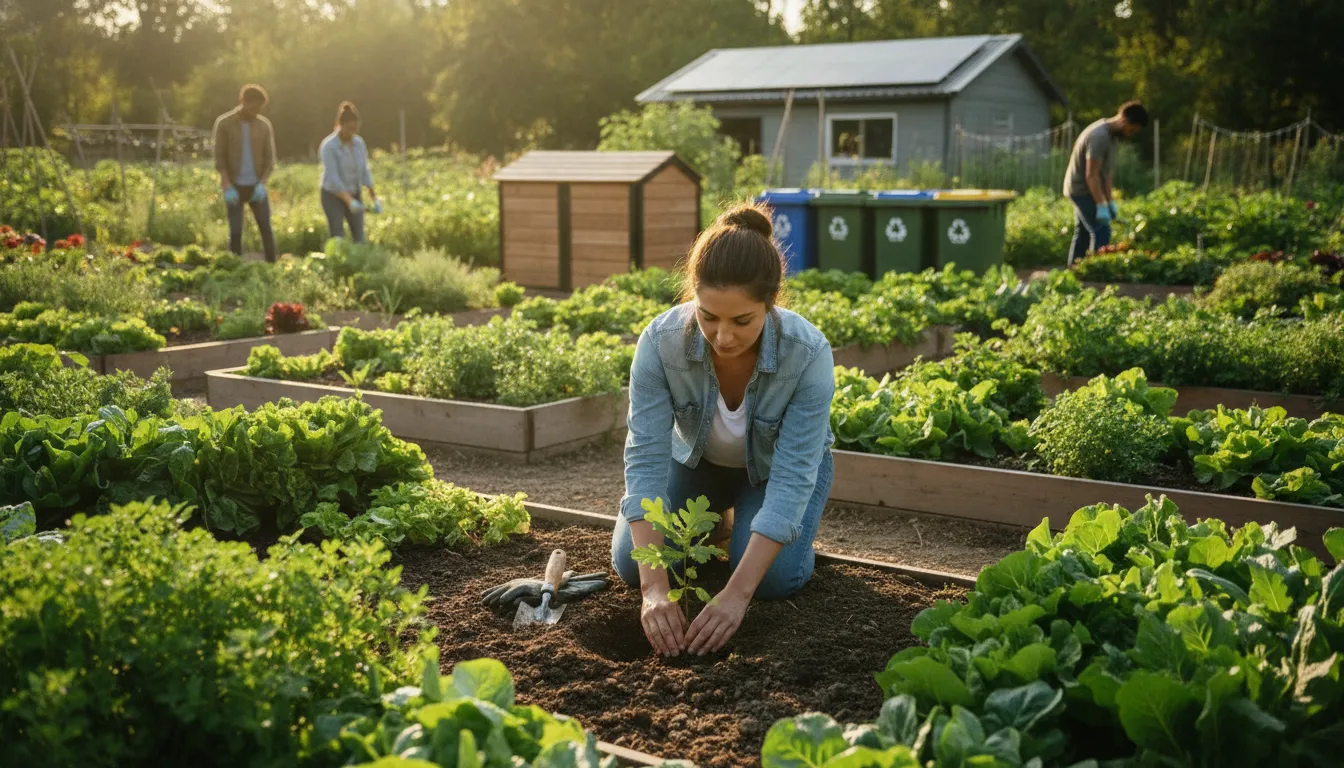
Sustainability isn’t perfection — it’s direction. There’s no person who has zero impact on the planet, and demanding that of yourself only creates paralysis. What exists is the real possibility of making better choices, one day at a time, and positively influencing the people around you.
In 2026, we have more information, more accessible technology, and more sustainable options than at any other time in history. This means that taking action has become easier — and more urgent.
Start with the habit that seems simplest to you. Change a light bulb, reduce one portion of meat per week, bring your own bag to the supermarket. Small gestures repeated by many people create real changes. The planet thanks you — and you’ll feel the difference too.
