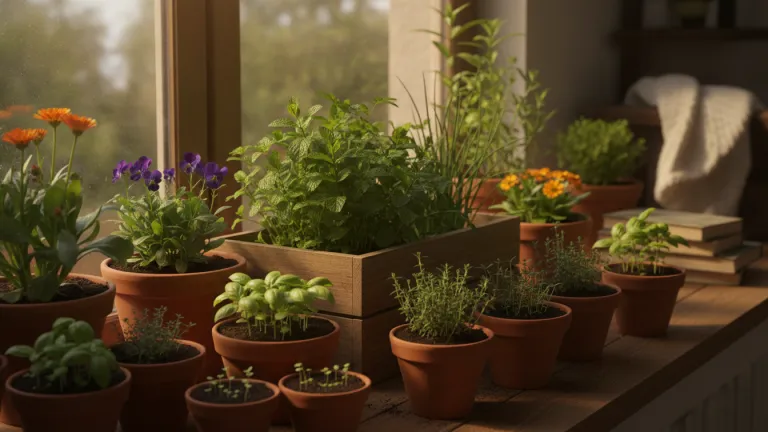
Why Growing Plants at Home Is One of the Best Decisions You Can Make Right Now
You don’t need a large backyard, agronomy expertise, or sophisticated equipment to start cultivating plants at home. A pot, some soil, and a seed are already enough to begin one of the most rewarding — and most sustainable — practices that exist. In a world where urbanization is advancing rapidly and contact with nature becomes increasingly scarce, bringing greenery into your home is an act of resistance and care at the same time.
Beyond the aesthetic pleasure and well-being that plants provide, cultivating at home has real impacts on daily life: it reduces spending on fresh food, decreases the need for plastic packaging, improves indoor air quality, and even contributes to mental health. Studies in environmental psychology indicate that regular contact with plants and nature is associated with reduced stress and increased sense of well-being — something that makes all the difference in the busy routine of city dwellers.
If you’re thinking about starting now, this guide was made for you. We’ll go from basic to advanced, with practical tips, common mistakes to avoid, and suggestions for ideal plants for those taking their first steps. Ready to get your hands dirty?
Understanding Your Space: The First Step to Home Gardening
Before buying any seeds or pots, the most important step is to observe the available space. There is no single recipe: an apartment with a sunny balcony has completely different possibilities than a bedroom with a north-facing window.
Evaluate your environment’s natural light
Light is undoubtedly the most critical factor for the success of any cultivation. Observe throughout an entire day where sunlight comes from:
- Intense direct light (more than 6 hours/day): ideal for tomatoes, peppers, basil, rosemary, and herbs in general
- Indirect or partial light (3 to 6 hours/day): good for lettuce, spinach, chives, cilantro, and some flowers
- Low light (less than 3 hours/day): focus on ornamental plants like pothos, ZZ plant, or ferns; vegetables are difficult in this condition
Consider horizontal and vertical space
Even in small apartments, shelves, wall supports, and vertical gardens greatly expand cultivation potential. Hanging pots are great for aromatic herbs and trailing plants like strawberries.
Which Plants to Choose: Guide to Species Ideal for Beginners
Choosing the right plants makes all the difference between success and frustration. For those starting out, the secret is to opt for species that are resilient, fast-growing, and with practical utility in daily life.
Aromatic herbs: the perfect entry point
Herbs are the champions among beginners. They grow quickly, take up little space, and you can use them straight from the kitchen:
- Chives: extremely easy, grows well in small pots and needs good light
- Parsley: prefers mild temperatures; regular watering and moist substrate
- Basil: loves heat and sun; excellent on a sunny balcony
- Mint: grows very vigorously — prefer to cultivate in separate pots to avoid invading other plants
- Rosemary: resistant to drought, perfect for those who forget to water
Short-cycle vegetables
If you want to harvest real food in just a few weeks:
- Lettuce: cycle of 30 to 45 days, tolerates partial shade, great for shallow pots
- Arugula: fast, peppery, and nutritious; tolerates lower temperatures
- Radish: one of the fastest vegetables that exist, ready in about 25 to 30 days
Ornamental plants that purify air
For indoor environments with poor light, NASA published a classic study (the Clean Air Study) that identified species capable of removing volatile organic compounds from the air, such as benzene and formaldehyde. Among the most efficient and easy to care for are:
- Snake Plant (Sansevieria trifasciata)
- Pothos (Epipremnum aureum)
- Peace Lily (Spathiphyllum)
How to Plant at Home: Step-by-Step Guide for Your First Pot
Now let’s get practical. Follow this tutorial to set up your first pot of herbs or vegetables:
- Choose the right pot: for herbs, pots with a minimum depth of 15 cm are sufficient. For tomatoes or peppers, prefer pots with at least 30 cm depth and equivalent diameter.
- Ensure drainage: check if the pot has holes at the base. Without drainage, roots rot. Place a thin layer of stones, coarse sand, or ceramic shards before adding soil.
- Choose the right substrate: use substrate specifically for pots (available at agricultural stores and garden centers), which is more porous and nutritious than common garden soil. A mixture of commercial substrate with organic compost is even better.
- Plant seeds or seedlings: for seeds, follow the depth indicated on the package — usually 0.5 to 2 cm. For seedlings, make a hole, carefully position the roots, and gently press the soil around them.
- Water with moderation: right after planting, water gently until water runs from the bottom. Avoid waterlogging.
- Position in the right place: place the pot where the plant will get the amount of light it needs (see the previous section).
- Labeling and monitoring: place a label with the plant’s name and planting date. This helps track development and learn from experience.
Watering and Fertilizing: The Two Most Common Mistakes for Beginners
If there are two issues that trip up most beginners, it’s these: watering too much and forgetting to fertilize. Let’s solve both.
How to water correctly
Excess water is the leading cause of death for potted plants. A simple rule: stick your finger about 2 cm into the soil. If it’s still moist, don’t water. If it’s dry, it’s time to water.
- Water preferably early in the morning or late afternoon, avoiding strong sun
- Avoid excessive leaf wetting — this can cause fungal diseases
- On hot summer days, plants in small pots may need daily watering
How to fertilize potted plants
Plants in pots deplete substrate nutrients over time. Some accessible and sustainable options:
- Worm castings: excellent natural fertilizer, mild and effective. Can be applied once a month
- Homemade organic compost: if you’re already composting at home, congratulations — you have one of the best fertilizers available. Check out how to start your own composter at Budget-Friendly Home Composting: Start Your Own Composter Today
- Liquid biofertilizer: made from cattle manure or fermented plant waste; easy to find at agricultural stores
- Fertigation with NPK: for those who prefer convenience, soluble fertilizers with nitrogen, phosphorus, and potassium work well when used at the correct dosage
Sustainability in Home Cultivation: Practices That Make a Difference
Growing plants at home is, in itself, a sustainable gesture. But you can go further and make your mini-garden even more aligned with environmental care.
Reuse containers
Aluminum cans, PET bottles, wooden boxes, and even pallets can be transformed into pots. Besides saving money, you reduce waste disposal.
Collect rainwater
A simple bucket or container positioned in an external area during rain can provide quality water for plants — at no cost. This practice is especially valuable in areas with water scarcity or during dry periods.
Produce your own compost
Fruit peels, coffee grounds, dry leaves, and vegetable scraps can be transformed into nutrient-rich fertilizer. Composting reduces the volume of organic waste sent to landfills — and Brazil generates, according to IBGE estimates, more than 40% of organic waste in total household garbage.
Prefer native or heirloom seeds
Heirloom seeds are varieties cultivated and preserved by traditional communities over generations. They are adapted to the local climate, more resistant, and help conserve agricultural biodiversity — a heritage threatened by large-scale monoculture.
Common Problems and How to Solve Them: Pests, Diseases, and Other Challenges
Even with all precautions, problems appear. The important thing is to identify them early and act preventively.
| Problem | Symptom | Sustainable solution |
|---|---|---|
| Excess water | Yellow leaves, dark roots | Reduce watering; improve drainage |
| Lack of light | Thin, etiolated stems | Move pot to different location or use artificial light |
| Aphids | Small insects on leaves | Water spray with diluted neutral soap |
| Soil fungus | White mold on soil surface | Reduce humidity; increase ventilation |
| Caterpillar | Leaves with holes | Manual removal; garlic and pepper spray |
Conclusion: Your Home Garden Starts with a Single Pot
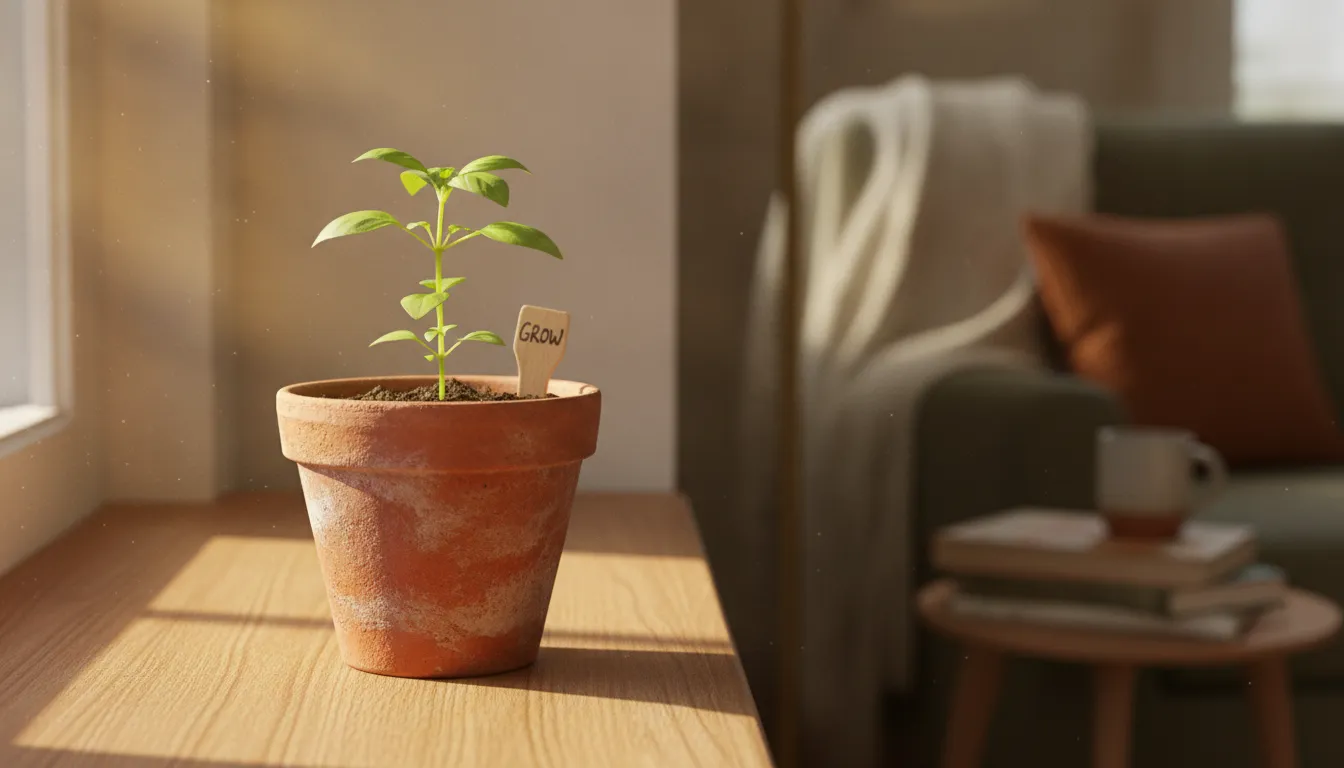
Growing plants at home doesn’t require perfection. It requires curiosity, patience, and willingness to learn from each plant that grows — or that sometimes doesn’t survive. Each mistake is a valuable lesson, and each harvest, no matter how small, brings a satisfaction difficult to describe.
You don’t need to transform your home into an urban farm overnight. Start with a single pot of chives or lettuce on your kitchen window. Observe, water, care. Before you know it, you’ll want more space, more plants, more greenery.
And remember: each plant grown at home is a concrete step toward a more conscious lifestyle, more connected to nature, and more sustainable. Small actions, when added together, create real change — both in your life and on the planet we share.
Start today. Your first pot is waiting for you.
