Endangered Animals in Brazil in 2026: What’s at Stake and How You Can Help
Brazil is home to one of the planet’s greatest biodiversities. With approximately 20% of all known species on Earth distributed across its biomes — the Amazon, Cerrado, Atlantic Forest, Caatinga, Pampa, and Pantanal — the country bears enormous responsibility in the face of the global extinction crisis. But this richness is under increasing pressure. Deforestation, wildlife trafficking, climate change, and uncontrolled agricultural expansion continue pushing dozens of species to the brink of disappearance.
The International Union for Conservation of Nature (IUCN) Red List and Brazil’s Official National List of Threatened Fauna Species, published by the Ministry of Environment and Climate Change, are the main references for understanding the scale of the problem. The most recent edition of Brazil’s national list, consolidated by MMA Ordinance No. 148/2022, recognizes more than 1,200 species of Brazilian fauna under some degree of threat — a reality that has not significantly improved since then and requires redoubled attention in 2026.
Knowing which animals are at risk, why they reached this point, and what can be done is the first step toward action. This article gathers accurate, updated, and practical information so you can understand the scenario and learn how to contribute — even through everyday actions.
Brazil’s National List of Endangered Animals: How It Works
Brazil’s official classification follows internationally recognized categories. Species are grouped into three main threat levels:
- Critically Endangered (CR): extremely high risk of extinction in the wild
- Endangered (EN): very high risk of extinction
- Vulnerable (VU): high risk of extinction
Beyond these, there are categories such as Near Threatened (NT) and Data Deficient (DD), which indicate concerning situations even without confirmed immediate threat.
MMA Ordinance No. 148/2022 is the most recent reference document and covers mammals, birds, reptiles, amphibians, fish, and invertebrates. The Chico Mendes Institute for Biodiversity Conservation (ICMBio) is the agency responsible for monitoring and action plans for each group of threatened species.
Critically Endangered Species: Animals on the Edge
Some Brazilian species are so close to extinction that every individual counts. Here are the most emblematic cases:
Spix’s Macaw (Cyanopsitta spixii)
Extinct in the wild since the early 2000s, the Spix’s Macaw is a symbol of Brazil’s biodiversity crisis — and also of recovery potential. Thanks to a captive breeding program coordinated by ICMBio and the Association for the Conservation of Threatened Parrots (ACTP), individuals have been reintroduced to the Bahian Caatinga in recent years. The process is slow and full of challenges, but represents one of the country’s most important wildlife restoration initiatives.
Golden Lion Tamarin (Leontopithecus rosalia)
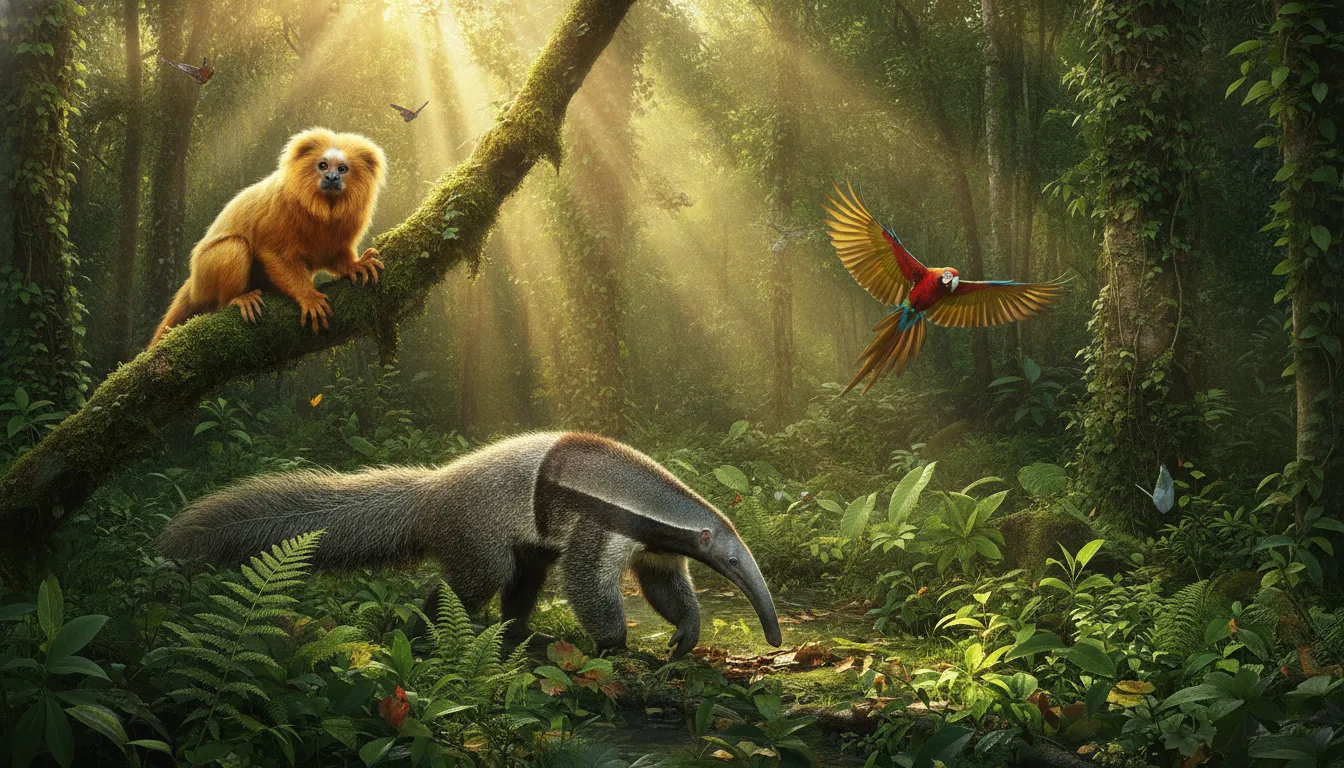
Restricted to the Atlantic Forest of Rio de Janeiro, the golden lion tamarin is classified as Endangered by the IUCN. Decades of joint effort between the government, NGOs like the Golden Lion Tamarin Association, and international zoos have managed to increase its population, which once had fewer than 200 individuals in the wild. Today the number is higher, but forest fragmentation remains the main threat to its survival.
Amazonian Manatee (Trichechus inunguis)
Classified as Vulnerable by the IUCN, this aquatic mammal faces historical illegal hunting, as well as degradation of Amazonian rivers and tributaries. ICMBio maintains rehabilitation centers for orphaned calves and develops active monitoring in the region’s river basins.
Maned Wolf (Chrysocyon brachyurus)
The largest canid in South America, typical of the Cerrado, is classified as Near Threatened by the IUCN. The advance of agribusiness and urbanization into the Cerrado — which has already lost more than 50% of its original vegetation cover, according to MapBiomas — continuously reduces its habitat and increases roadkill incidents.
The Main Biomes at Risk and Their Animals
Each Brazilian biome harbors unique species and faces specific pressures.
| Biome | Main Threat | Examples of Endangered Species |
|---|---|---|
| Atlantic Forest | Fragmentation, urbanization | Golden lion tamarin, northern muriqui |
| Cerrado | Agriculture, wildfires | Maned wolf, giant anteater |
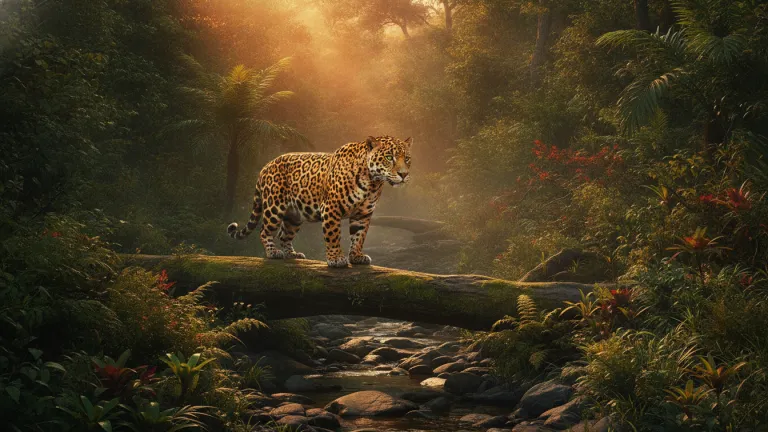
| Amazon | Deforestation, mining | Manatee, giant otter, jaguar |
| Caatinga | Drought, bird trafficking | Spix’s macaw, oncilla |
| Pantanal | Wildfires, cattle ranching | Marsh deer, jabiru stork |
| Pampa | Monoculture, trampling | Pampas deer, aplomado falcon |
The Atlantic Forest is Brazil’s most fragmented biome. Less than 12% of its original cover remains, according to the SOS Mata Atlântica Atlas — making each remaining forest fragment a critical refuge for local fauna.
Why Are Species Disappearing? The Real Causes
Understanding the causes is essential for addressing the roots of the problem. The main ones are:
- Habitat destruction and fragmentation: deforestation for agriculture, mining, and urbanization is the number one cause of extinction in Brazil and worldwide, according to the IUCN.
- Climate change: rising average temperatures, prolonged droughts, and extreme events alter species’ reproductive, migratory, and feeding cycles. Climate change is already identified by the IPCC as a growing extinction factor in coming decades. Learn more about how this process works in Greenhouse Effect: What It Is and How It Works in Practice.
- Wildlife trafficking: Brazil is one of the world’s largest wildlife trafficking markets. Songbirds, turtles, and primates are among the most affected groups.
- Roadkill: estimates from ICMBio and university researchers indicate that millions of wild animals die on Brazilian roads each year.
- Contamination by pesticides and heavy metals: especially severe in illegal mining regions, with direct impact on fish, amphibians, and aquatic birds.
- Introduction of invasive exotic species: feral domestic cats, wild boars, and introduced fish species cause severe damage to native fauna.
What’s Being Done: Conservation Initiatives in 2026
Despite the serious scenario, consistent work is being carried out:
- ICMBio coordinates more than 40 National Action Plans (PANs) for threatened species, involving researchers, local communities, and the private sector.
- The Conecta Cerrado program, led by NGOs like CI Brazil and TNC Brazil, works on restoring ecological corridors in the country’s most threatened biome.
- SOS Mata Atlântica and the BioAtlântica Institute coordinate forest restoration and species reintroduction projects in partnership with farmers and municipalities.
- Brazilian zoos participate in ex situ (outside natural habitat) conservation programs for species like the jaguar, Spix’s macaw, and golden lion tamarin.
- Indigenous and riverside communities play an irreplaceable role as territory guardians, monitoring and protecting species on their lands.
How You Can Help: Practical and Accessible Actions
Conservation is not solely the responsibility of government or scientists. Everyone can contribute concretely. Here’s how:
- Never buy wild animals. Illegal trade sustains trafficking. If you suspect trafficking, report it through IBAMA’s hotline: 0800 61 8080.
- Financially support reliable organizations. Instituto Onça-Pintada, Golden Lion Tamarin Association, SOS Mata Atlântica, and WWF-Brazil accept donations and have verifiable fieldwork.
- Reduce your ecological footprint. Conscious consumption, less beef, and less waste relieve pressure on biomes like the Cerrado and Amazon. Learn more at Ecological Footprint: What It Is and Why It Matters.
- Plant native trees. In partnership with municipalities, schools, or individually, planting native species from your region helps restore habitat.
- Reduce pesticide use at home and support agroecology. Organic products and local markets strengthen farmers who use fewer chemical inputs.
- Install feeders and water sources for native birds in your backyard, balcony, or garden — especially in urban areas near forest fragments.
- Drive carefully in rural areas, especially at night, and reduce speed in zones identified as wildlife corridors.
- Share quality information. Fighting misinformation about conservation on social media is a real form of collective influence.
Conclusion: Every Species Is a Story That Can Continue
Extinction is irreversible. When a species disappears, it takes with it millennia of evolution, unique ecological functions, and part of the natural heritage that belongs to all future generations. Brazil has the power — and the obligation — to be a protagonist in reversing this trend.
But the good news is that conservation works when there is will, resources, and engagement. The golden lion tamarin nearly disappeared and today has a recovered population thanks to collective effort. The Spix’s macaw is flying again in the Caatinga. These cases show that the effort is worthwhile.
You don’t need to be a biologist or live in the forest to make a difference. Reporting trafficking, consuming more consciously, supporting those who work for conservation, and staying informed through reliable sources is already a powerful start. The future of Brazilian biodiversity also depends on your choices today.
