Eco-Friendly Living: Affordable and Impactful Ways to Go Green
There is a persistent myth that prevents many people from adopting more sustainable habits: the idea that caring for the planet is an expensive privilege, reserved for those who can afford imported organic products, solar panels, and luxury electric cars. This perception is not only incorrect — it is, in many cases, the opposite of reality. Living more eco-friendly often means spending less, wasting less, and making the most of what you already have.
The truth is that many sustainable practices are born from frugality: repairing instead of discarding, reusing materials, reducing energy and water consumption, and growing some of your own food. These are actions that ease your wallet while also reducing pressure on natural resources. Excessive consumerism is, by definition, the opposite of sustainability — and also the opposite of personal economy.
In this article, we will show with practical and concrete examples that the transition to a greener lifestyle can — and should — start with small changes accessible to any budget. You don’t need to renovate your house or buy everything new. What you need is information and the willingness to start.
Why Does Sustainability Seem Expensive?
The confusion begins because the “green” market often charges more for products with sustainable labels. Natural cosmetics in pretty packaging, certified organic cotton t-shirts, and functional foods in specialty stores — all of these exist and have their value, but they represent only a slice of the ecological universe.
The problem is that this slice is the most visible. Media and advertising associate sustainability with high-end conscious consumption, creating the impression that “being green” is a class identity. But the real principles of sustainability — reduce, reuse, recycle — have been practiced by generations of ordinary people long before they became a market trend.
Moreover, many environmental costs are hidden in our current daily lives: high electricity bills from appliances left on, food waste that becomes trash before being consumed, frequent replacement of cheap products that break quickly. When you start to see these leaks, you realize that sustainable change is not an extra cost — it’s a waste correction.
Energy: Small Habits with a Big Impact on Your Bill
The electricity bill is one of the largest household expenses and also one of the areas where simple behavioral changes generate immediate savings.
Reduce Consumption Without Sacrificing Comfort
- Replace incandescent bulbs with LEDs: LED bulbs consume significantly less energy than conventional incandescent ones and have a much longer lifespan, representing real savings over time.
- Turn off appliances in standby mode: TVs, chargers, and microwaves on standby consume energy continuously. Using power strips with switches makes it easy to cut power completely.
- Adjust the temperature of the electric shower: lowering it one level in winter can already make a noticeable difference in the bill.
- Take advantage of natural light: rearranging furniture to better utilize sunlight during the day is free and effective.
- Use the washing machine with a full load: each cycle has a fixed energy and water consumption; maximizing it is more efficient.
ANEEL (National Electric Energy Agency) provides online calculators to estimate the consumption of each appliance in your home — it’s worth using to identify the biggest culprits on your meter.
Water: A Precious Resource That Also Affects Your Wallet
Brazil is a country of absolute water abundance, but this abundance is unevenly distributed and under increasing pressure. Saving water is an environmental responsibility and, depending on your rate and consumption, direct financial savings.
Simple Water-Saving Habits
- Turn off the tap while brushing your teeth: a gesture that can save dozens of liters per day in a household with more than one person.
- Install flow reducers: inexpensive devices that fit into faucets and showers and reduce water flow without compromising functionality.
- Reuse rinse water from laundry: it can be used to clean floors and sidewalks.
- Collect rainwater to water plants: just a properly positioned container is needed.
- Check for leaks regularly: a constant drip from a faucet can waste a surprising amount of water per month.
Sustainable Eating: Eat Better While Spending Less
Food is one of the areas with the greatest potential for both environmental and financial impact. Food waste is a serious problem: according to FAO (Food and Agriculture Organization of the United Nations) data, approximately one-third of all food produced worldwide for human consumption is lost or wasted along the chain — a number that represents enormous environmental impact and money thrown away.
How to Eat More Sustainably and Economically
- Plan your meals for the week: planned shopping avoids excess and reduces organic waste.
- Buy at local and seasonal markets: seasonal products are cheaper, fresher, and travel shorter distances to reach your table.
- Reduce red meat consumption: livestock production is one of the largest sources of greenhouse gas emissions. Replacing some weekly meals with plant-based proteins like beans, lentils, and chickpeas is cheaper and more ecological.
- Utilize peels and stems: carrot peels, broccoli stems, and beet leaves are nutritious and often unnecessarily discarded.
- Compost: transforms organic waste into fertilizer for plants, reducing trash and the cost of fertilizers.
Cleaning and Hygiene Products: DIY and Save
One of the areas where sustainability and economy meet most clearly is in the homemade production of cleaning and hygiene products. Simple ingredients like baking soda, white vinegar, lemon, and bar soap solve most household needs efficiently, at low cost, and with much less environmental impact than conventional industrial products.
A great example is the reuse of used cooking oil. Instead of discarding it improperly — which contaminates soil and water sources — you can transform it into efficient and economical homemade soap. Check out our Complete Guide to Homemade Soap with Used Oil to learn the step-by-step process.
Another interesting front is sustainable personal hygiene products: solid shampoo, bar conditioner, natural soaps, and reusable sanitary pads have a much lower cost per use than conventional disposable equivalents, despite the higher initial investment. If you want to explore this universe, see our selection of Sustainable Bathroom Products Worth Trying.
Conscious Consumption: Buy Less, Buy Better
The logic of conscious consumption is simple: before buying, ask if you really need the item, if you can borrow it or buy it used, and if the product has real durability.
Questions to Ask Before Any Purchase
- Do I really need this or is it an impulse?
- Is there a used or refurbished version available?
- If I buy new, what is the expected durability?
- How will I dispose of it when I no longer need it?
Thrift stores, social media exchange groups, used product marketplaces, and circular economy fairs have grown significantly in recent years in Brazil. Buying second-hand clothes, electronics, and furniture is one of the most sustainable and economical practices possible — and culturally increasingly accepted, especially among younger generations.
Another relevant point: durability is sustainability. A more expensive product that lasts ten years has a lower total cost than three cheap products that break in three years each — and generates less waste.
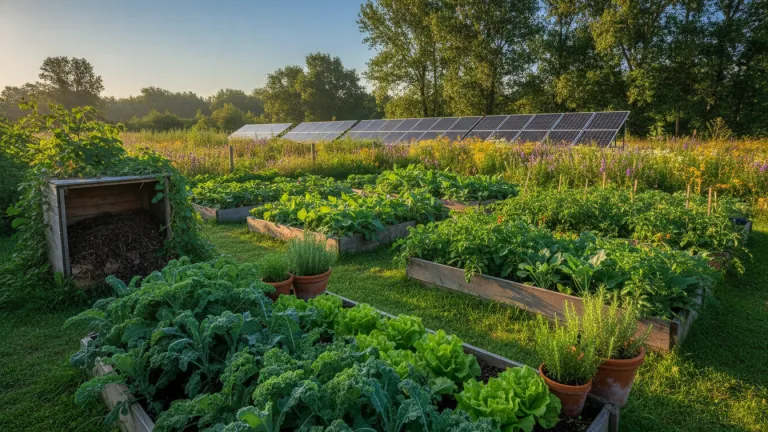
Urban Gardening: Grow Some of Your Own Food
Growing herbs, vegetables, and fruits at home or in small urban spaces is one of the most enjoyable and economical practices of a sustainable lifestyle. You don’t need a backyard: balconies, window sills, and terraces work very well to start.
Chives, parsley, basil, mint, lettuce, and arugula are relatively easy-to-grow plants that thrive in small pots and have high turnover in Brazilian kitchens. Growing them at home reduces spending on produce, eliminates plastic packaging, and ensures fresh, pesticide-free products.
If you want to delve deeper into the topic, we have a complete guide on how to grow your own food even while living in the city.
Conclusion: Sustainability Within Everyone’s Reach
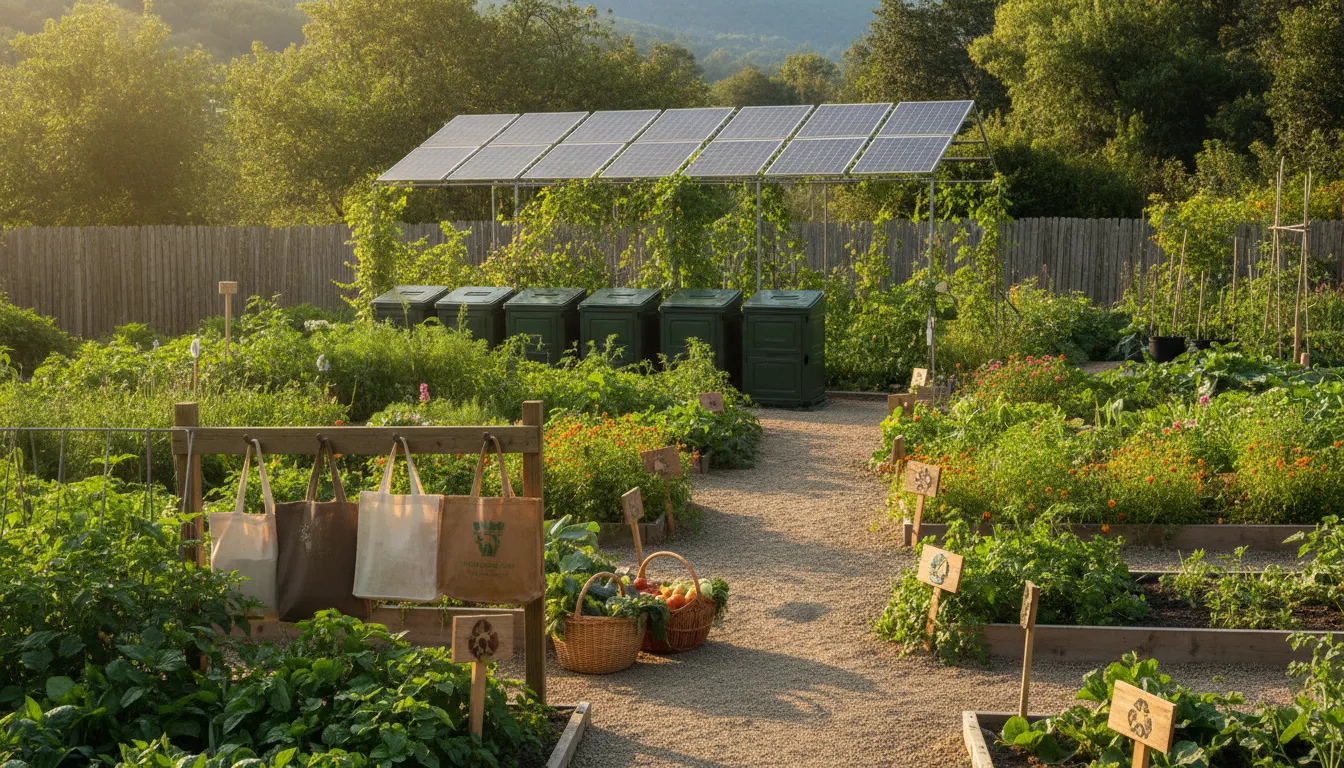
Being eco-friendly is not a matter of purchasing power — it’s a matter of choices and habits. The most impactful practices for the environment often coincide with the most economical ones: consuming less, wasting less, repairing, reusing, producing at home.
You don’t need to transform your life all at once. Start with one area: the electricity bill, food, cleaning products. Observe the results on your budget and your relationship with consumption. Then, gradually expand.
Every choice counts. And the sum of individual choices, multiplied by millions of people, has a real weight on the planet’s future. Caring for the Earth and caring for your budget go hand in hand — and that’s one of the best news the environmental movement has to offer.
Share this article with someone who still thinks sustainability is expensive. Sometimes, a change in perspective is the first step to a change in habit.
