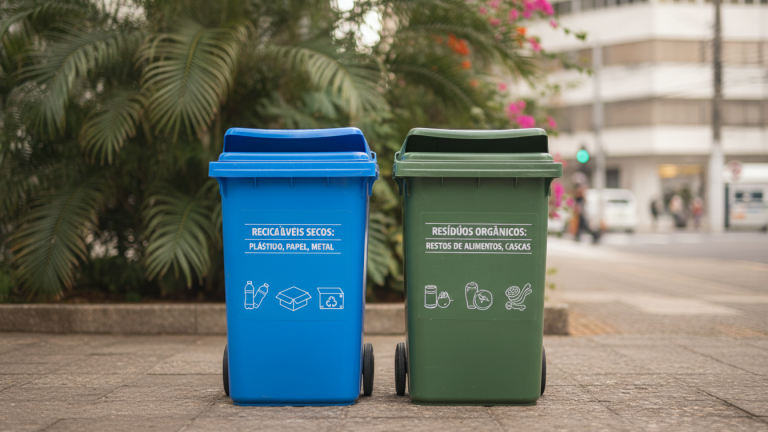
Why Your Trash Can May Be Sabotaging Your Neighborhood’s Recycling
Have you ever carefully separated your garbage, put it in the right bin, and felt that sense of duty fulfilled? Well, depending on what was mixed in there, it all might have ended up in the landfill anyway. This happens because a single contaminated item, like a food-stained package or oil-soaked paper, can render an entire batch of recyclable material useless.
The separation between dry waste and wet waste is the most basic step of selective collection, but it’s also where most people go wrong without realizing it. According to data from Abrelpe (Brazilian Association of Public Cleaning and Solid Waste Companies), Brazil generates over 80 million tons of solid waste per year, and only a small fraction is actually recycled. Contamination between dry and wet materials is one of the main causes of this waste.
By the end of this text, you’ll know exactly what goes in each bin, how to organize this process in your home, what the most common mistakes are, and what to do with those items that don’t fit clearly into either category.
What Is Dry Waste and What Is Wet Waste, Really
The name can be misleading. Many people think “dry” means anything that isn’t wet, but the logic behind the separation is different.
Dry waste is everything that can be sent for recycling: plastic, paper, cardboard, metal, and glass. The criterion isn’t just the absence of moisture, but the ability to transform that material into something new. An empty, clean PET bottle is dry waste. That same bottle with juice residue? That complicates everything.
Wet waste is the organic fraction, made up mainly of food scraps: fruit peels, coffee grounds, bones, leftover food, leaves, used toilet paper, and soiled napkins. This material can’t be recycled the same way, but it has another valuable destination: composting. When handled correctly, wet waste becomes fertilizer for gardens and vegetable plots.
Law 12.305/2010, known as the National Solid Waste Policy (PNRS), establishes the responsibility of municipalities and citizens in properly separating and disposing of waste. In practice, this means separation starts at home, even before the collection truck arrives.
What Goes in Each Bin: Straightforward Guide
Having clarity about each category prevents confusion when it matters. Use the table below as a quick reference and post it on your kitchen door if needed.
| Material | Dry Waste (Recyclable) | Wet Waste (Organic) |
|---|---|---|
| Clean PET bottle | Yes | No |
| Banana peel | No | Yes |
| Aluminum can | Yes | No |
| Leftover rice | No | Yes |
| Dry newspaper | Yes | No |
| Used napkin | No | Yes |
| Clean glass jar | Yes | No |
| Coffee grounds | No | Yes |
| Washed yogurt container | Yes | No |
| Toilet paper | No | Yes |
Notice the pattern: material cleanliness makes all the difference in dry waste. A tuna can with grease will contaminate other clean, recyclable packages. A quick rinse usually solves the problem.
How to Organize Waste Separation at Home Without Overcomplicating It
You don’t need anything fancy to get started. Two bins, a label, and a new habit will solve most of the problem.
Step-by-Step Guide for Apartments or Houses
- Choose your containers: two bins of different sizes work well. The wet waste bin can be smaller because this material needs emptying more frequently. The dry waste bin can be larger since cardboard and bottles take up space.
- Define the locations: place the wet waste bin near the kitchen sink where you peel fruits and vegetables. The dry waste bin can go in a corner of the kitchen or utility area.
- Rinse packages before discarding: you don’t need to wash with soap or scrub. A few seconds of running water removes the main residue. Do this when you finish using the product, not later.
- Crush boxes and bottles: flattened packaging takes up less space and makes recycling cooperatives’ work easier.
- Remove caps and labels when possible: some municipalities ask for plastic caps to be separated. Check with your local collection service.
- Take dry waste on the right day: find out when selective collection happens on your street. In many Brazilian cities, selective collection occurs on specific days different from regular garbage collection.
Estimated cost to start: two simple bins cost between R$ 20 and R$ 60 at any hardware store. If you already have buckets at home, reuse them with printed labels.
Time needed per day: less than two minutes. Once incorporated, the habit becomes automatic.
The Most Common Mistakes That Waste Your Recycling Effort
Separating with good intentions but wrong information can be frustrating. These are the most frequent slip-ups:
- Putting supermarket plastic bags in dry waste: thin film plastic (bags, bread wrapping, bubble wrap) isn’t accepted by most conventional recycling cooperatives. It needs a specific collection point, usually available at supermarkets.
- Mixing greasy paper with dry paper: a pizza box with grease won’t recycle. Clean newspaper will. Wet or oily paper contaminates the pulp and can’t be reused.
- Putting broken glass in dry waste without protection: fragmented glass injures workers at cooperatives. Wrap it in paper and mark “broken glass” on the outside of the package.
- Leaving food scraps inside packages: sardine cans with oil, unwashed cheese containers, soda bottles with liquid residue. All of this attracts insects and fungi and prevents recycling.
- Throwing electronics and batteries in household garbage: batteries, chargers, cell phones, and appliances are special waste and have their own collection points at pharmacies, supermarkets, and electronics stores. They never go in regular trash.
What to Do With Wet Waste: Beyond the Trash Bin
Most people throw away organic waste without thinking much, but this fraction represents over half the weight of Brazilian household garbage, according to Abrelpe estimates. There’s a much better destination for it.
Home composting transforms peels, coffee grounds, leaves, and vegetable scraps into fertilizer in a few weeks. You can do this in a bucket with holes, in a purchased or homemade composter, in a yard or even an apartment balcony. The result is rich compost that improves any plant pot, garden, or vegetable plot.
If you live in an apartment and don’t want a home composter, some cities already have organic waste drop-off points at open markets or municipal community composting programs. It’s worth researching what exists in your city. This action, by the way, is directly linked to reducing methane in landfills, a gas with far greater climate impact than CO2, as the IPCC points out in its assessment reports.
Small changes in consumption also help reduce waste generation, just as happens with other daily habits. If you haven’t thought about reviewing what you buy and discard in your closet, for example, the article on sustainable wardrobe: where to really start brings a similar path to what we’re exploring here.
Waste That Is Neither Dry Nor Wet: What Now?
Some items cause doubt because they don’t fit clearly into either category. See what to do with the most common ones:
- Expired medicines: pharmacies are required by law to accept them back. Never throw them in the toilet or regular trash.
- Used cooking oil: bottled in a PET container and delivered to collection points (many supermarkets accept it). Never pour it down the sink or drain.
- Old clothes and textiles: not recyclable through the regular selective collection system. Donate them, take them to thrift stores, or find specific collection points for brands that have reverse logistics.
- Styrofoam: not accepted by all cooperatives. Check with your local collection before putting it in dry waste.
- Fluorescent lights: contain mercury and have their own collection at construction stores and home centers.
- Paint and household chemicals: hazardous waste. Check with your local government where to deliver them.
The doubt is valid and very common. When in doubt, a good rule is not to mix with anything: keep the item separate and research before discarding it.
Frequently Asked Questions About Dry and Wet Waste Separation
Do I Need to Wash All Packages With Soap Before Recycling?
No. A quick rinse with water is enough to remove the main residues. The goal is to remove food scraps that attract insects and contaminate other materials, not to sterilize the packaging.
Does Selective Collection Work the Same Way Across Brazil?
No, it doesn’t. Selective collection is each municipality’s responsibility, and coverage varies greatly. Capitals like São Paulo, Curitiba, and Belo Horizonte have more developed systems, while smaller cities may have limited or no coverage. Check your city government’s website to see which days and types of material are collected on your street.
What Is Cross-Contamination and Why Does It Matter?
Cross-contamination happens when wet waste (with food scraps, grease, or moisture) contacts dry recyclable material. This can render not just that item useless but a large amount of surrounding material as well. It’s the main reason unwashed packages damage the entire batch at a recycling cooperative.
Can I Use Plastic Bags to Separate Dry Waste?
Yes, but prefer appropriately-sized bags and, if possible, reuse bags you’ve already received (bread bags, shopping bags). Some municipalities distribute specific bags for selective collection. Ideally, avoid unnecessary bags since film plastic is difficult to recycle.
Start Today: One Bin at a Time
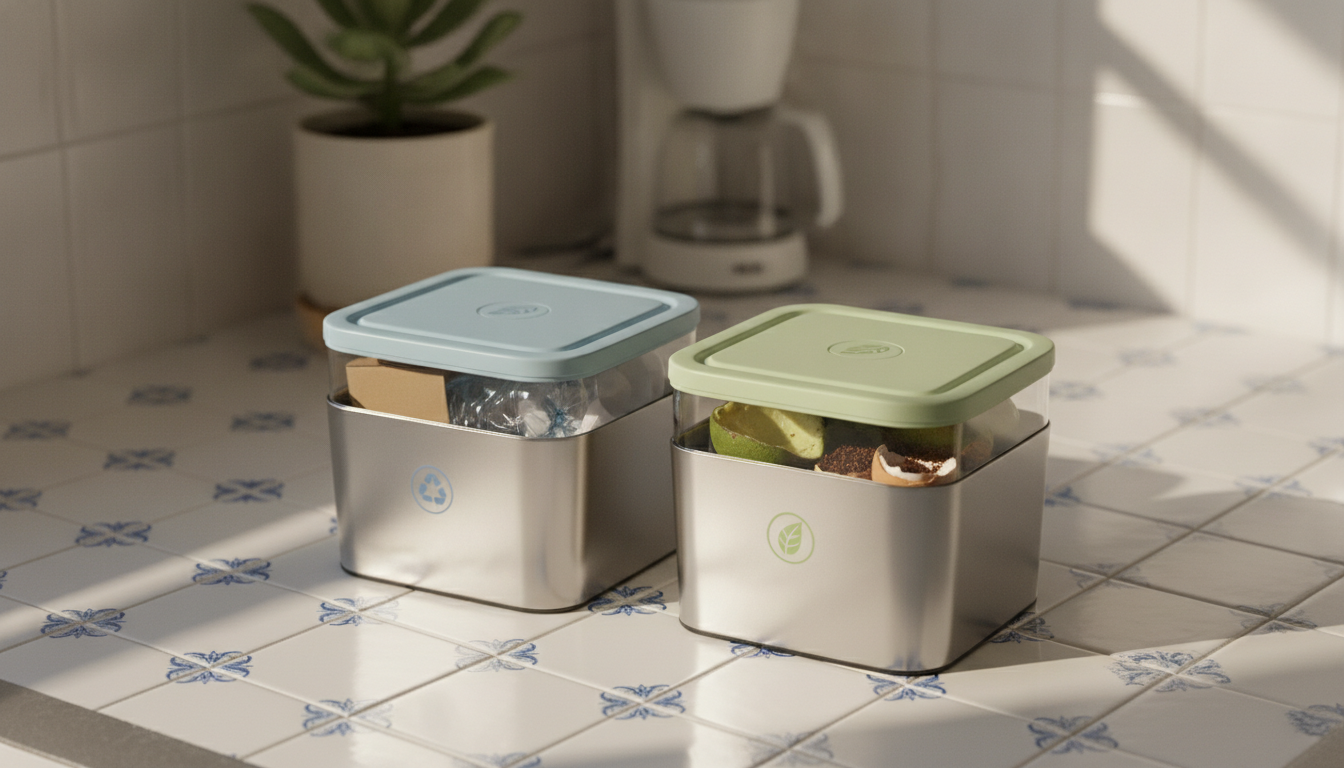
Separating dry from wet waste doesn’t require overhauling your entire routine. You can start by putting a second bin in your kitchen today, preferably near the sink, and training yourself to quickly rinse packages before throwing them away.
If you want to increase your household’s impact, the next natural step is setting up a composter for wet waste. And in the meantime, it’s worth thinking about other sources of waste and consumption that can be optimized, like your electric bill. People who’ve reduced trash at home often discover that the habit of watching consumption extends to other areas, including energy, and initiatives like a low-cost solar water heater set up at home show that small practical changes have concrete results on your monthly bill.
Correct garbage separation isn’t about perfection. It’s about practice. Start with what you already know, fix one mistake at a time, and move forward.
